Or: Lessons from a year of Aurora Chasing
The far north is not for the faint of heart. A landscape of boulders and barren crags; crashing waves of the berg-tossed Arctic; silence over the ice of a thousand frozen lakes. The cracking of the ice in the spring. The swish of the sled and the pack of panting dogs. Polar bears. The North is wild. Its days stretch long as the sun runs its circle over the earth. Its nights are frightfully cold but clear, with fresh-fallen snow sparkling in the starlight of constellations running circles under the pole, while bands of wistful green lights dance across the sky. The North cannot be tamed.
The aurora is the same way. Wild son of the North and spirit of the Arctic, it too cannot be tamed. It leaves many in wonder, and many more chase after it, but remember: You do not go to it. It comes to you. It comes when it wishes. It stays while it pleases. And in the blink of a freezing, tear-filled eye it vanishes into air.
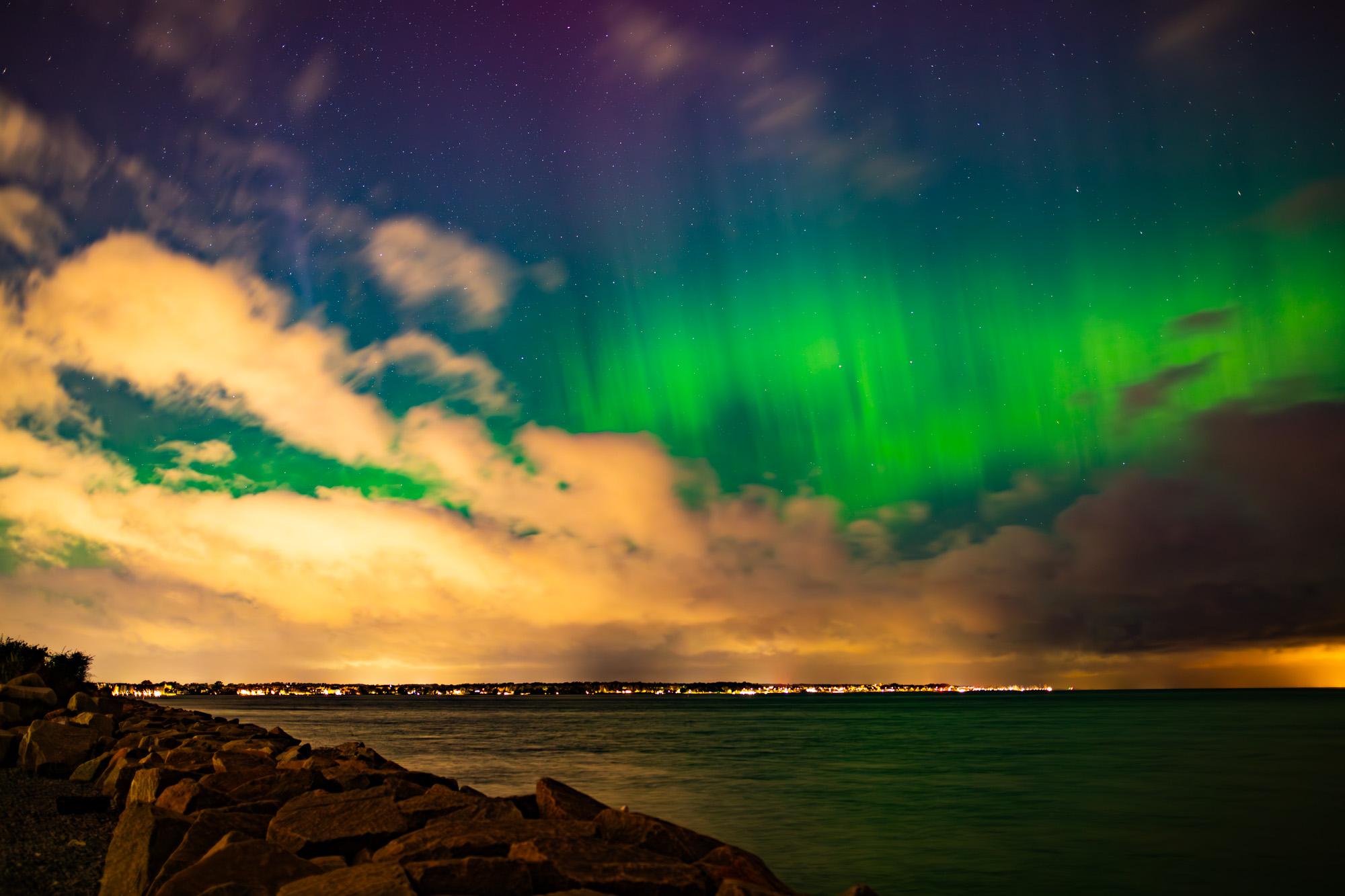
In this blog post, I’ll cover the techniques I use to take aurora photos, some of the results, and a few of the unexpected things I have learned along the way. Aurorae are different from deep-sky objects: they are generally brighter, always unpredictable, and constantly changing. As a result, many of the usual astro techniques (tracking, stacking, panorama stitching) do not work. Skill matters a bit, but planning and good luck matter a lot more. This can be frustrating, especially if you travel a long way and stay up hours in the windy cold just to come back unlucky. But that is the way of the North. Keep trying!
1. Technique
First, a bit of science (read more here). Stars, like the Earth, have weather patterns and storms. In addition to emitting light and heat, they also blow streams of charged particles called “stellar wind”. These stellar winds are strongest in bright blue stars and red giants, and play a key role in the formation of cosmic objects like planetary nebulae, as well as the gas and dust clouds from which stars form. But main-sequence stars like our Sun also have a mild solar wind, which is strong enough to distort the magnetic field lines of the Earth, pushing trapped electrons (which follow the field lines) toward the atmosphere near the poles. These charged particles excite atmospheric atoms (primarily nitrogen and oxygen), which decay to form the brilliant green and red colors of the aurora.
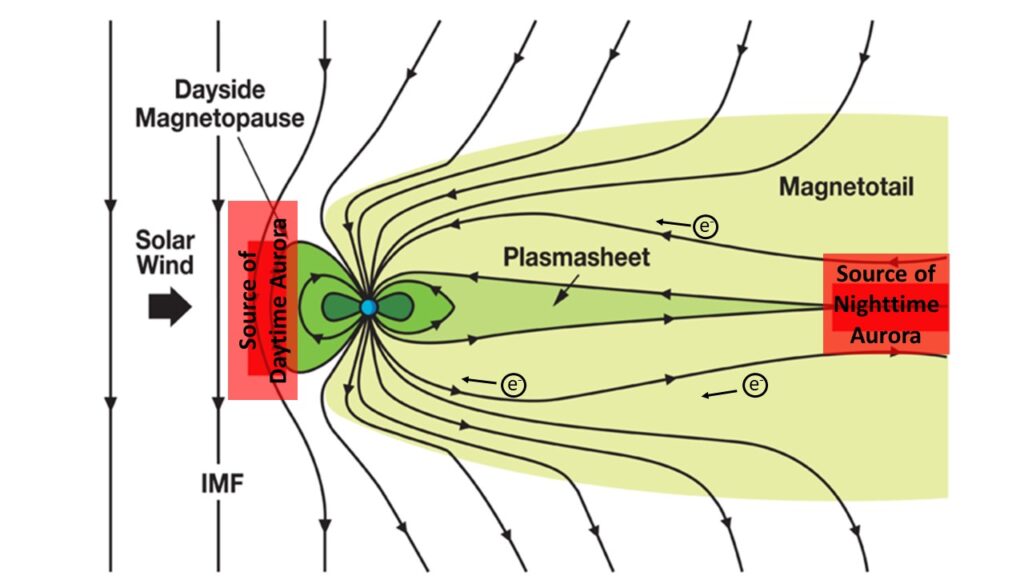
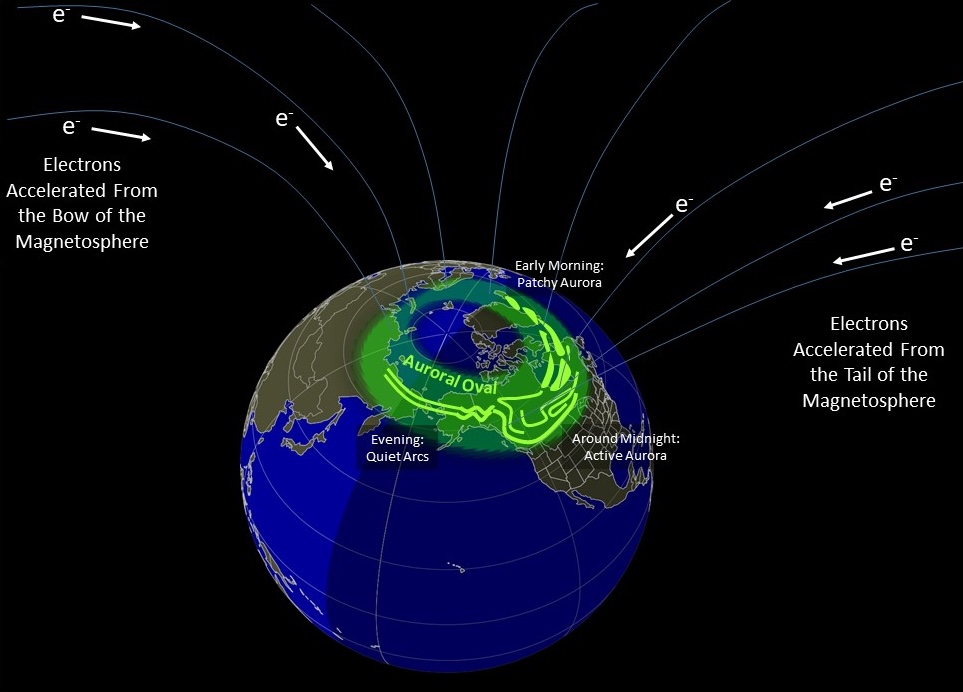
Because there is always a solar wind, there is always an aurora in the sky, but it is usually faint and concentrated near the magnetic poles. However, during periods of high solar activity, the wind can become very strong, compressing the magnetic field lines and pushing the aurora to lower latitudes. The current of charged particles creating the aurora, in turn, causes small deflections to the Earth’s magnetic field, which have been measured continuously since the 1800’s. These deflections are the basis of the planetary K-index (Kp-index), the most important figure for measuring a solar storm. Kp is like the wind speed of a hurricane: it tells you how strong an aurora will be, and how far south it can be seen.
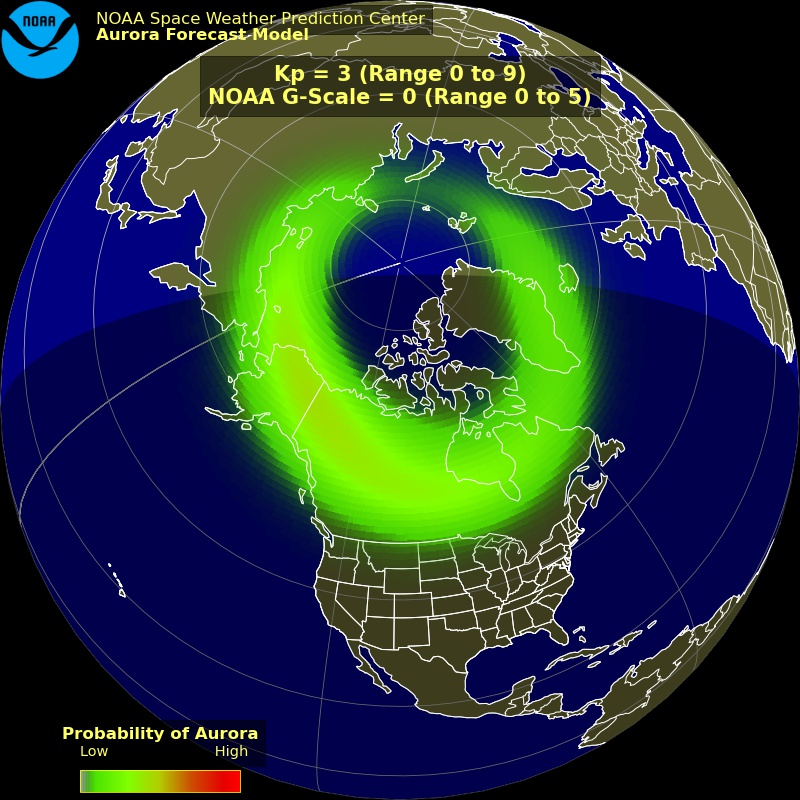
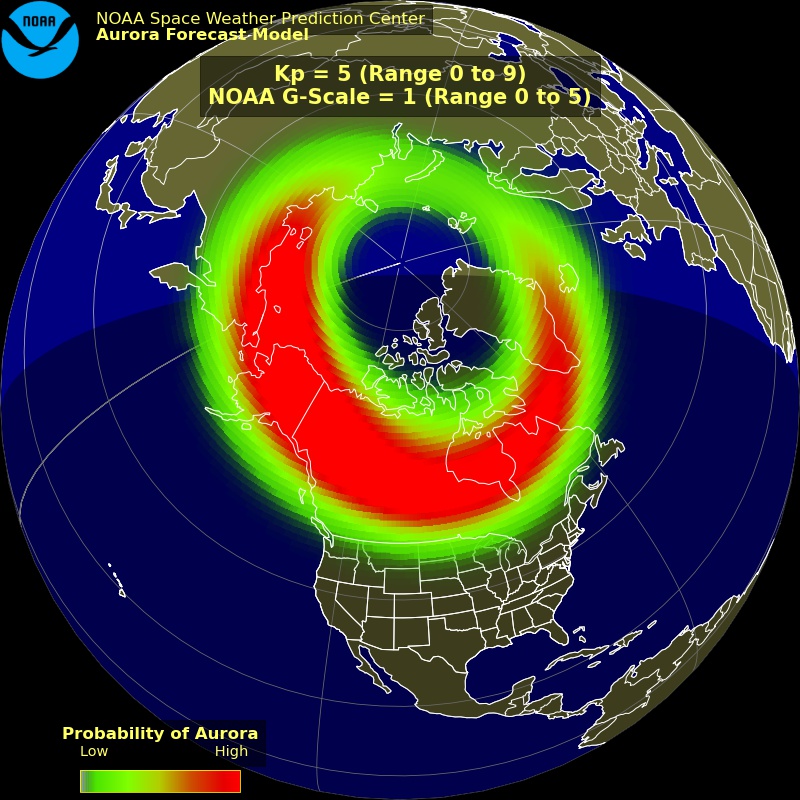
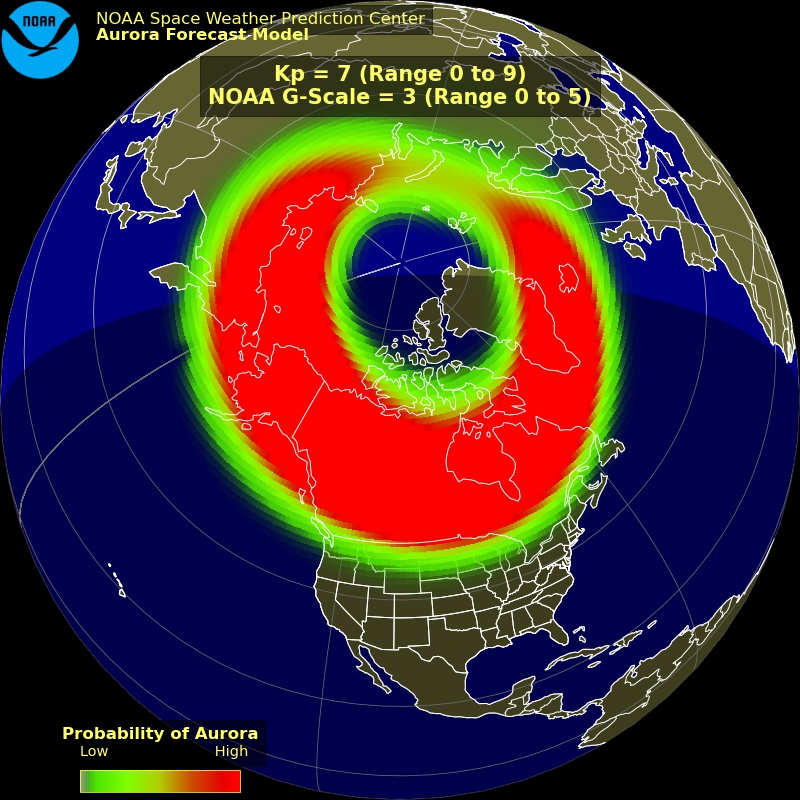
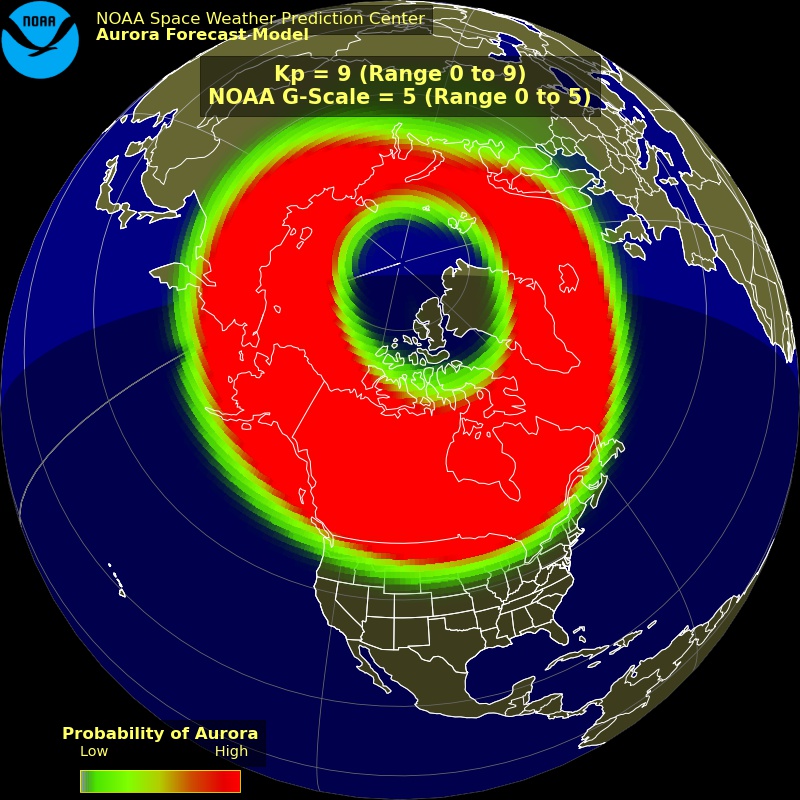
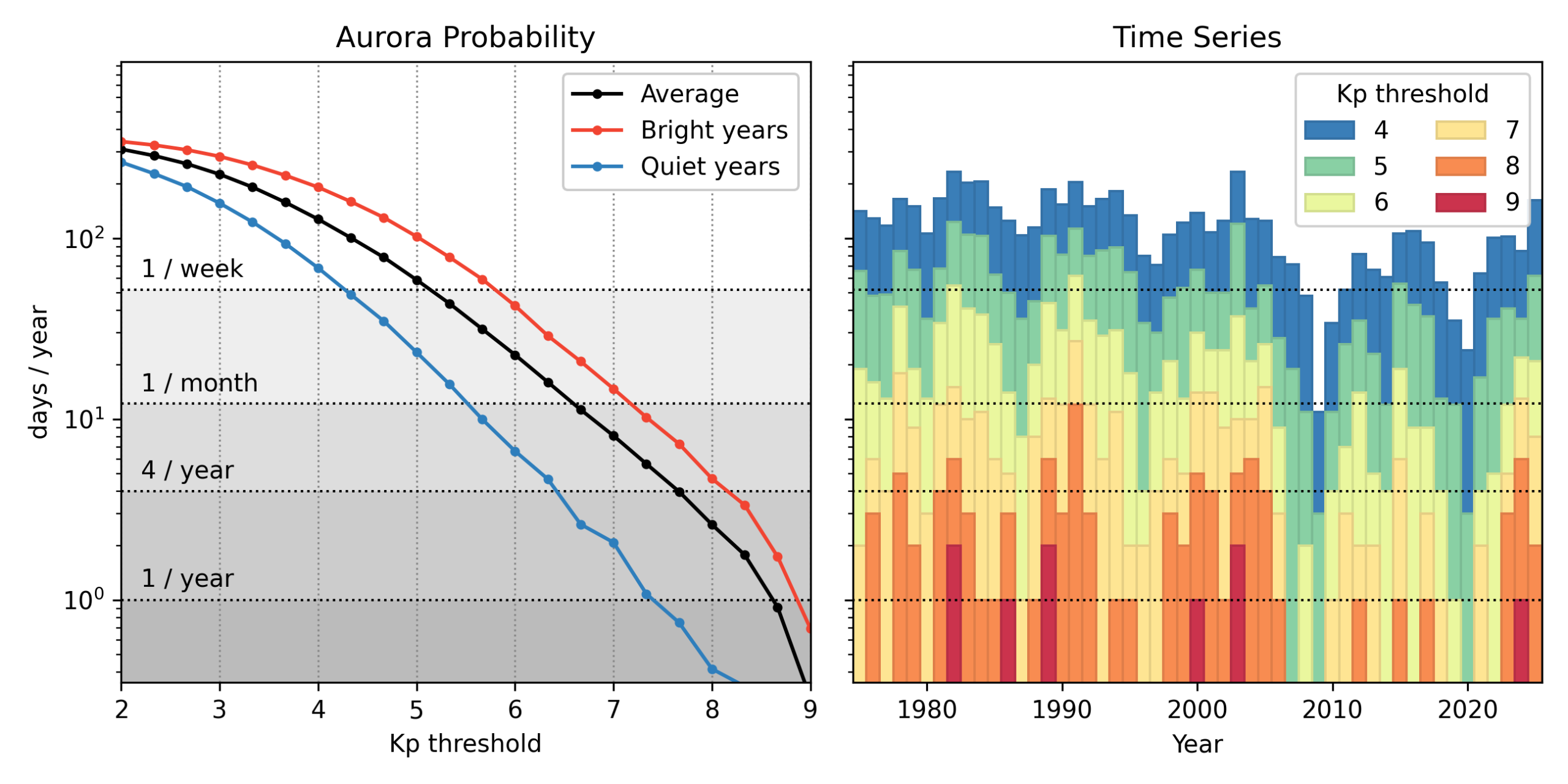
Depending on where you live, the nightly forecast for Kp will tell you if it is even worth going out at all. In western Canada and Alaska, the aurora is often visible continuously, and any event with Kp ≥ 5 will be a good showing. Where I live in the northeast US, I usually only get good luck when Kp ≥ 7. People living further south may only see storms with Kp ≥ 8 or 9, if at all.
But regardless of where you live, get the most of your aurora sightings with four rules: be prepared, bring the right gear, set expectations, and edit vigorously:
1.1 Be Prepared
The aurora comes on its own schedule. But modern science can help a bit with forecasting. These forecasts are based on satellite data, sunspot measurements, solar dynamics, and space weather simulations. They are far less reliable than terrestrial weather forecasts, but better than nothing. The accuracy of the forecast also depends strongly on the lead time: predictions for the next 15-45 minutes are reliable, the next 1-3 days are okay, and anything further out is poor.
Stay on top of the forecast by downloading an aurora app and turning on notifications (example here). Set the target Kp value based on your location. When considering going out, use the NOAA Aurora Dashboard for more detailed info.
Scout out some good locations nearby, with (i) an unobstructed view of the north (consult a topographic map), and (ii) minimal light pollution facing north (light pollution map). An interesting foreground is a great plus. Do this research now, so that you are prepared when the aurora strikes. You may only have a couple hours’ warning! Finally, check the weather and moon phase.
Finally, don’t be lazy! Strong solar storms are rare. The chart below shows the probability or aurora (technically, of Kp > threshold) from the last 94 years of Kp data. If your location requires Kp ≥ 8 for a good show, there will on average be only 3 events per year (even lower during the “quiet” years of the solar cycle). And some of those will be cloudy. So unless you live in Iceland, the Yukon, Norway, or South Georgia, this is a rare event. Don’t let the weather hold you back. Get out there and see it!
1.2 Bring the Right Gear
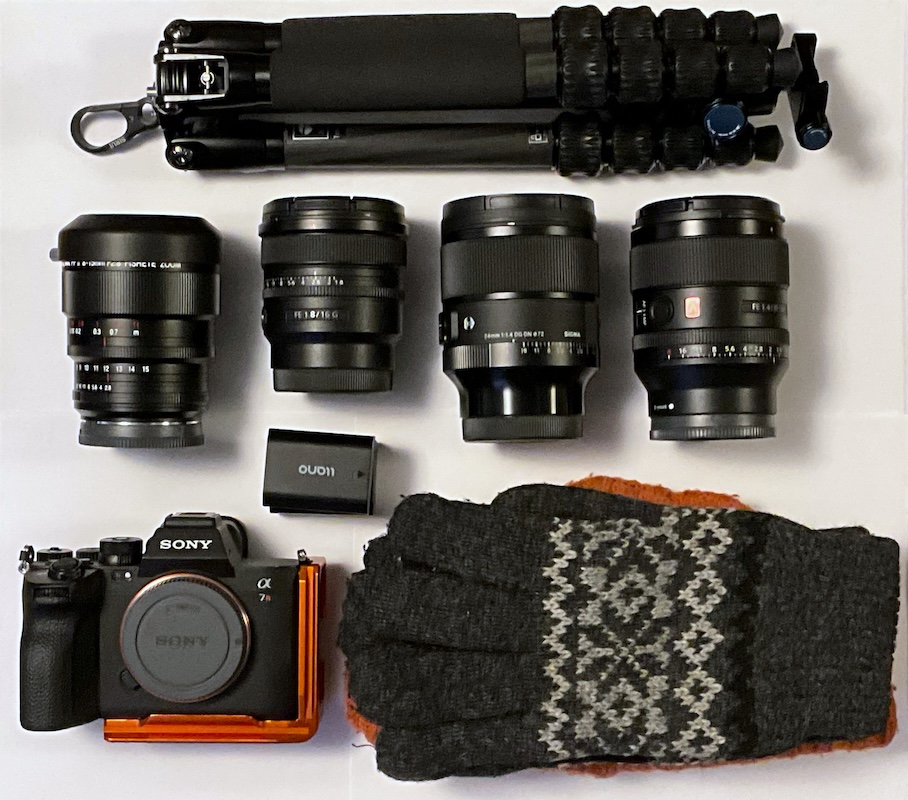
Since aurorae are faint, widefield subjects, they need the same wide-field astro kit you already have for Milky Way shots. Specifically, I find myself bringing:
- DSLR / Mirrorless Camera
- Lens Kit
- Full-sky fisheye lens, e.g. Rokinon 8mm f/3.5, Laowa 8-15mm f/2.8
- Ultrawide lens (14-16mm), e.g. Rokinon 14mm f/2.8, Sony 16mm f/1.8 G
- Wide-field lens (20-24mm), e.g. Sigma 24mm f/1.4 Art
- 35mm class lens, e.g. Sigma 35mm f/1.4 Art, Sony 35mm f/1.4 GM
(usually I don’t use this unless the aurora is very distant)
- Tripod
- Extra batteries (especially if it’s cold)
You do not need:
🚫 Telescope
🚫 Star tracker / equatorial mount
🚫 Astro-modified camera
🚫 Pano head or panorama stitching software
Aurorae are too wide-field for any telescope, and the patterns change too quickly to benefit from a star tracker. All you need is a camera, tripod, and lens. This is a rare case in astrophotography where the “simplest solution is the best”!
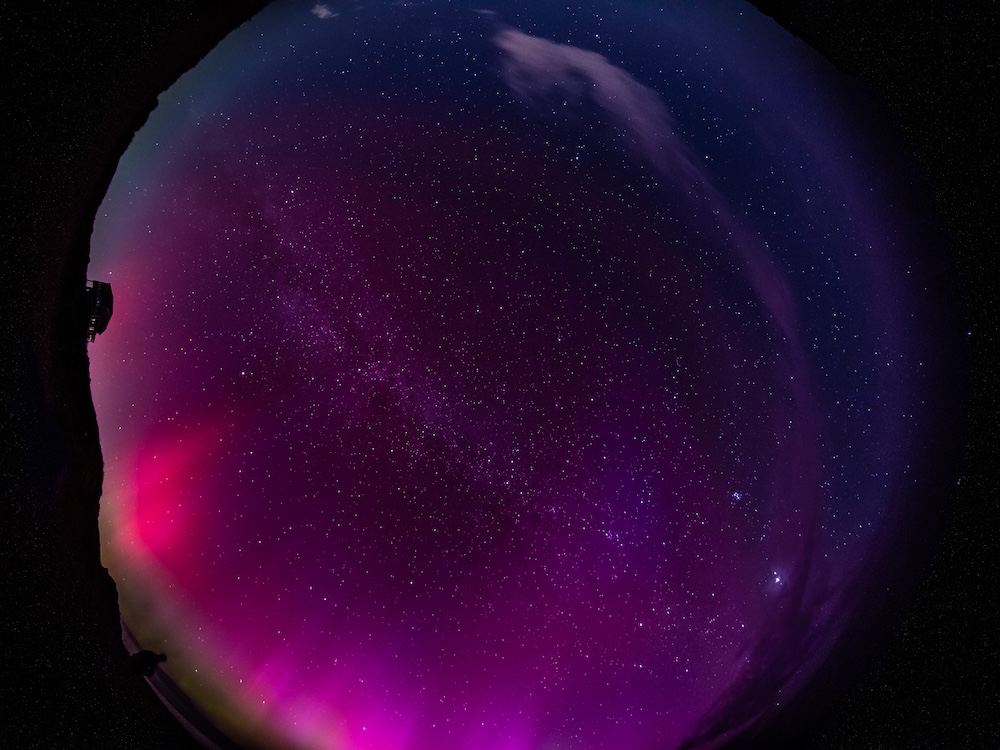
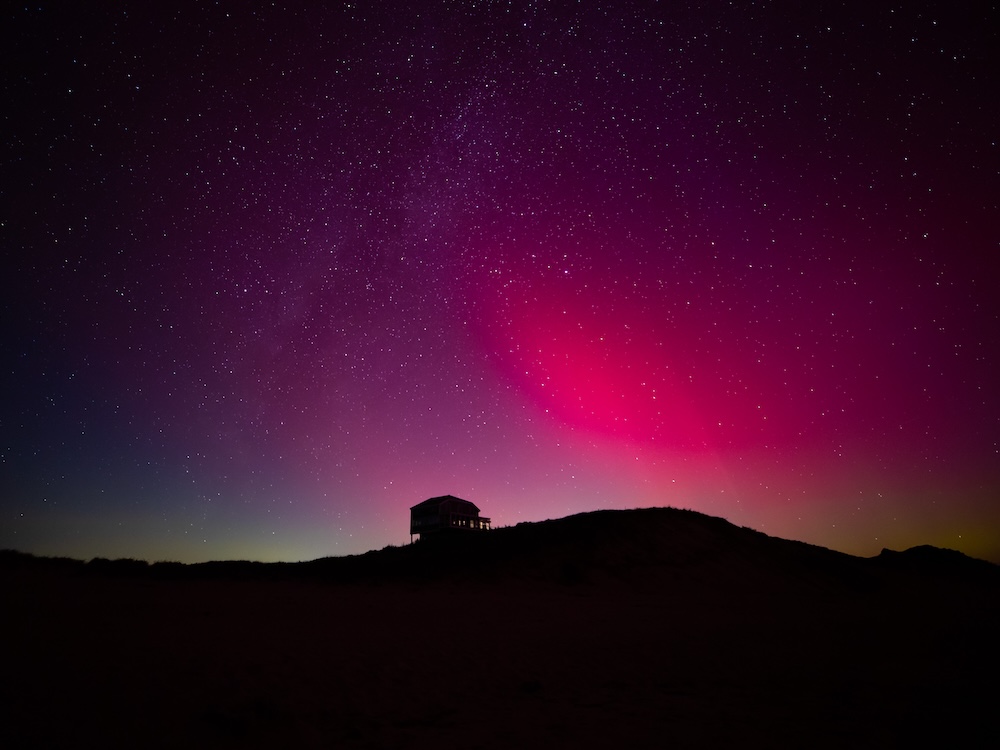
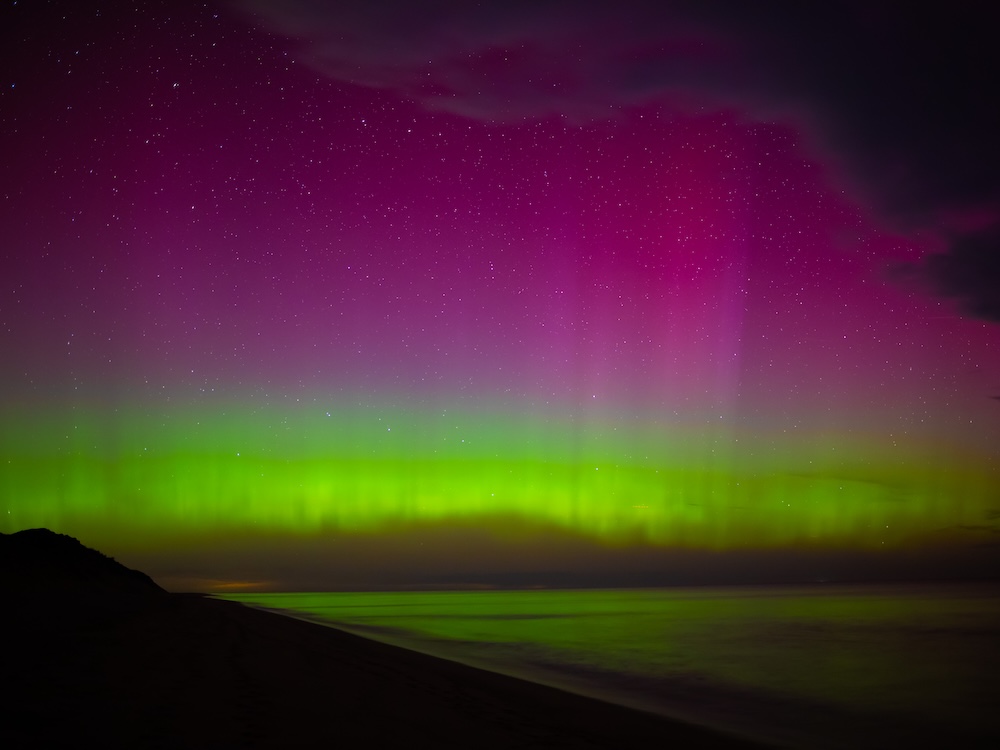
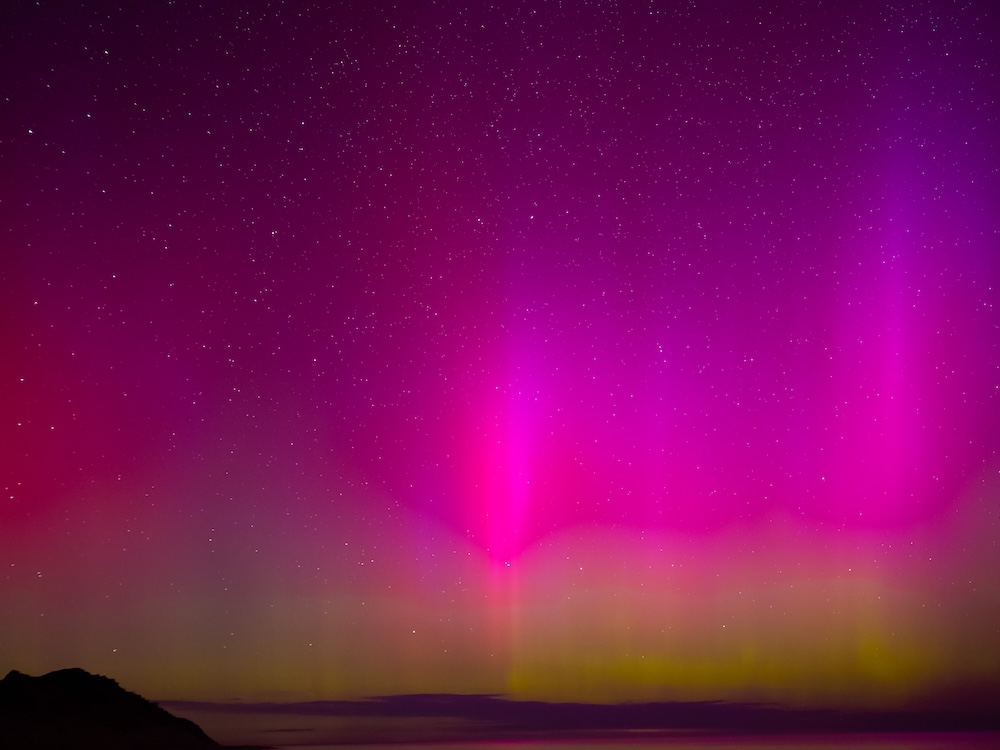
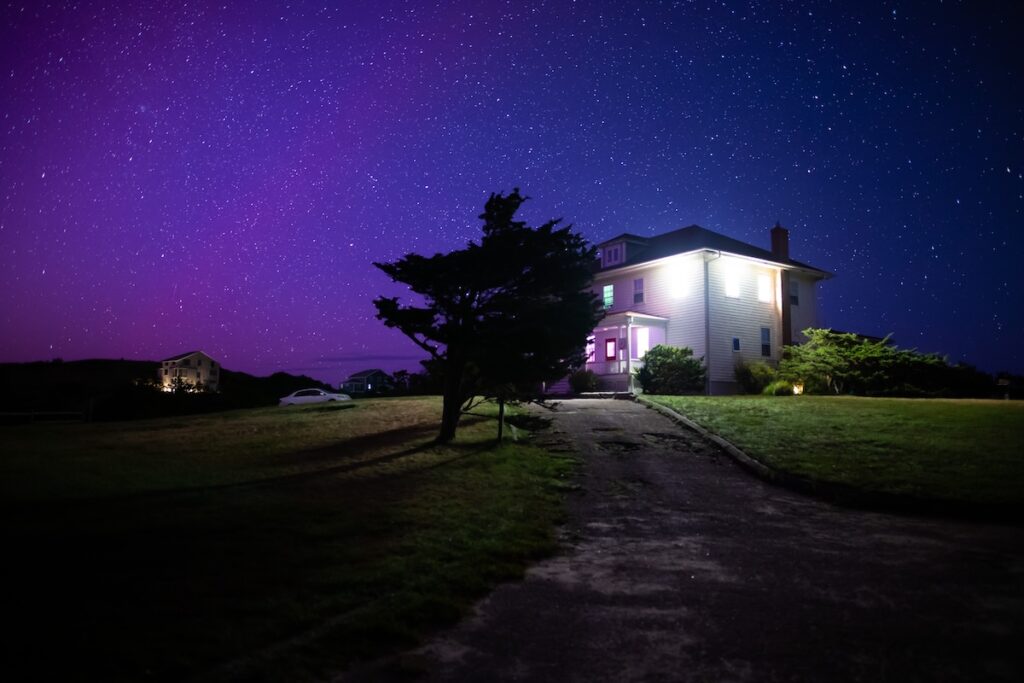
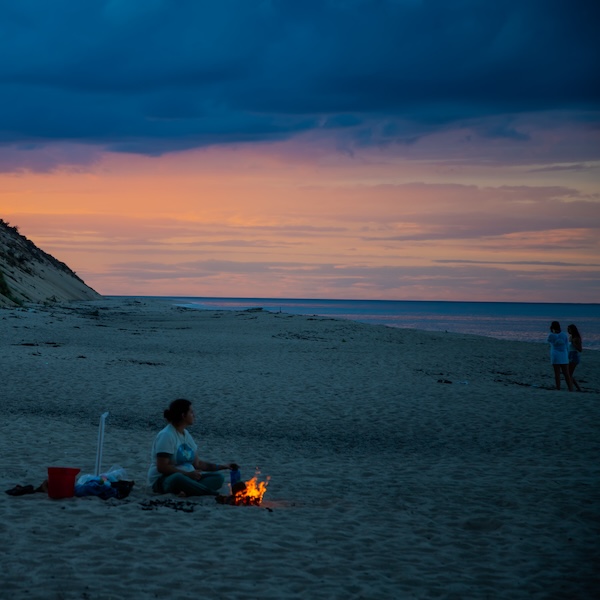
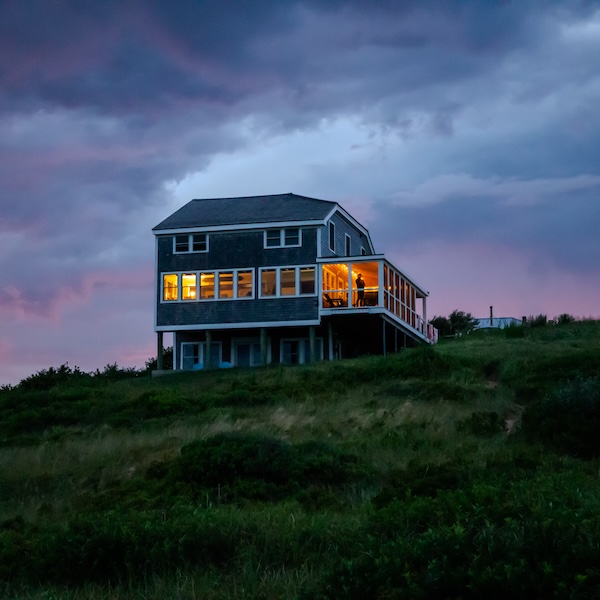
Scenes captured from the Kp=8 storm of Aug 11-12, 2024, from the beach near Truro, Cape Cod, MA. This was a very active aurora, which also coincided with a new moon and the Perseids.
Use the following settings when shooting:
- Time: 1-5 seconds, depending on the intensity of the storm. The aurora moves faster in stronger storms, but it is also brighter, which lets you take shorter exposures.
- Aperture: as wide as possible. The goal is to maximize the SNR of the aurora. Even though shooting wide-open causes corner aberrations, the eye ignores them and focuses on the aurora.
- My experience: I used to own the Sigma f/1.4 DG HSM Art (DSLR version), which has bad corner astigmatism at f/1.4, and would always shoot the Milky Way at f/2.8 to clean up the stars. But I would shoot aurora wide open at f/1.4, since the astigmatism was harder to notice in a brighter aurora scene (example: the first image in this post)
- ISO: camera-dependent, but I typically use 800-3,200. For ISO-invariant cameras (newer Nikons, Sonys), this doesn’t matter as much, unless the scene is overexposed and you clip the whites.
- Save photos in RAW format, as always.
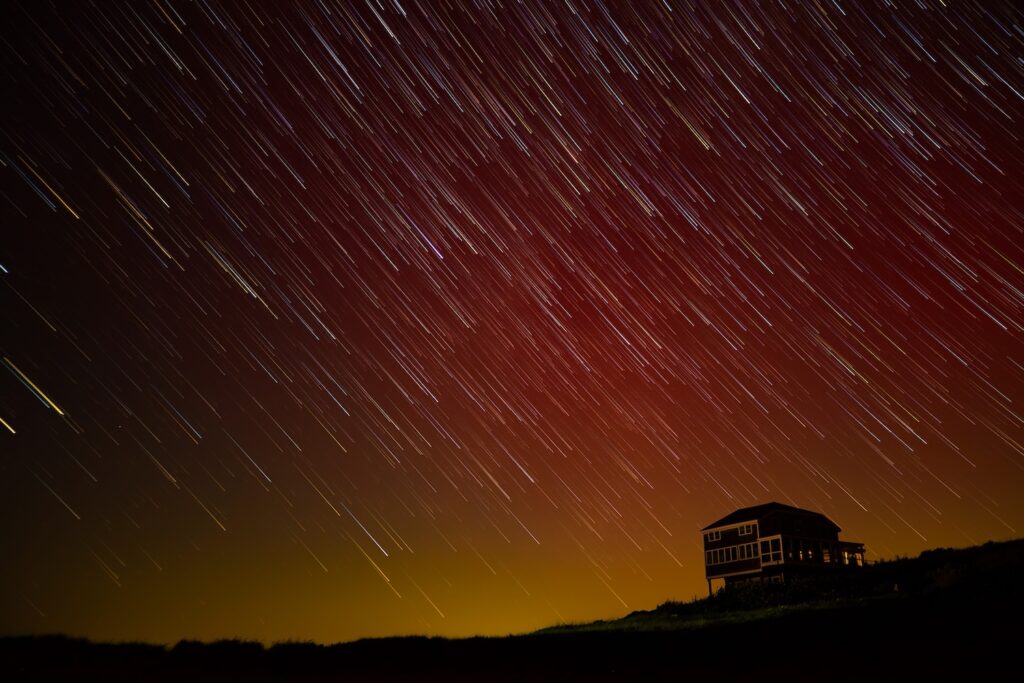
Take time-lapses with an intervalometer (most cameras have a built-in intervalometer in their menu settings). This lets you pick the best frames when the aurora is most active. Plus, the same photos can be combined into a video or stacked to give star trails.
1.3 Set Expectations
As the aurora is intermittent, expect to be out all night, or at least a good part of it. Stay warm, dress for the weather, or rent a cabin or start a campfire.
Also, since the aurora forecast only tells you of the possibility of seeing aurora on a given night (and the odds are usually at most 50%), be prepared for disappointment! Have fun backup plans in case the aurora never shows up, like:
- Go camping and enjoy a fire
- Bring a telescope, do some observing or DSO astrophotography
- Take some Milky Way photos with the camera
- Travel to a spot that has great daytime activities too
This way, you will enjoy the trip even without an aurora, and will be more likely to take these trips in the future. Catching aurora is a lot about luck, but luck plus persistance equals certainty. Go out often enough and you will see it — multiple times. And often you will get doubly lucky and take home good non-aurora photos as well. (My experience: over the past 18 months, I have seen aurora 7 times. And I never even traveled to Alaska or Iceland.)
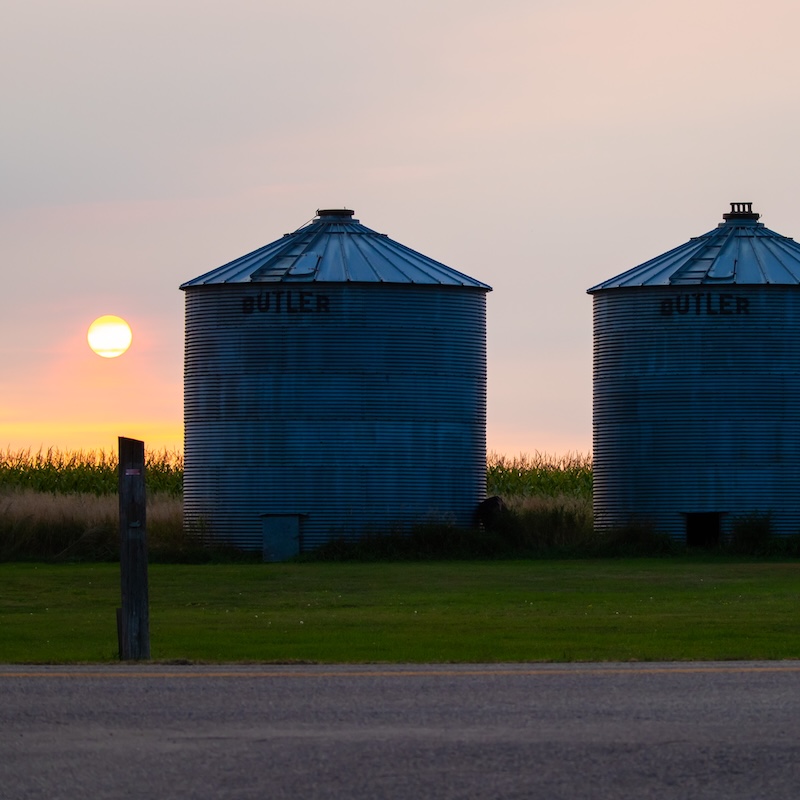
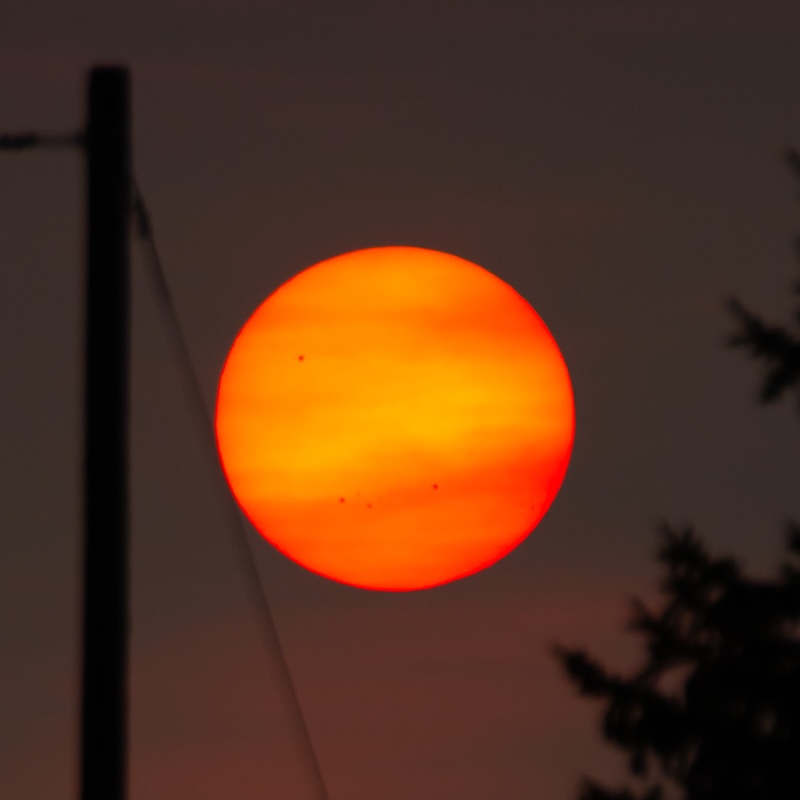
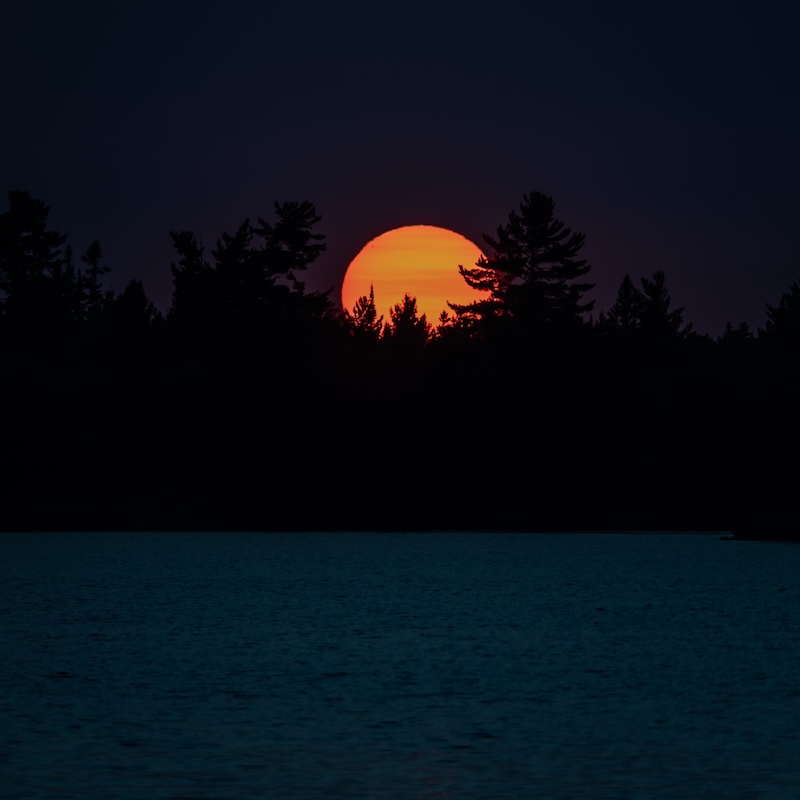
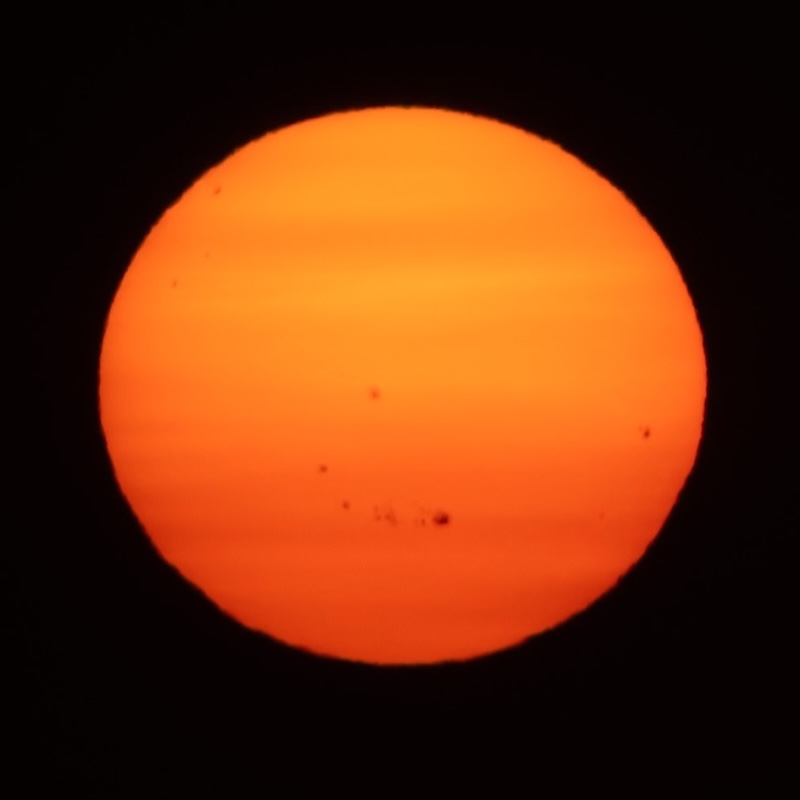
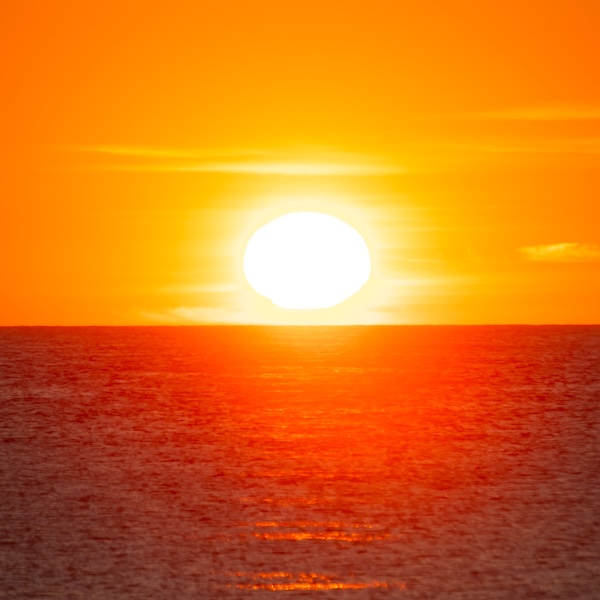
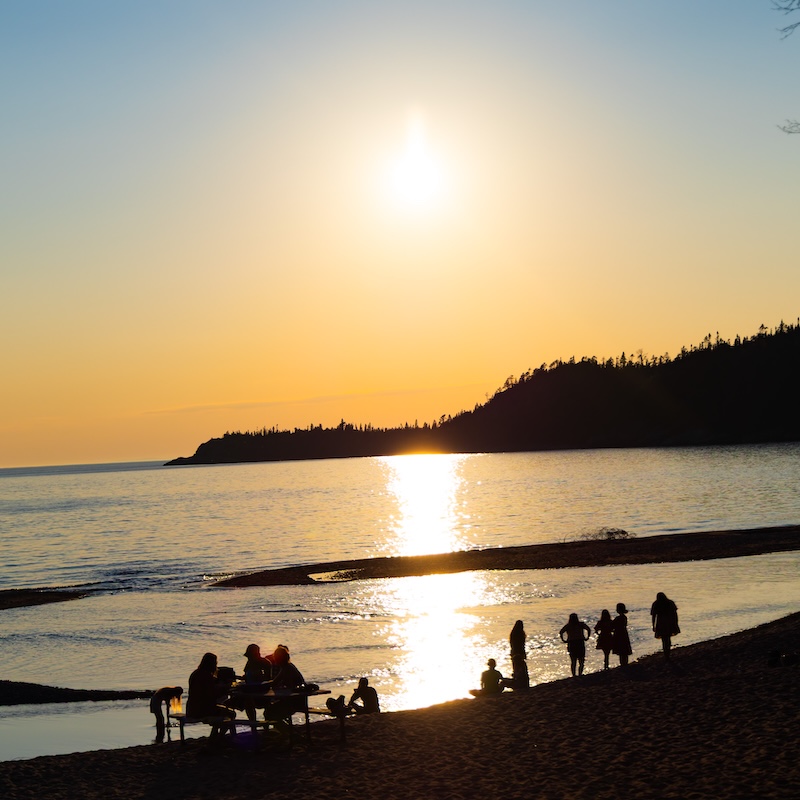
Above: a tale of two solar storms. Left: the sun from Pettibone, ND (9/7/24), showing 3 prominent sunspots. There was no aurora that night. Right: the sunset at Rainy Lake, MN (8/30/2025). A mild aurora danced over the lake around 1:30 am.
1.4 Edit Vigorously
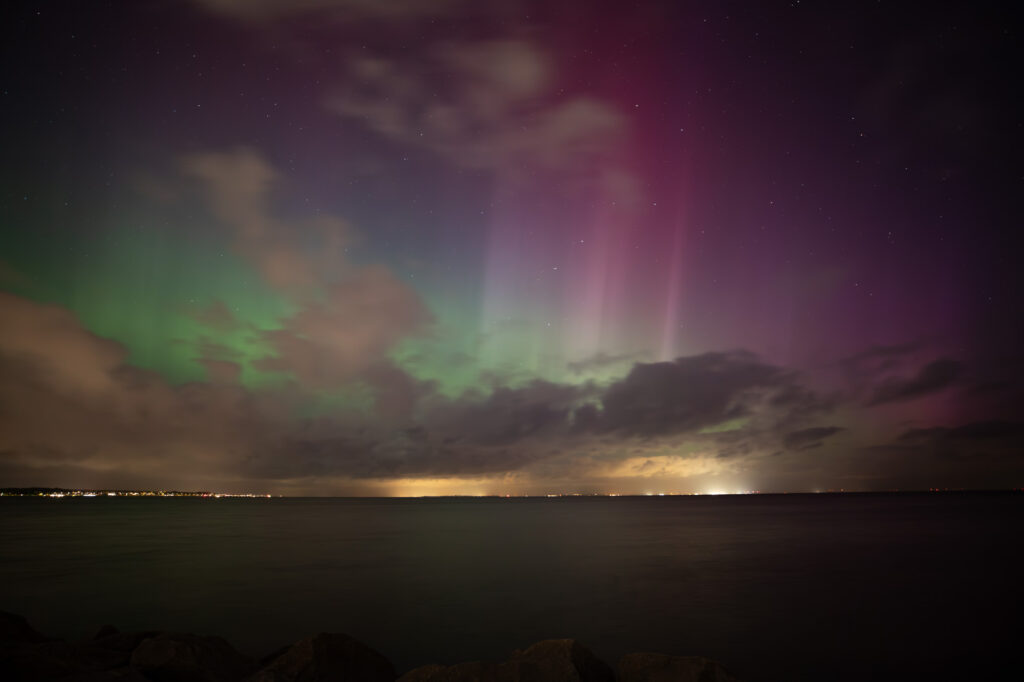
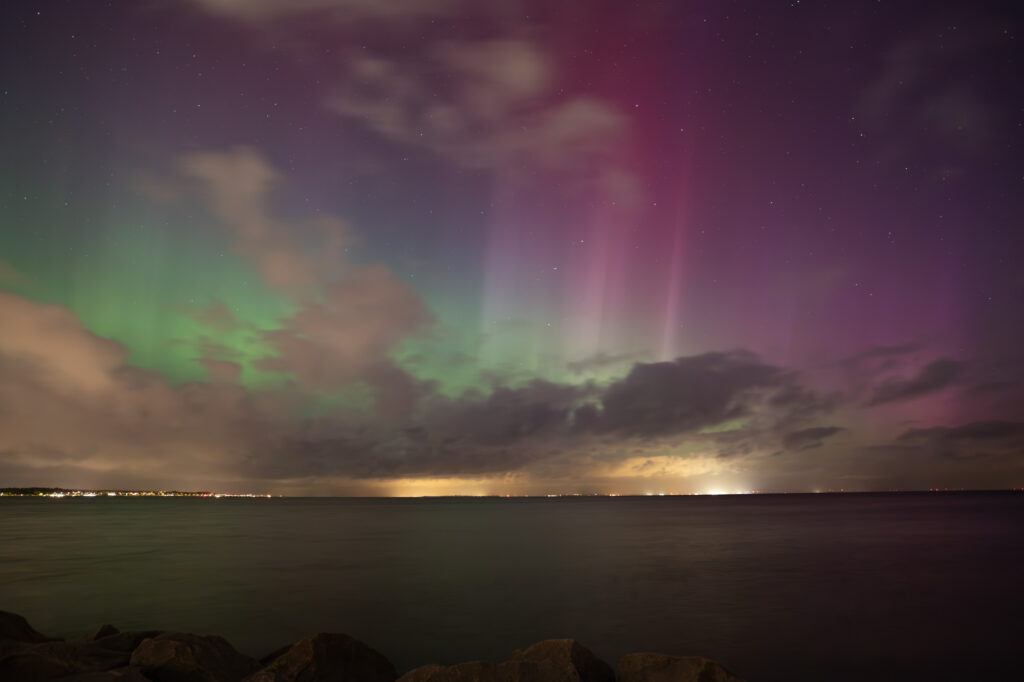
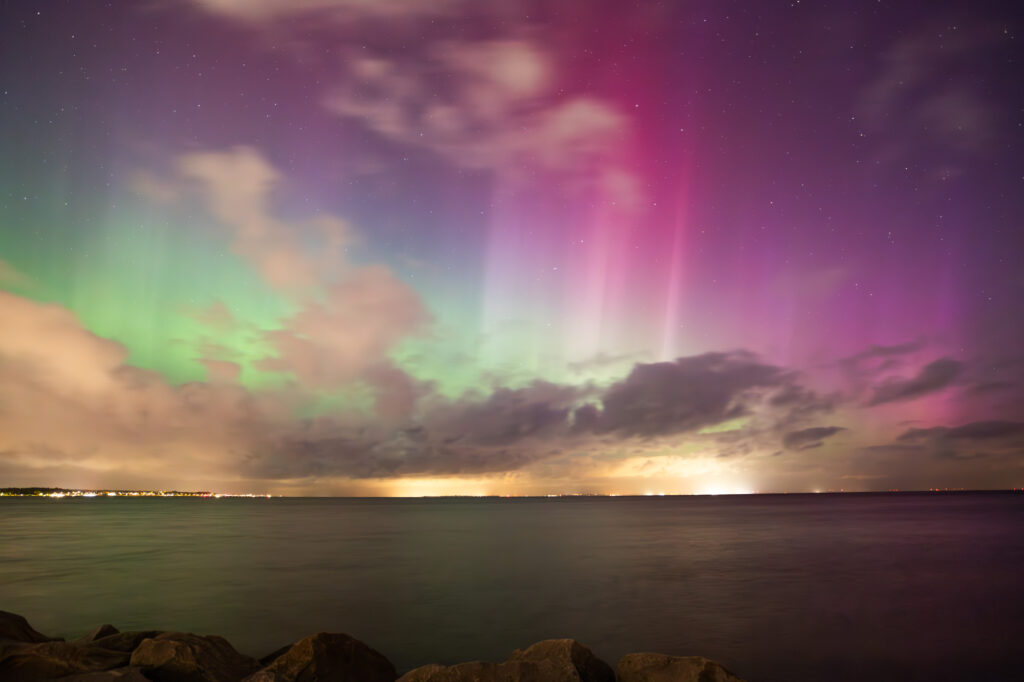
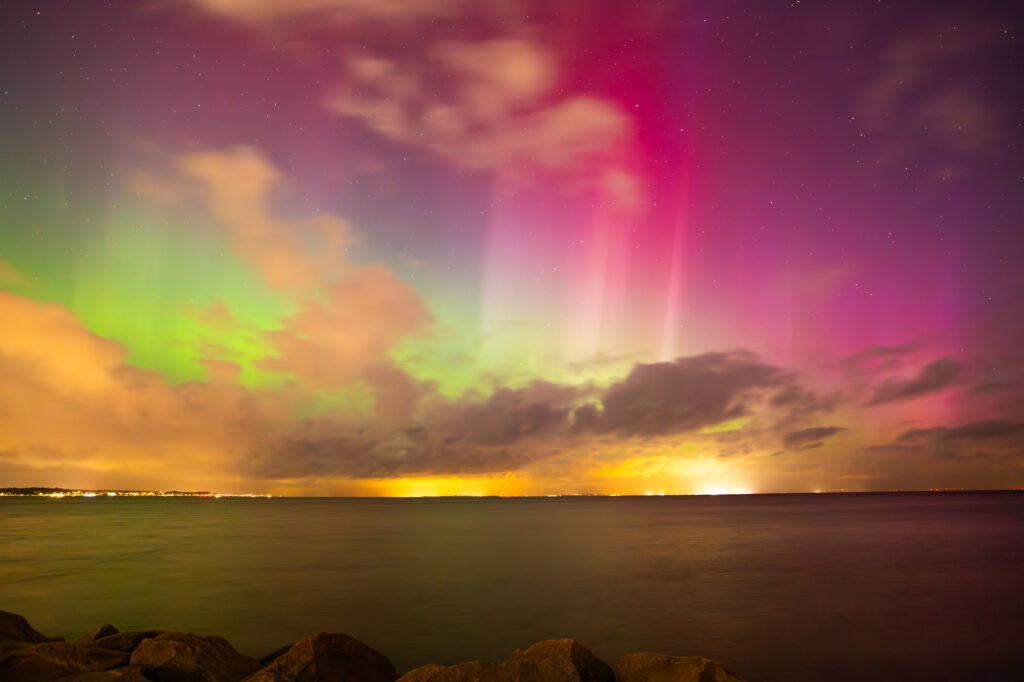
Bright aurorae will already appear colorful on raw images, but processing makes them much more striking, while staying true to the original image. I find aurora editing to be easier than Milky Way or DSO editing, requiring less enhancement to obtain a quality image, probably because the originals are brighter and more colorful to begin with. The steps that I follow are given below:
- Start with a RAW image captured by the camera. Always shoot RAW! JPEGs have compression and reduced dynamic range, which limits the amount of editing you can do. If you run out of space, you can always convert to JPEG later.
- Denoise the image, ideally with an AI denoising algorithm like Lightroom’s built-in noise reduction or NoiseXterminator.
- Correct the vignetting using the lens profile.
- Increase the brightness and contrast to bring out detail. Adjust the lights / darks / whites / blacks sliders to taste.
- Adjust the color temperature and tint to give the desired balance of reds/purples, greens, and blues. Bump up the vibrance and saturation (but don’t push the saturation too far as this looks unnatural).
- Push the clarity and dehaze sliders to the right, bringing out the aurora against a black background.
At this point, go back to the earlier steps and readjust the sliders until everything looks perfect. Below, I give an example based on an image taken during the 10/9/24 solar storm (Canon EF 16-35 f/2.8L III at 17mm f/2.8, 4 sec, ISO 3200). Click on the tabs to see how each step changes the image.
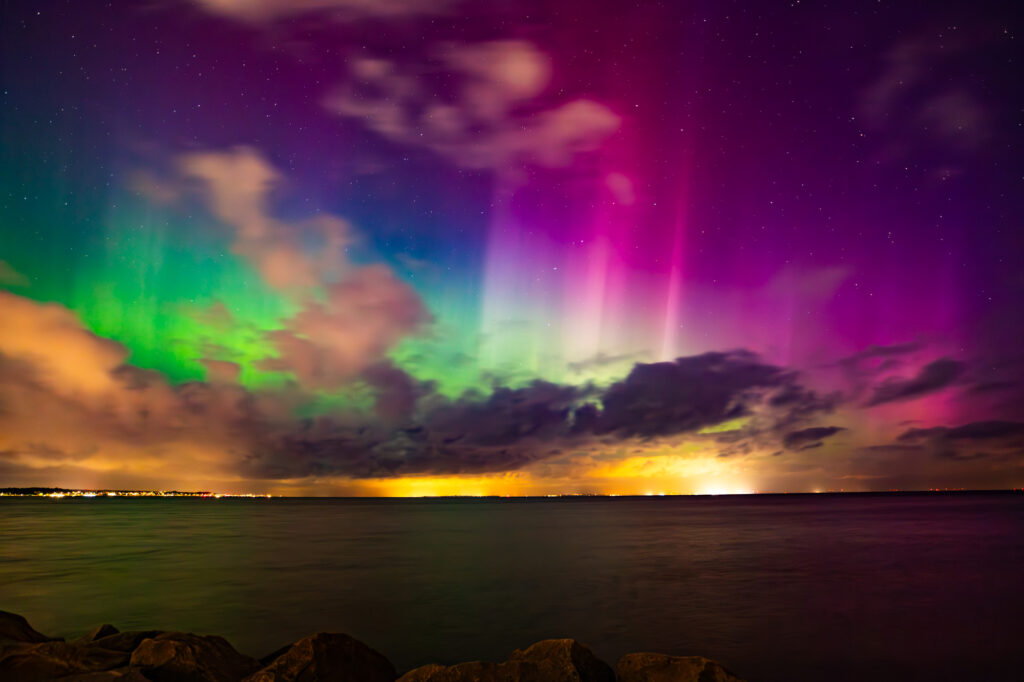
One of the big technological changes in my one year of aurora photography has been the spread of reliable AI denoising software. When used correctly, AI denoising reduces image noise without blurring the image. I strongly recommend it. It is not “cheating” and doesn’t replace good technique, but it can subtly make a good photo much better and more detailed. Below, I give two aurora photos, the first using Lightroom’s standard denoiser, and the second with the new AI denoise tool:
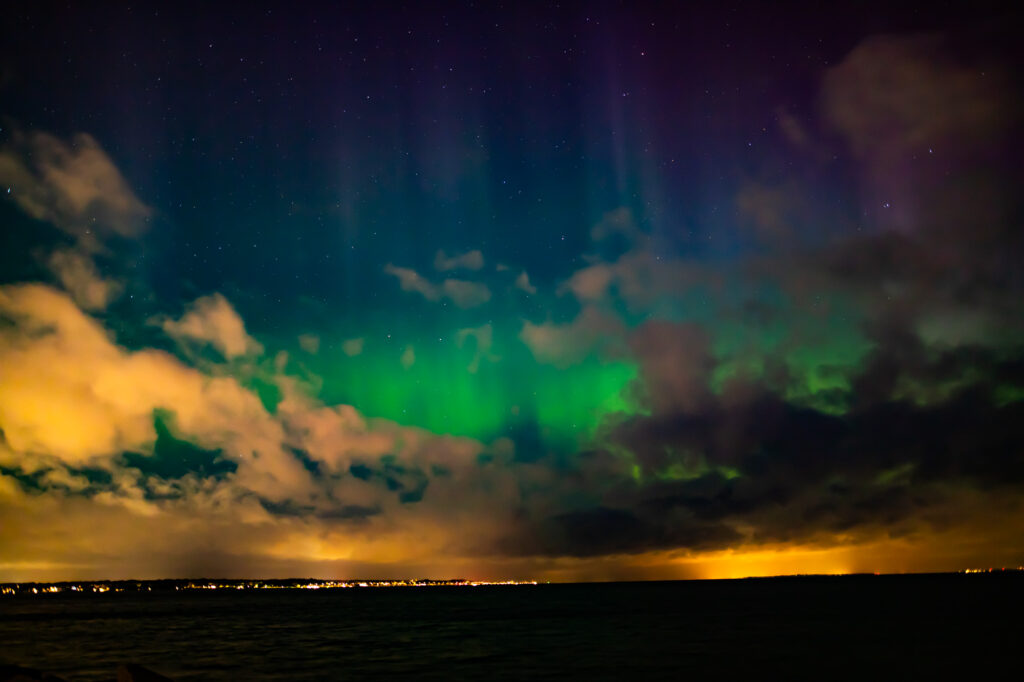
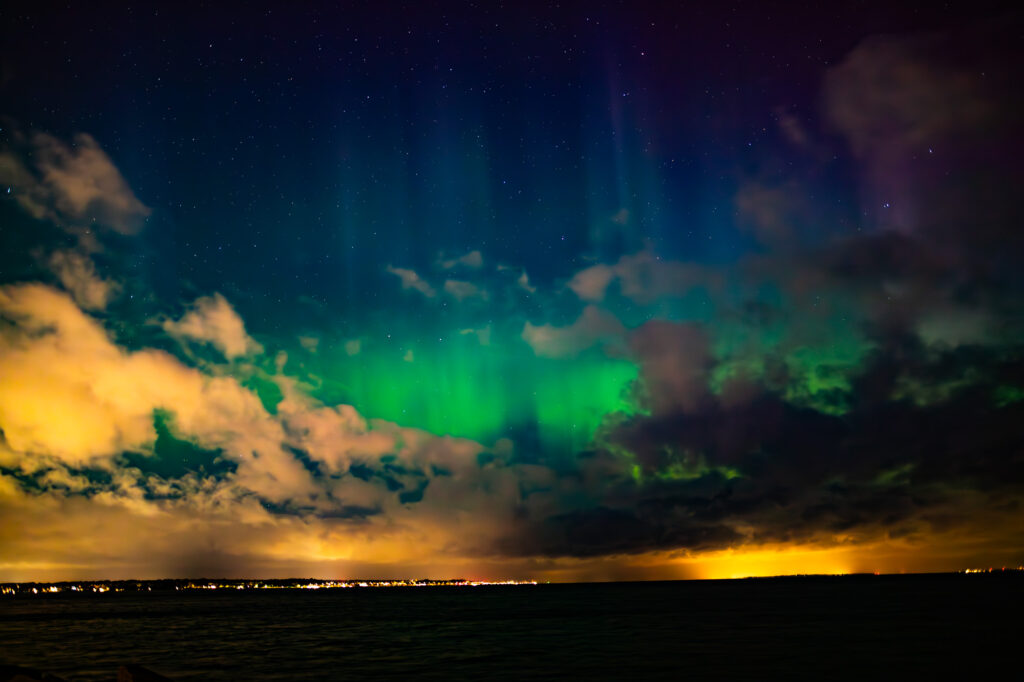
With AI denoising, I was able to pull more detail out of the image (increasing contrast, clarity) without amplifying the noise. Plus, we see more stars, which tend to get washed out by conventional denoising algorithms.
To create timelapse videos, I use ffmpeg. The following code converts a folder of JPEG images into an MP4 movie:
ffmpeg -framerate 30 -pattern_type glob -i 'OH3A*.jpg' -vf format=yuv420p movie.mp4
Notes:
- If too grainy, apply denoising with the keyword
-vf "hqdn3d=4:3:6:6,format=yuv420p". The numbers refer to (lum_xy : color_xy : lum_t : color_t). Higher values → more denoising. I do not use AI denoising for video frames as it creates patchy artifacts that become obvious in a video. - If dimensions are not even, ffmpeg will throw an error. Crop to even by adding
crop=trunc(iw/2)*2:trunc(ih/2)*2to the-vflist of commands.
2. My Aurora Story
2.1 Starting with a Bang
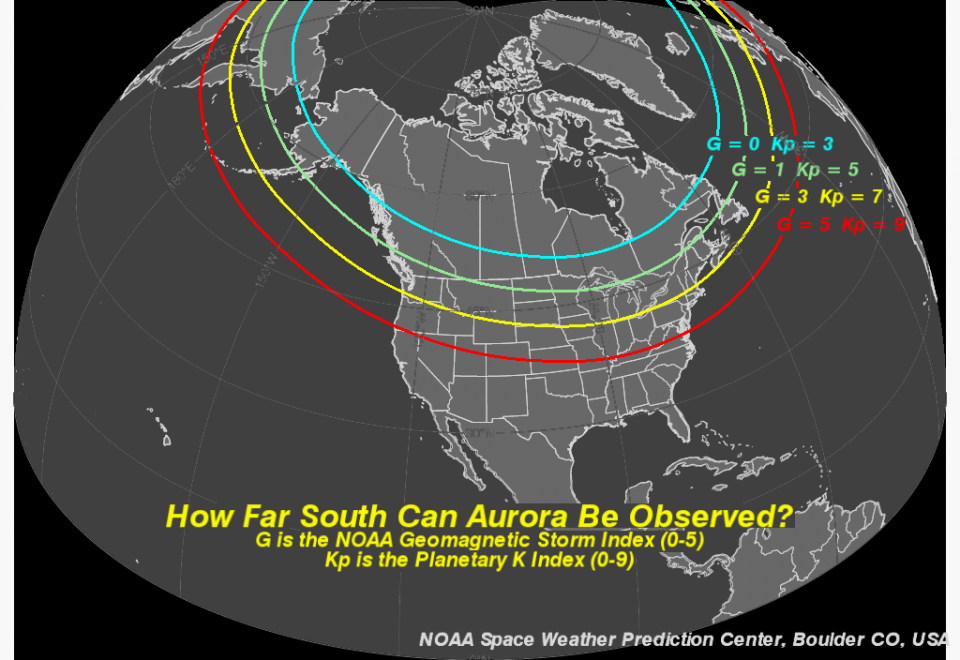
It was the end of the 2024 Conference on Lasers and Electro-Optics in Charlotte, NC. I had just finished my lecture and was on the way home, when a good friend from China messaged me and asked about the solar storm. At the time, I had never done any serious photography, but this was a once-in-a-decade event, so of course I tried to catch it! I canceled my return flight, booked a next-day morning ticket to Minneapolis, rented a car, and drove all the way up to northern Minnesota, staying in a cabin 40 miles from Duluth. These choices were informed by aurora visibility maps like the one below. Northern Minnesota, North Dakota, and Maine are the best places to see aurora in the continental U.S. The weather was also clear. The drive took about 3 hours, and it was already dark on reaching Duluth city. As I explained in my first post, the visual experience was stunning, not so much the photos. Even new-ish phone cameras (2023 iPad Pro in my case) struggle in low light.
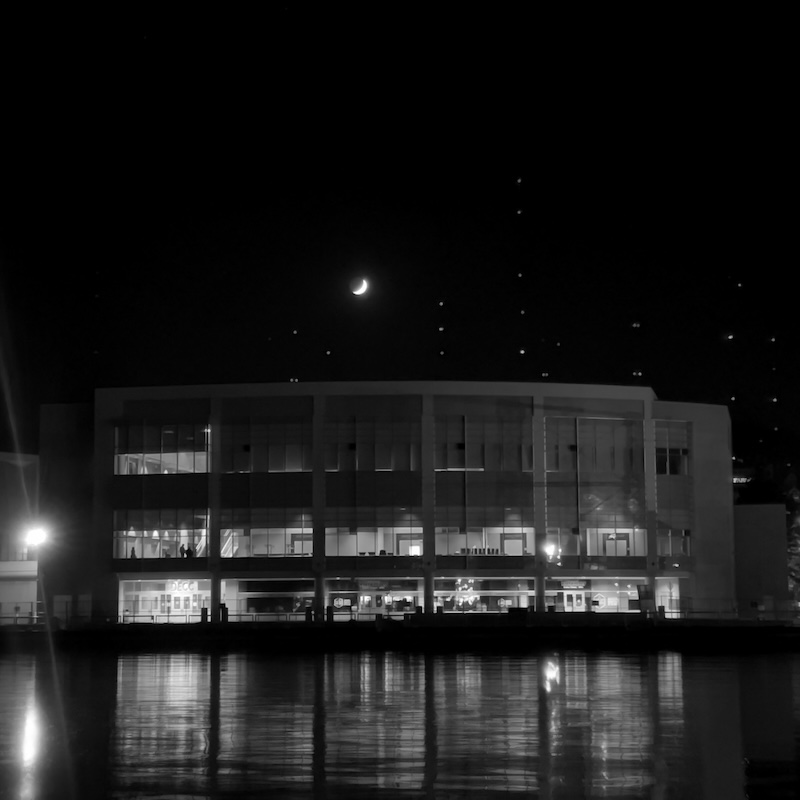
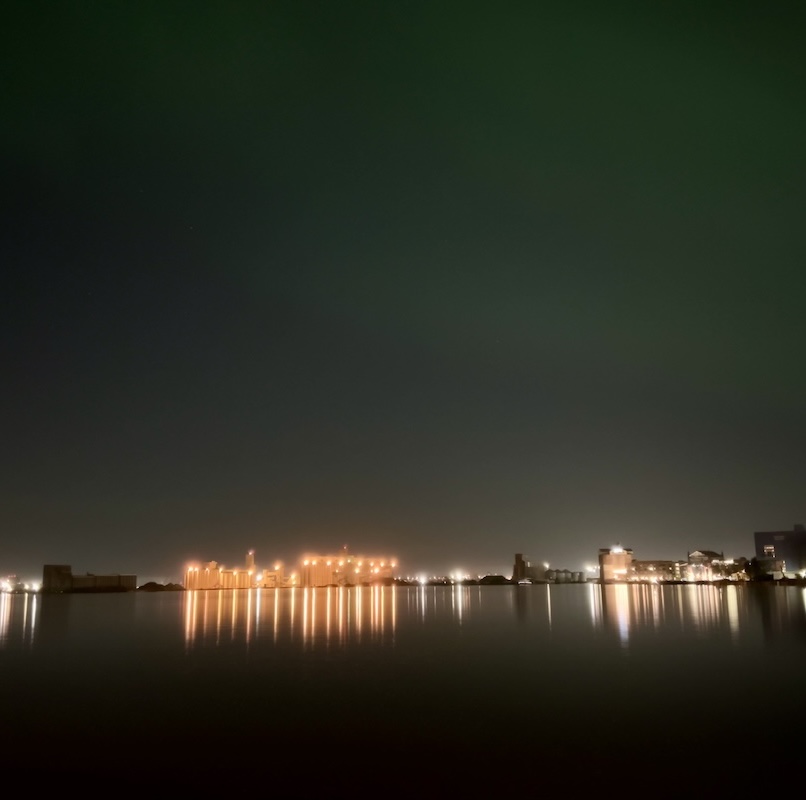
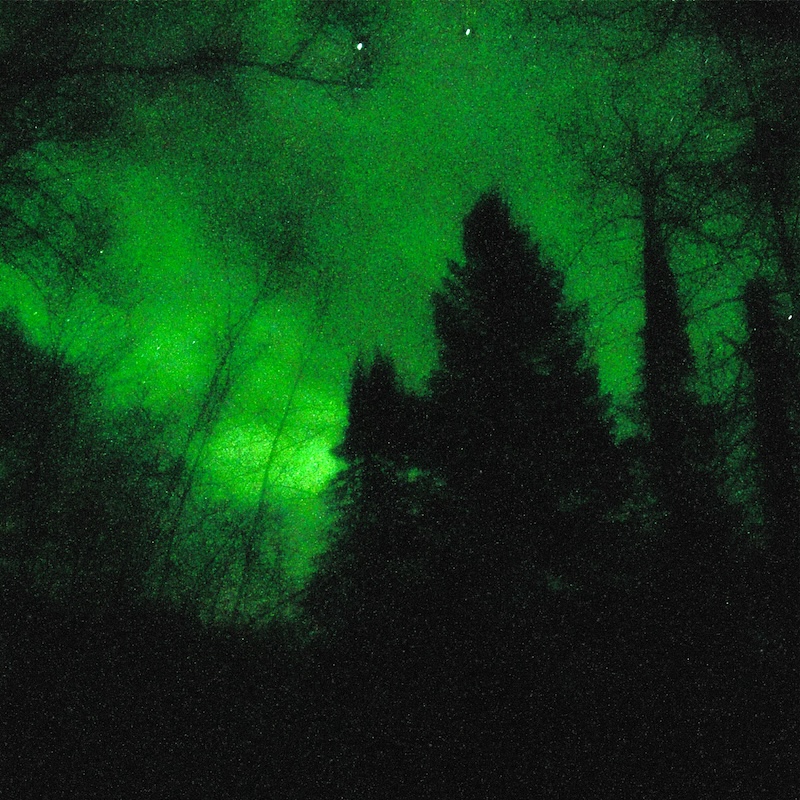
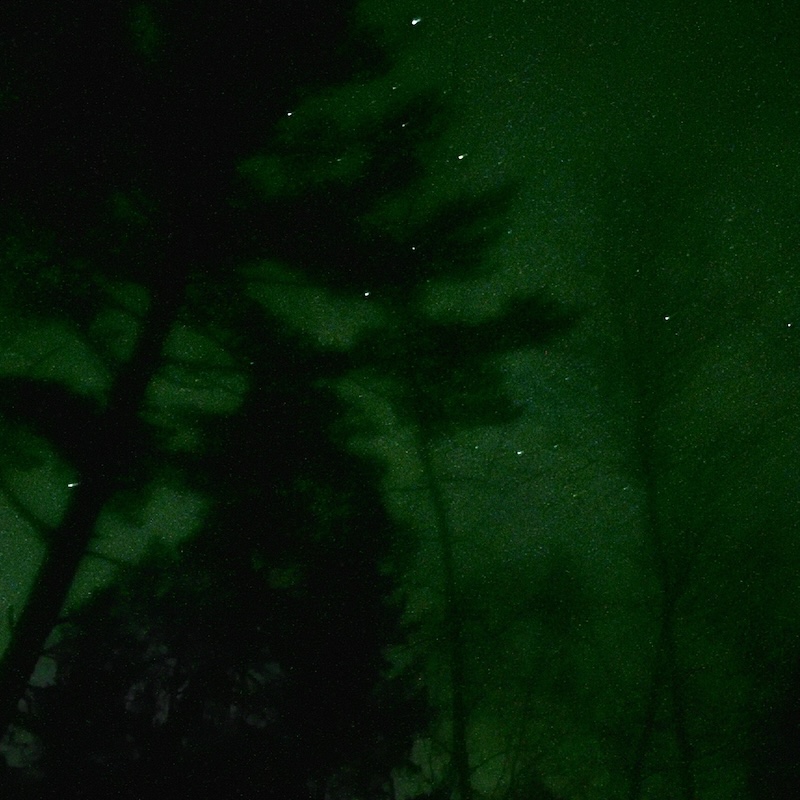
There’s more to the story. After the less-than-prepared first night, NOAA put out a prediction of weaker Kp=6 storm for the following day. I had booked a cabin for the weekend, so I tried my luck again. Assuming (wrongly) that light pollution was the biggest factor limiting aurora visibility, I drove another 50 miles to a spot called Honeymoon Bluff, inland from Grand Marais and close to the Boundary Waters Canoe Area wildernesss. This has a Light Pollution ratio of 0.009 (0.9% of total sky brightness is artificial), the darkest dark-sky location I have been to in the U.S. Unfortunately, that night also had smoke from Canadian wildfires — so no sky, and no aurora.
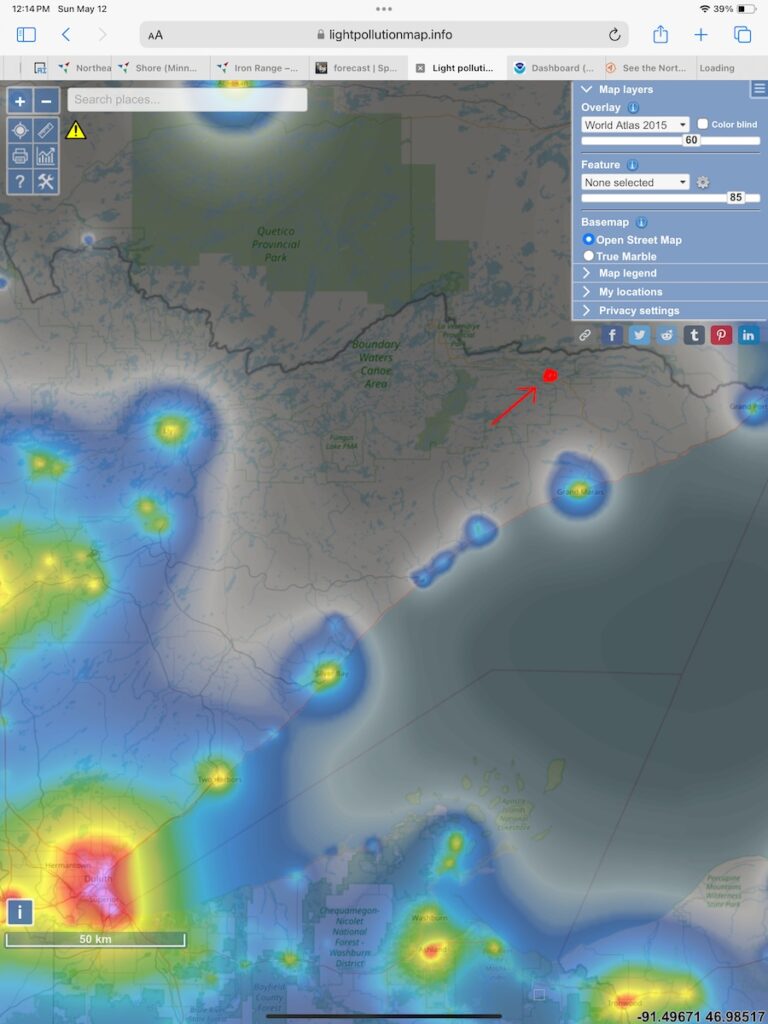
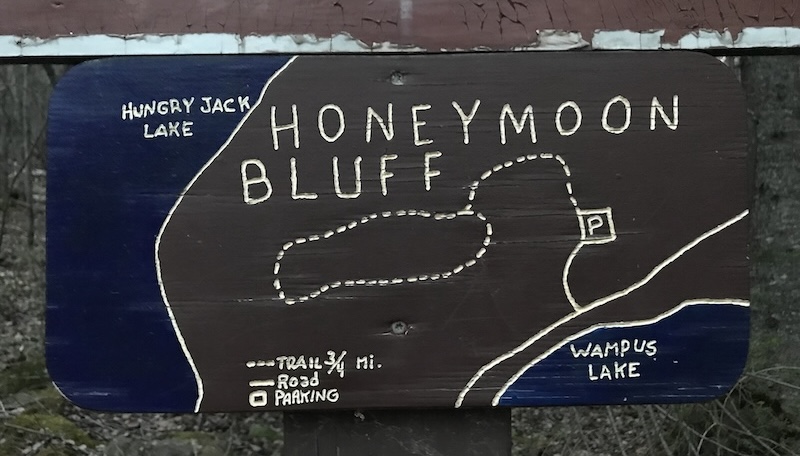
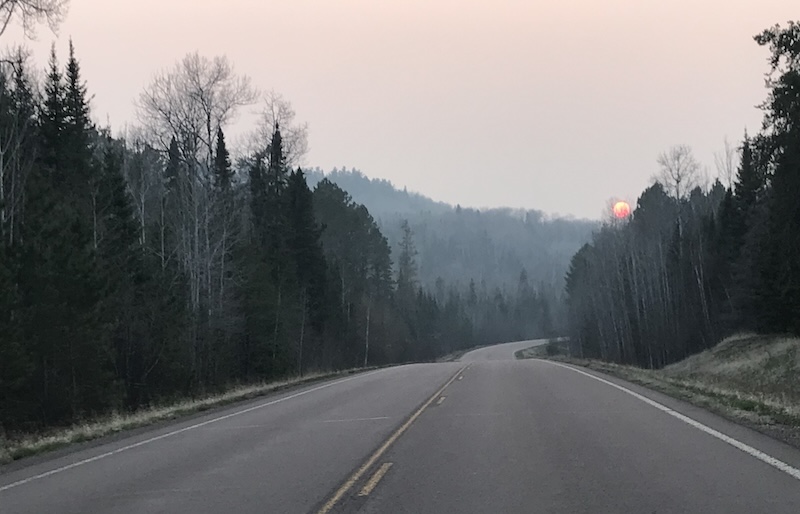
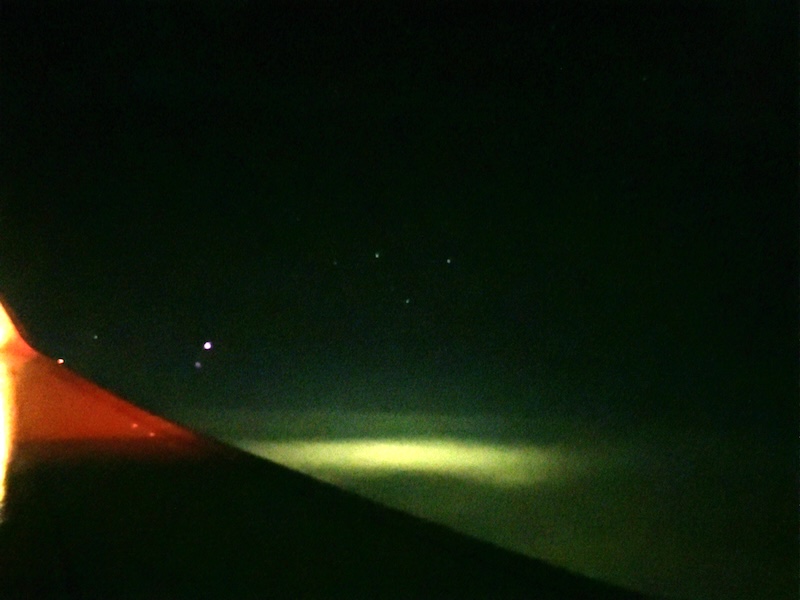
There were a couple of other attempts to catch aurorae with the iPad. All of these are unlikely to be aurora. I saw a green glow from the airplane returning from MSP — but this is probably city lights and not aurora. I went up to northern New Hampshire and caught a green glow on 5/31, but it was too noisy to make out any structure. Some cameras produce a green background from dark counts.
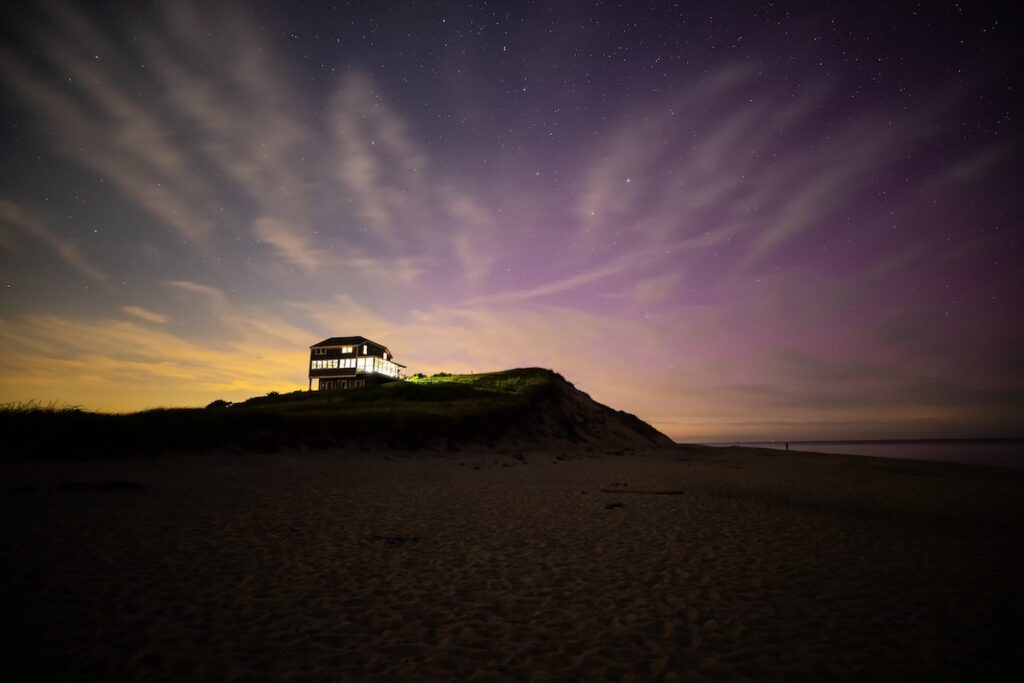
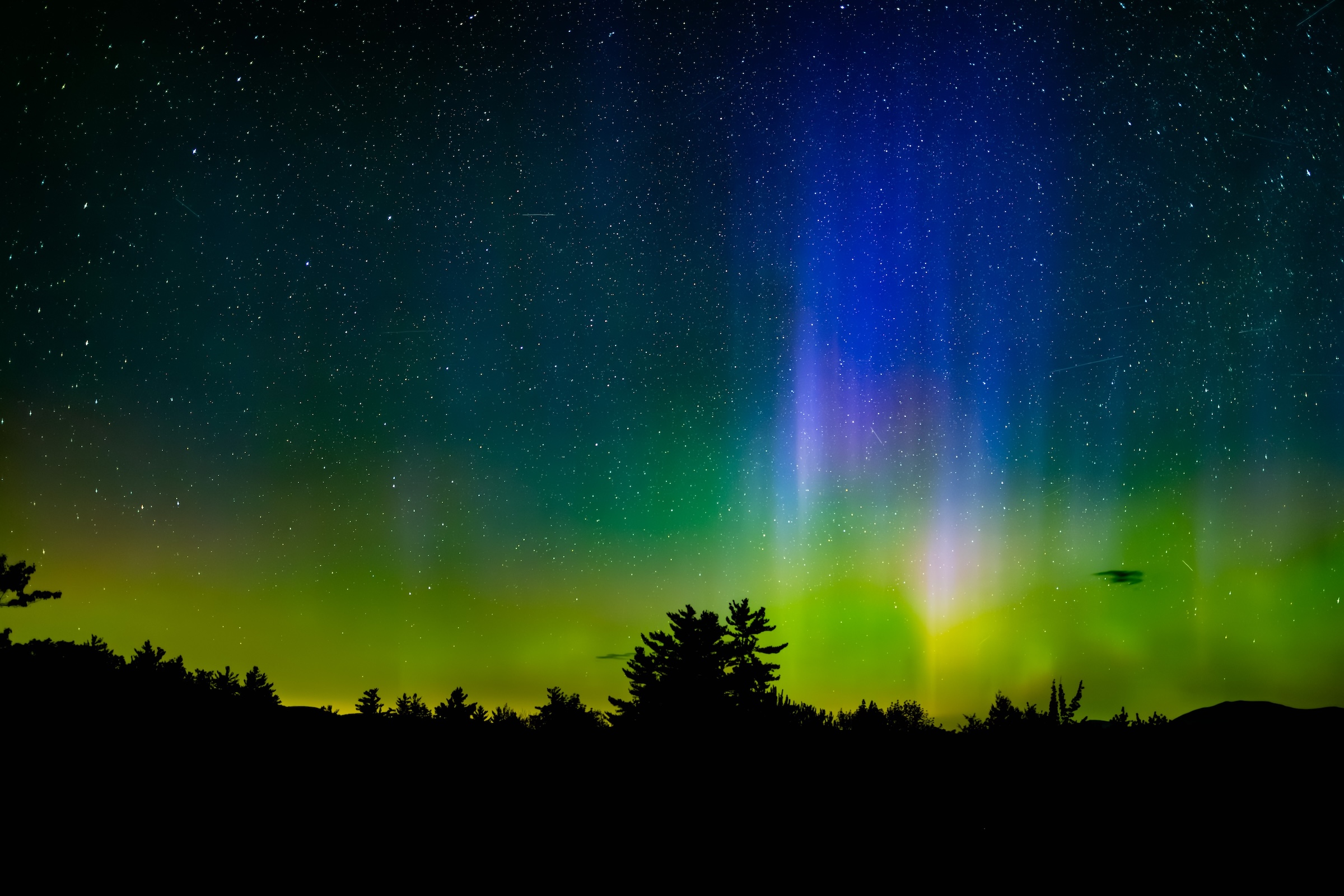
My first “good” aurora was the event of 8/11/24 (peak Kp = 8). This one was a coincidence. I had just bought my camera and lenses a month earlier and was out at Cape Cod for the weekend to take photos of the Perseids. Early in the night, the aurora was visible as a faint purple hue, something I only picked up on during postprocessing. But after midnight, it got really bright.
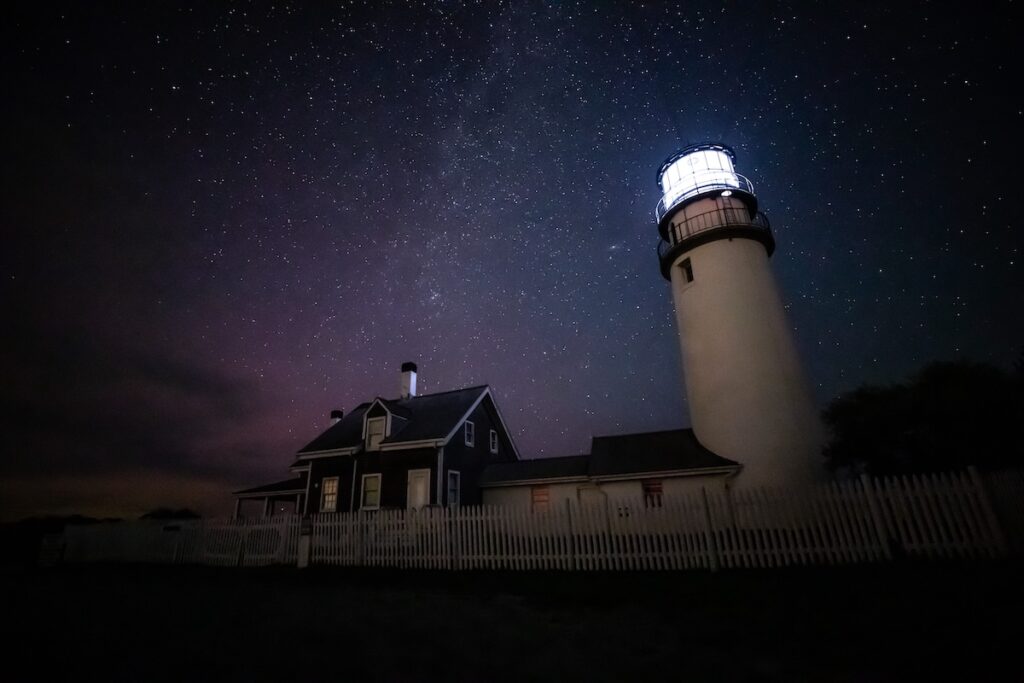
There was another group of photographers up at the lighthouse, and they alerted me to the aurora. You can see one of them in the circular fisheye photo below. The fisheye catches everything. By about 2:00 am, I set up the camera to take a time lapse for a couple hours and went to sleep. Ironically, that’s also when the aurora was strongest. But at least I didn’t miss it!
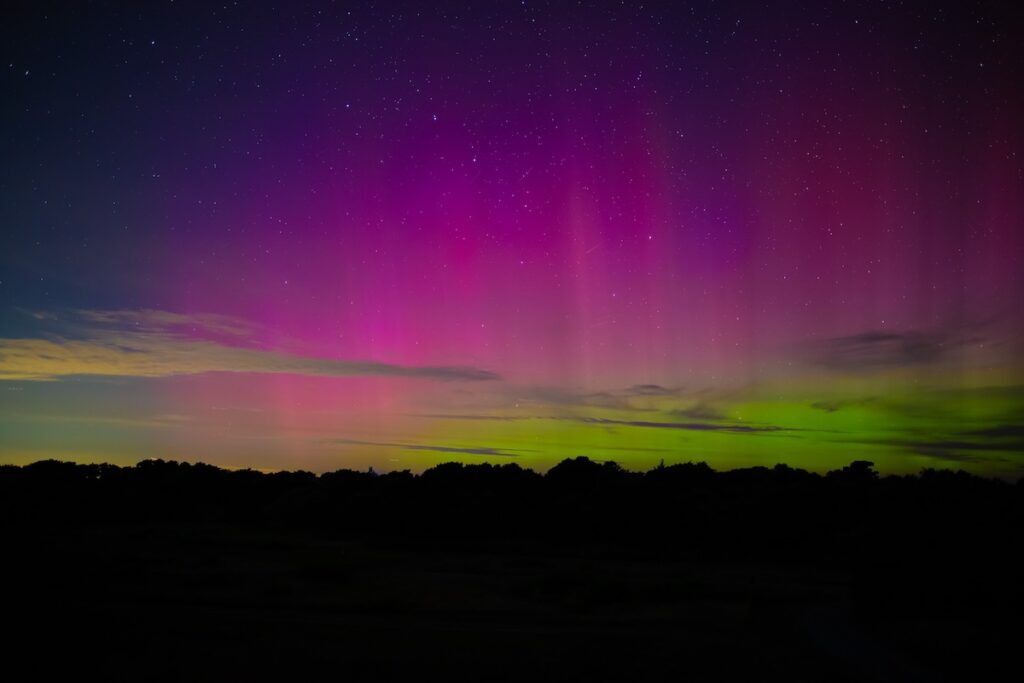
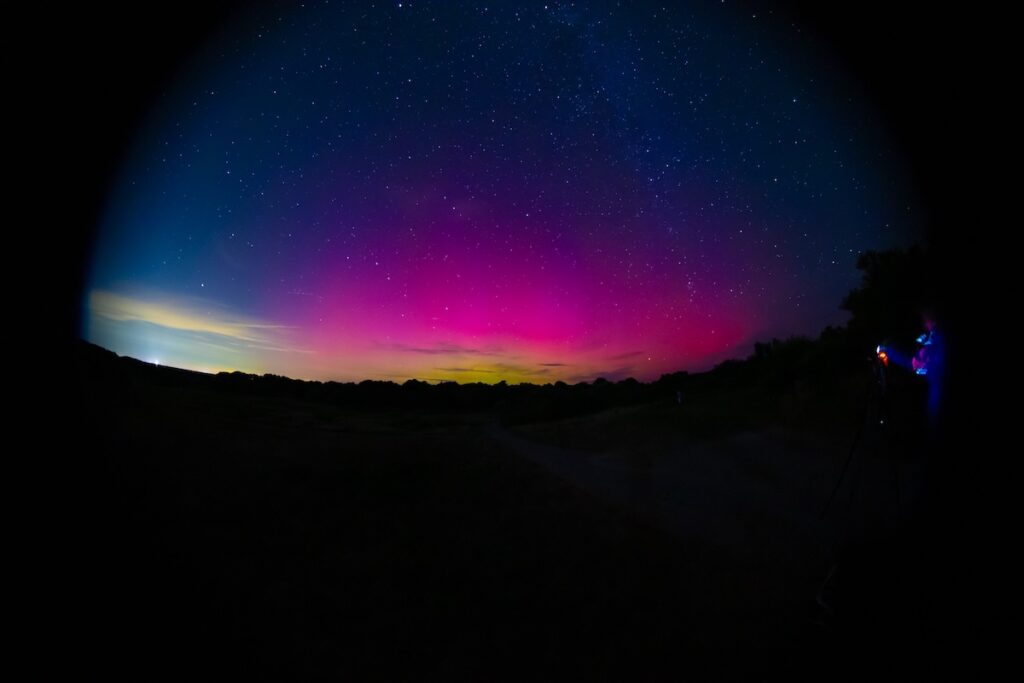
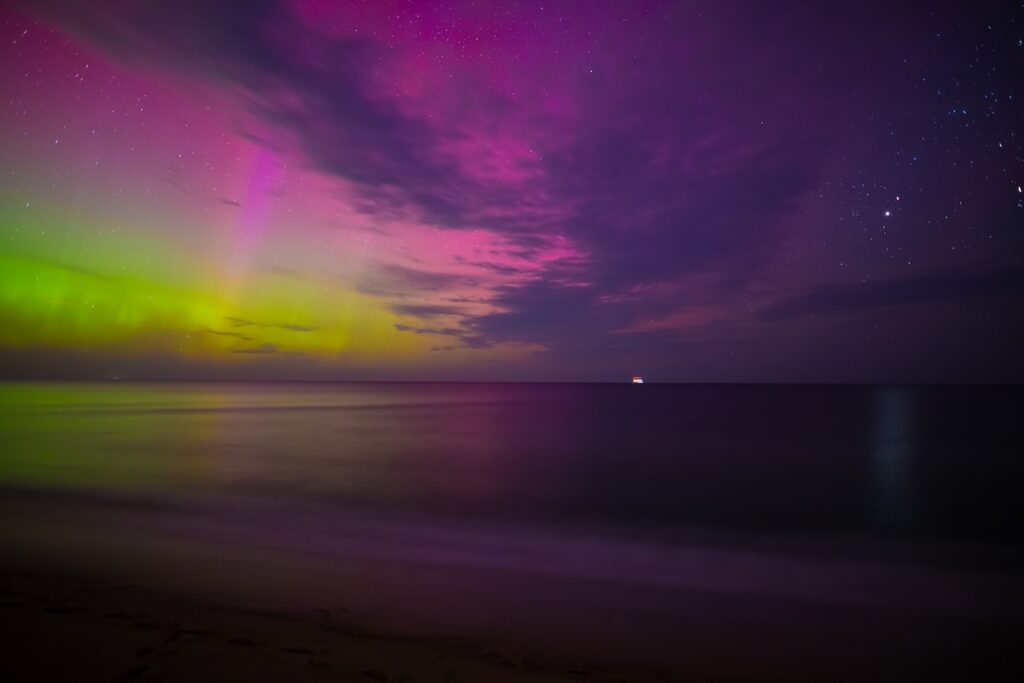
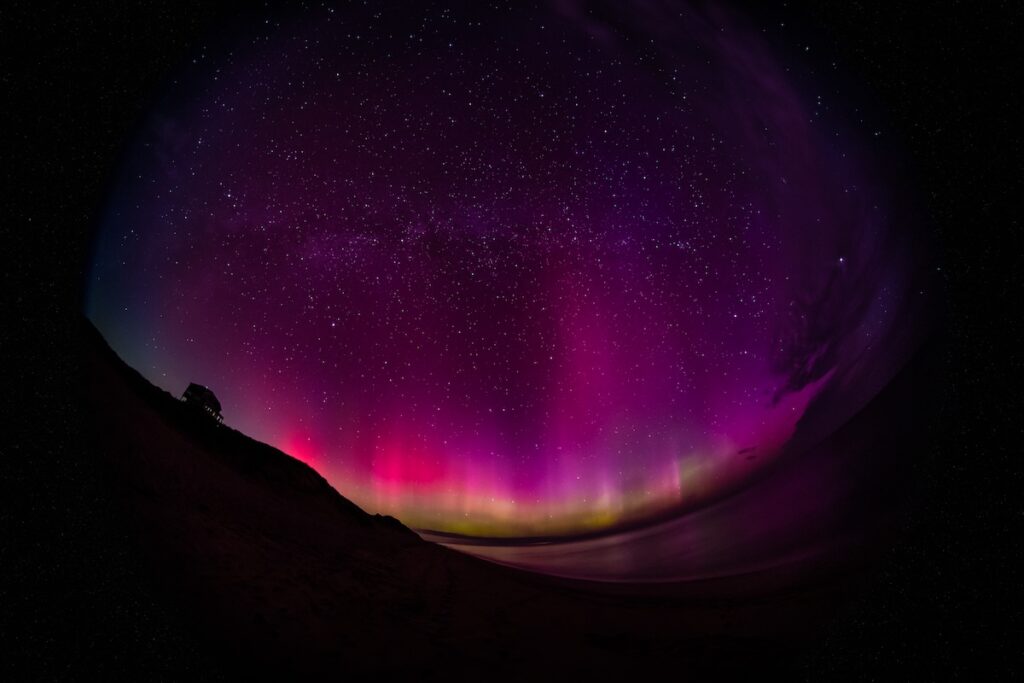
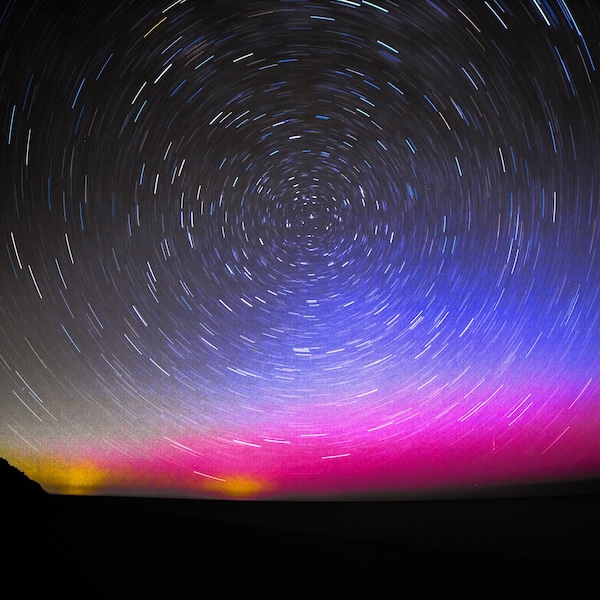
I stayed a second night in the hostel to try to get another shot, but the aurora was much weaker the second night, almost not visible at all. But in a long star-trail time lapse (albeit with the wrong ISO settings — that’s why it’s so grainy), you can make out a very faint purple glow.
Next, there was the event of 10/10/24 (Kp = 9-), the third strong storm in less than 6 months! I had arrived in Copenhagen the previous night to give a lecture. Just before going to sleep, the aurora app notified me of a very strong event. It was expected to peak in the early morning (~3am). Fortunately, Copenhagen has a 24-hour metro system. This allowed me to reach the port area Nordhavn, a couple miles outside the city center with a clear view north over the water.
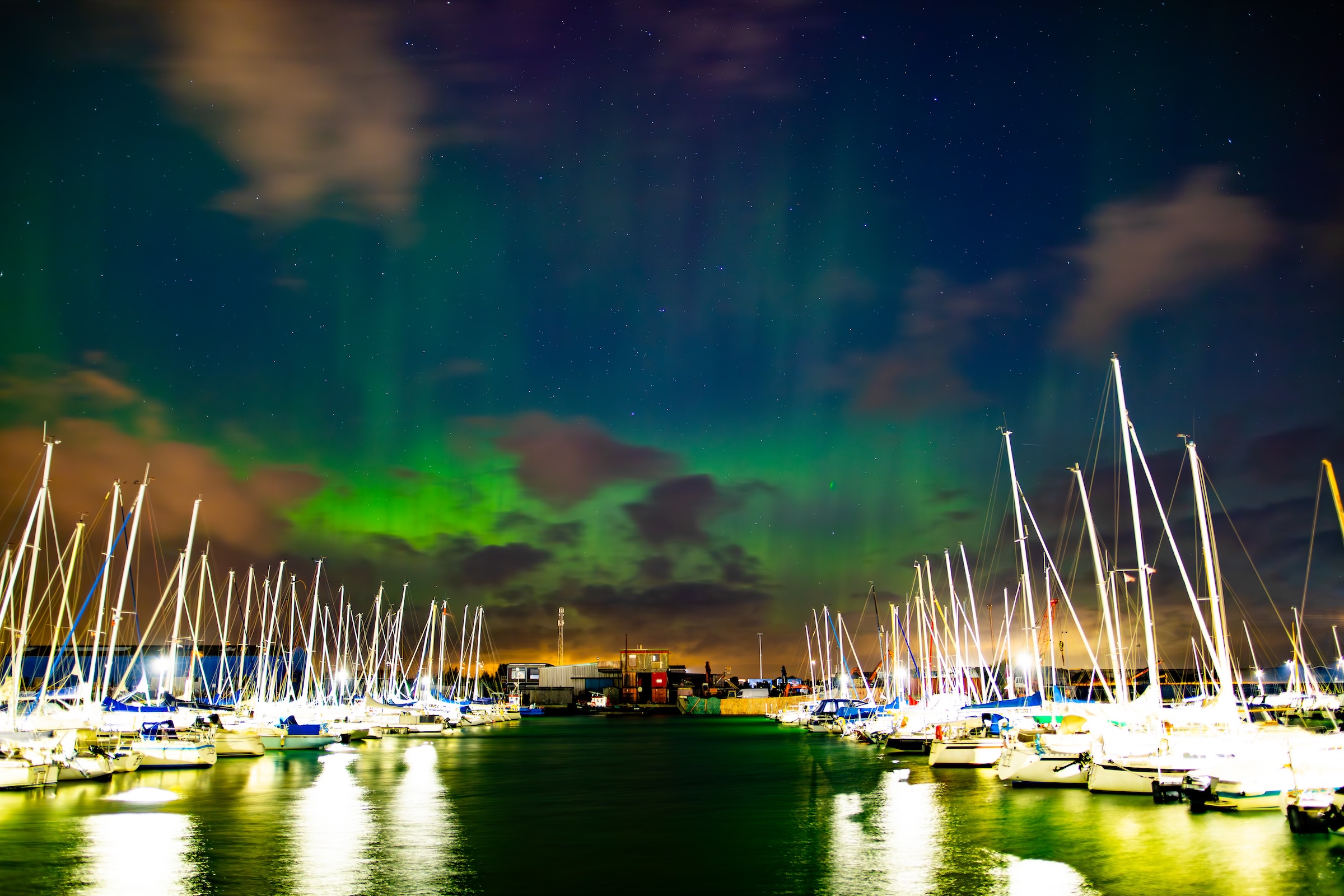
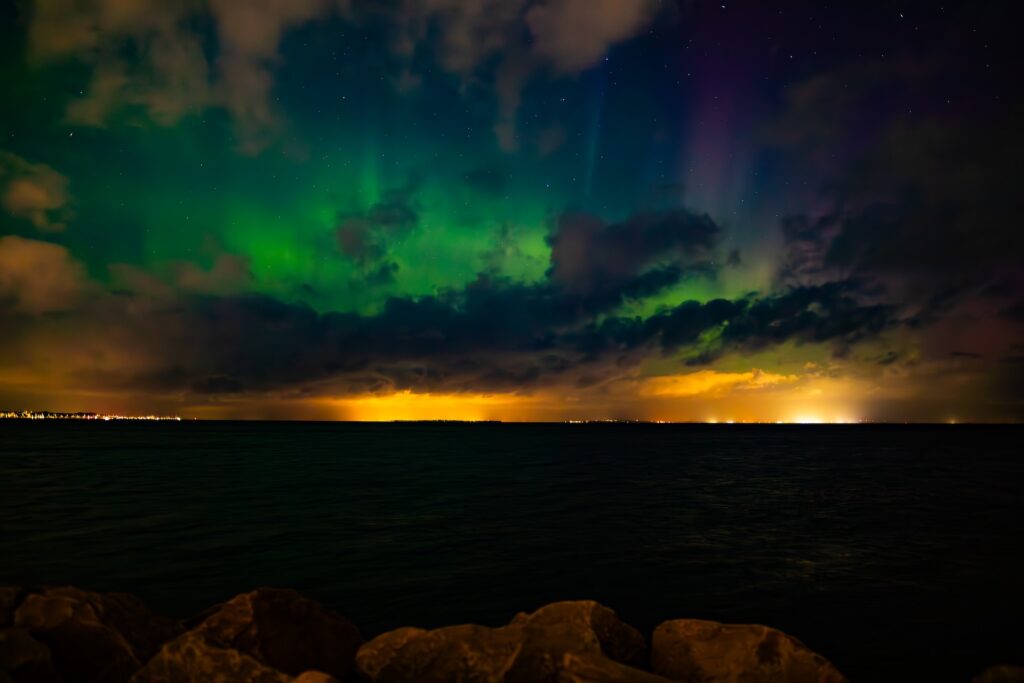
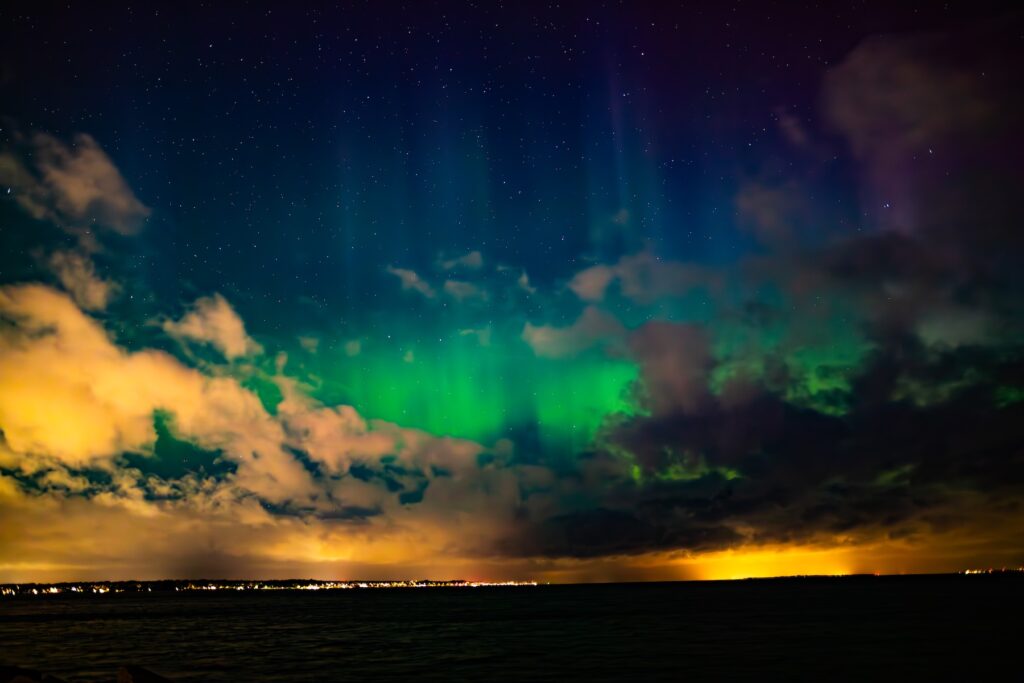
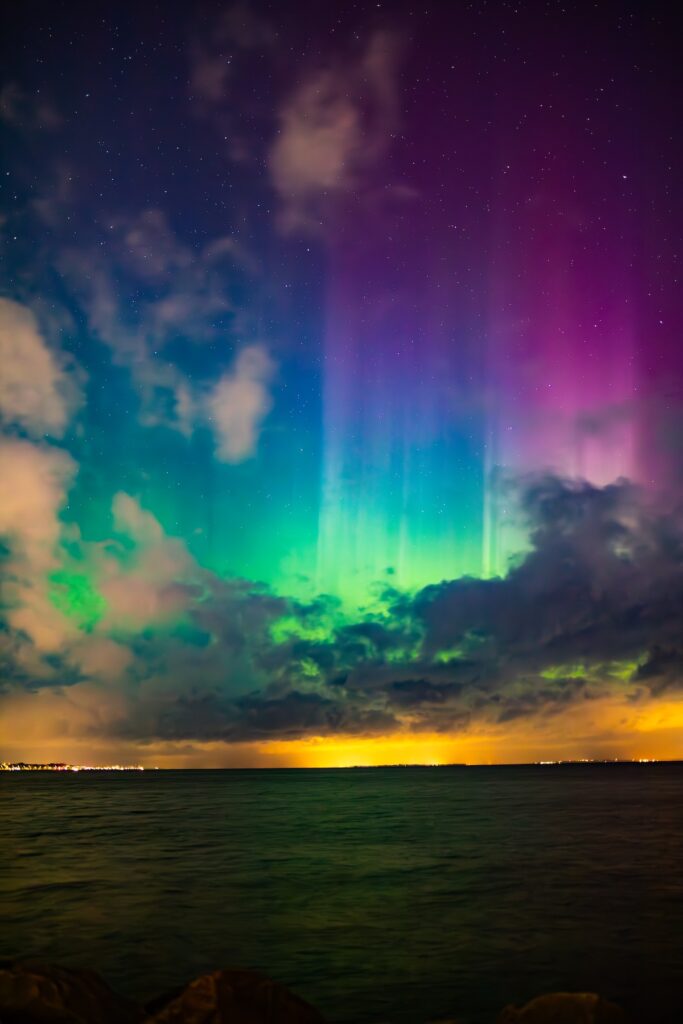
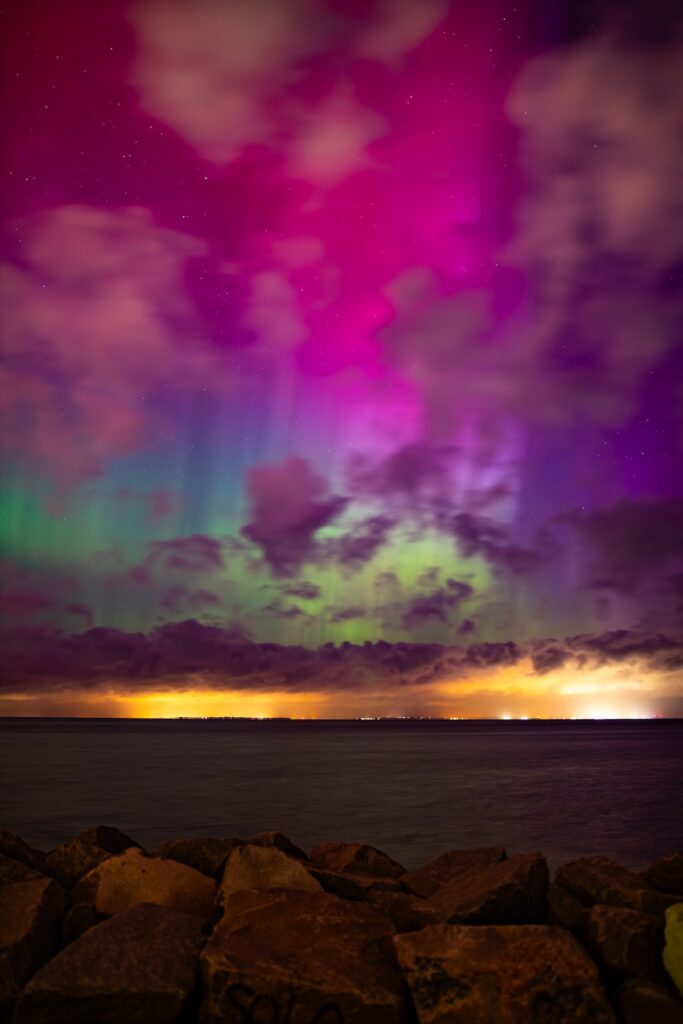
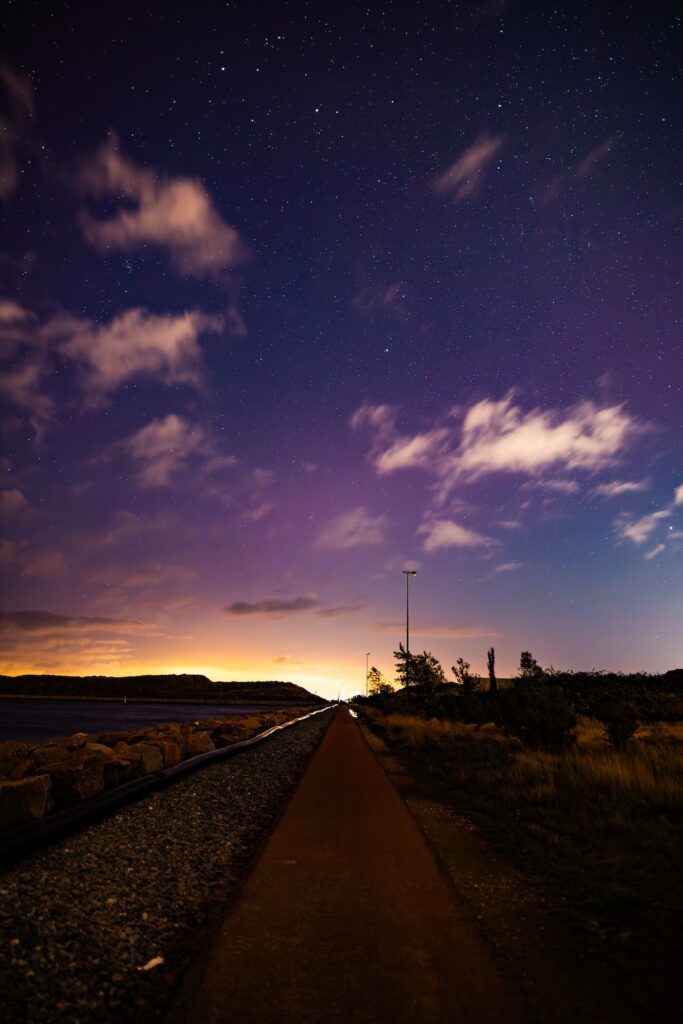
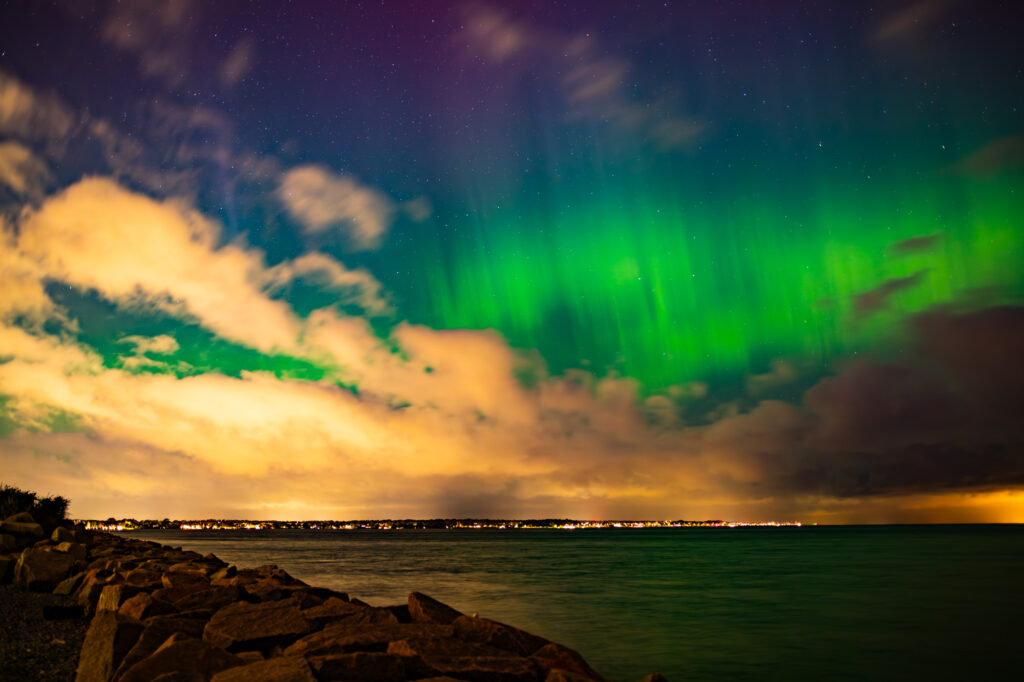
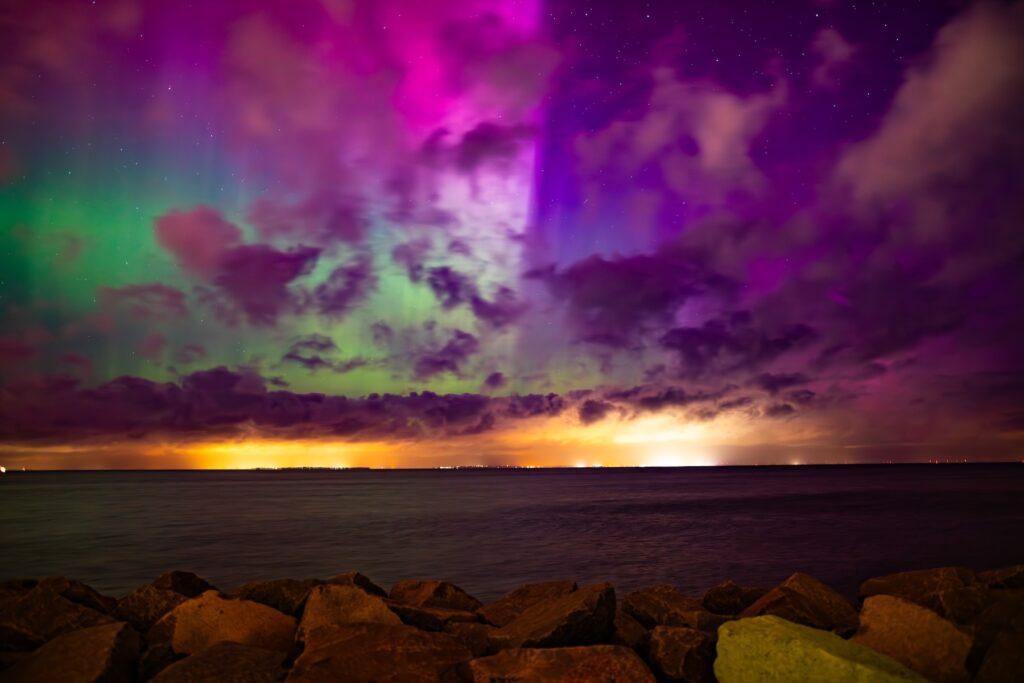
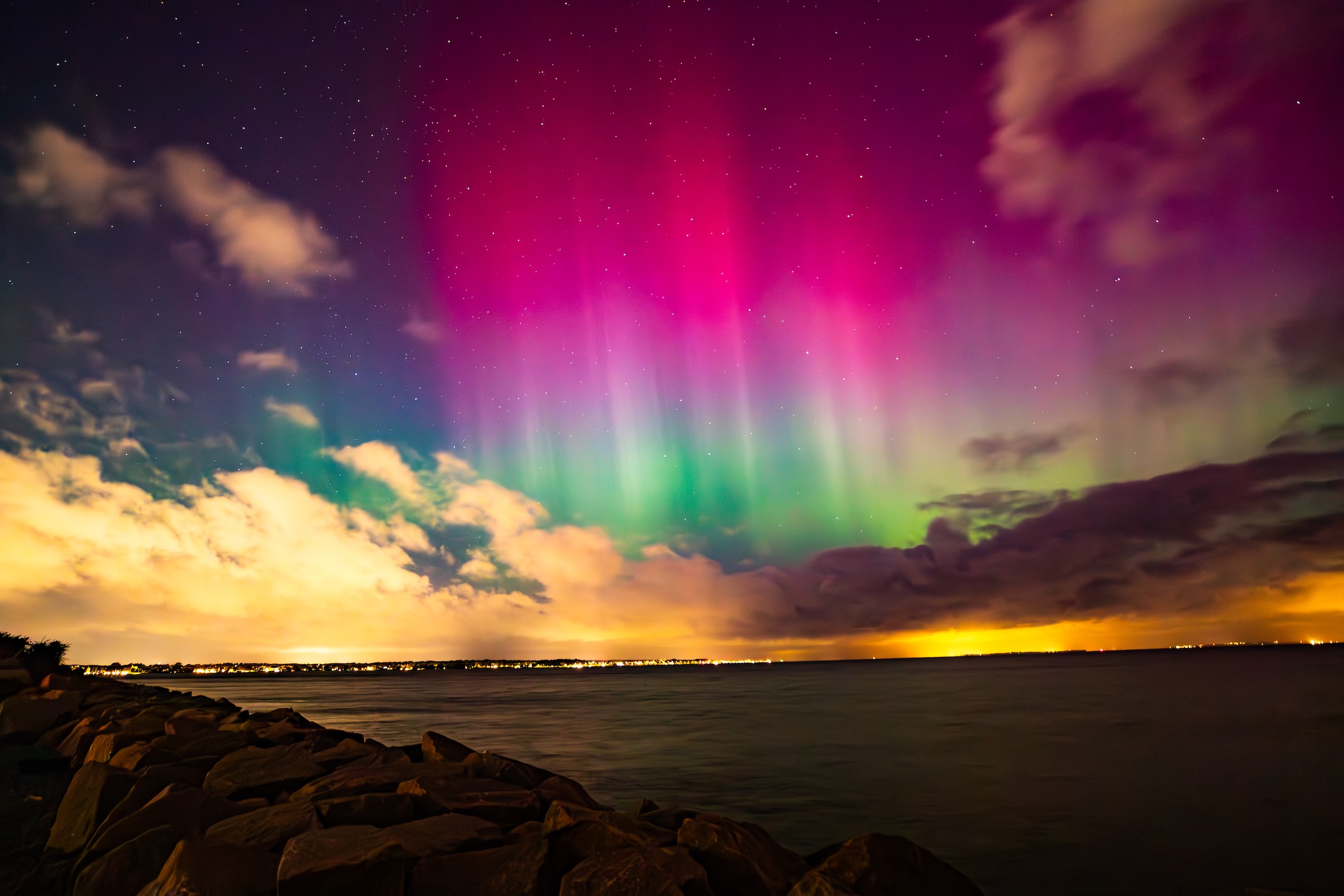
The funny thing was that I had to give a lecture at the Neils Bohr institute the following morning. Neils Bohr is known for his “Bohr Model” of the atom, the first correct explanation of the spectral “emission lines” observed in atoms like hydrogen, nitrogen, and oxygen (technically just hydrogen, but the principle applies elsewhere). And aurora is a natural example of emission lines.
2.2 The Subtle Auroras
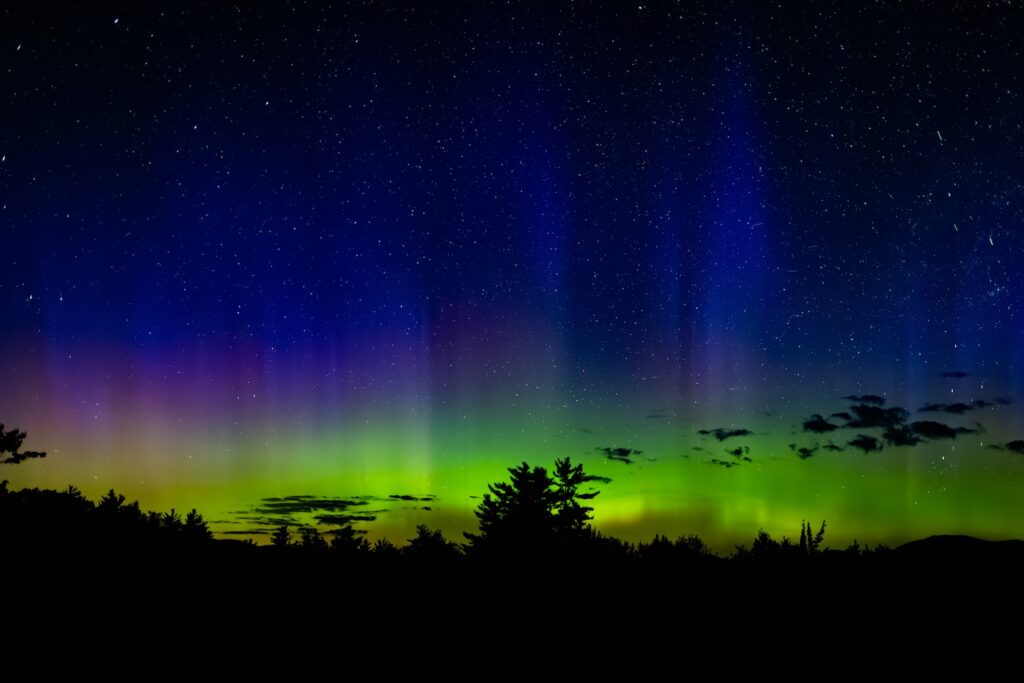
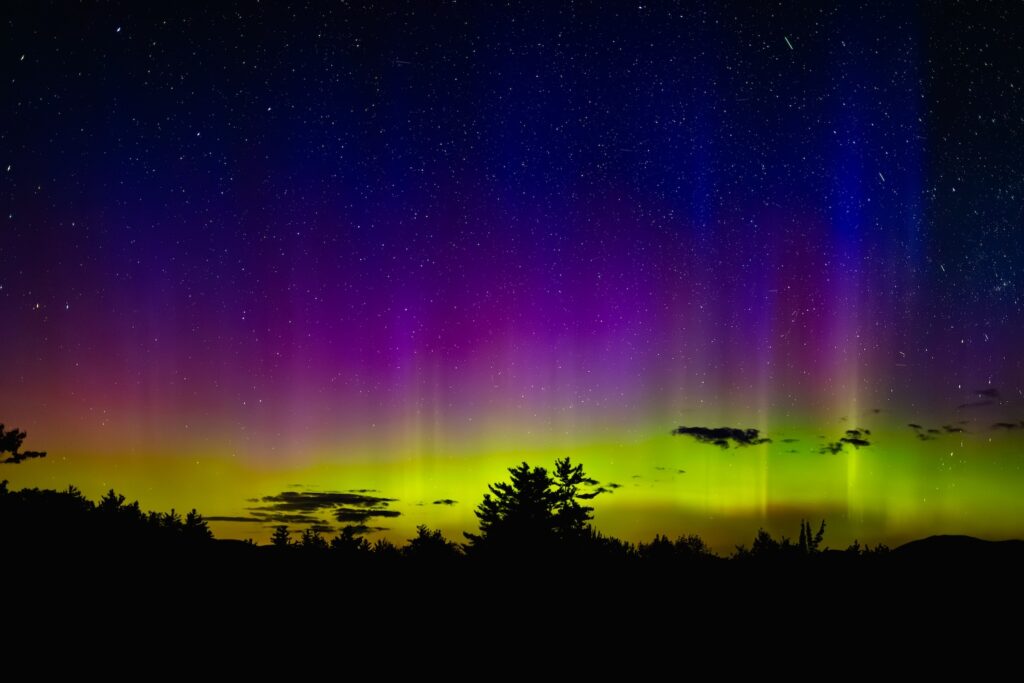
I didn’t see anything for the next six months. Then during the event of 6/1-6/2 (Kp = 8-), I went camping in New Hampshire to try out my new RedCat 51 telescope. While the RedCat was shooting the North America Nebula, I caught the aurora. It was the second night of the storm, so it was fainter than an 8-, but still bright and structured, and persisted for hours.
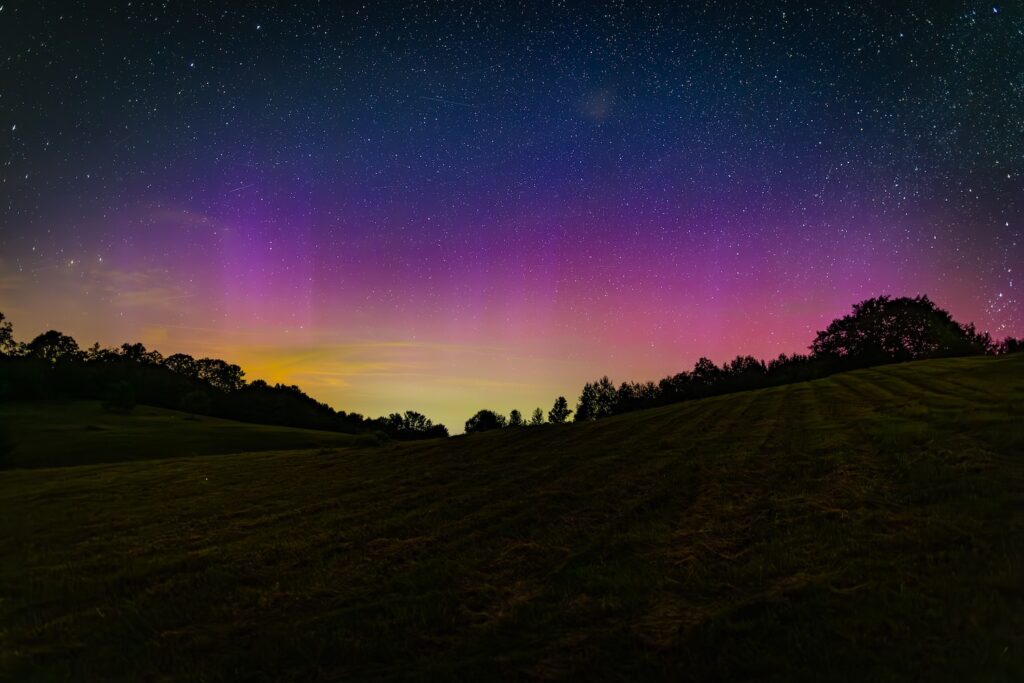
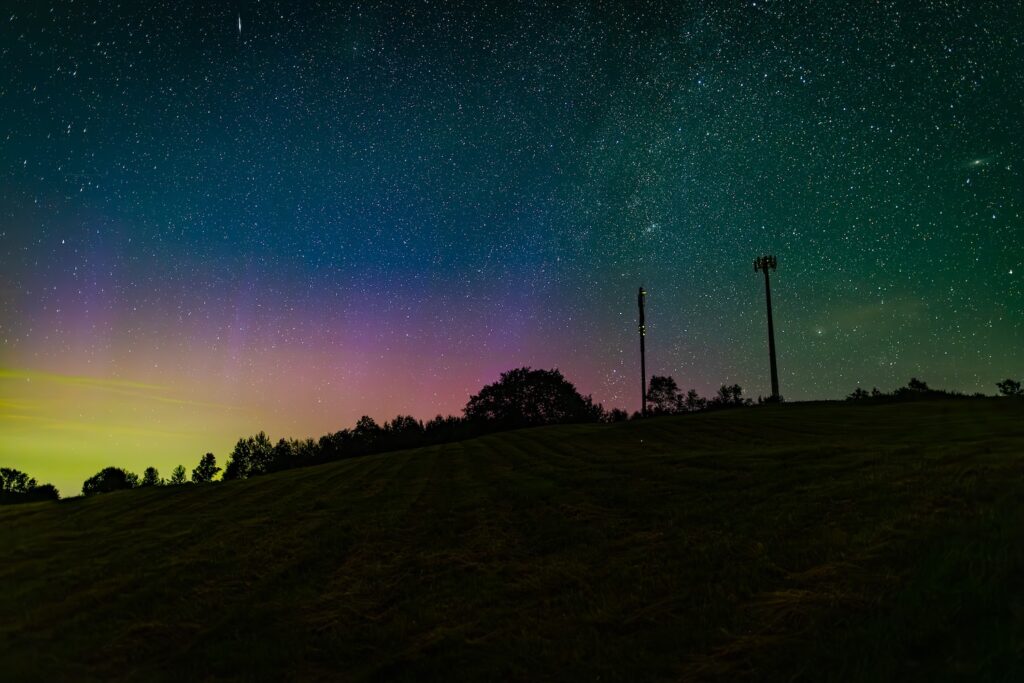
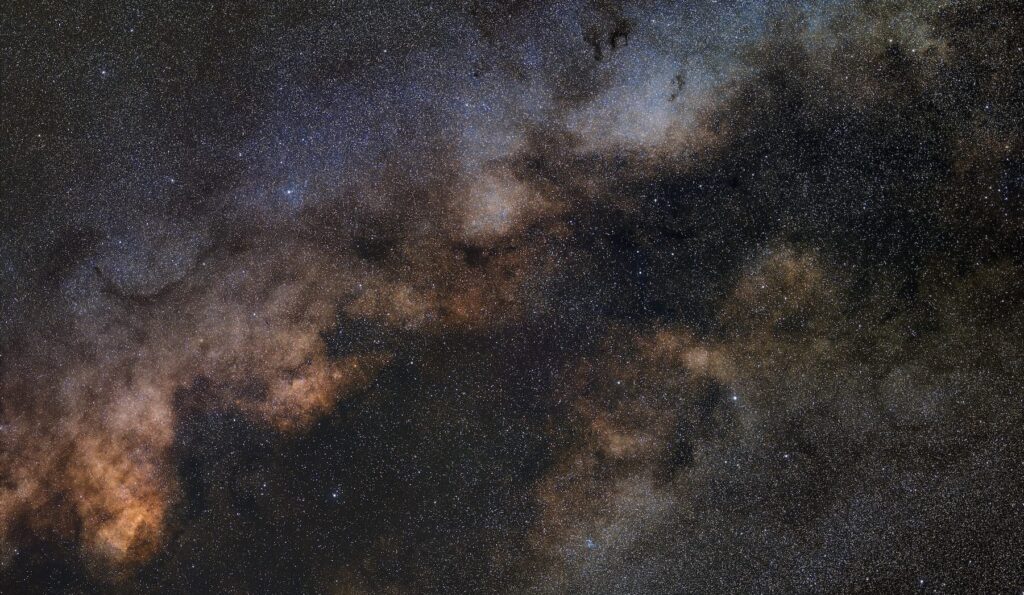
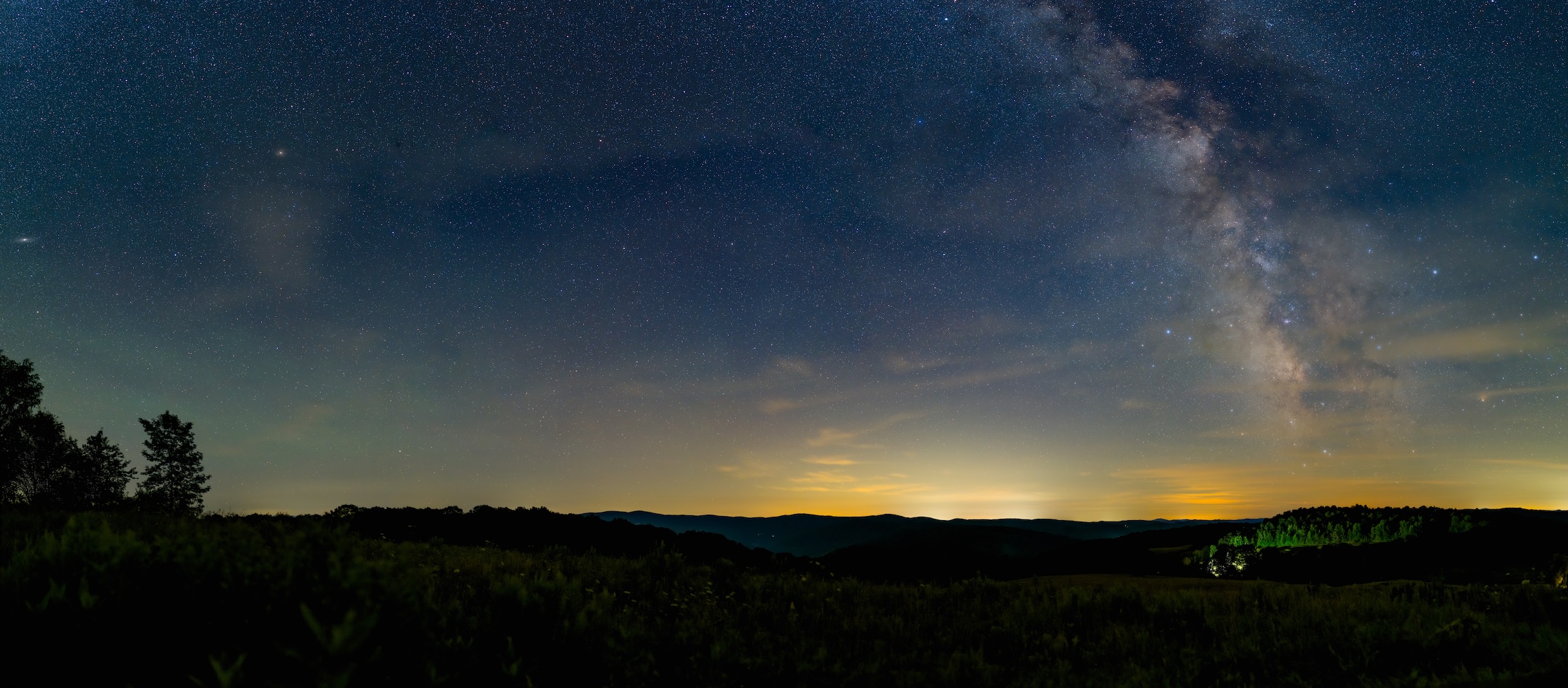
Later on 7/22/25, I was staying at a farm guesthouse in Vermont, catching the Iris and “Fish on a Platter” nebulae with the Takahashi. Once the Tak was set up (which took longer than usual because of a damaged filter wheel USB port), I took some photos from a hilltop overlooking the farm. The viewpoint had a clear view south, which was great for the Milky Way, but the view north was slightly blocked. Nevertheless, I got two clear shots of the aurora, which was weak enough that it nicely balances the grass of the hills, which is lit up by starlight. This was a relatively weak storm (Kp = 5-), and it is surprising that it would be visible this far south, but since the light is structured and moves around, I have no doubt that it is an aurora.
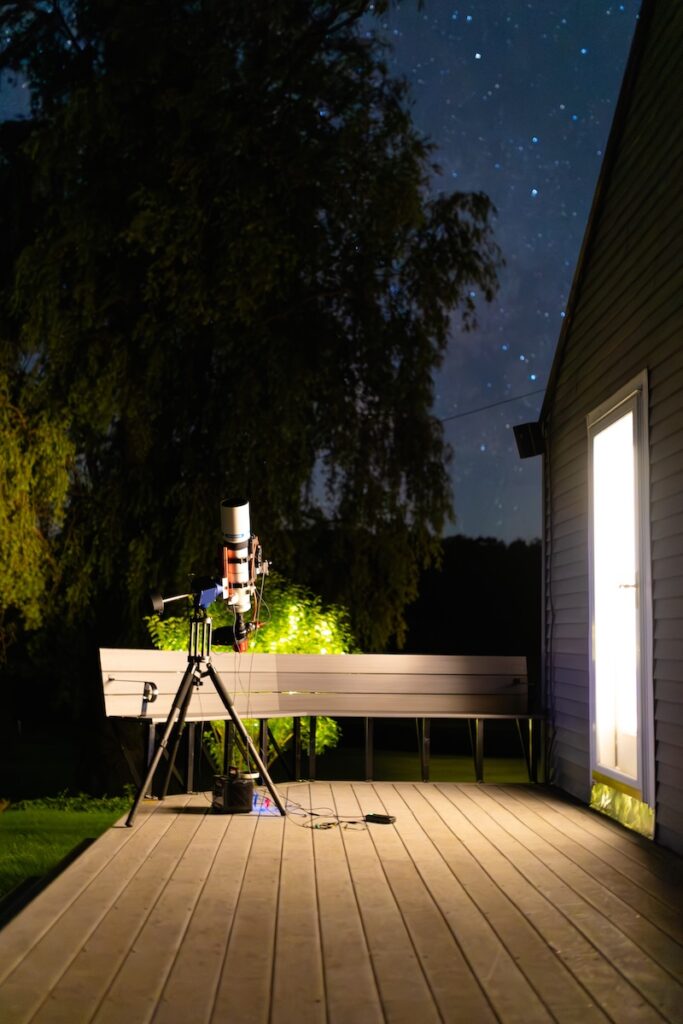
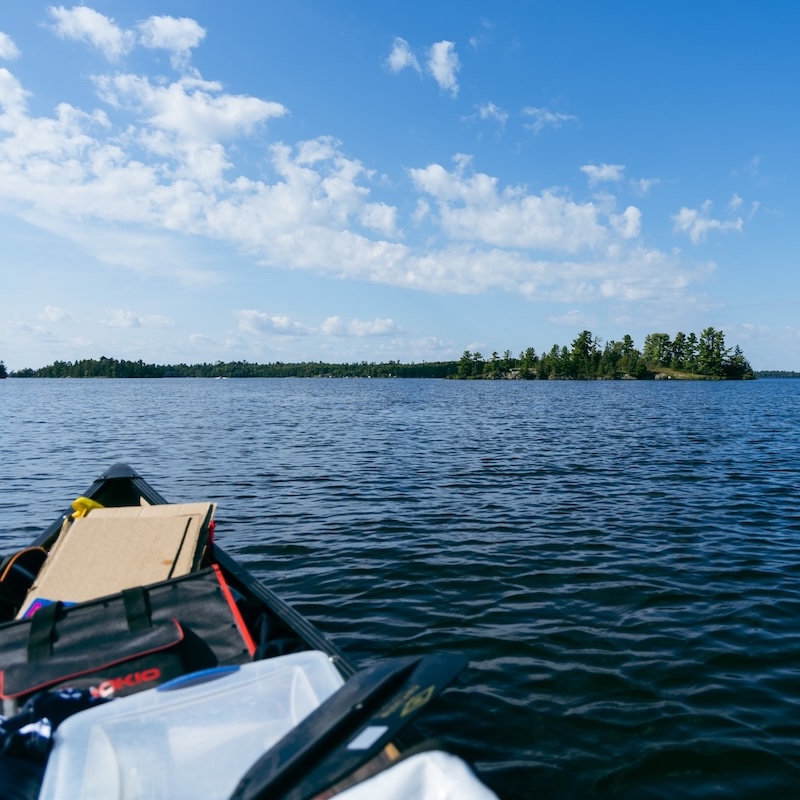
I saw one more aurora at the end of the Summer of Astronomy, when I drove the car back to Boston, passing through northern Minnesota on the way. I camped for two nights at Voyageurs National Park, a unique park where the campsites are only accessible by boat. Taking great care, I loaded the telescope, astronomy camera, daytime camera, mini PC, tripod, equatorial mount, lithium power supply, camera lenses, and solar battery charger into the boat, together with the camping gear and firewood. And I rowed five miles each day, a tricky thing to do in a canoe alone, and camped on two separate islands.
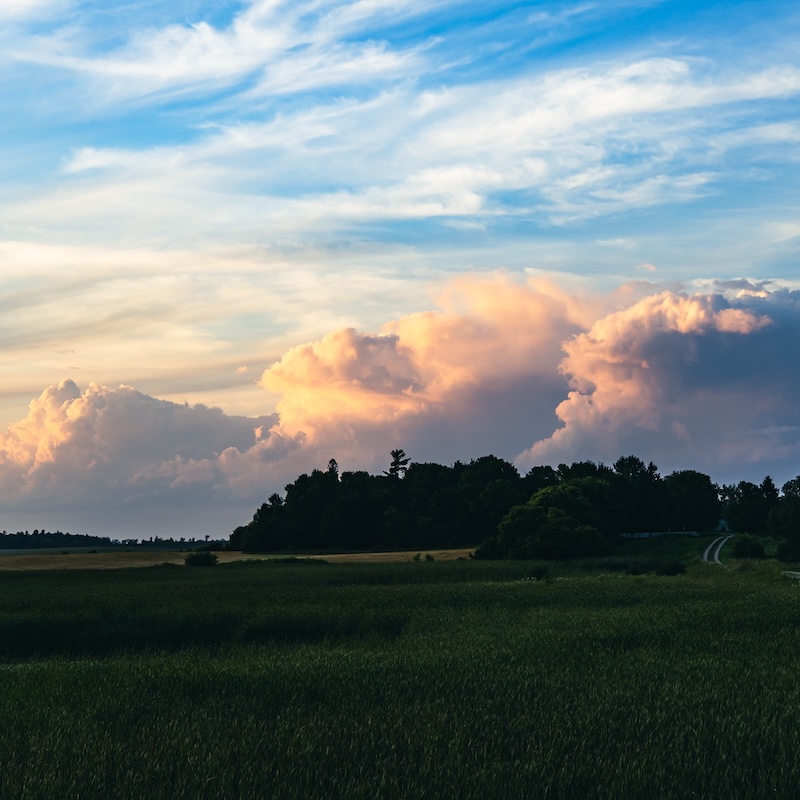
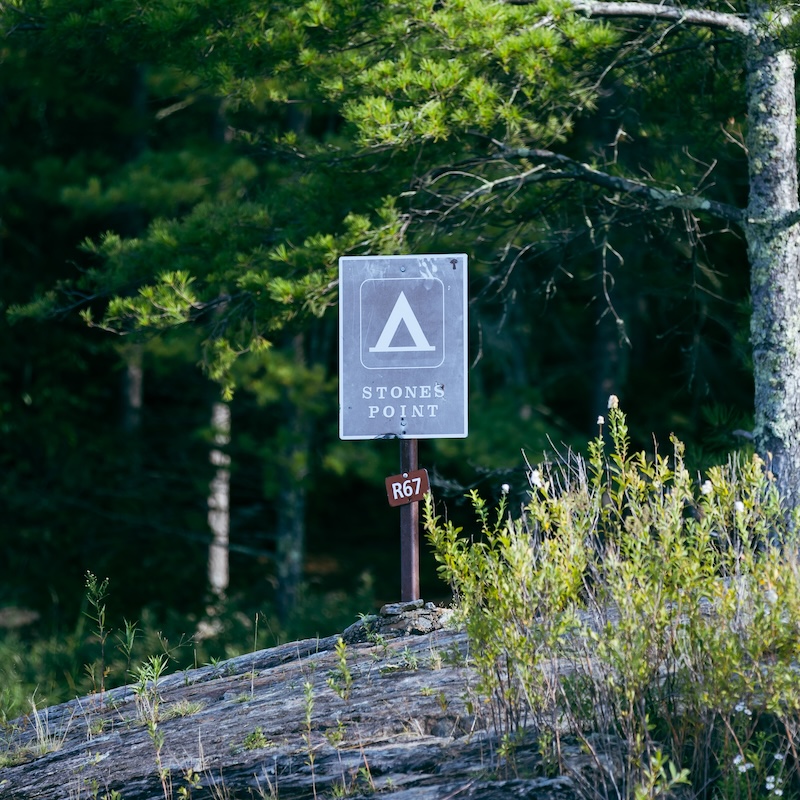
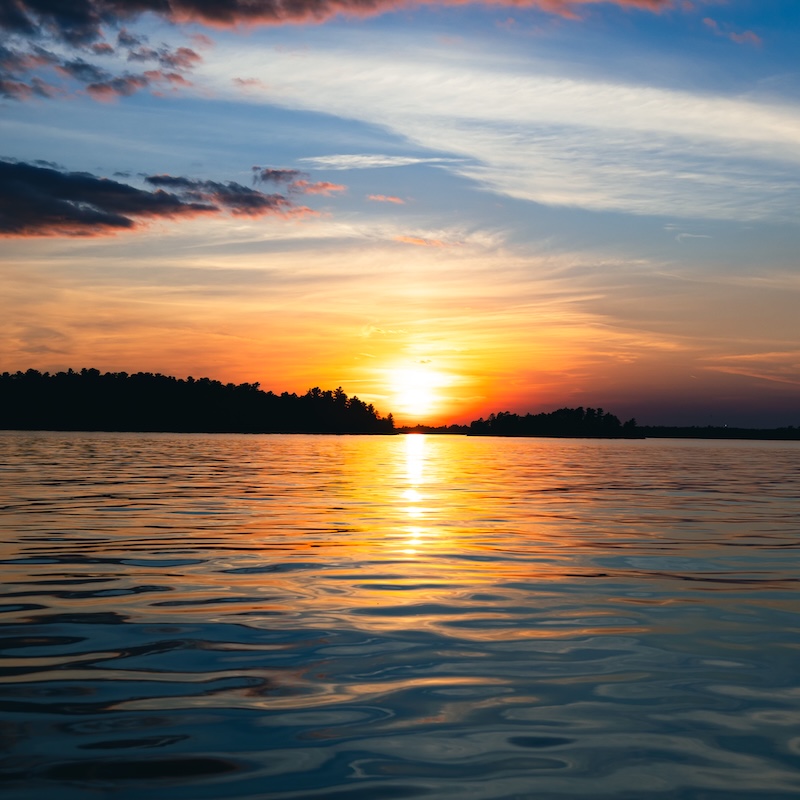
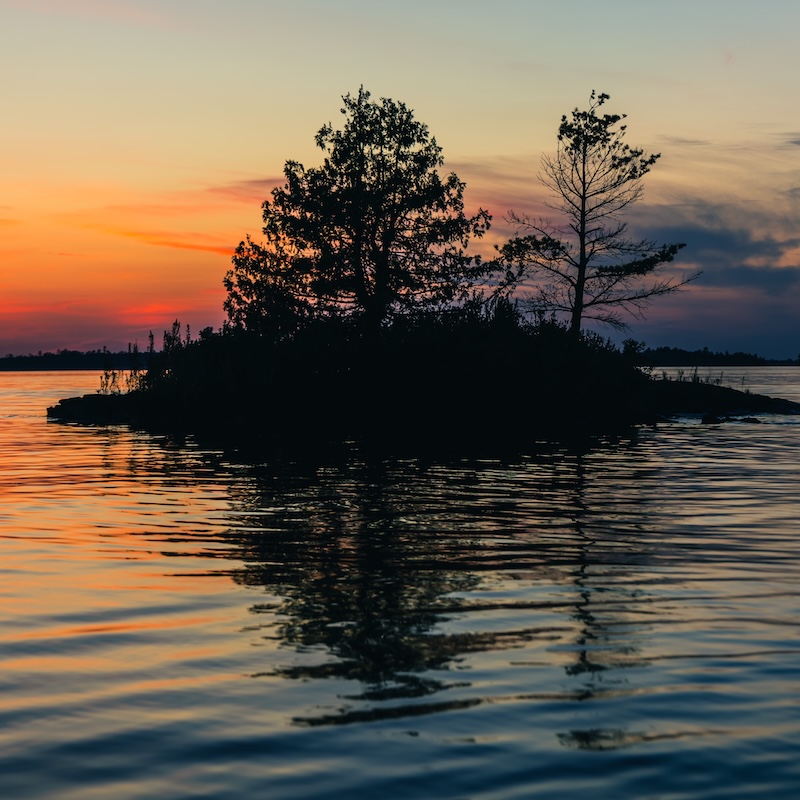
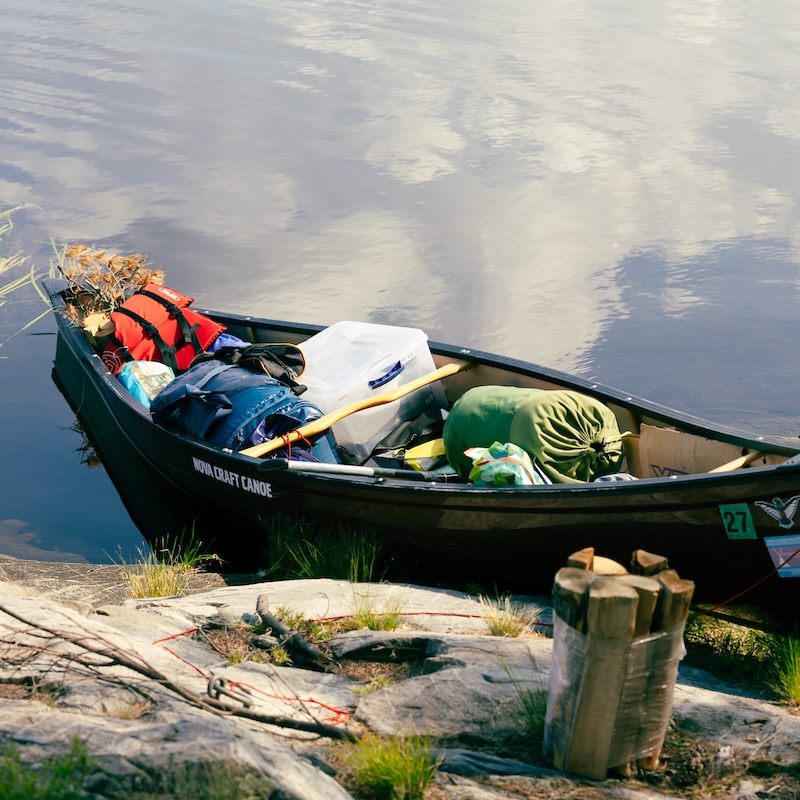
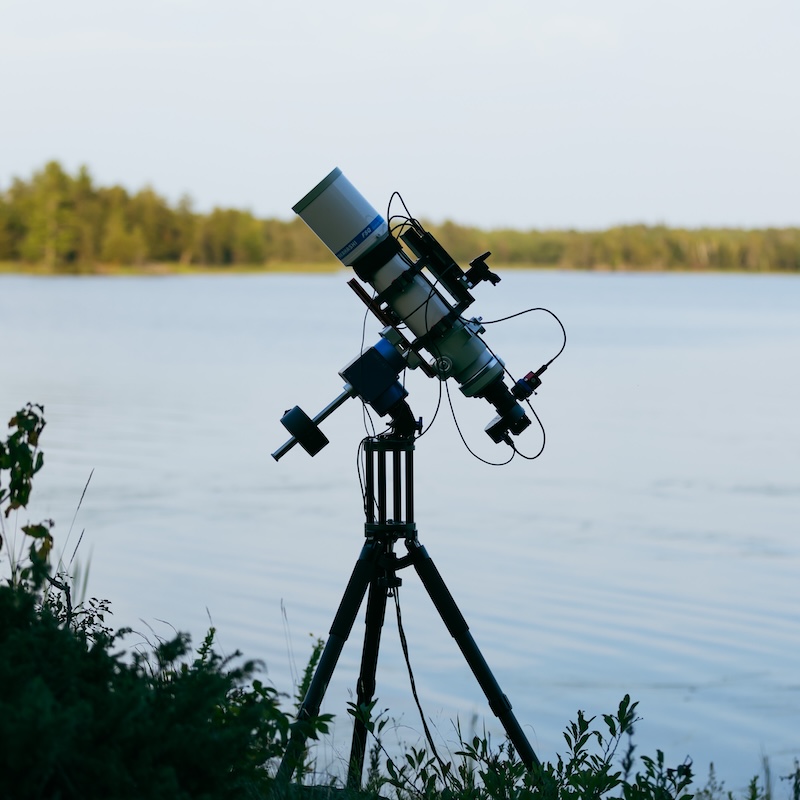
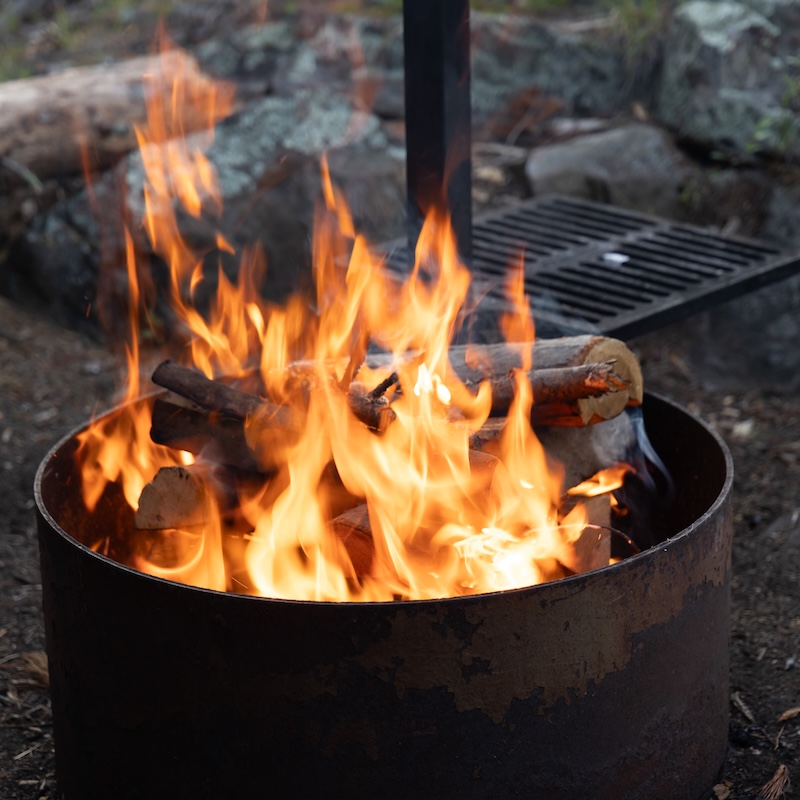
There was a sunset, and a moonset, and a thunderstorm, and stars.
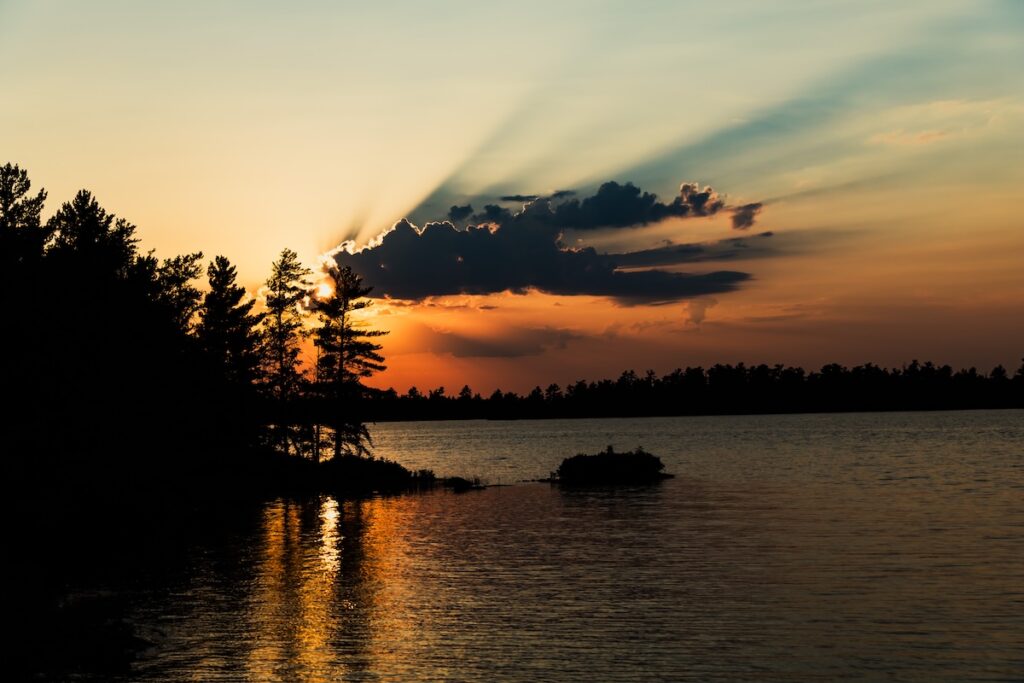
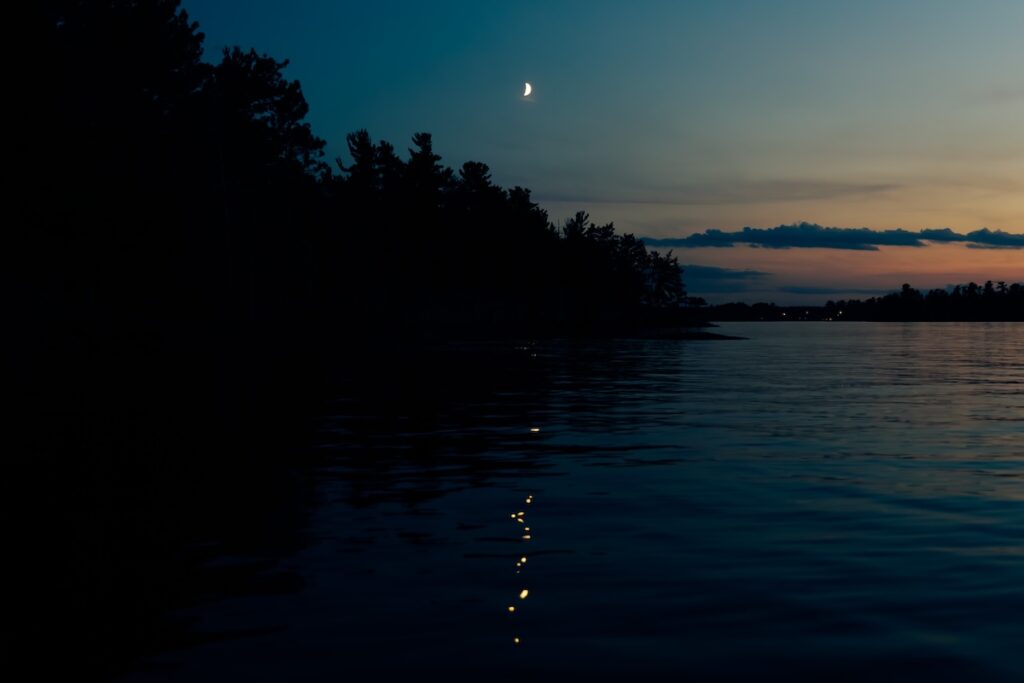
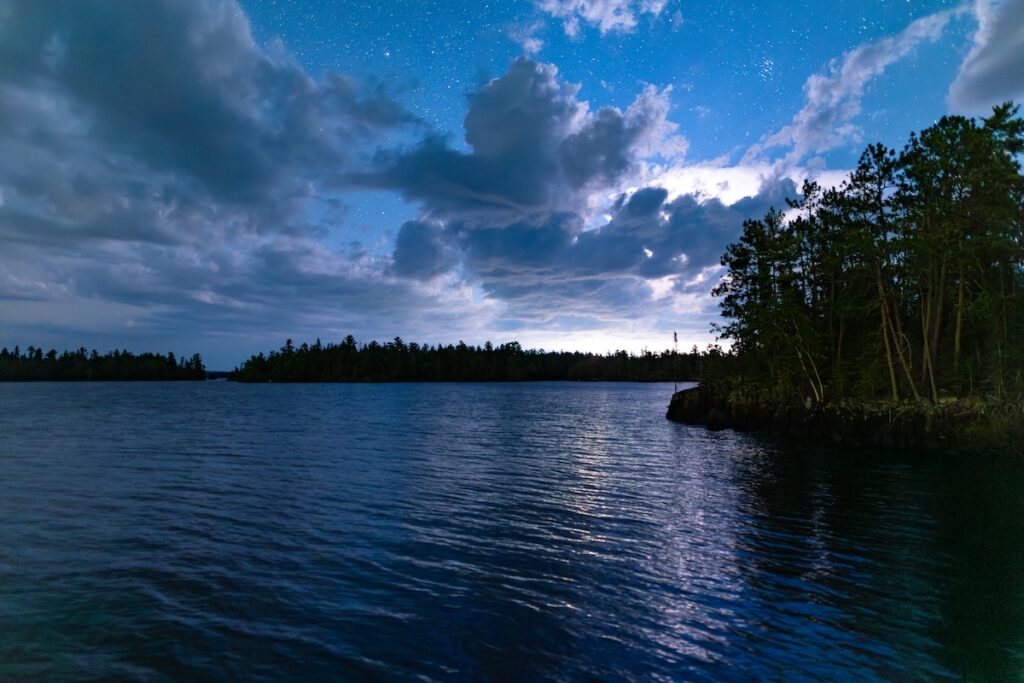
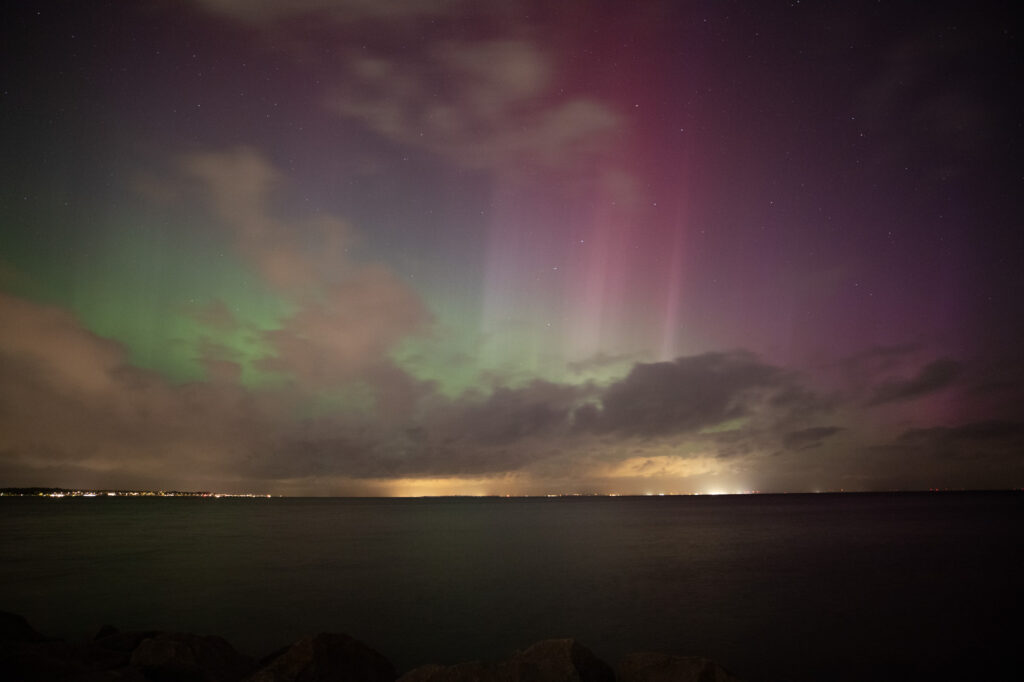
On both nights, the Takahashi was imaging separate objects: first a dusty star cloud near Sadr, and next the M33 Triangulum Galaxy. I also set up the camera to capture star trails on the second night, and sometime around 1:20 am, the aurora flared up. It was weak and subtle, and I never saw it by eye. But it was definitely there.
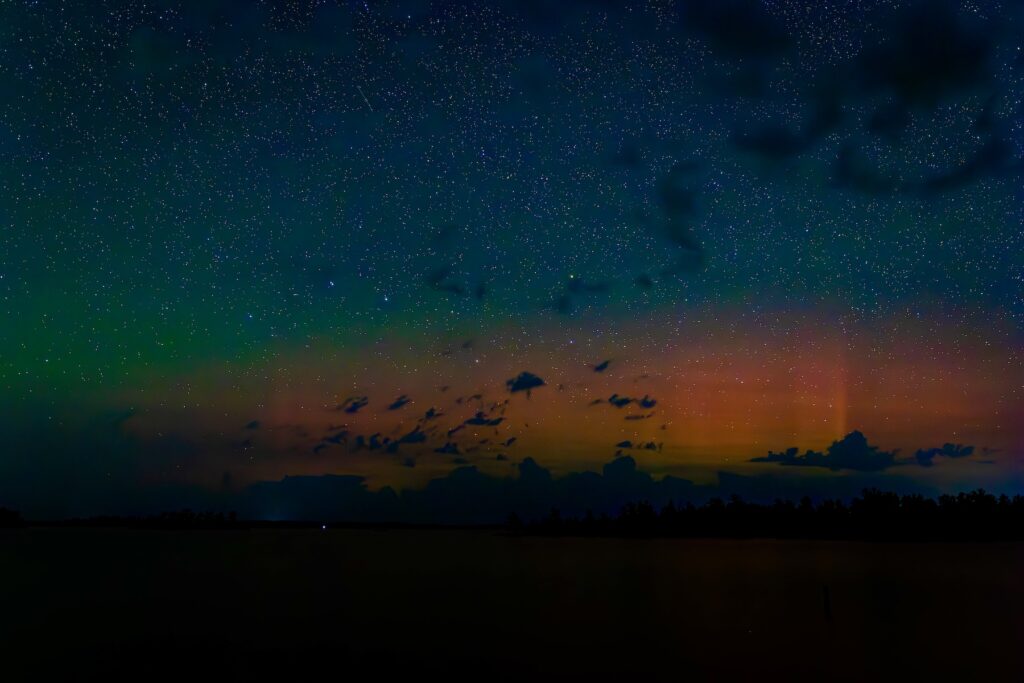
![{"shape": [4000, 6000, 3]}](https://photonhammer.blog/wp-content/uploads/2026/01/fig32b-1024x683.jpeg "Catching Aurora")
I said Voyageurs was the last, but there’s actually one more! Two days later, I was driving the Trans-Canada Highway to Toronto en route to Boston, and stayed overnight at a backcountry campsite in Gargantua Harbor. Gargantua is extremely remote. The closest town, Wawa (pop. 2,700) is 50 miles away, including 10 miles over bumpy forest dirt roads with potholes and mud. The light pollution ratio is 0.005, making this the most pristine dark sky that I’ve been to by at least a factor of two. I arrived at the campsite at dusk, and it was already quite dark by the time I finished dinner. But the moon was still out. North of me, a pair of campers had the site a half-mile away. In the sky, there was a faint purple glow to their right, northwards. As the moon set lower and the fire burned down to embers, the scene got darker — but that faint purple glow persisted.
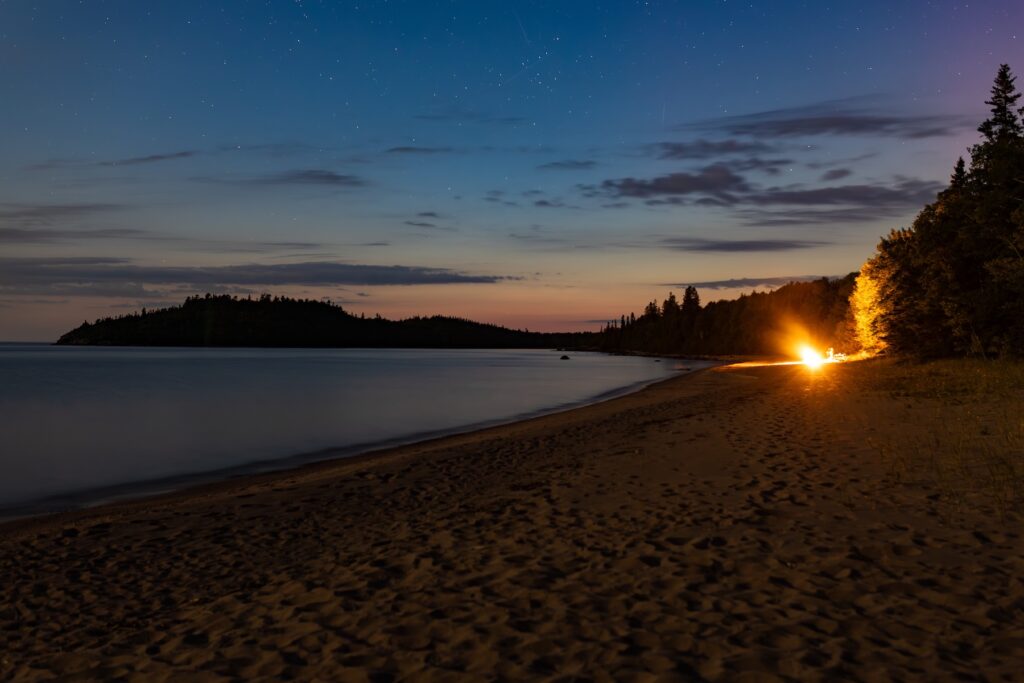
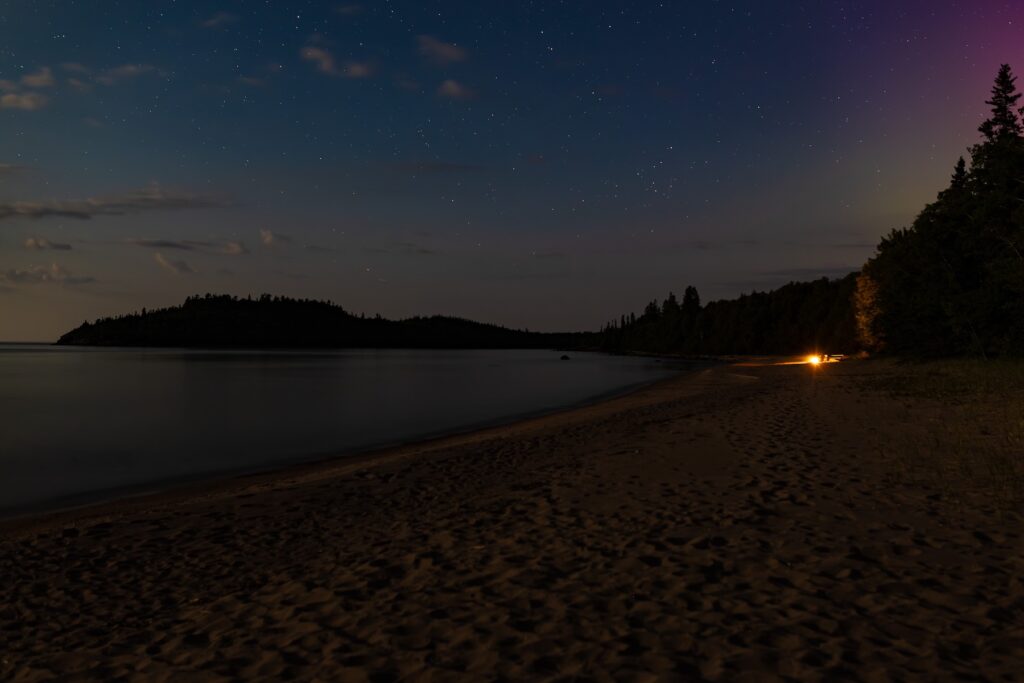
The moon set over Lake Superior and I snapped a picture of the Milky Way. Not quite “snapped” — this is a panorama stitched from about 8 frames, each one a stack of 3-4 exposures. The setting moon illuminates the air with a rainbow of colors, not unlike a sunset, with yellows and reds transitioning to greens and then blues (though my choice of color balance has somewhat muted the greens in this image). And that purple glow to the north is still there.
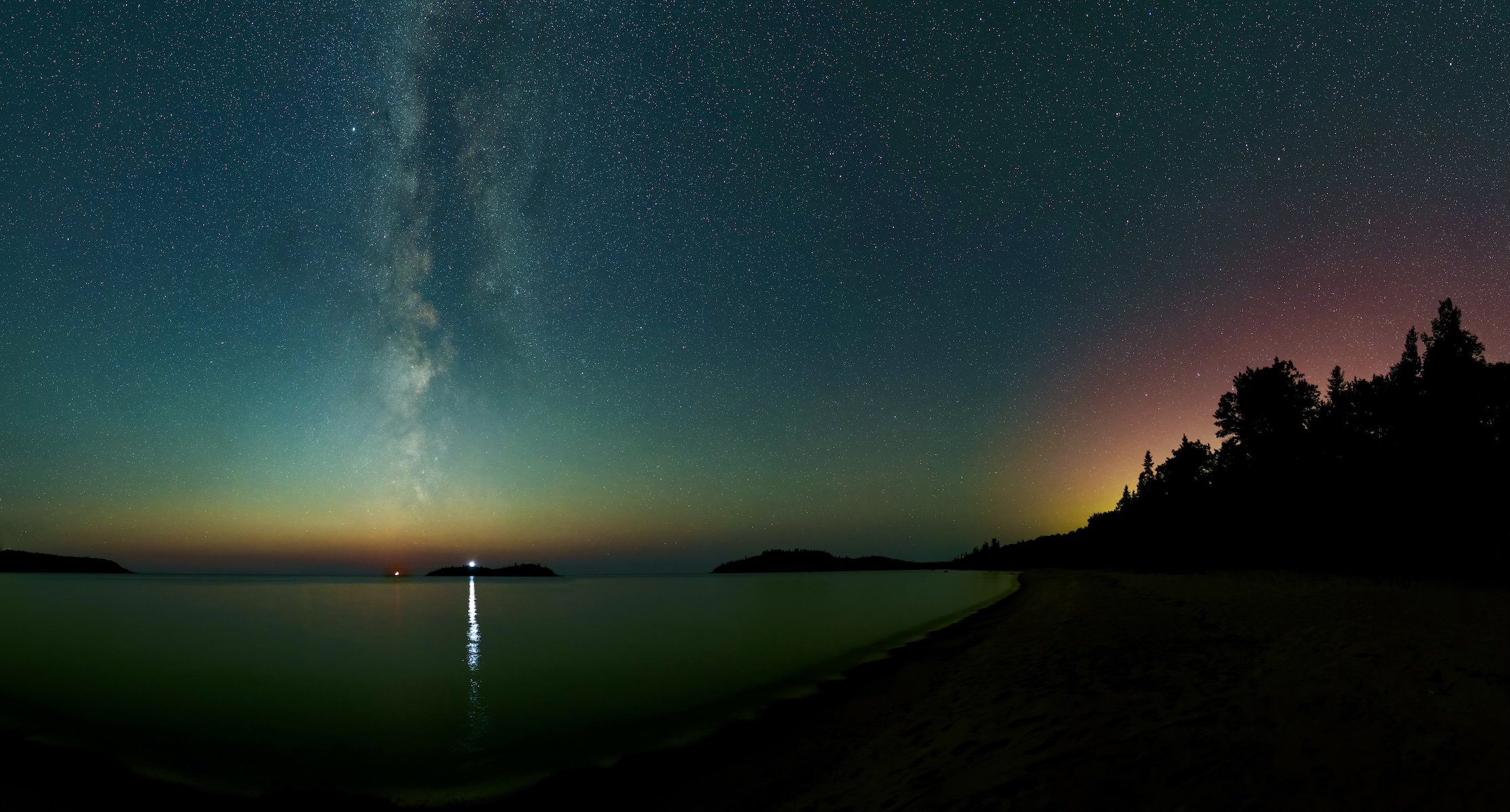
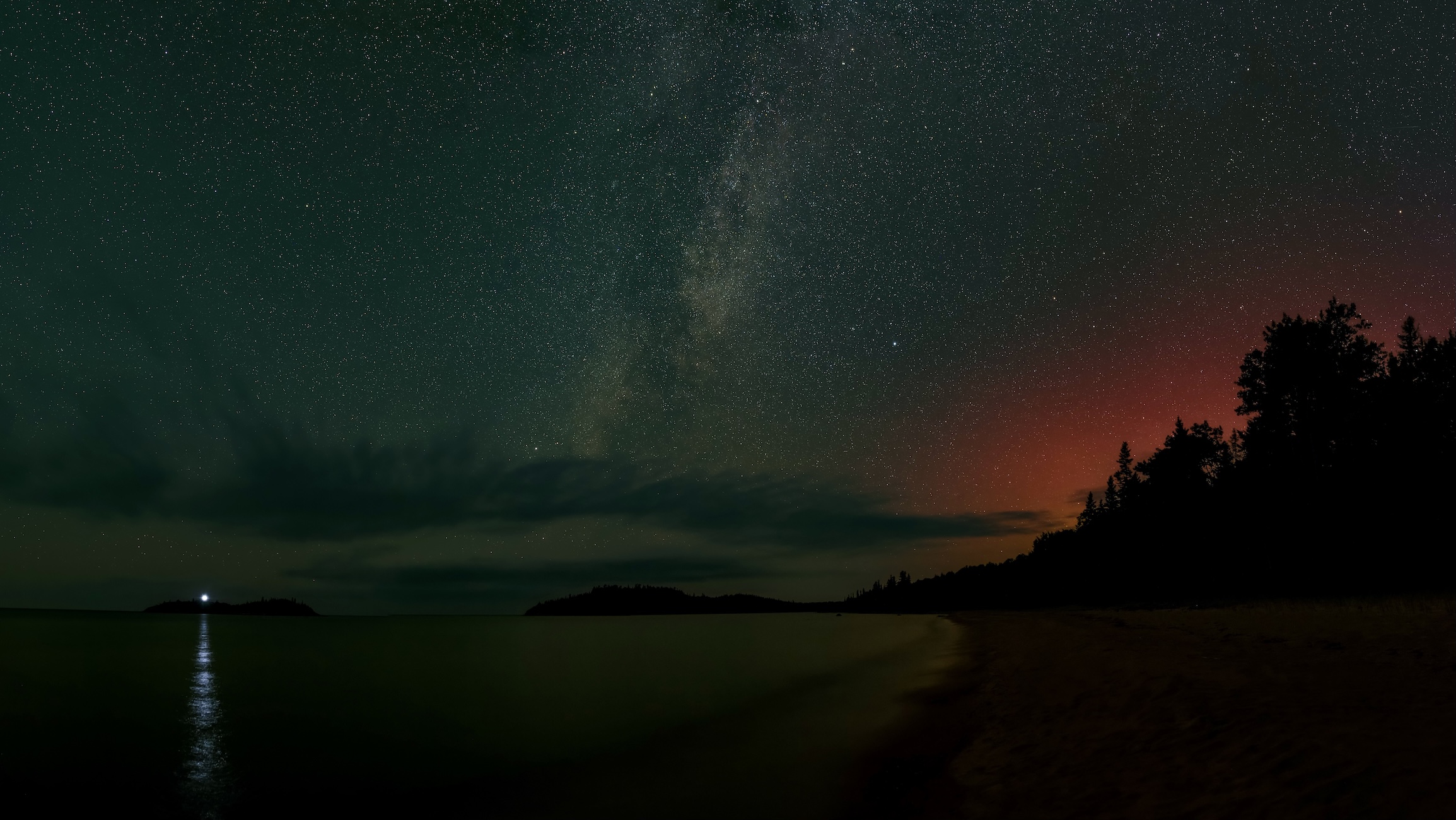
I napped while the camera took a time-lapse for the next hour. When I awoke, the moon was long gone and the Milky Way core had descended well below the horizon, leaving only the dimmer outer galaxy. Cygnus and Aquila are in view, and the bright star to the right of the Milky Way is Vega. Against this backdrop, and with a color balance that seemed suited to this frame, the mild aurora glowed a dim red. Not brilliant or energetic, with dancing green curtains or light beams streaming from the sky, but quiet and subtle, reflecting the silence and solitude of this region — one of the few places left on earth that is still largely untouched by settlement — as remote as it is remarkable, rocky, rugged, wild.
Welcome to the North.