This blog is a journal of land, sea, and sky.
Scholars have mapped the skies for thousands of years. Their maps shed light on our place in the world, and the shape of the world itself. For sailors, this fact was quite literal. Herodotus tells a legend of Greeks who sailed from the Med to the Arabian Sea (2,000 years before Vasco da Gama), and doubts their tale because of the new constellations they claimed to see, and the strange behavior of a winter sun that would pass from east to west north of the zenith rather than south. Today we know these sightings as evidence that the Earth is round. When Magellan circled the globe, when Drake went down to the Horn, when Cook explored the southern seas, a more complete map of the heavens was written in their wake. And with Yuri Gagarin’s maiden flight, the final frontier was crossed, and man walked among the stars that had for so long twinkled above him.
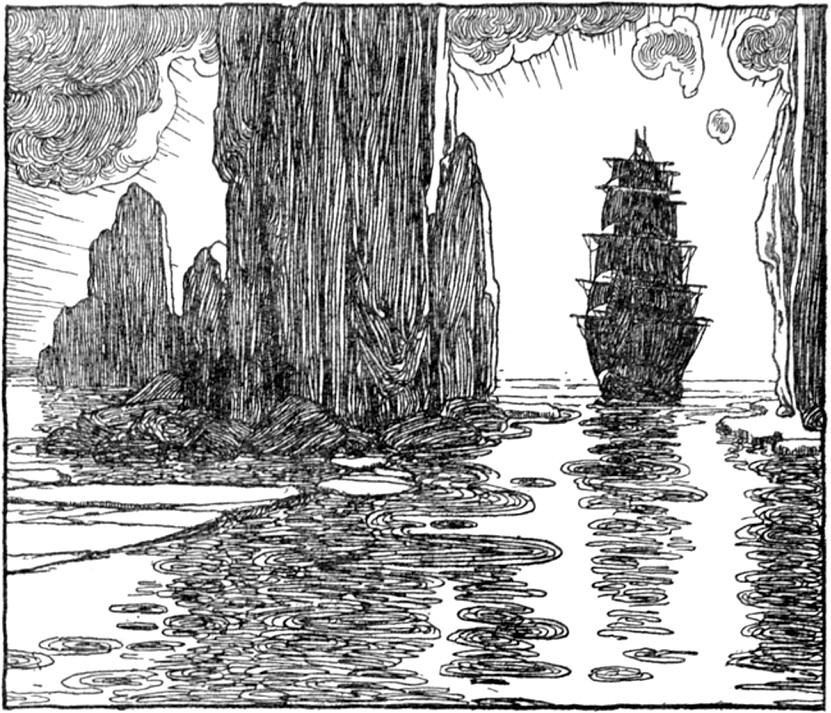
Equally important is how these great moments were recorded. Ancient and medieval explorers left us maps and notebooks, while their contemporaries sketched paintings, lithographs, star charts, and the occasional epic poem. But thanks to photographic film, and later CCDs and CMOS image sensors, the discoveries of the 20th century have been accompanied by detailed, real-time, accurate, and cheap visualizations. Every important moment is photographed in our age (along with plenty of unimportant ones), from Apollo’s “Earthrise” and the Man on the Moon to Hubble’s Pillars of Creation. And in Hubble’s case, it was the unmatched low-light performance of digital image sensors that brought out the majestic detail in what astronomers once called “faint fuzzies”.
What is Astrophotography?
Professional astronomers have been taking night-sky photos for a century. But in the last couple of decades, new technologies have emerged that allow amateurs to do the same thing. These technologies include:
- Mass-produced CMOS image sensors present in digital cameras, phones, webcams, etc. CMOS has caused a revolution in imaging. State-of-the-art sensors can simultaneously have very fine resolution (3-5μm pixels), excellent sensitivity (60-90% QE), low read noise (~1.5e), high dynamic range (14 stops), while costing little more than $2,000. These sensors can capture native RGB photos, or with the appropriate filters, the narrowband spectral features of emission nebulae. And because mirrorless cameras are taking over the market, there is an abundance of cheap, almost-as-good used DSLR cameras for $500 or less. Most of these are perfect for an entry-level astro setup.
- Digital RAW image processing tools like Lightroom, Photoshop, AstroPixelProcessor, and PixInsight. While processing isn’t strictly needed for daytime photography (if your technique is good enough), for the night sky it is essential.
- Good optics for an amateur budget:
- For deep-sky objects, amateur “imaging”-capable telescopes that focus light to a flat image plane, compatible with film or a CMOS sensor. These include Petzvals like the William Optics RedCat and Takahashi FSQ, triplets with flatteners / reducers, and flat-field Newts / SCTs like the Takahashi Epsilon or Celestron EdgeHD.
- For widefield scenes, fast lenses (f/2.8 or wider) with high sharpness, low chromatic aberration, and excellent coma / astigmatism correction. This is extremely demanding on lens design, and historically required top-tier first-party glass (Canon “L”, Sony “GM”, Nikon “S”) costing thousands of dollars per lens. But recent competition from Sigma, Samyang, Viltrox, and other quality third-party brands has made this more affordable.
- Cheap computer control. Mini PCs like the Raspberry Pi 5 have more than enough processing power to control an astronomy rig (orchestrating image capture, plate solving, guiding, autofocus, filter changes, mosaicing, etc.), and cost under $100. Equally important, open-source software tools like NINA (Windows only) and Kstars (Win, Mac, Linux) contain all the functionality needed to run a setup, so no coding skills are needed. All-in-one boxes like ASIAIR make it even easier, but at the cost of reduced flexibility. An added benefit of computer control is that it allows auto-guiding (tracking a telescope to a target “guide star”), making imaging more reliable, and reducing the demand on other components (especially the mount).
- Harmonic drive mounts (based on the same motor technology used in the Moon rovers), whose compact size, high torque, and low backlash make them ideal for mounting telescopes. Competition between Chinese mount brands (Juwei, Clearsky) and unbranded products has caused a steep drop in prices, and it is no longer true that “the mount is the most expensive thing” in a setup. Mounts still matter a lot, but there are now cheap options that do very well.
Taken together, these advances have led to the new hobby of astrophotography, an extension of classic visual astronomy (or is it an extension of photography?), where amateurs can create stunning photos on a meager budget. These photos are fundamentally different from daytime photos, both in their technique and their demands on equipment, but also in the editing process and the style of the final product. They complement photos taken in the daytime, just like day complements night, linked in a perpetual cycle of dawn and dusk.
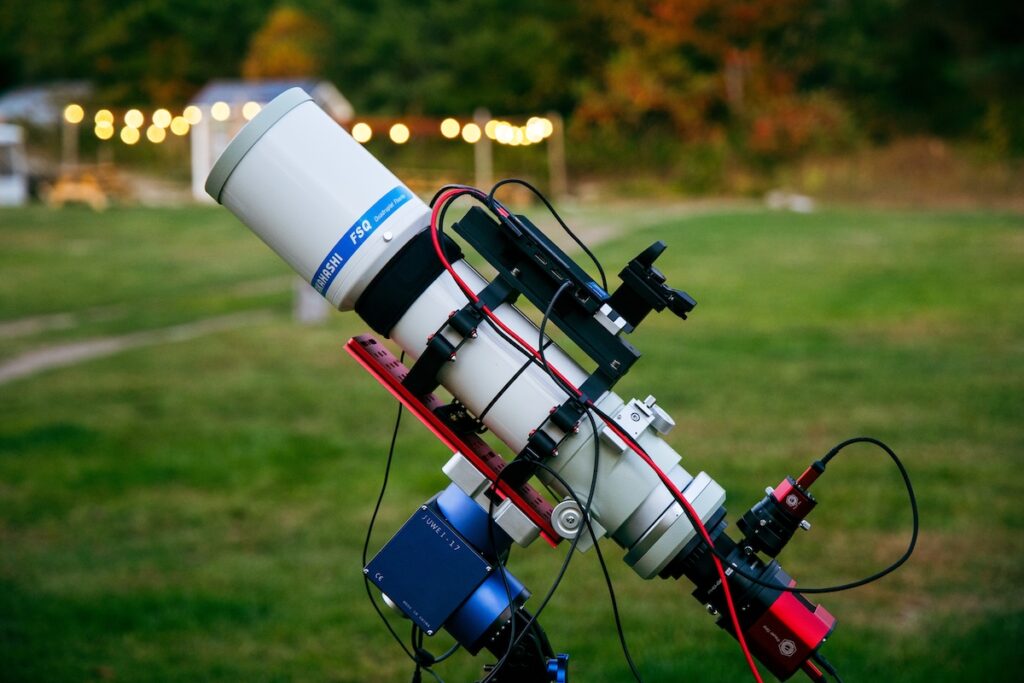
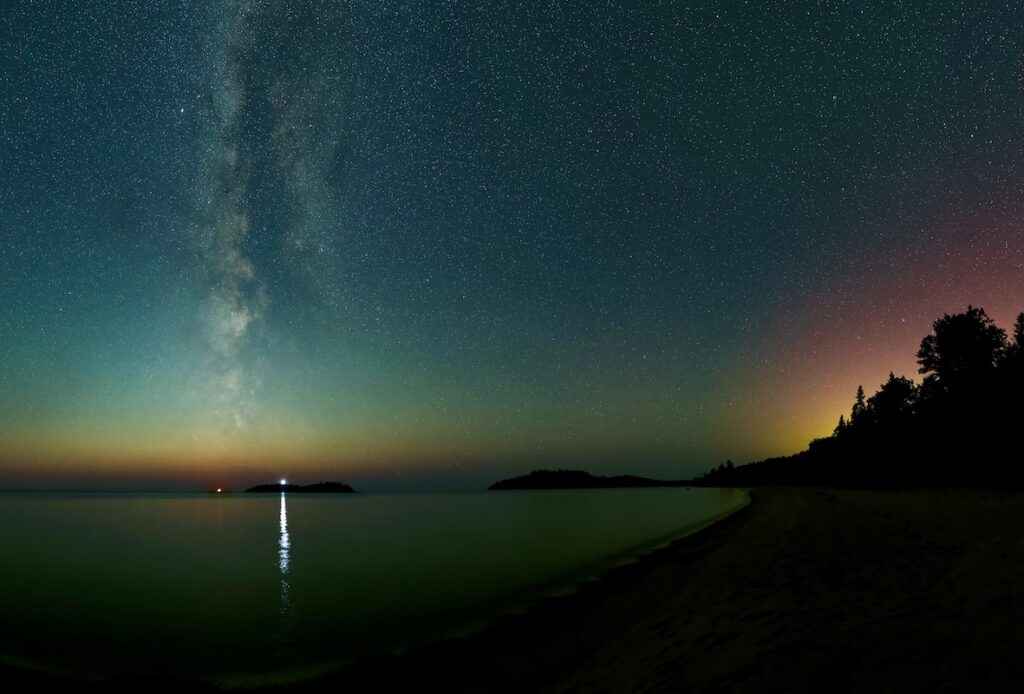
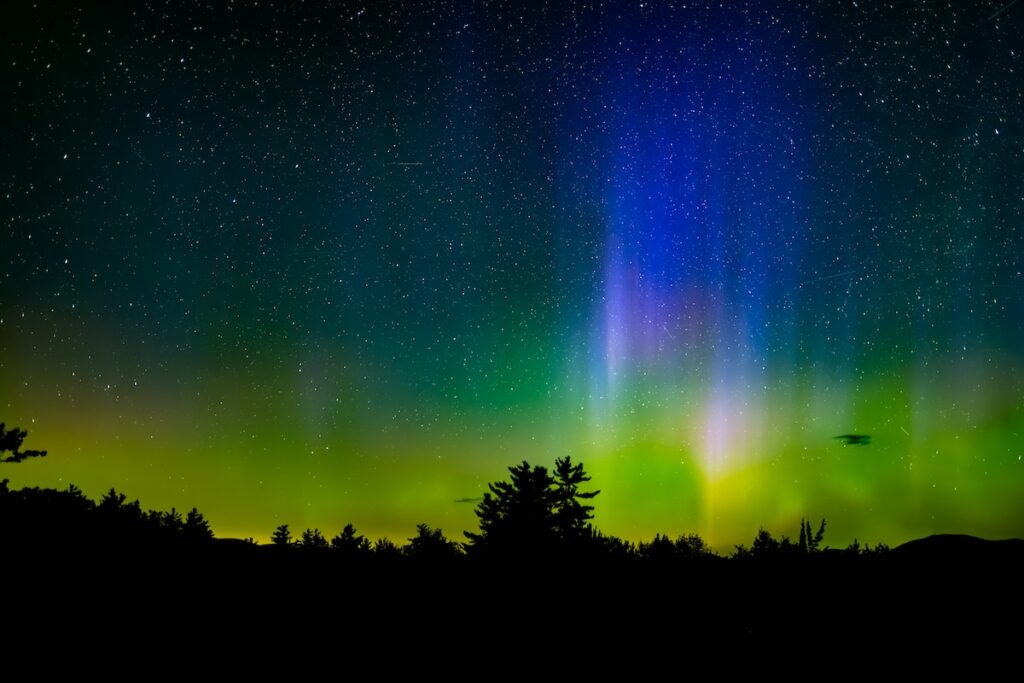
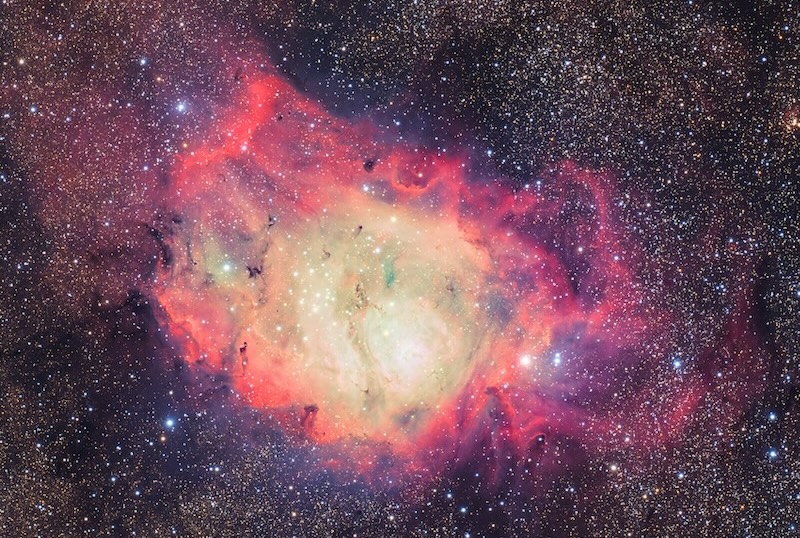
Left to right: A well-tempered astrophotography rig preparing to capture comet C/2025 A6 Lemmon (10/5/25); Milky Way over Gargantua Bay, with mild aurora to the north (9/1/25); strong aurora borealis over rural New Hampshire around midnight (6/2/25); Lagoon Nebula captured from Lassen Volcanic National Park (8/16/25).
My Journey
I started taking pictures in 2014, when I went to China for a summer. 我在北京大学留学,吃烤鸭登泰山交朋友学中文等等,后来回国的时候什么都忘记。 A decade later, we had the “Carrington Event” of May 2024. I was lucky enough to make it to northern Minnestota by the second night when the aurora was still strong. And the show was undoubtedly brilliant, with green lights streaming down from the zenith and dancing over the horizon in every direction. But when I tried taking a photo with my iPad (using a long-exposure camera app of course), the results were comically bad:
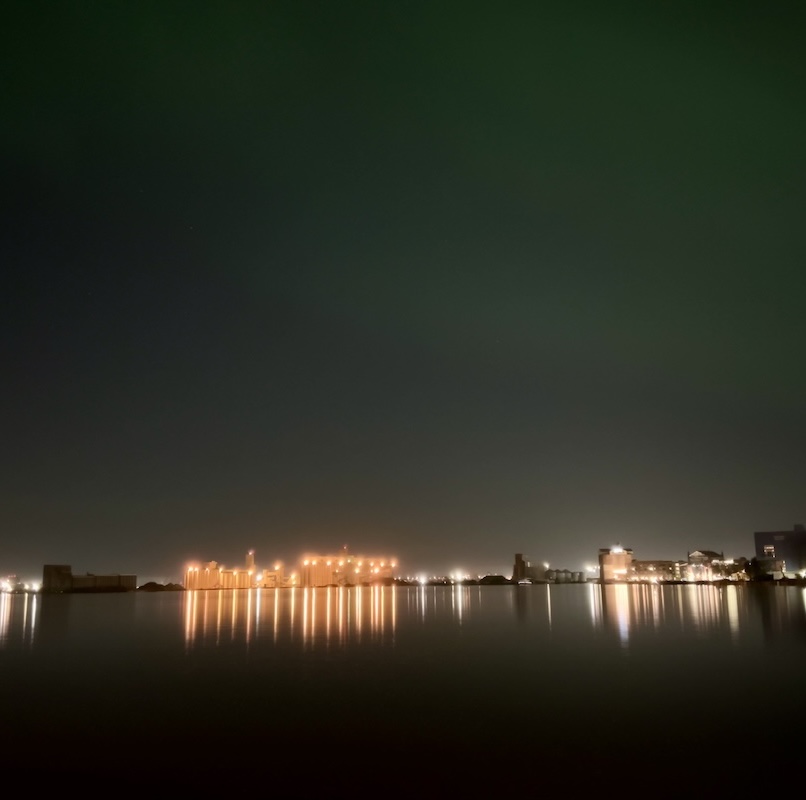
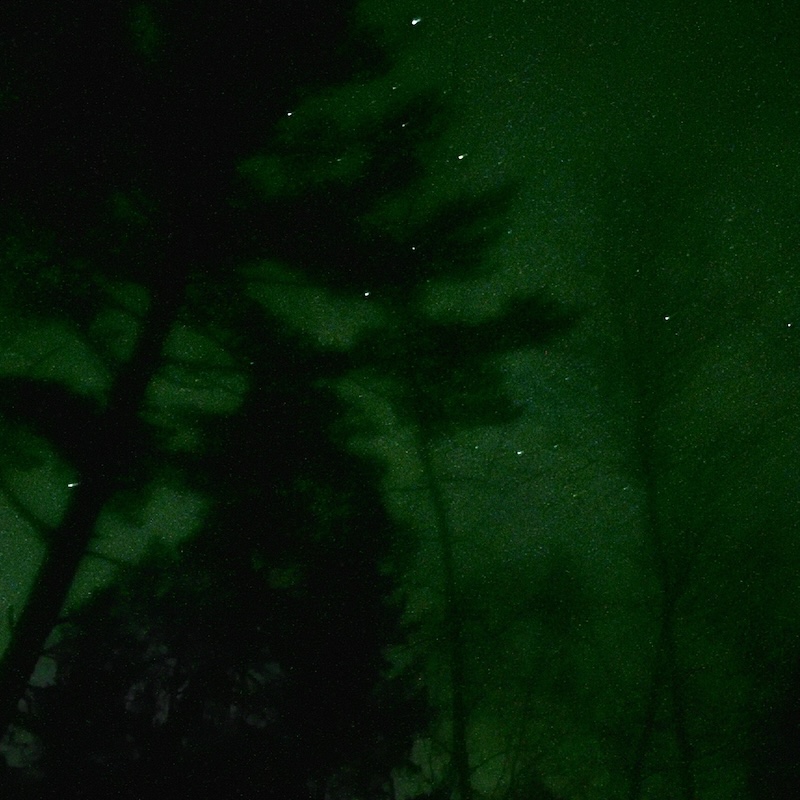
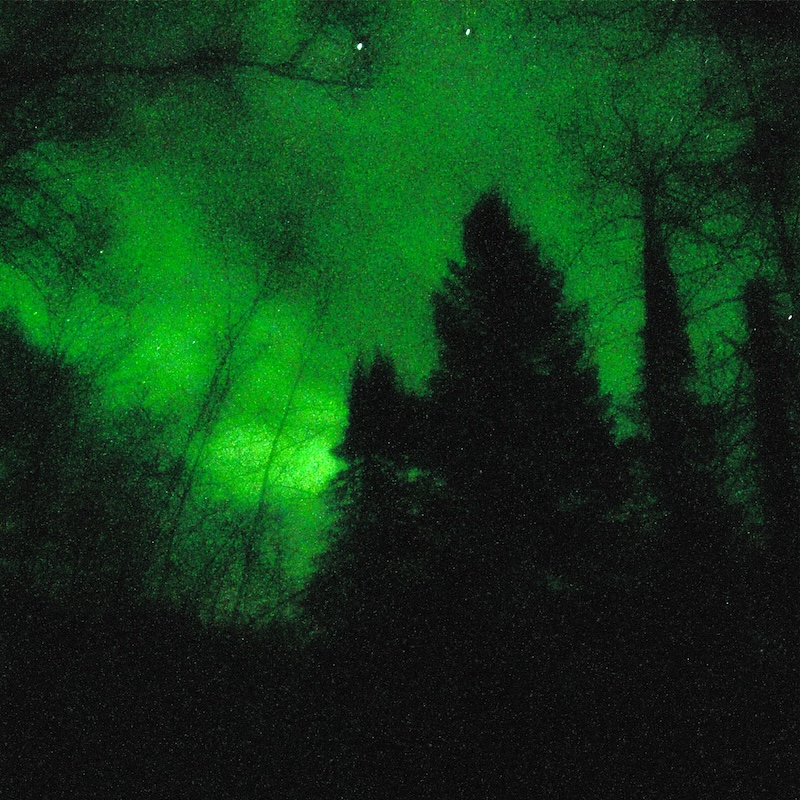
My first astrophotos! Left: northern lights observed from the harbor at Duluth, MN facing south. Center & right: weak green glow from the aurora later that night, Gooseberry Falls, 40mi NE of Duluth.
My journey started with a Canon EOS 6D Mark II . I highly recommend this model because it is (a) full-frame with 24 MP resolution, (b) affordable on the used market (just sold mine for $750, including the “L” kit lens), and (c) compatible with a vast selection of cheap, used, high-quality lenses. Also, Canon gives you the true RAW data from photos. Most Sony and (older) Nikon DSLRs do some data filtering, which is fine for daytime photos but leads to the notorious “star eater” problem at night (list of affected cameras here).
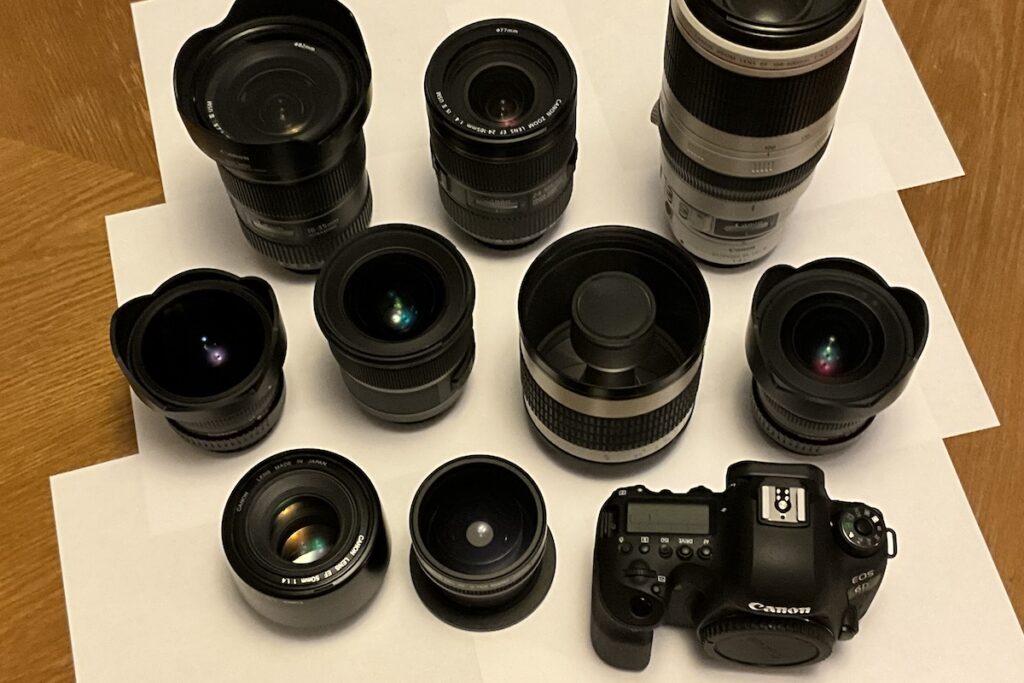
Here’s a reasonable starter kit. I bought way to many lenses at first, but for astro, I found myself defaulting to three primes >90% of the time: (i) a 14mm prime for my widest Milky Way and aurora panoramas, (ii) a 24mm prime for most of my shots, wide enough to capture most of the Milky Way, and (iii) a 35mm prime, too narrow for most frames, but excellent when doing panorama stitching.
Sigma has a great reputation for optical quality, matching or sometimes surpassing Canon/Nikon/Sony at much lower prices. Samyang (which also sells under the names Rokinon and Bower) also makes good lenses, not quite matching Sigma, but a lot cheaper.
Theoretically, I could have replaced all three of these primes with one zoom lens (say a Canon EF 16-35mm f/2.8 L III, a top-tier lens). This sounds attractive at first and the cost is comparable, but despite owning this lens (top-left in photo), I did not use it much. The f/1.4 primes have much wider apertures, gathering 4x more light. Moreover, you have the option of stopping the primes down to f/2.8, which results in significantly sharper images than the zoom can deliver (unless you stop it down to f/4 or f/5.6, and then lose even more light!). I do not recommend zoom lenses for astrophotography.
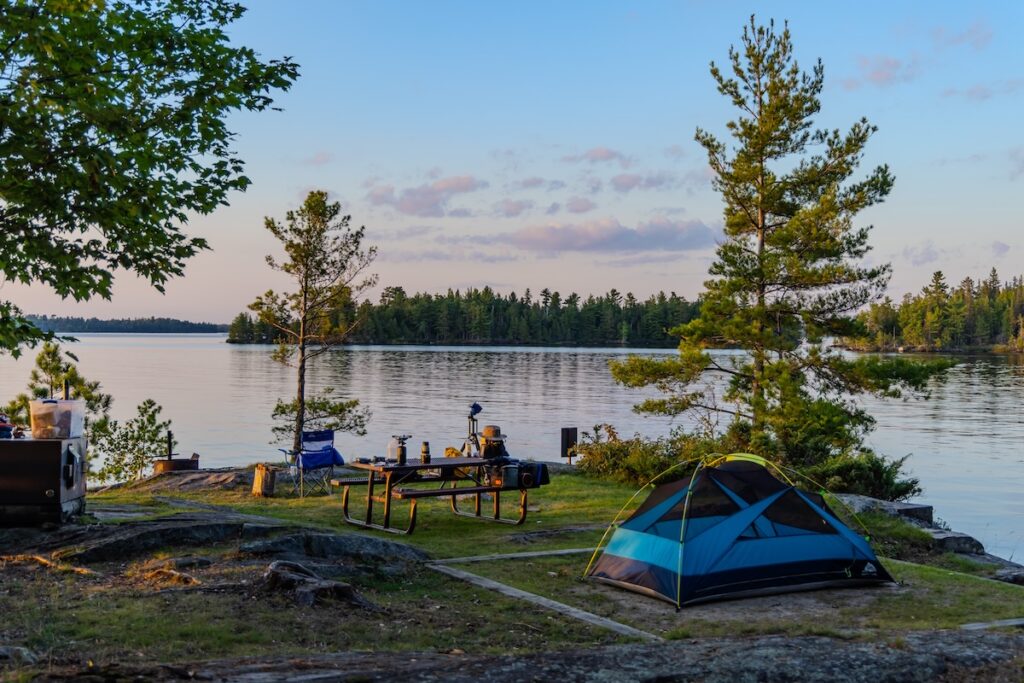
Finally, taking good photos requires dark skies, which means driving far from the city. For large cities like Boston, it’s a minimum 1-hour drive to suitably dark sites (Bortle 3-4), and 3+ hours to get to really good ones. Ideally I would do this in a rugged vehicle like an SUV or camper van with lots of clearance for rocky roads, 4WD for mud, and plenty of room to store gear. Or not. Either way, I find myself camping overnight during most astro expeditions because the distances are so great, and that adds to the experience. Hence this blog is a journal of camping and astrophotography.
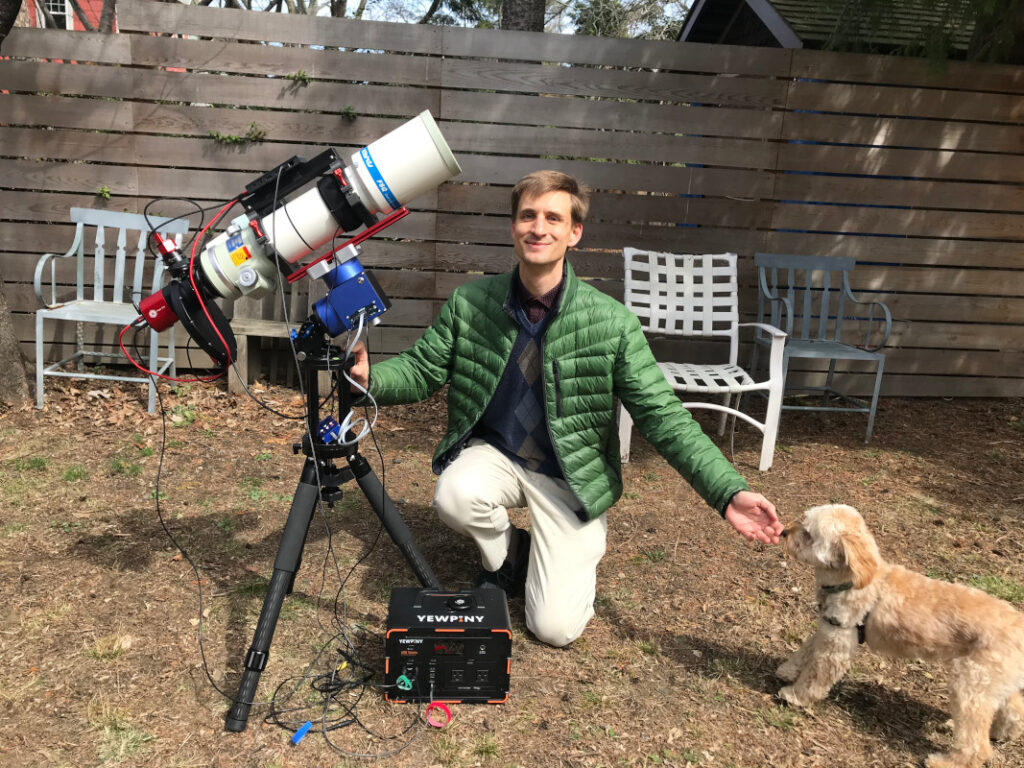
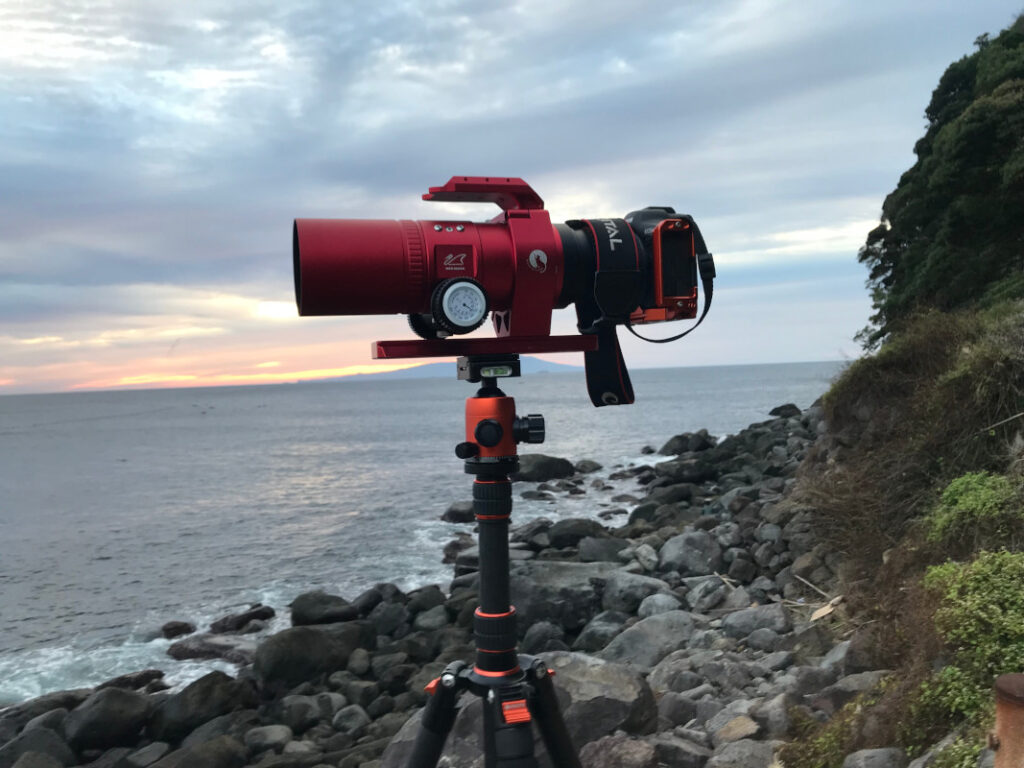
By early 2025, I decided to get into deep-sky object (DSO) astrophotography. This is much more technical than wide-field astrophotography, requiring polar alignment, guide-star tracking, filters, dithering, and lots of computer debugging. Also, the objects are incredibly faint, so you need to automate the setup to run all night long (another reason to go camping!). It is also a portal to the world of visual astronomy. I have two telescopes: a Takahashi FSQ-106N (the fluorite version) for serious work, and a William Optics RedCat 51 for travel. The RedCat also doubles as an exceptional telephoto lens, if you can handle manual focusing.
In future posts I will present photos captured with these exceptional tools, and the insights that I learned along the way!