Last night we had a lunar eclipse. It was visible 2-3 hours before sunrise in the western U.S., but I think that most easterners could have seen it as well, perhaps also coinciding with a moonset if lucky. In light of this, I’m doing a short blog post about my (3) experiences shooting eclipses.
4/8/24 (Solar)
This was one of the events that got me interested in astrophotography in the first place. If I had been home, I probably would have gone up to Vermont to see it — but I had to travel to LA on that day. Not to miss it, I planned a flight with a long layover in Chicago, and rented a car to drive to Indianapolis for the afternoon, since the path of totality went straight through Indianapolis.
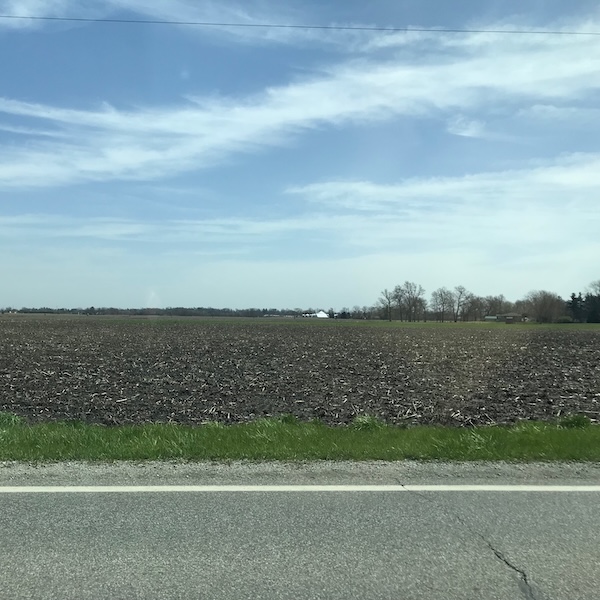
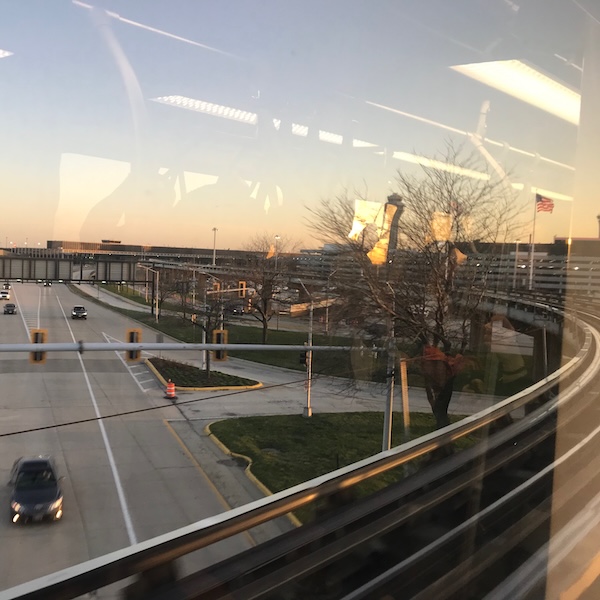
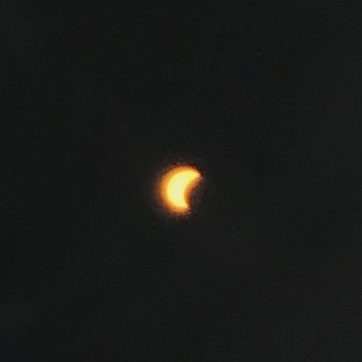
Unfortunately, there was a lot of traffic leaving Chicago, and the rural Indiana roads were also bogged down, since many other people were doing the same thing. I did’t get to Indianapolis at time, and had to settle for a 98% eclipsed Sun, which is a lot less impressive than totality.
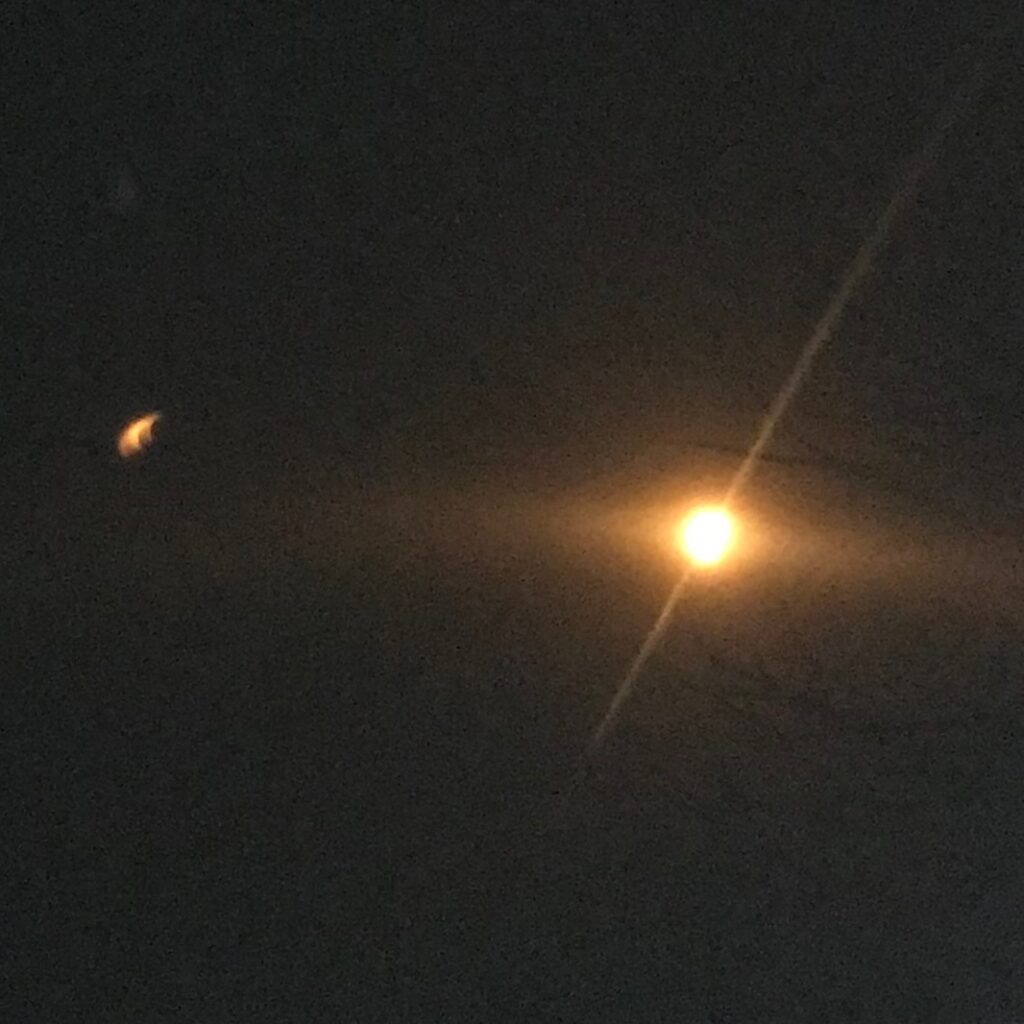
This was my first attempt to use a plate of obsidian, which I picked up in Mexico, to look at the eclipse. The obsidian acts like an attenuator, reducing the brightness by well over 99% without degrading image quality. But I had no experience with photography at the time, and my best attempts to photograph the sun through the obsidian were lackluster, although they clearly showed the “crescent” shape of the eclipsing sun.
3/14/25 (Lunar)
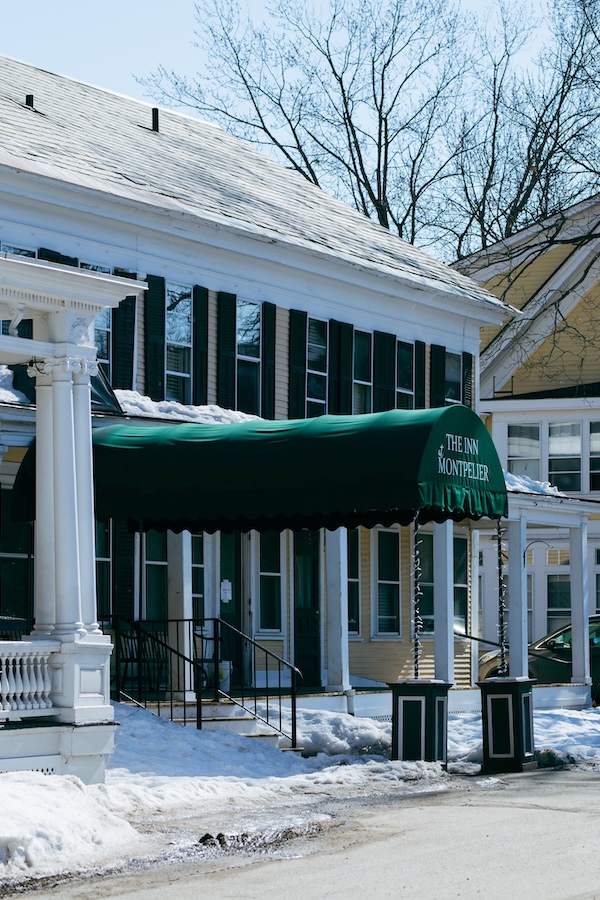
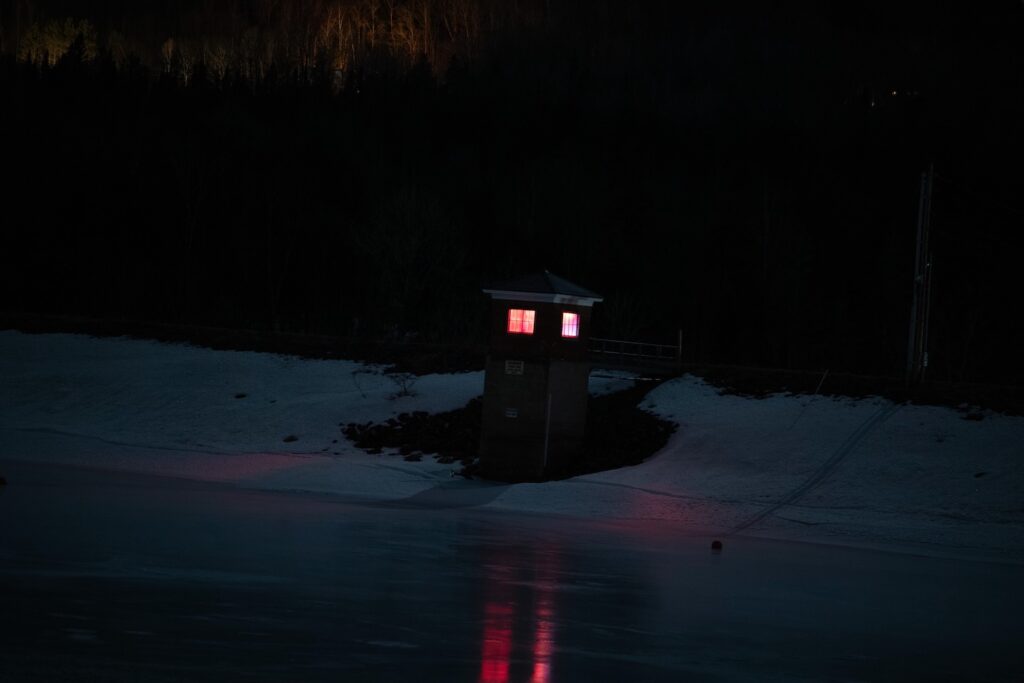
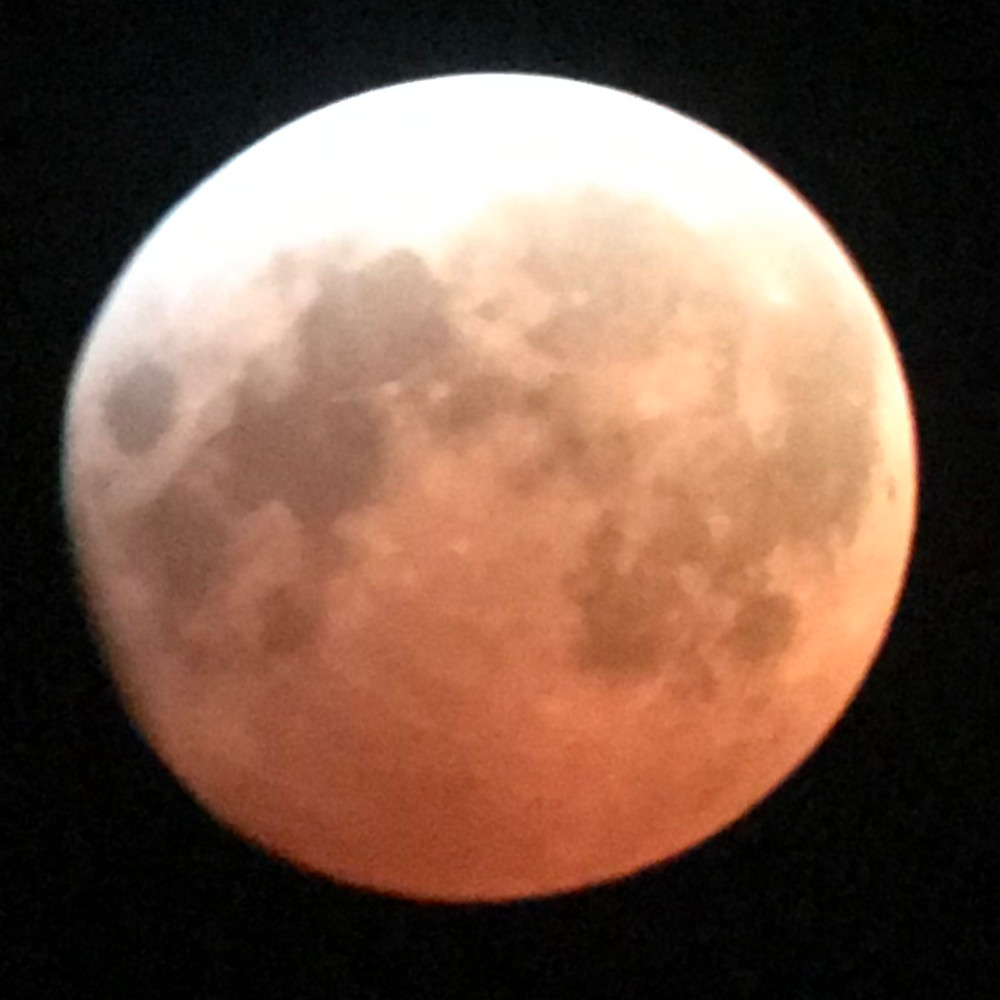
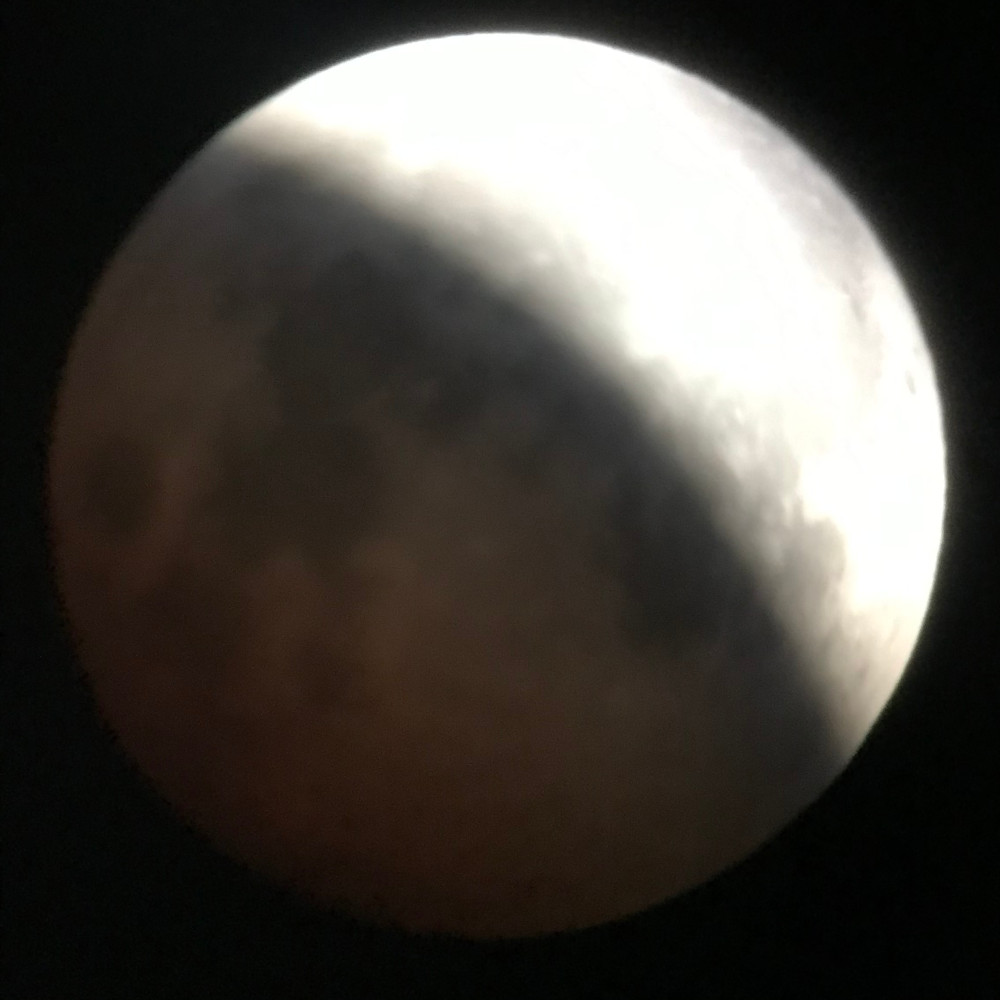
The lunar eclipse of 3/14 was one of the first objects I shot using the new Takahashi, purchased in February. The weather forecast was cloudy in Boston, so I took a road trip to Montpelier, VT, which had clear skies all night. After a short sleep in the hotel, I drove further afield to Molly’s Falls Pond, a reservoir with a boat launch. It was still snowy in Vermont and the pond was covered in ice.
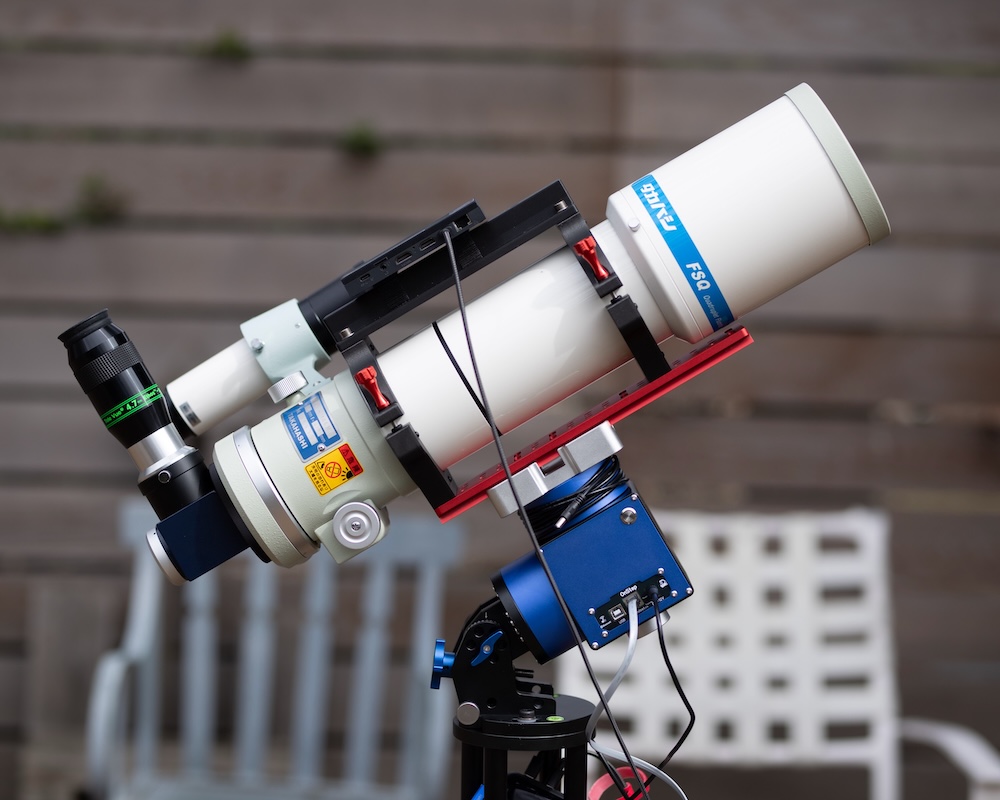

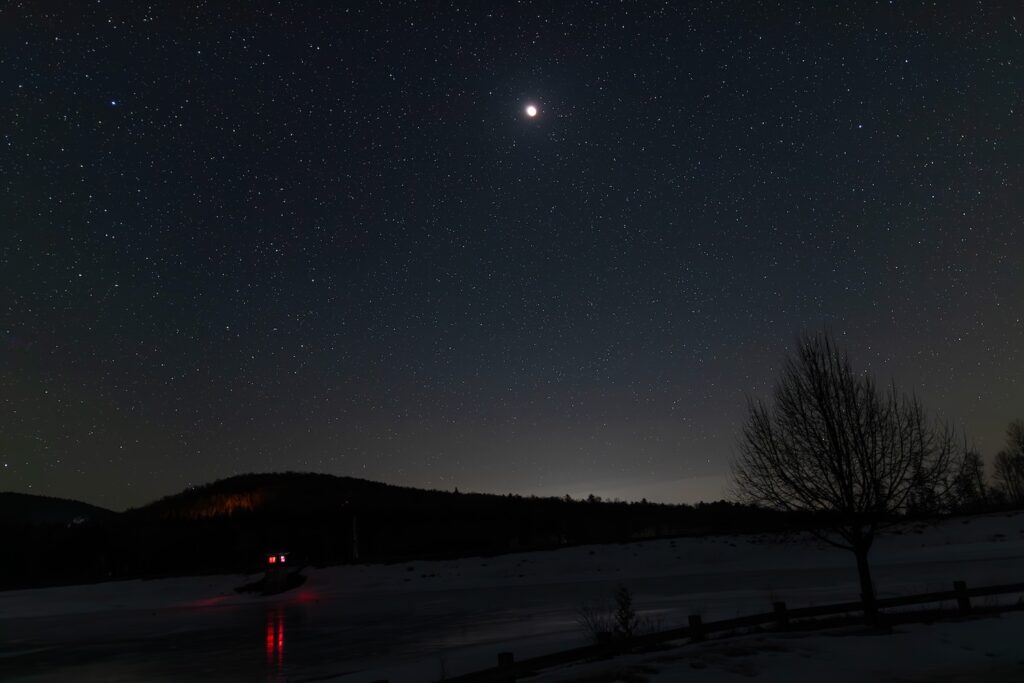
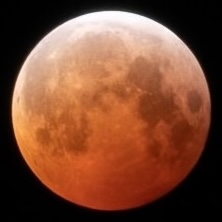
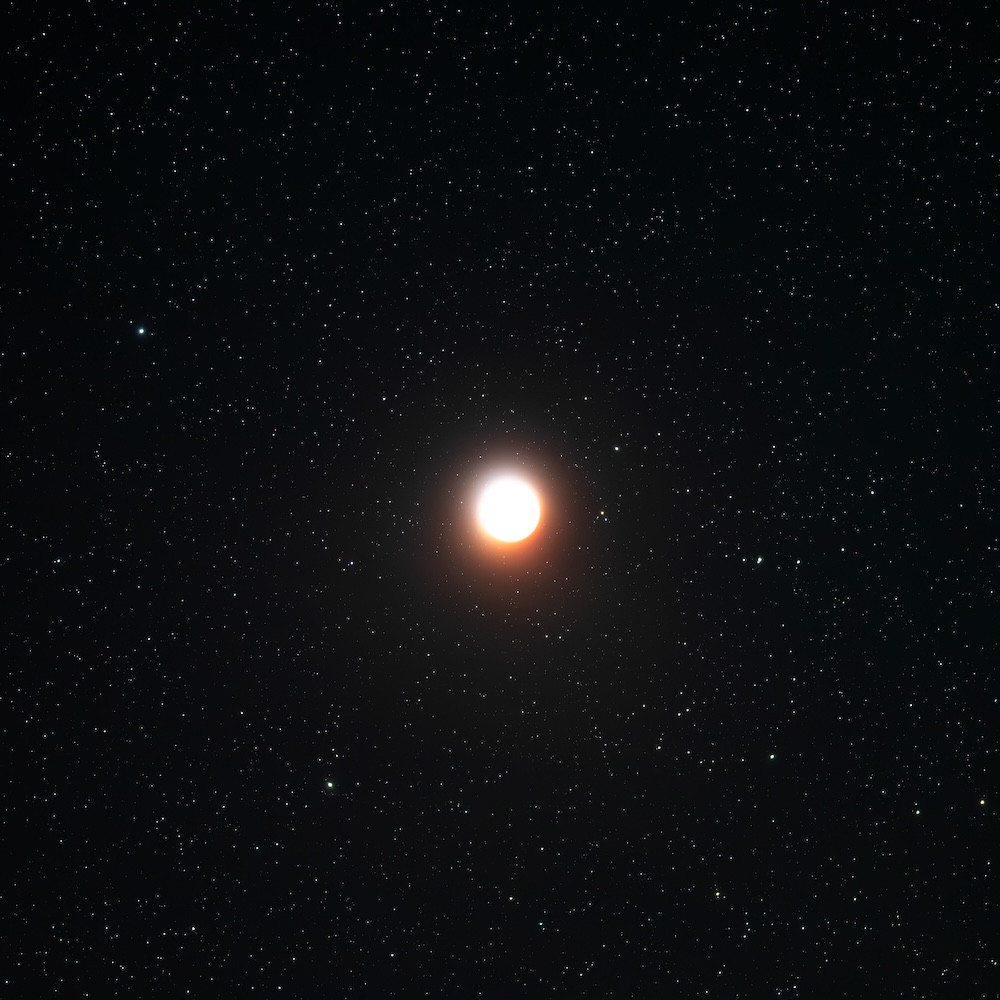
At the time, I didn’t have the right threaded rings to connect the camera to the telescope, so I was forced to put an iPhone up to the eyepiece exit pupil in order to capture an image. It was very tricky to align the exit pupil to the camera aperture, since I was holding the phone by hand, and so the pictures were a little blurry. However, this is pretty decent given the circumstances. For comparison, I also present a picture taken the same night with the Canon and a 500mm mirror lens (on a star tracker), plus a zoomed-out (and over-exposed) photo with the 135mm f/2 Rokinon lens.
3/3/26 (Lunar)
Last night, we also had a lunar eclipse. Again, it was cloudy in town (though I was in Berkeley this time), so I drove an hour north to the town of Williams, followed by a 10-minute drive west into the hills. This is a dark area, at least if you face west with your back to the Sacramento / Stockton / Davis light pollution. The SQM-L meter recorded 20.65 mag/arcsec².
The original plan had been to photograph the eclipse using my Sony A7RV and the RedCat 51 telescope, since that scope had done so well on the Horsehead and California nebulae last month (see my previous post). But when I tried to focus the telescope, I could not bring the stars to focus! I realized that there was not enough back-focus spacing in my setup because the A7RV flange distance is so short. This hadn’t been a problem on the previous nights because I was using the astronomy camera with a filter wheel and OAG, which provided enough spacing. Sad night for the RedCat!
Instead, I shot the exposures with my day-use Tamron 25-200 (replacement for the Tammy that I lost at sea last month). The 200mm of focal length and f/5.6 optics bring it close to the RedCat, and although it can’t match the Cat for sharpness or contrast, it is a close second. I didn’t have the adapters to mount the Raspberry Pi or guide scope, though — this forced me to take the pictures “old-school”, with the mount running unguided and the camera shooting autonomously with the built-in intervalometer.
In the process, I had messed up some of the camera settings, and all the pictures were taken in JPEG rather than RAW. Therefore, some data loss occurred, but with the appropriate gamma curve to capture the full dynamic range, the JPEGs retain most of the information in the images.
There’s a lot of dynamic range in the eclipse during the penumbral stage. The five pictures below illustrate this. The sunlit lunar surface is about 1000x brighter than the part under the Earth’s shadow. And it is only when you saturate the former that the scene is bright enough to reveal any stars.
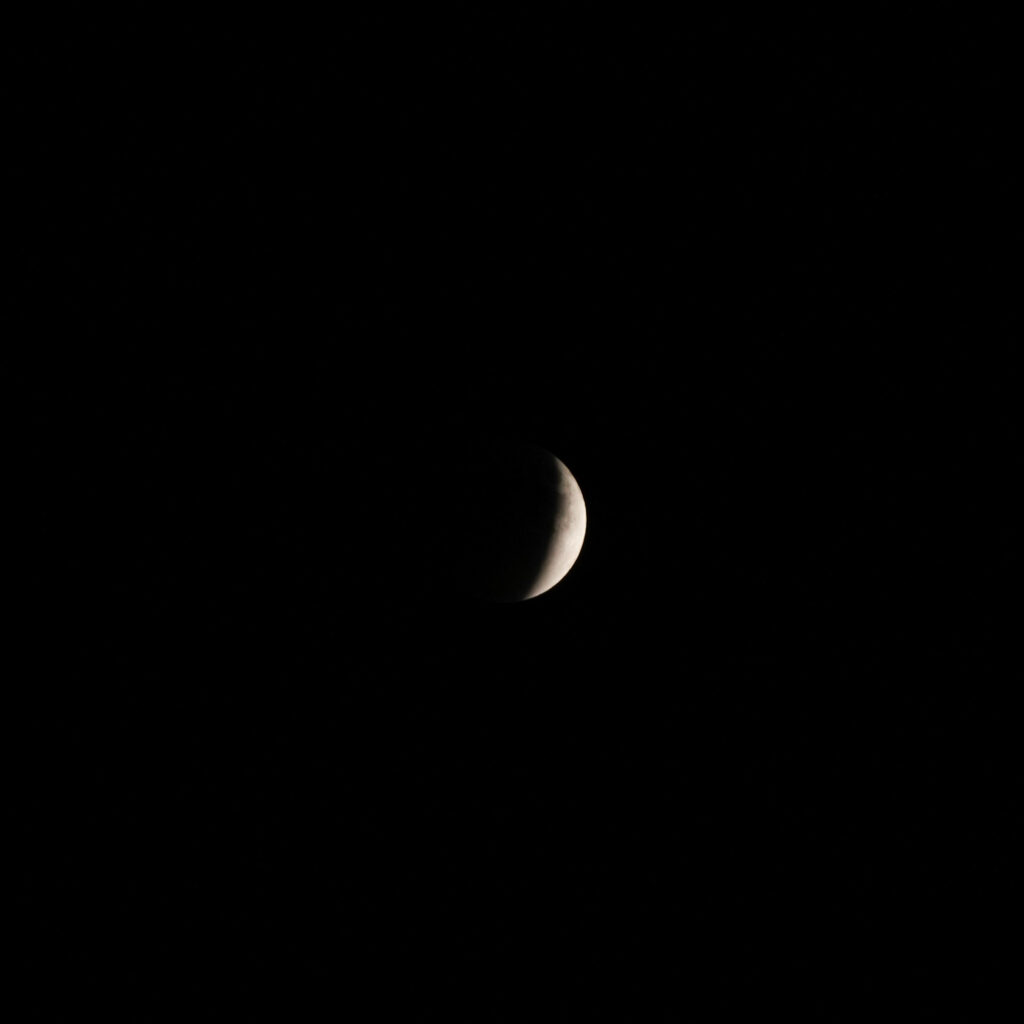
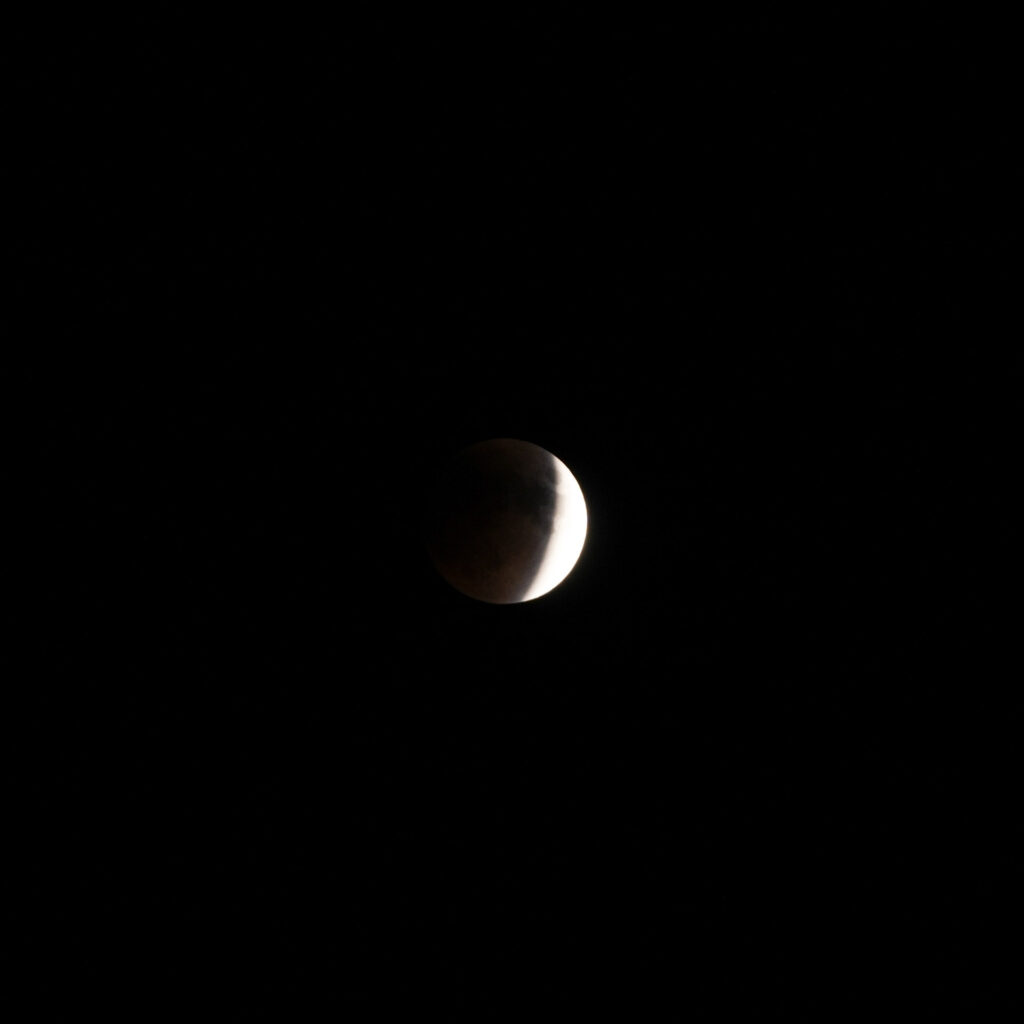
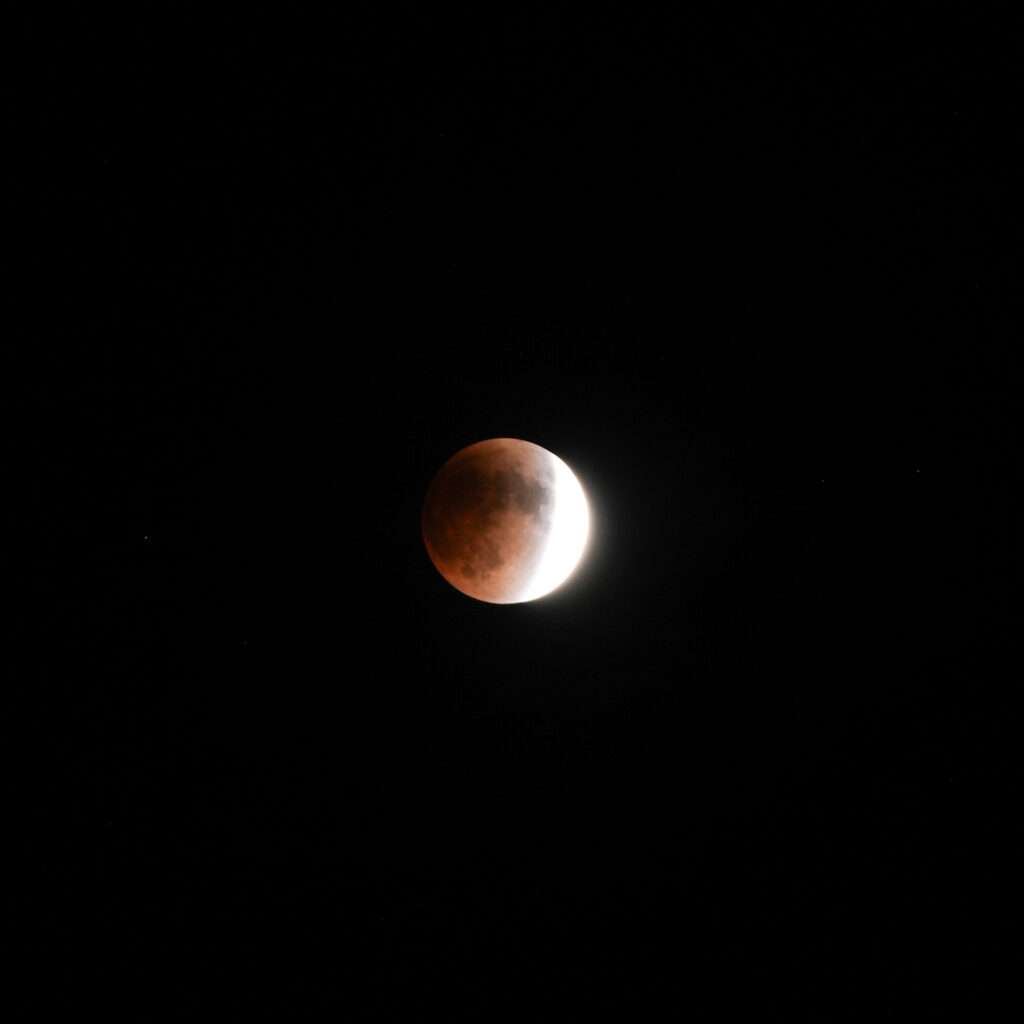
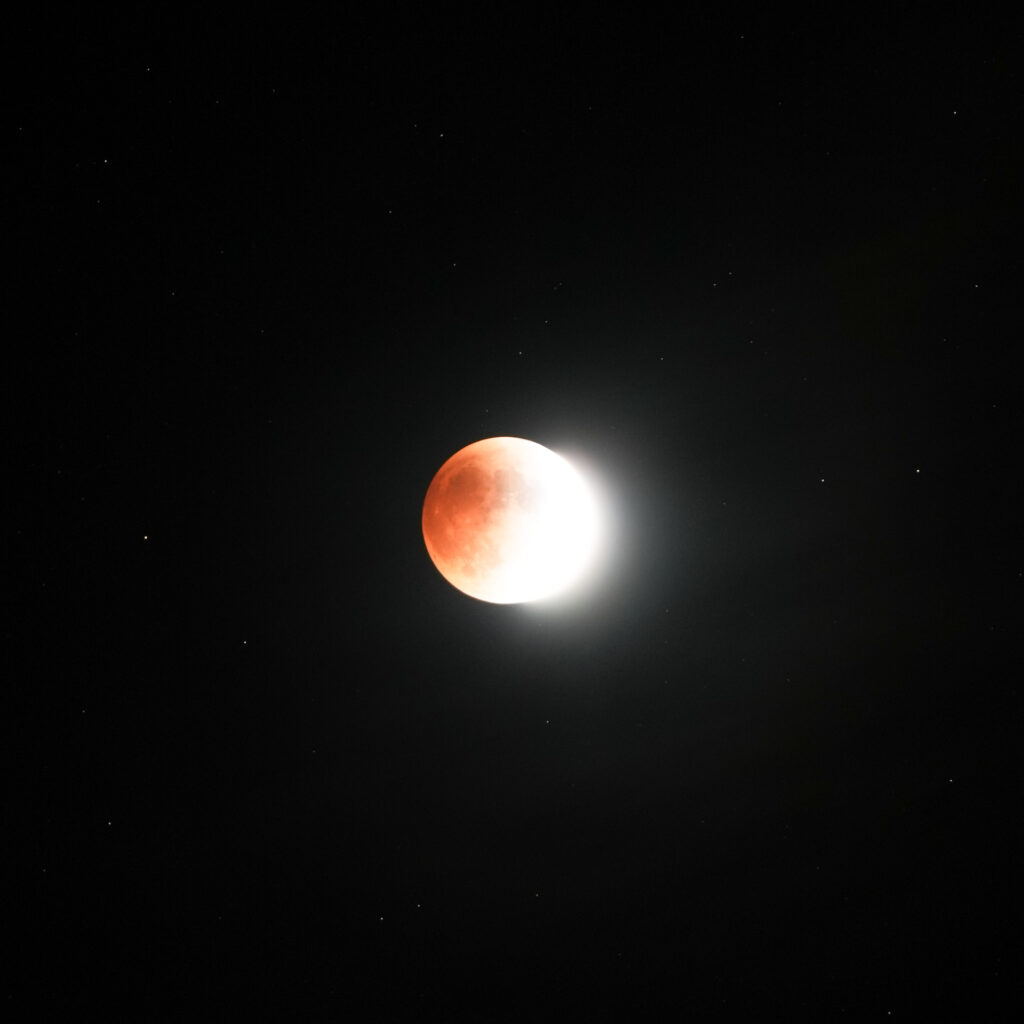

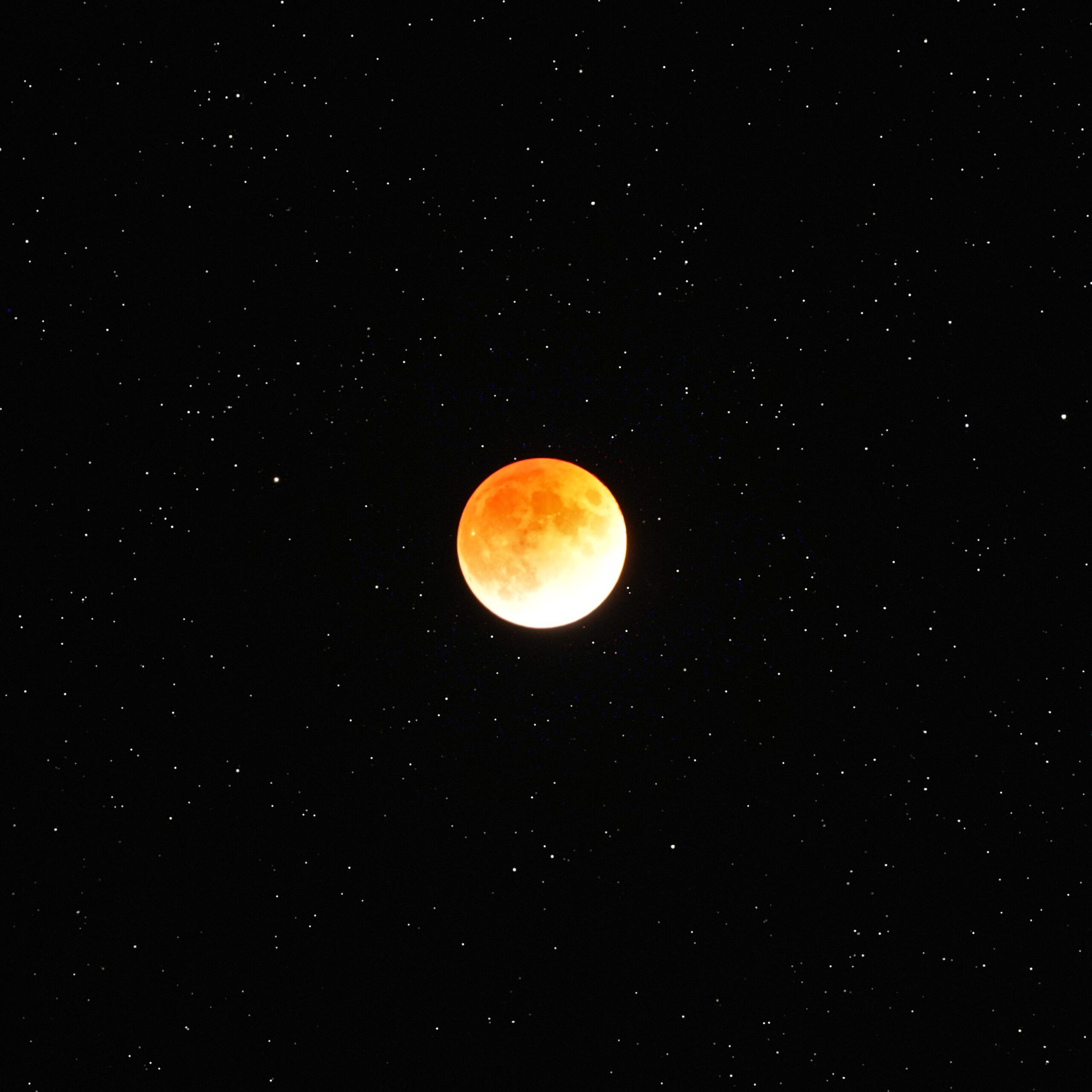
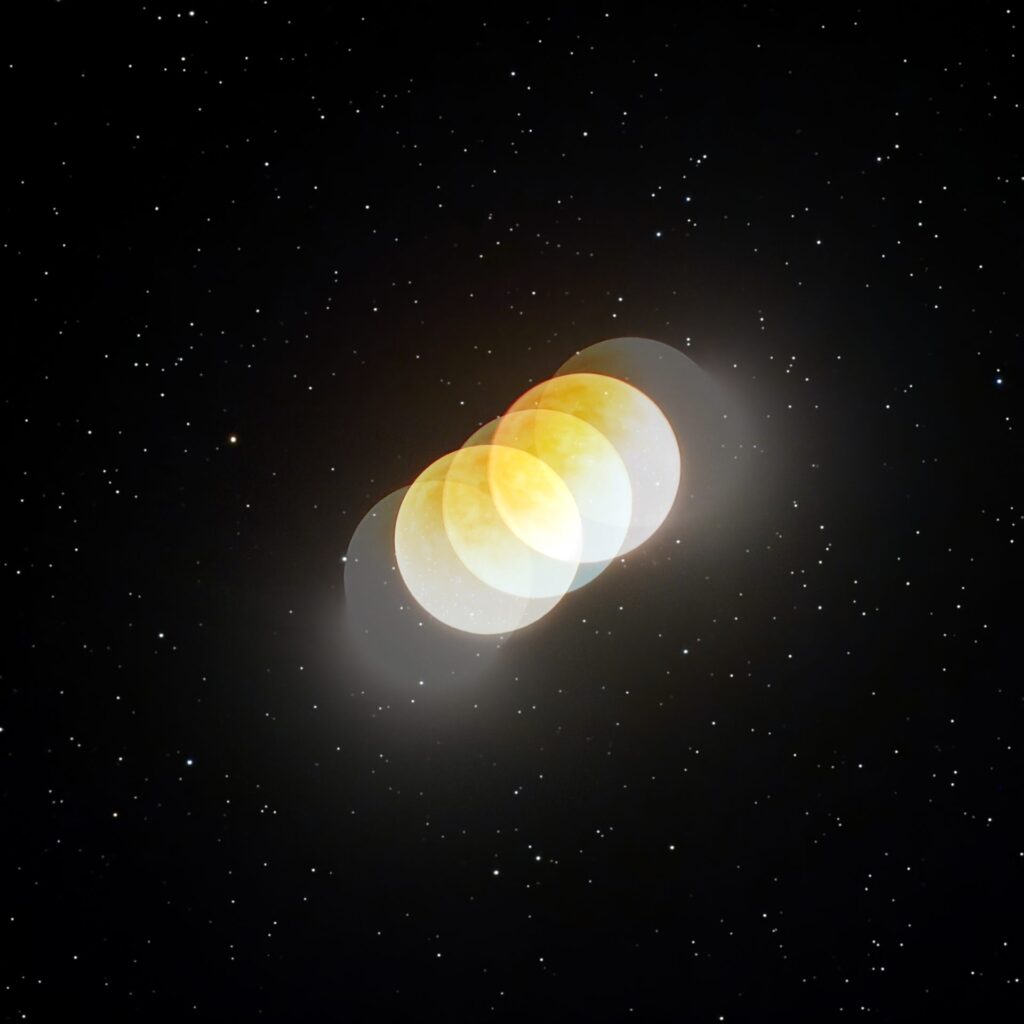
Once the eclipse reaches totality, you see a more even lighting between the moon and its background. By DSO standards, it is still a very bright object (around -1.5 mag, which means ~14 mag/arcsec²). But it is dim enough that you prefer a long exposures, >10 s, to capture lunar features in detail. Below are two images and a time lapse from the eclipse.
Future
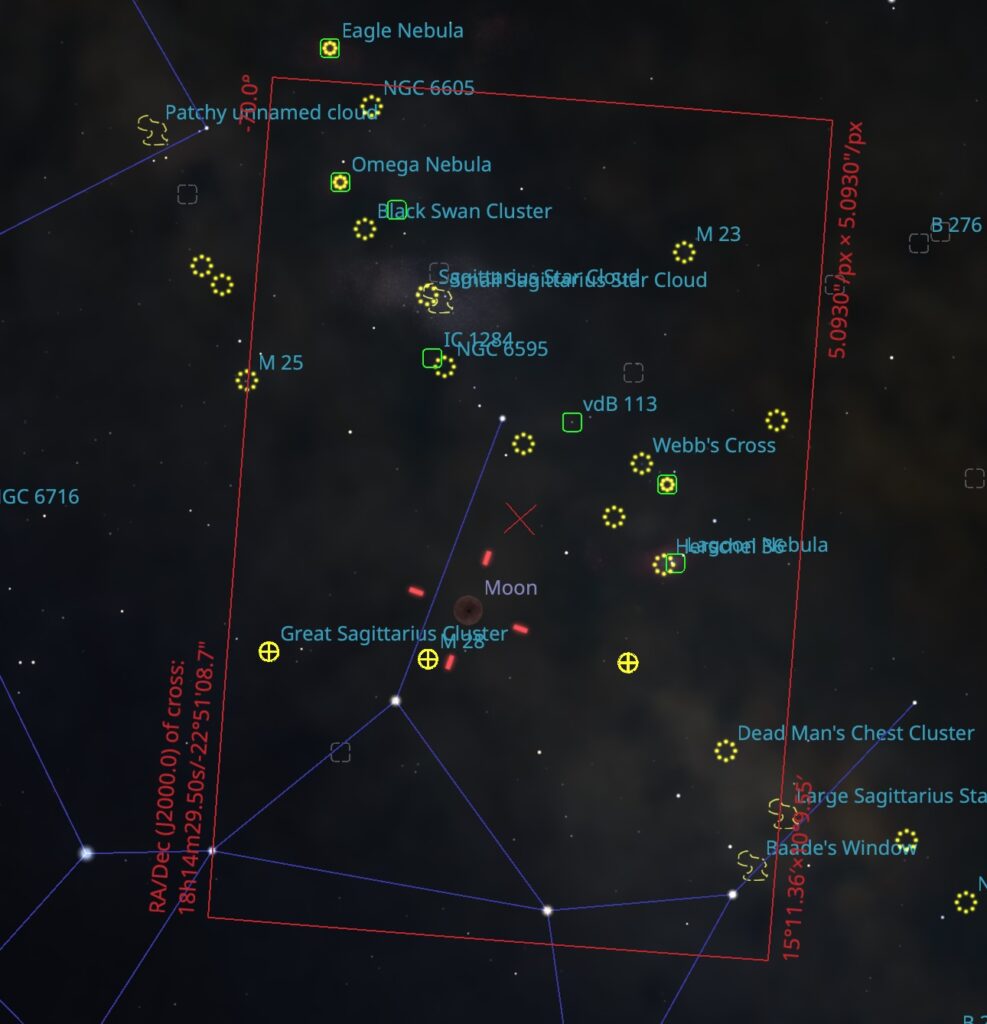
Since 2027’s eclipse is annular, the next total lunar eclipses will happen in 2028 and 2029 (planner here). The 2029 eclipse will be especially remarkable because not only does the Moon pass through the center of Earth’s shadow (so its attenuation will be the most extreme), but the eclipse also happens in the dense Sagittarius region of the inner Milky Way. This region is bustling with star clusters, emission nebulae, and dark nebulae, and overall has a high density of stars. With a good portrait lens or ultrawide-field telescope (Rokinon 135mm f/2, Sigma 200mm f/2, MiniCat 51), I could catch the eclipsed moon against this exciting backdrop!