In one of my first posts, I explained the art and science of aurora chasing. One of the important claims was that visible aurora are rare, even in the northern continental U.S. To justify this, I pointed to NOAA’s Aurora Viewline Map, which predicts aurora visibility as a function of the geomagnetic Kp index. Since we know the frequency of high-Kp events, we can predict the number of aurora visible from a given location, per year. I concluded that, in northern U.S. states like Massachusetts, an event with Kp ≥ 7 was needed to see aurora, which works out to only 8 visible aurorae per year. And some of these days are cloudy.
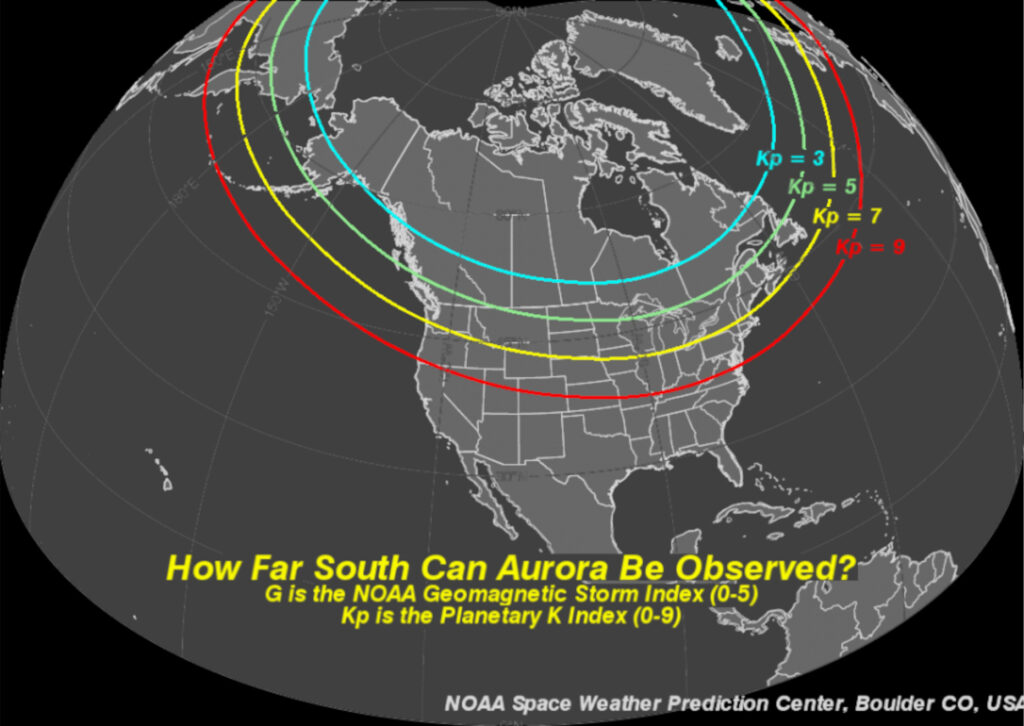
Based on my recent data, I am happy to report that this was wrong. With long-exposure photography, the aurora viewline extends far south of the NOAA maps. This means that (photographically) visible aurora are far more common than I believed.
A Record of Aurora Sightings
Below, I give a list of all my confirmed or likely aurora sightings from the last two years.
| Date / Time (UTC) | Location | Kp | Height | Activity | Description |
|---|---|---|---|---|---|
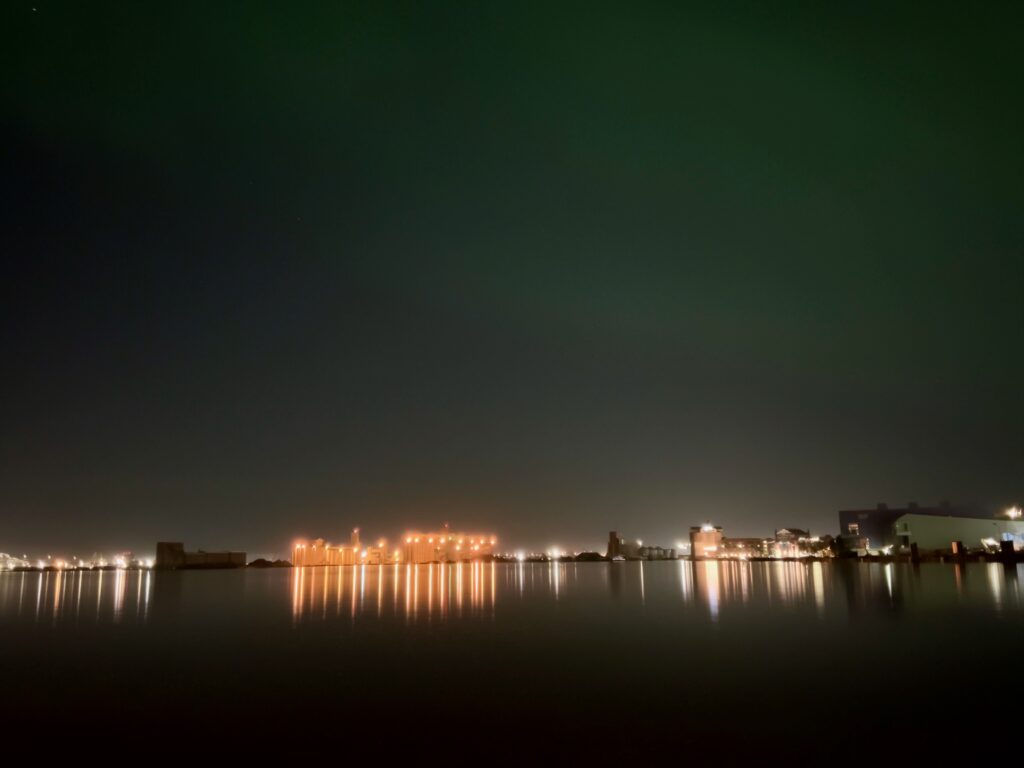
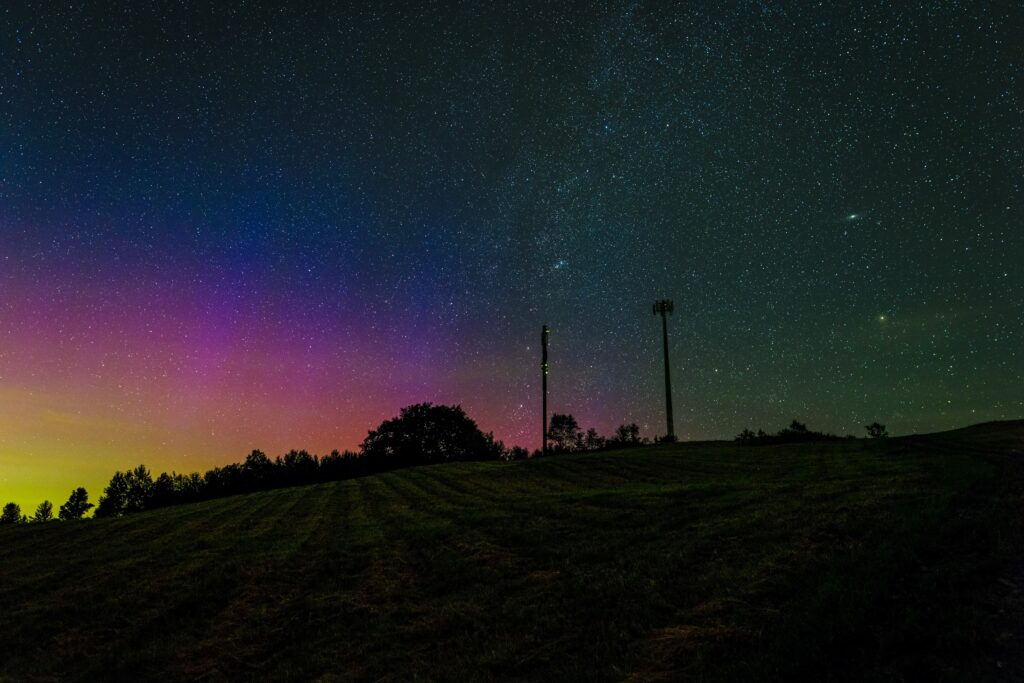
| 2024-05-12 04:30Z | Duluth | 7 | 90º | A7 | All-sky aurora over Duluth harbor |
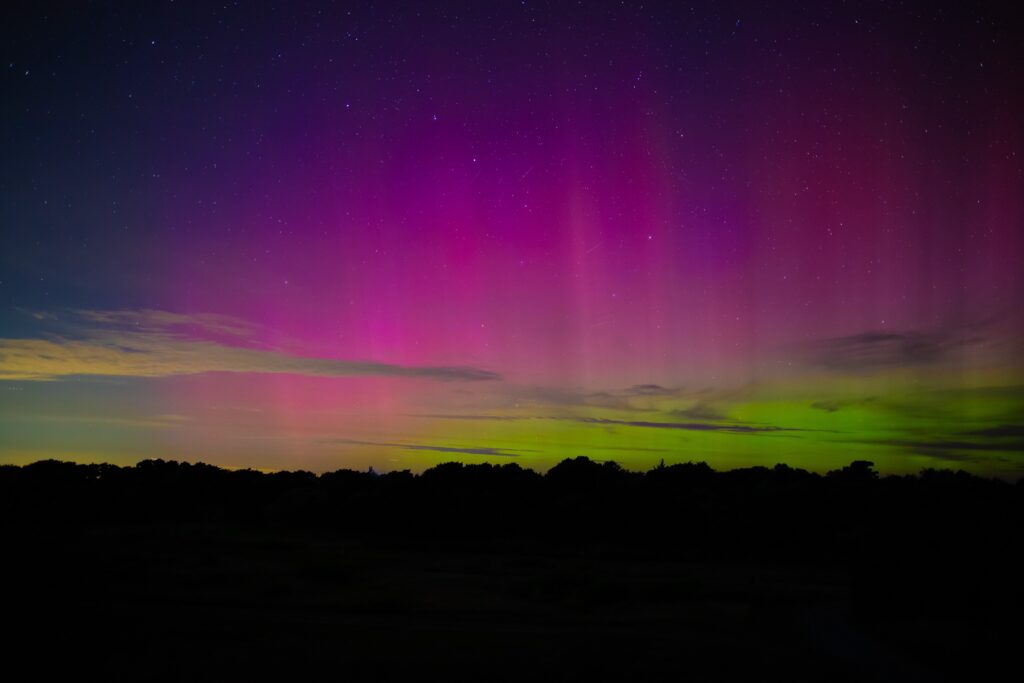
| 2024-08-12 05:20Z | Truro | 7 | 45º | A5+ | Cast shadows and reflected over ocean |
| 2024-08-13 07:00Z | Truro | 3- | 15º | A2 | Purple glow in star trails. Very faint. |
| 2024-09-25 07:20Z | Gunnison NP | 4 | 5º | A1 | Low confidence |
| 2024-10-11 02:00Z | Copenhagen | 8+ | 45º | A5 | Reflected over water |
| 2025-05-02 11:00Z | Bryce Canyon | 4+ | 5º | A1 | Purple glow to north? |
| 2025-06-02 06:30Z | Streeter Mtn | 6 | 40º | A5 | Active & bright, but didn’t illuminate ground |
| 2025-07-23 03:10Z | Windswept | 3+ | 20º | A4 | Glow with bright bands |
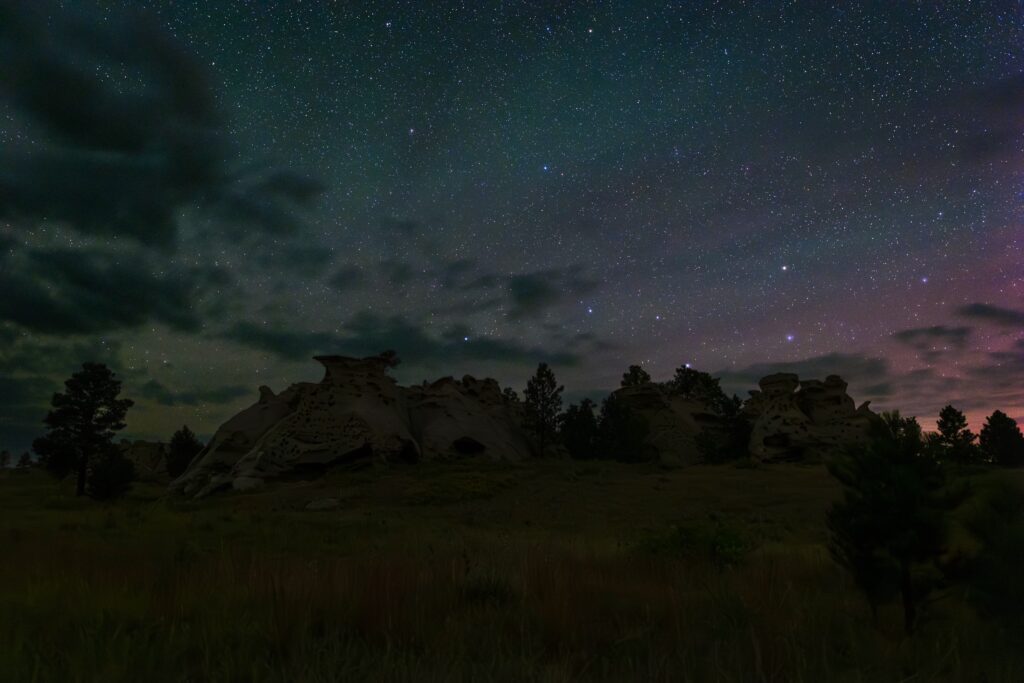
| 2025-08-28 07:20Z | Medicine Rocks | 2 | 25º | A2 | Purple glow to north. Medium confidence. |
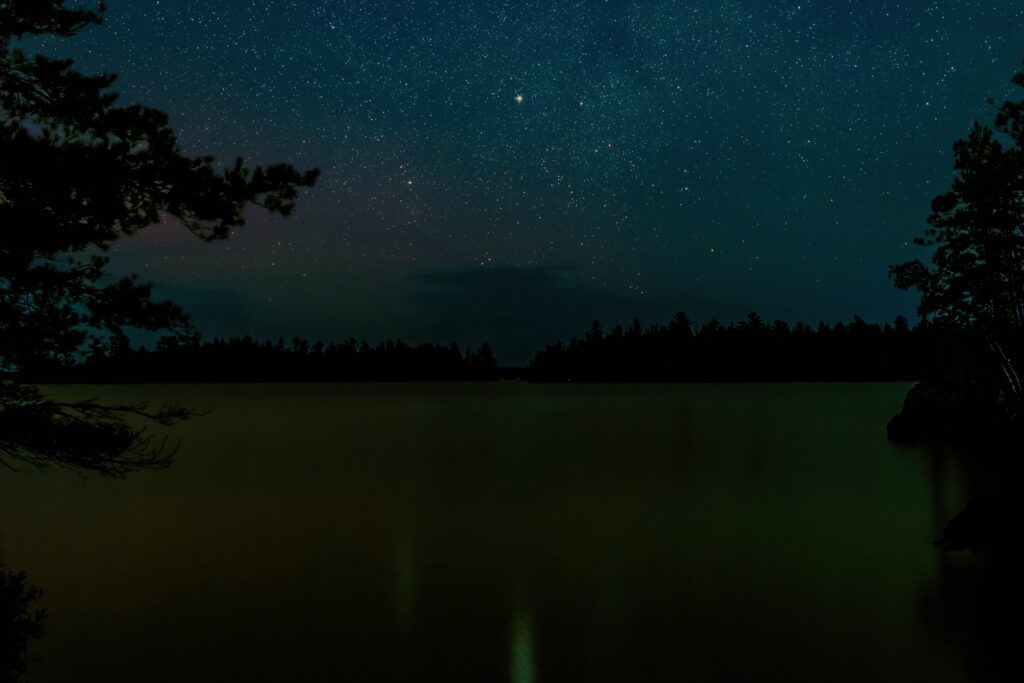
| 2025-08-30 05:40Z | Voyageurs | 1 | 8º | A2 | Faint red glow north in storm |
| 2025-08-31 06:20Z | Voyageurs | 1+ | 15º | A3 | Red glow, occasional bursts |
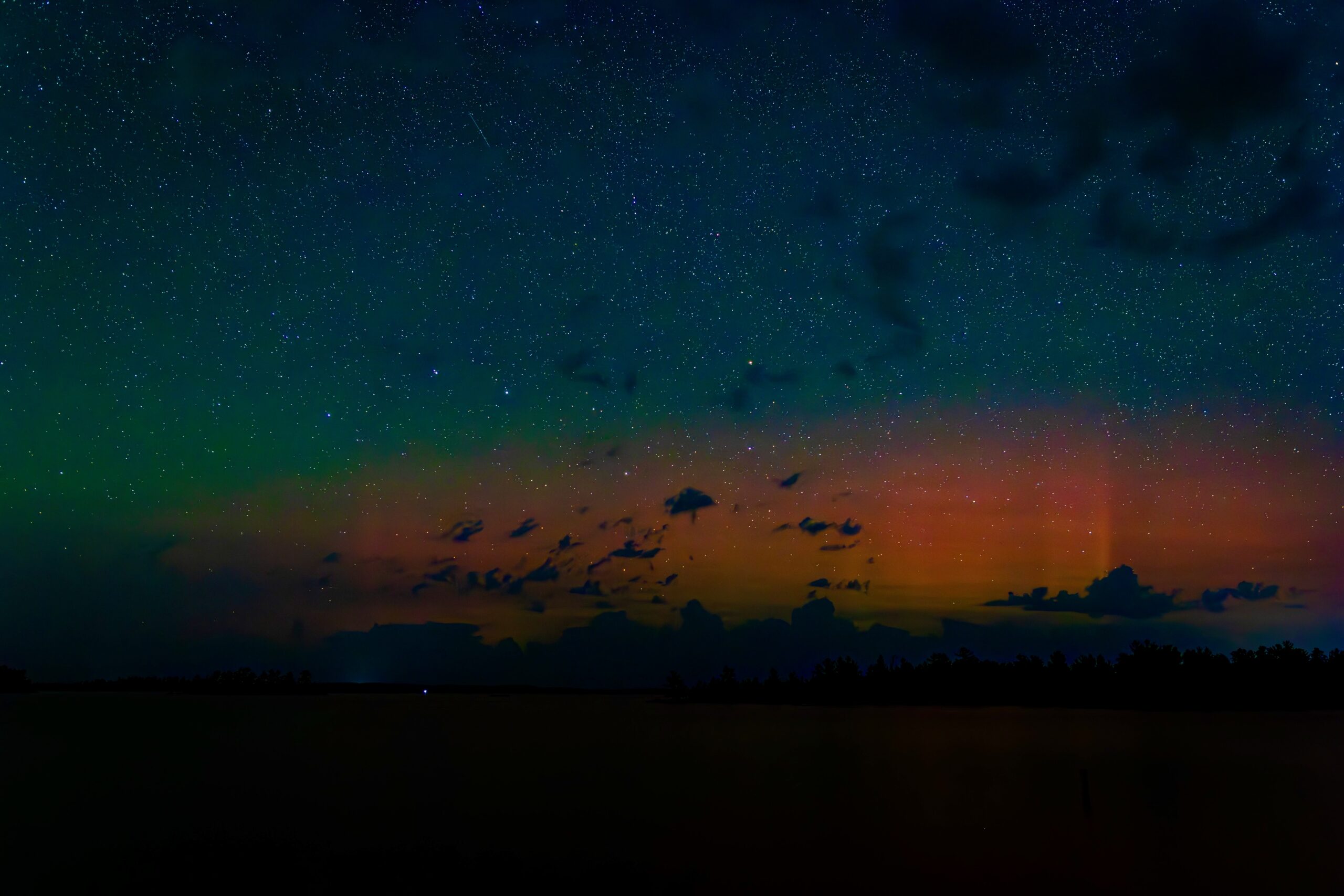
| 2025-09-02 04:40Z | Gargantua | 4+ | 35º | A2 | Red glow above some yellow (Wawa?) |
| 2026-03-22 10:20Z | Hopland | 6+ | 10º | A3- | Red glow, faint bursting |
In addition to date/time and location, I have reported the measured Kp index for the 3-hour period containing the photo, as well as a subjective “Activity Index”, defined as follows:
| Level | Description |
|---|---|
| A0 | No visible aurora. Nothing detectable, even with long exposure. |
| A1 | Very faint glow, may be light pollution or a processing fluke. Low confidence. |
| A2 | Faint glow. Low on horizon, often reddish or purple, stands out in photos against light pollution (yellow) and sky background (blue). |
| A3 | Structured glow / arc. Clear arc or band. Usually still confined to the north (in mid-latitudes) |
| A4 | Active arcs and rays. Green becomes obvious. Motion visible to the eye. Vertical structure (“curtains”) appears. |
| A5 | Bright, dynamic display. Rapid motion (“dancing lights”). Multiple structures, pulsing, waves. Extends high in sky (30–70° elevation). |
| A6 | Overhead / storm-level. Aurora reaches zenith. Corona forms (rays converging overhead). |
| A7 | All-sky aurora. Extends in all directions, including south. Rare at mid-latitudes. |
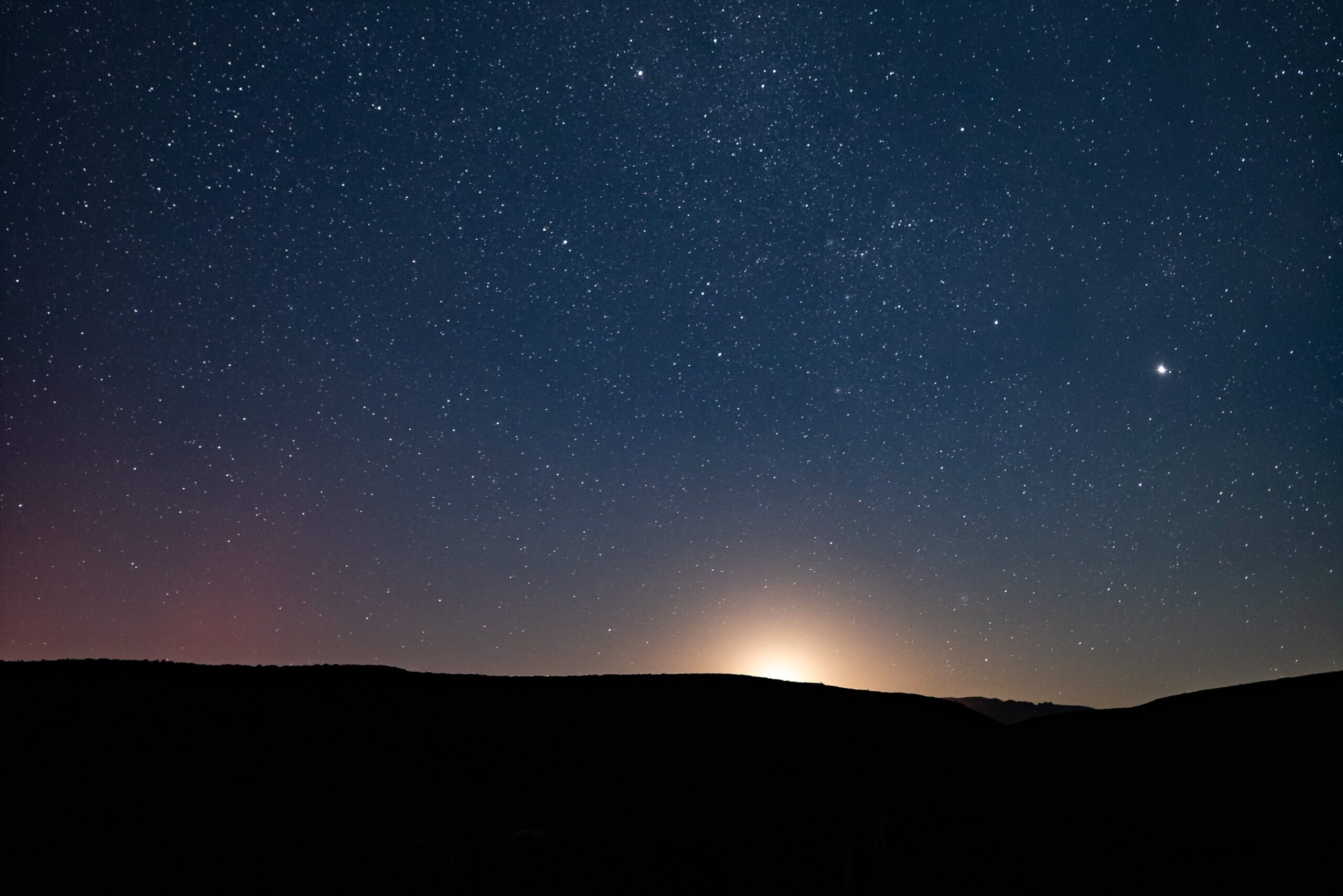
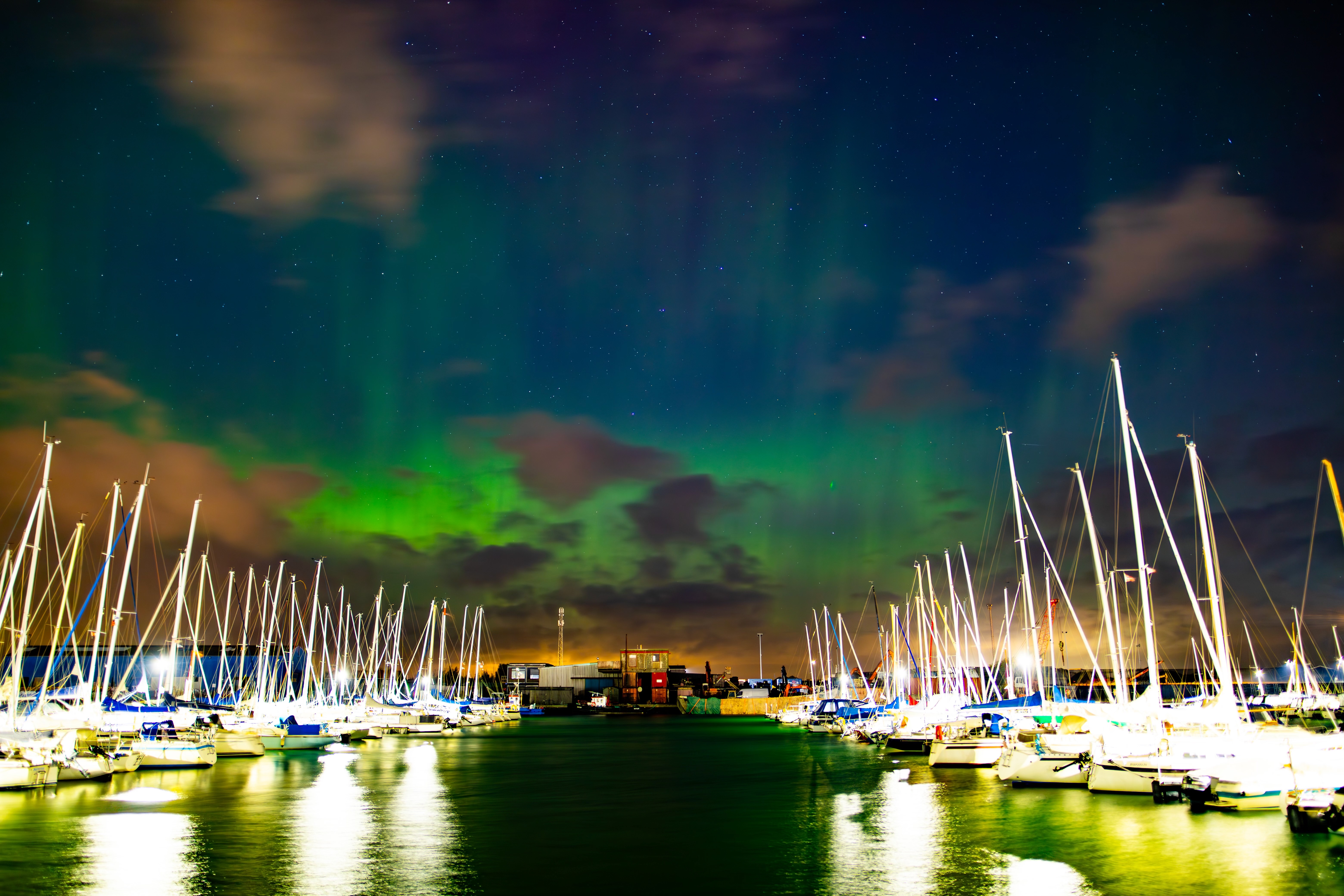
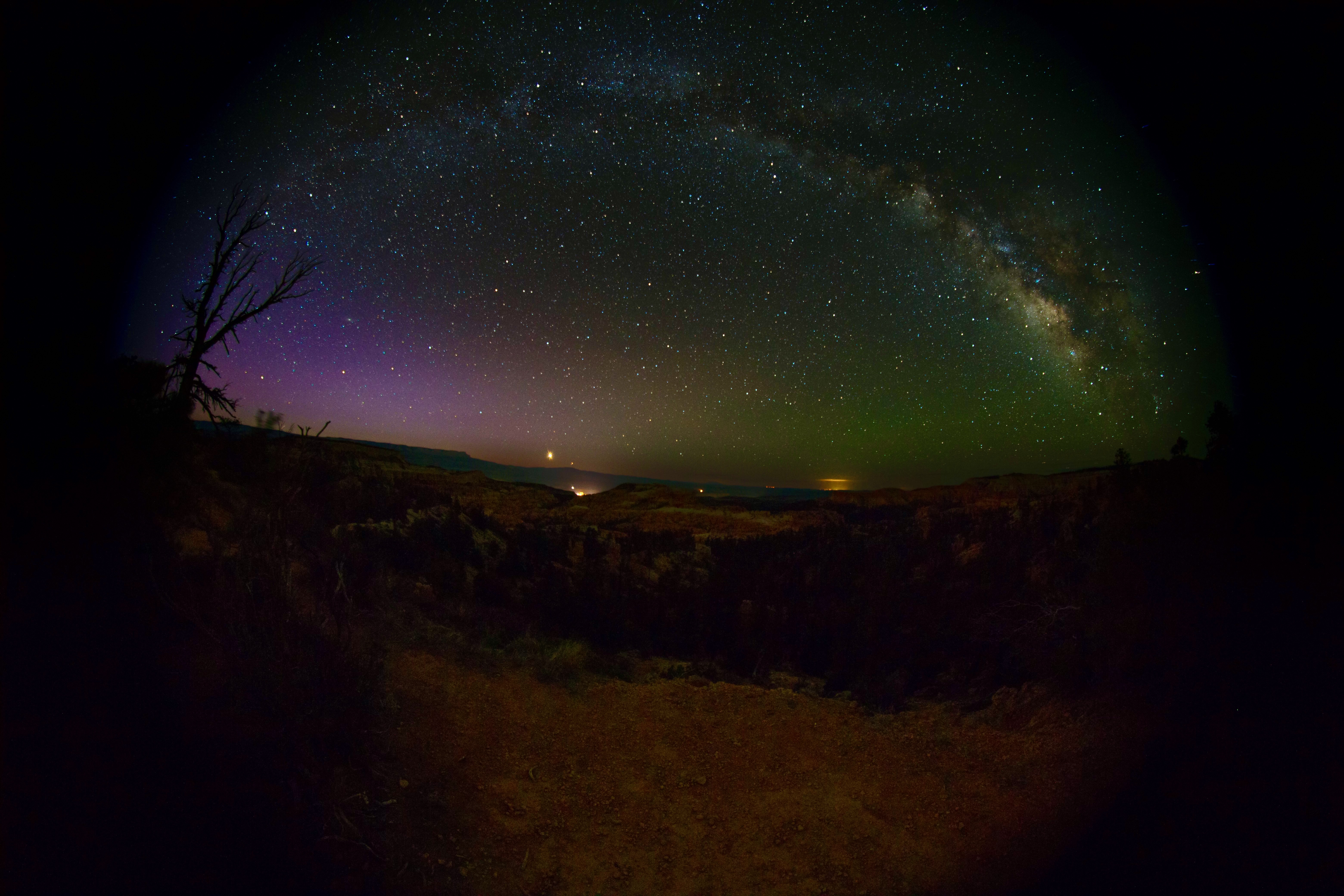
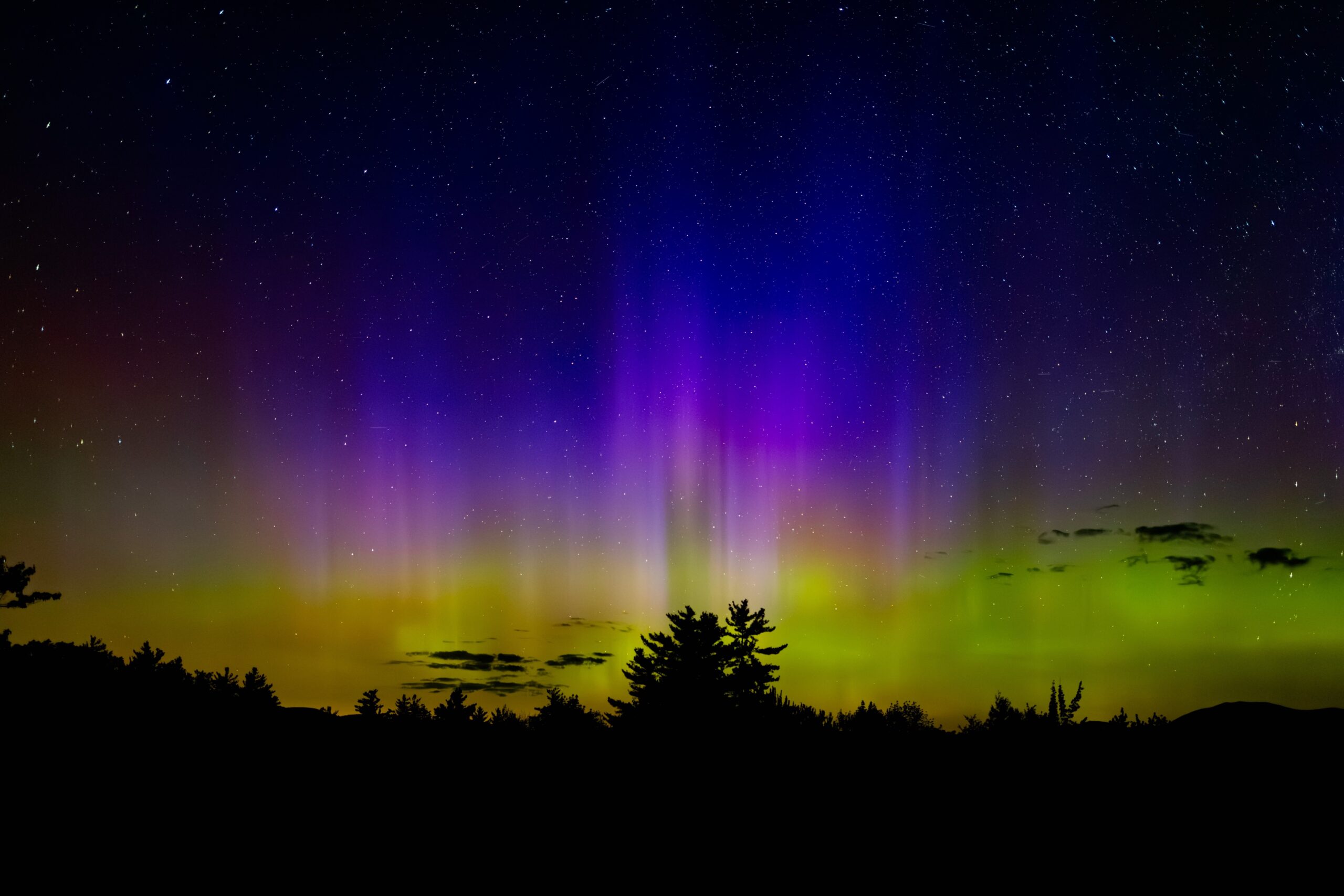
About half of these fall within the NOAA visibility lines, including the most prominent storms on 5/12/24, 8/12/24 and 10/11/24. But there are a few outliers. The events at Gunnison (9/25/24) and Bryce (5/2/25) occurred during mild Kp=4 storms, but were too far south for aurora. But those were really faint. Not so with the 7/23 Windswept aurora, which was very structured and variable, or the 8/31 Voyageurs event, where a red northern glow pulsed through the night at a mere Kp=1+ (though Voyageurs is pretty far north). These were definitely aurorae.
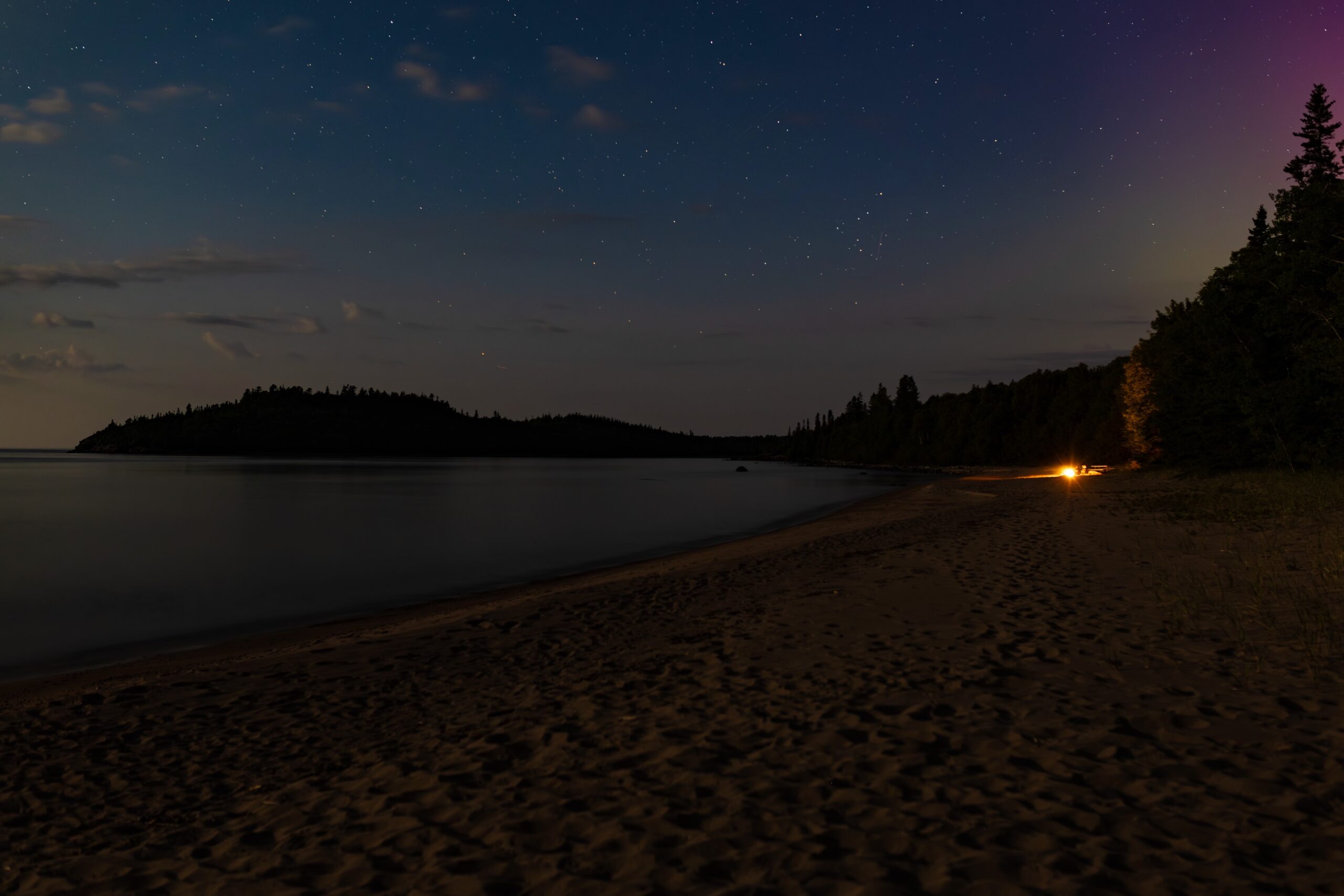
The Smoking Gun: Hopland
I put this hypothesis to the test on a March 30 outing to the hills near Hopland, CA (100 miles north of San Francisco). The forecast predicted a G3 geomagnetic storm (Kp = 7 or so), which was still out of range according to the map (the viewline roughly follows the Washington-Oregon border). Regardless of the aurora, the campsite offered hilltop views from a Bortle 2-3 location and clear weather, so it wouldn’t be a waste.
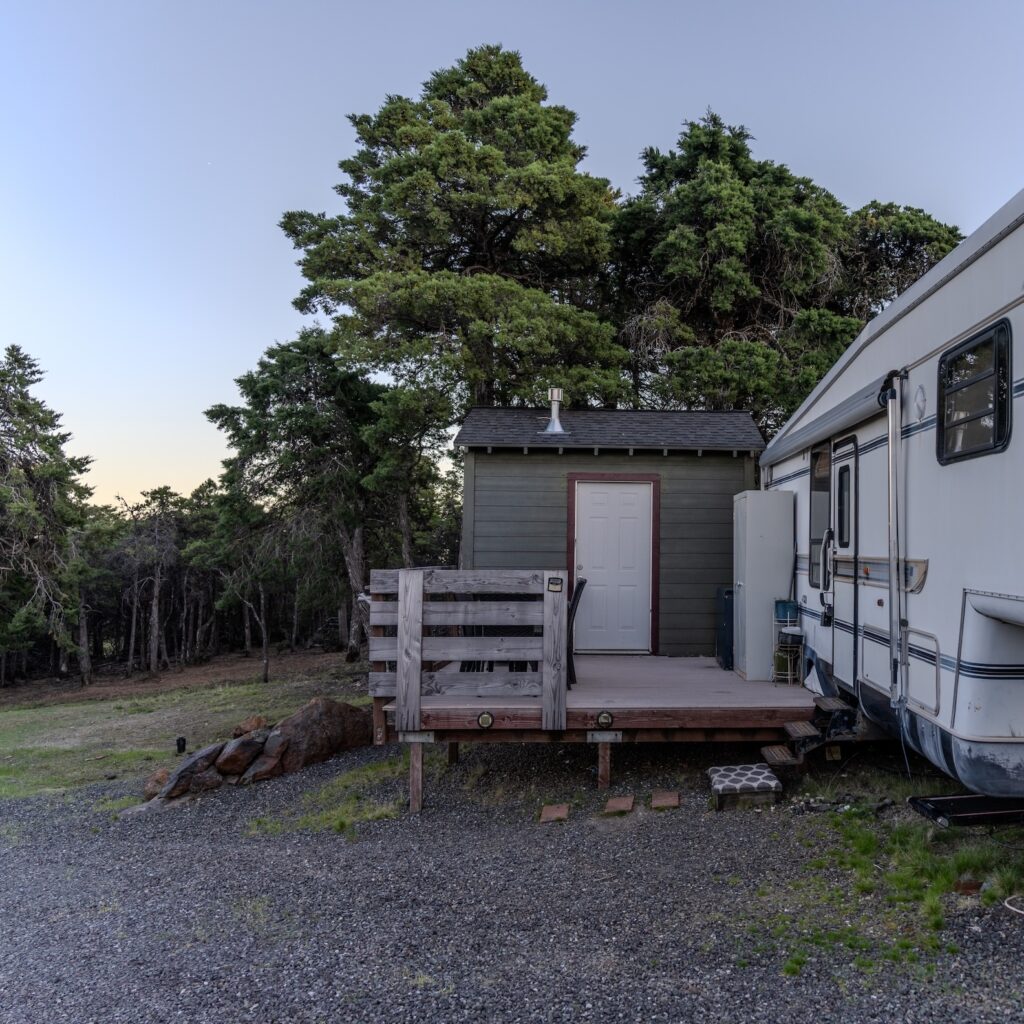

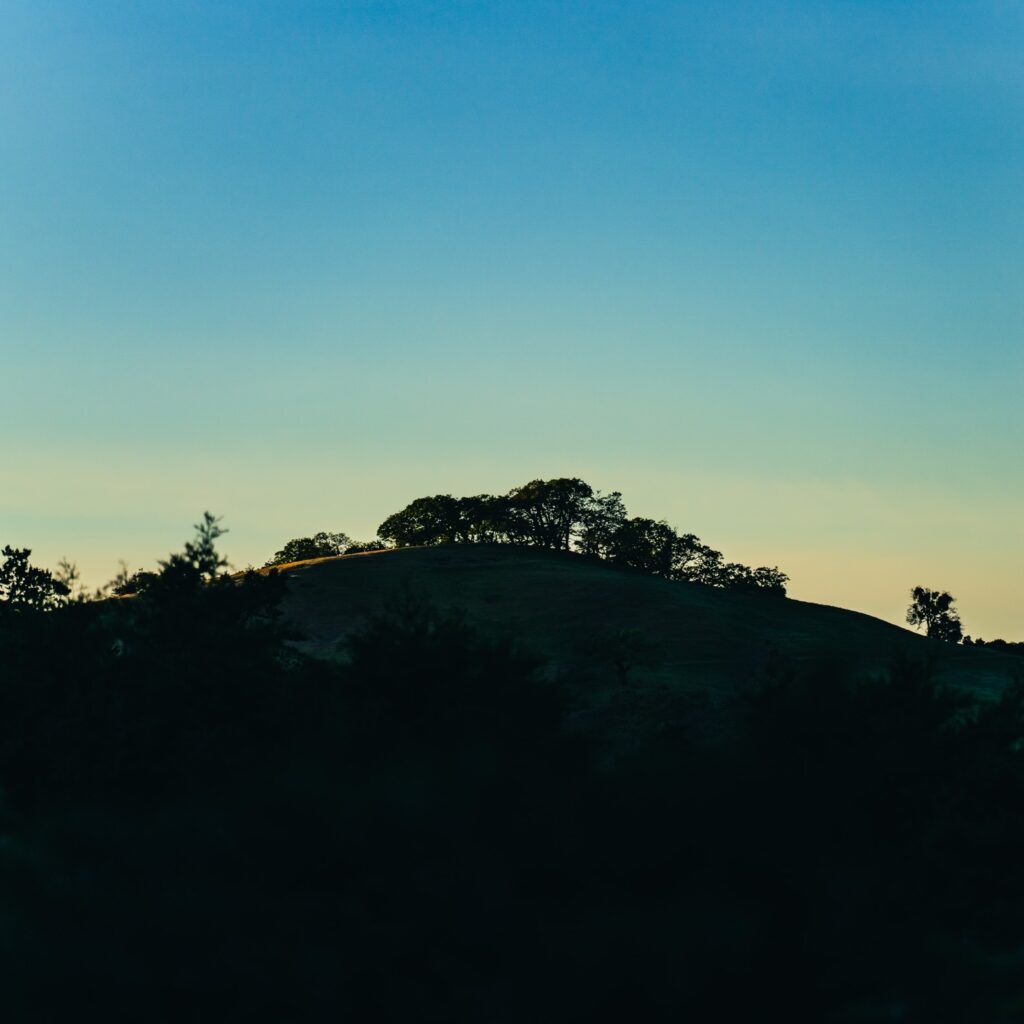
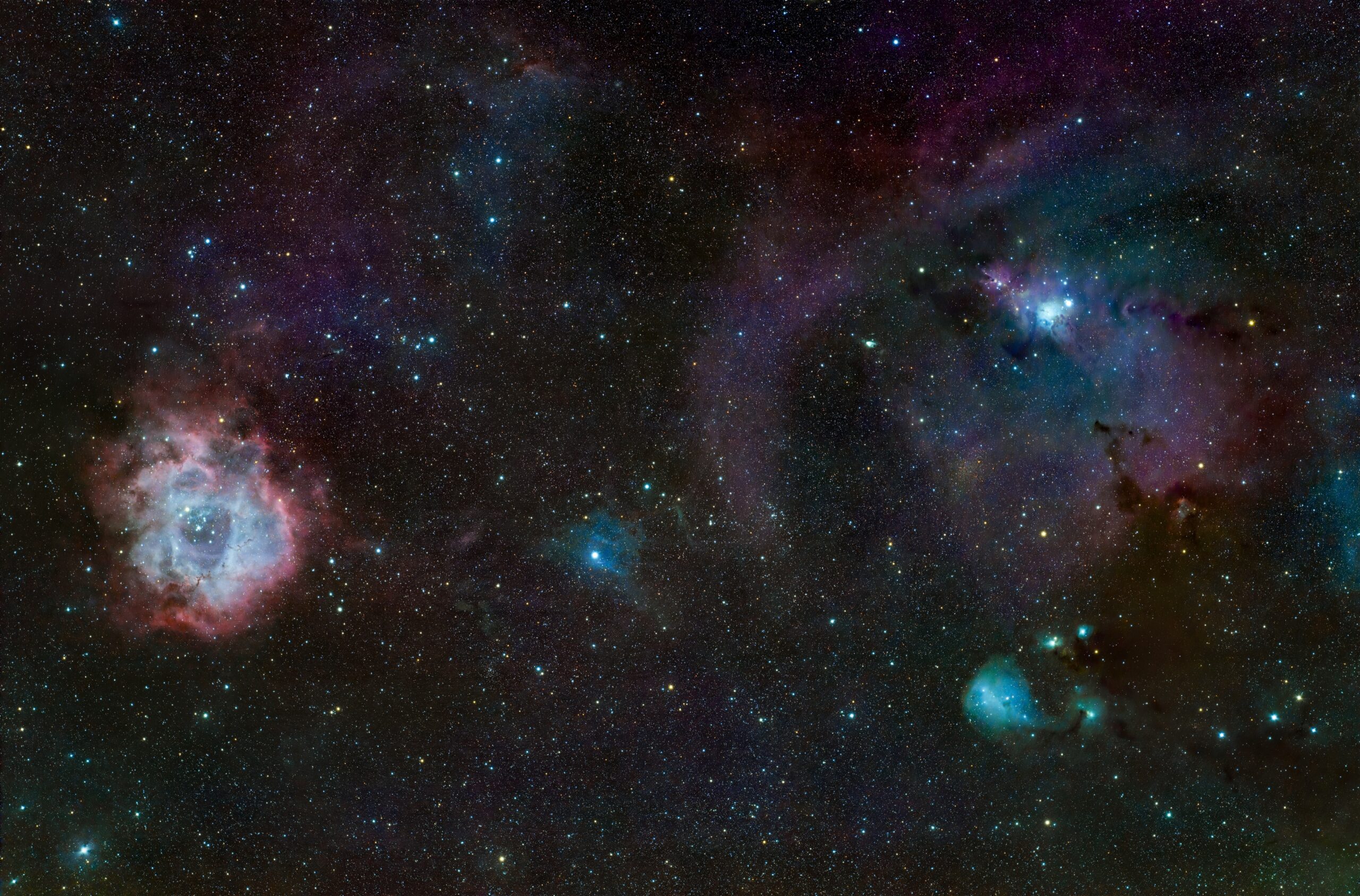
During the early hours of the night, I shot the Rosette Nebula / Dreyer Nebula / Christmas Tree Cluster complex between Orion and Gemini. Late March is pretty late to be shooting Orion because it sets so early, and the campsite location (east of the mountain ridge) wasn’t ideal for this. But it was a good test for my portable astro setup:
- Sony A7RV
- RedCat 51
- Teseek Mini 11 mount
- Geekoto CT25 tripod (want to eventually move to something smaller)
- Apertura guidescope + Player One Sedna-M (eventually want a lighter guiding solution)
- Raspberry Pi 5 + Stellarmate
And the picture turned out decent. I’m not a big fan of the way that the Sony renders emission nebulae in general, at least combined with my normal editing workflow (WBPP + BXT + SPCC + DBE + Stretch), since it seems to turn a lot of the nebulae purple, and turns “blue” reflection features like Dreyer’s Nebula a blue-green. But I love that Rosette nebula! It has the lovely red-white-blue contrast that I failed to achieve in my last post. When I get back to Boston, I’m going to try this with a bigger telescope, to really zoom in on the details.
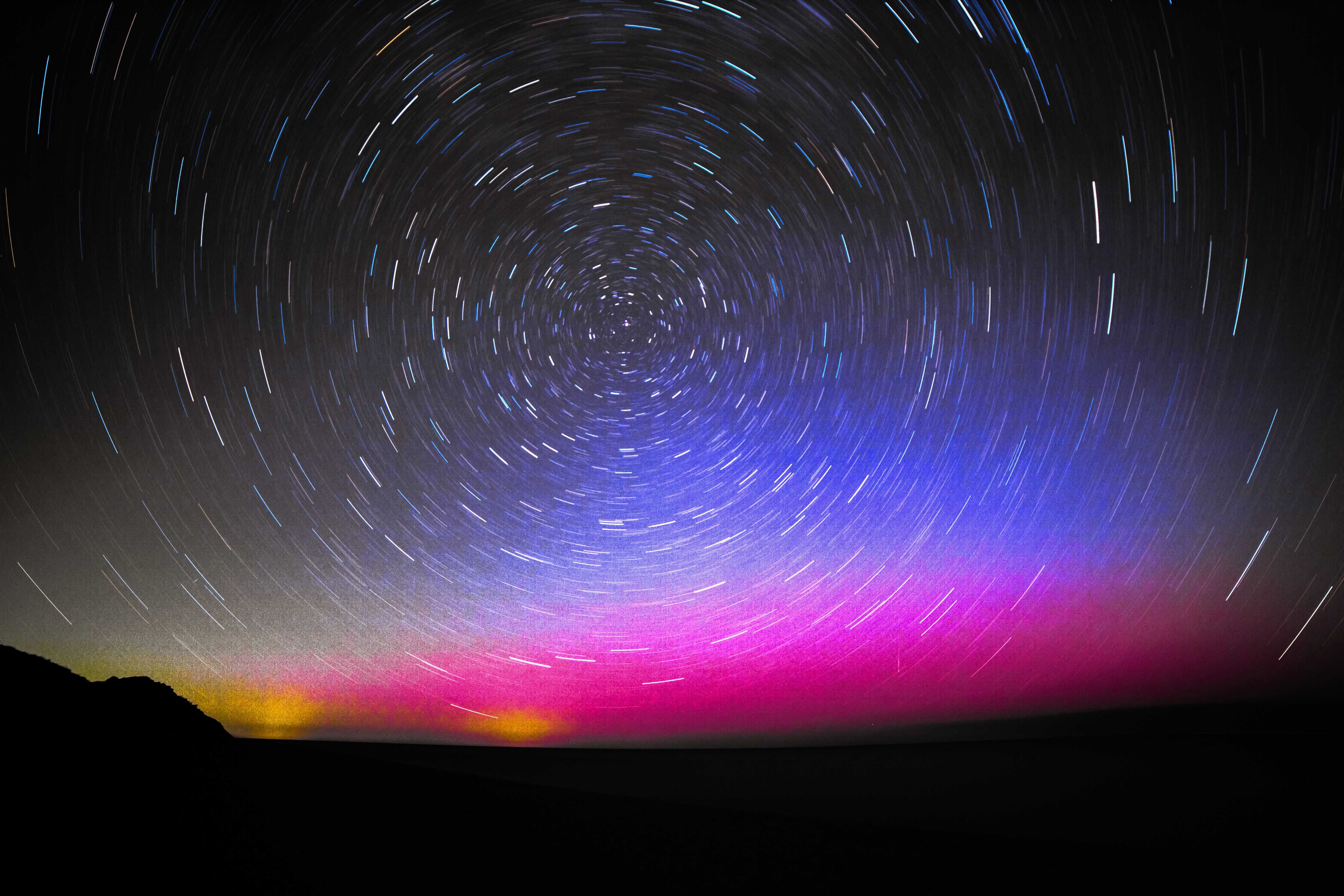
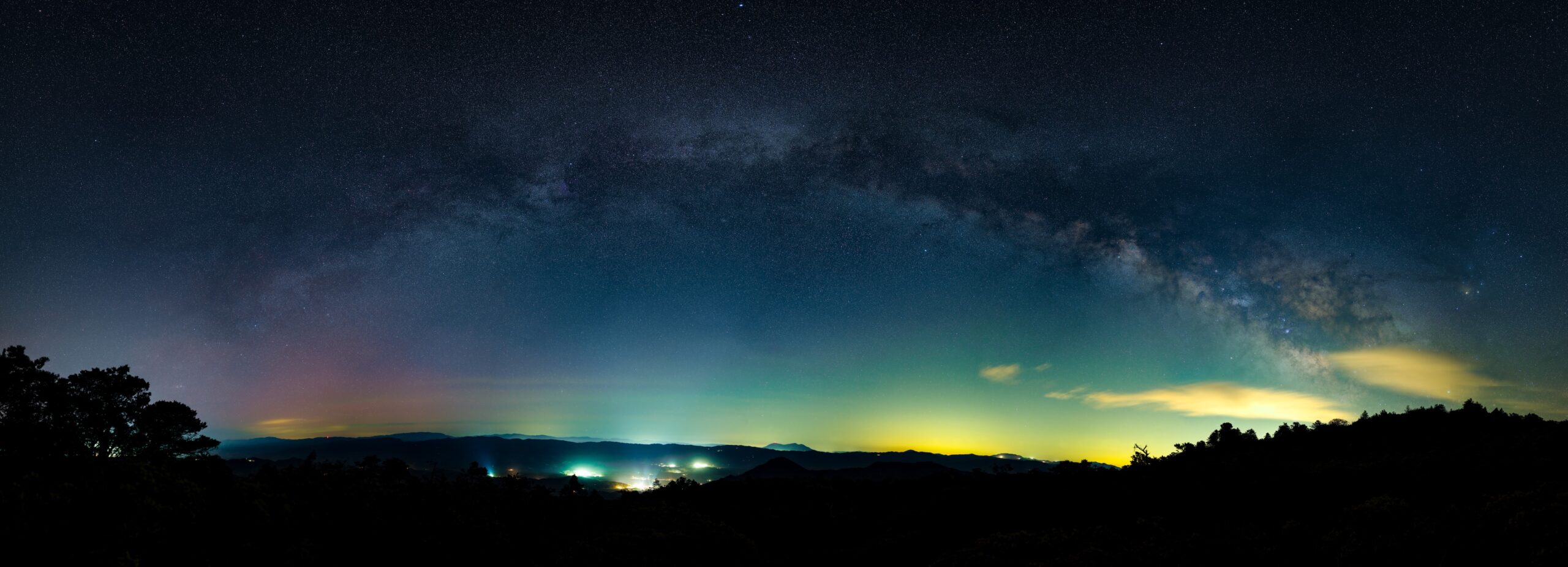
But back to aurora, I spent an hour taking a wide-field panorama of the eastern sky, with the Milky Way rising over Mt. Konocti and the neighboring hills opposite the Russian River valley. This shot is a composite of the 21 panels, each comprising 10 frames stacked, for a total of 210 photos! I can make another post about panoramas sometime, but the point here is that to the left of the photo, there is a faint red glow. This is distinct from the airglow (green) and light pollution (white / yellow) and is only present to the north.
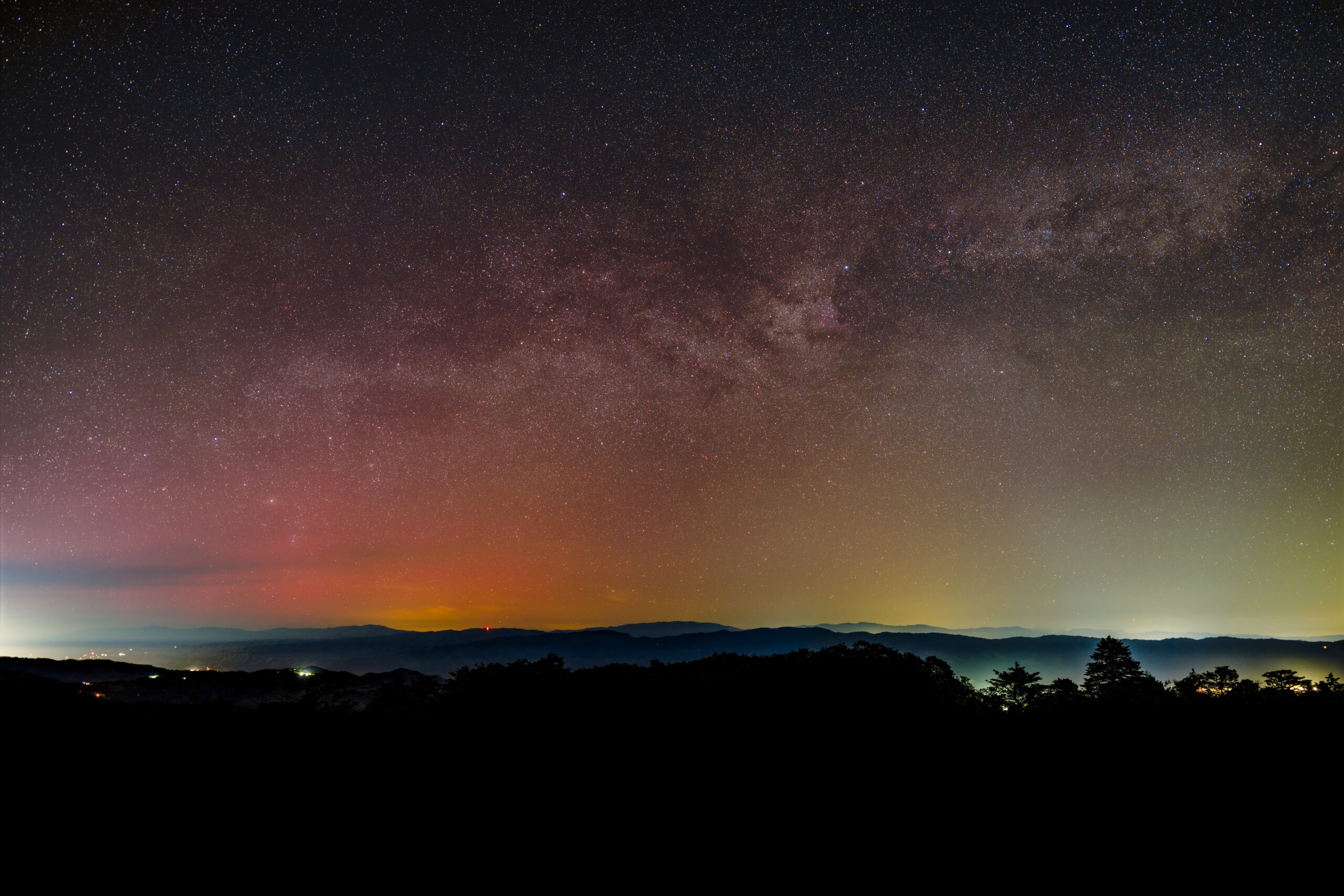
Here is a north-facing shot of star trails, as well as a stacked photo of the northern Milky Way. That red glow is still there.
![{"shape": [1584, 2376, 3]}](https://photonhammer.blog/wp-content/uploads/2026/05/f6b-scaled.jpg "I was wrong about Aurora")
If you still don’t believe, watch this time-lapse, collected with an hour of consecutive exposures from the same vantage point (I use the Sony built-in intervalometer). The red glow is always there, but at the very end of the video, you can see it start moving around. That’s definitely aurora.
Then the sun rose. I used the RedCat 51 to capture the sunrise. I have already given this telescope high praise as a daytime telephoto lens. The sharpness and contrast exceed the best camera lenses I’ve used (including Canon L- and Sony GM-series lenses), giving the photos an extra “pop”. I attribute this to the optical compromises forced on mainstream lens makers by their engineering criteria — fast optics, sharpness at both near- and far-field, compact form-factor, weather sealing, autofocus, and image stabilization. These force you into extremely complicated lens designs with many elements, which have less contrast and more flaring thanks to the many pieces of glass in the optical train. An APO telescope is designed for one thing only: sharp far-field imaging, and it does that exceptionally well.
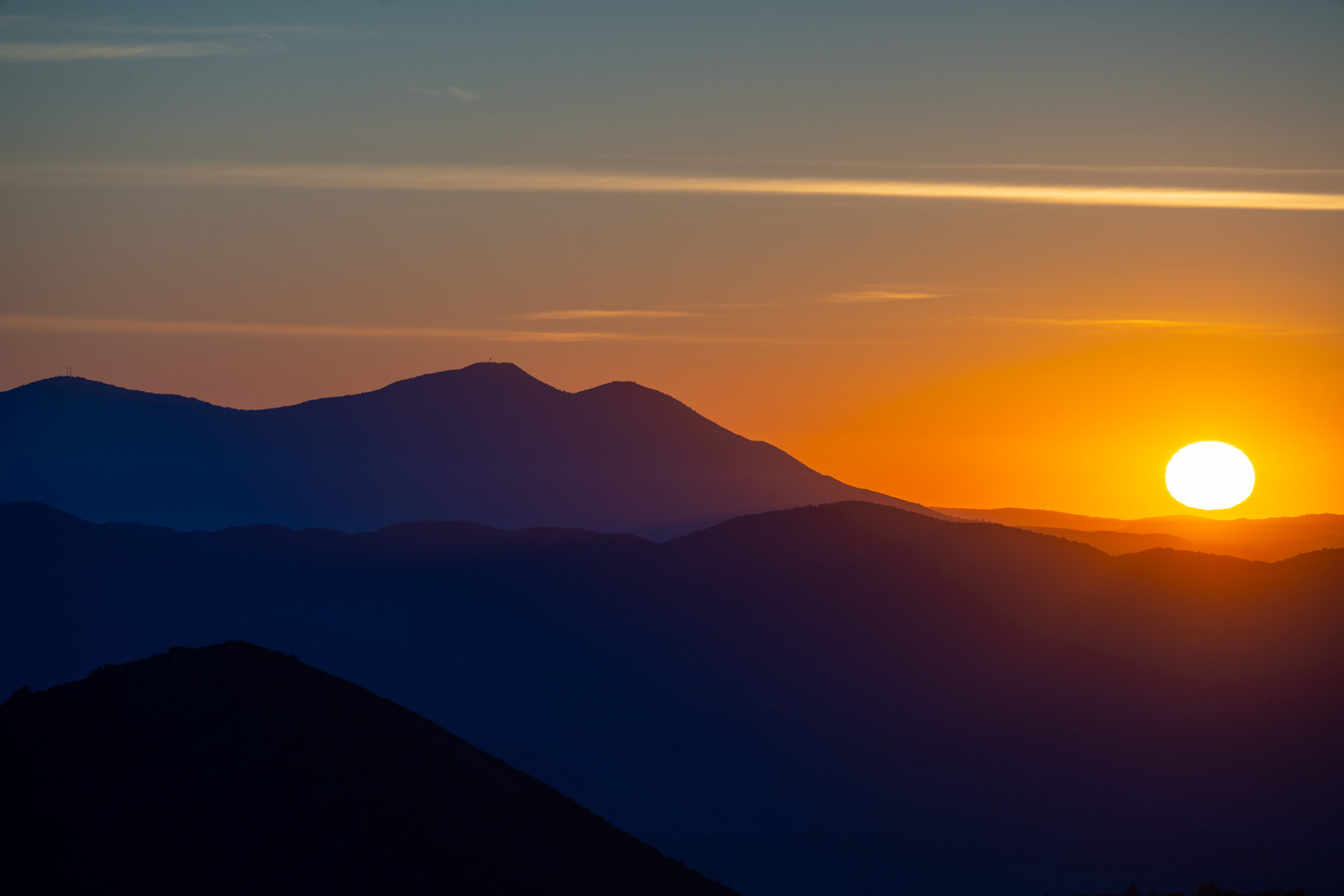
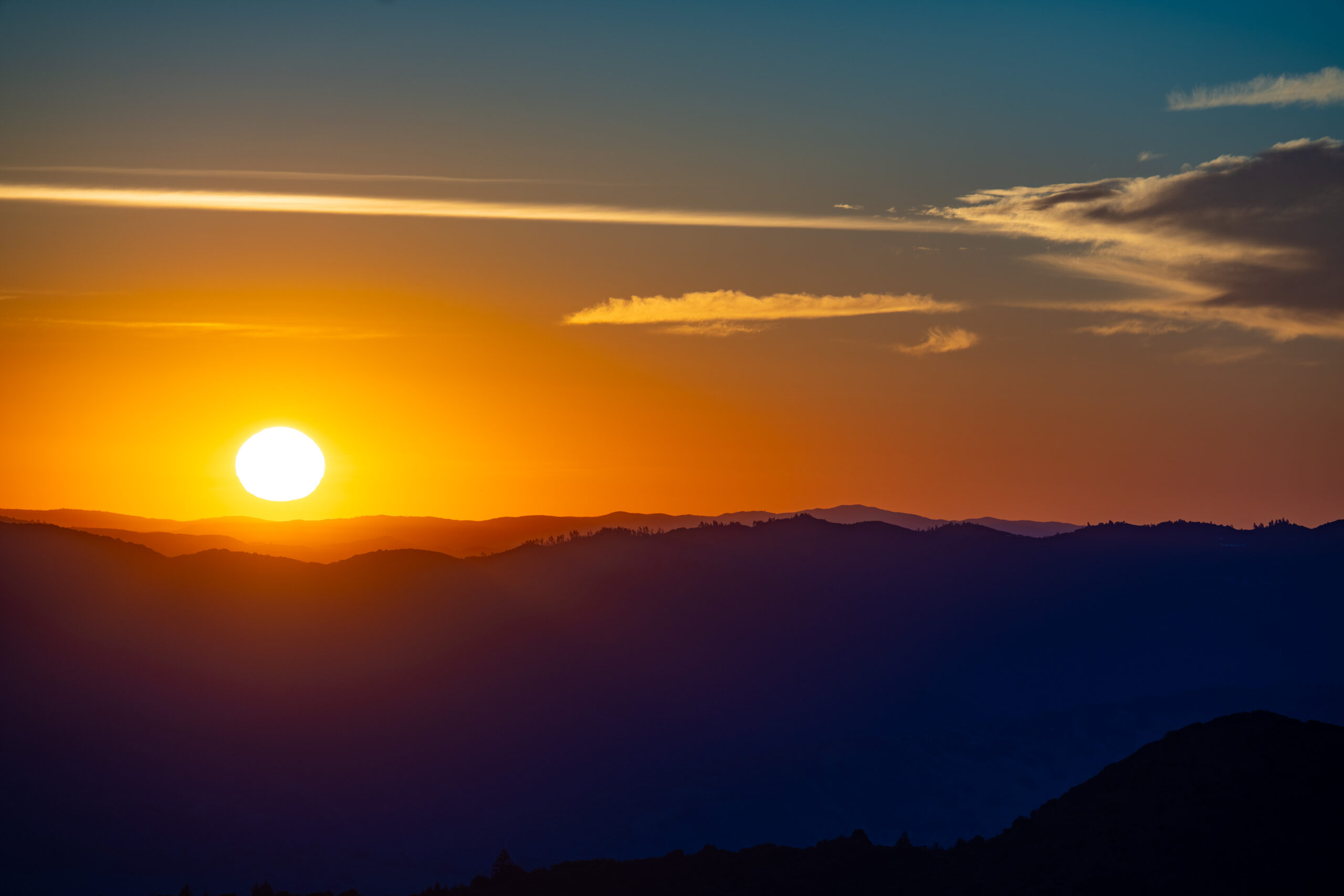
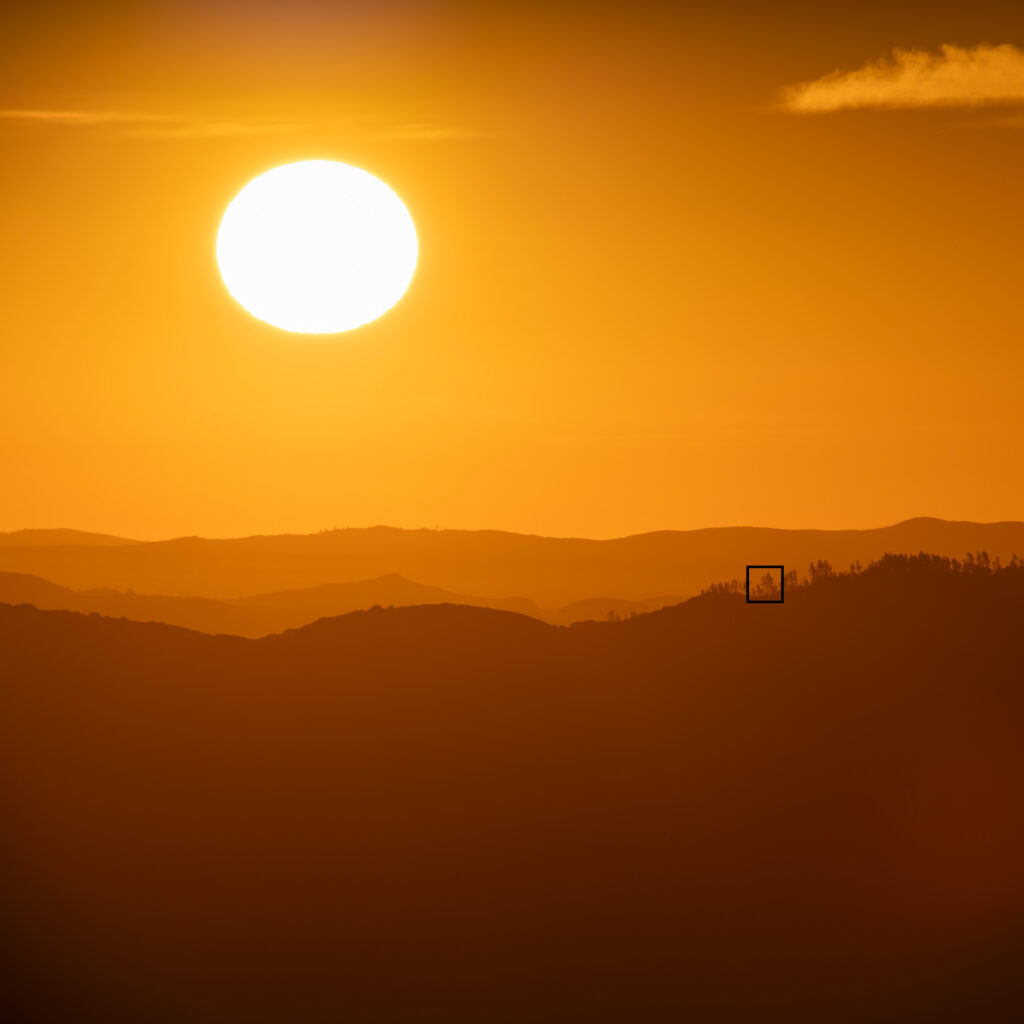
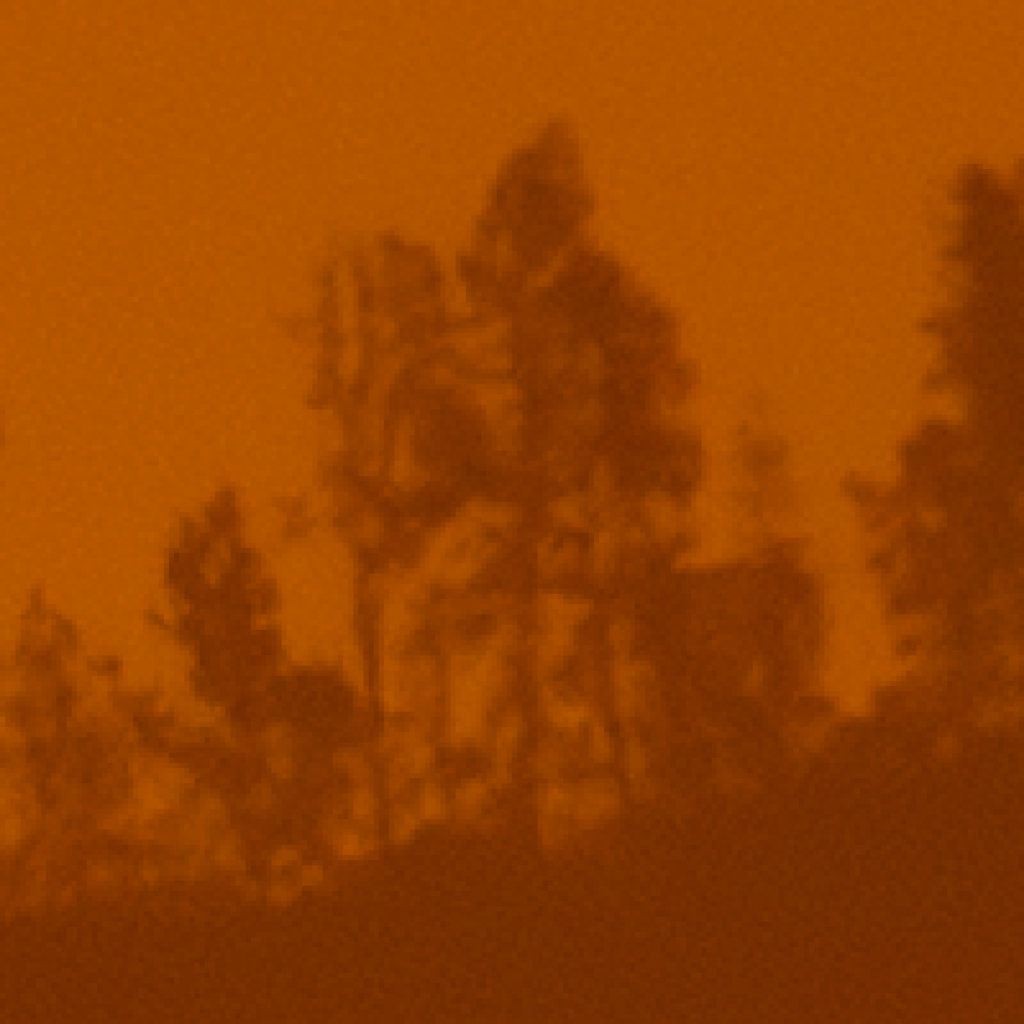
For fun, I paired the RedCat with the new Viltrox 2x Sony FE teleconverter. This converts the 250mm f/5 scope to a 500 f/10. Most photographers think that f/10 is too slow for practical work, and 2x TCs have a bad reputation for soft optics. As the following shot shows, the 2x TC is quite sharp when paired with the RedCat, almost to the single-pixel level on the A7RV’s 61MP sensor (it’s impossible to get actual single-pixel sharpness due to the Bayer filter, but you can usually get close).
But this is quite a digression. Back to aurora, and the conclusion to this post:
Conclusion
Putting all of my expeditions on NOAA’s aurora visibility map, it would look something like this:
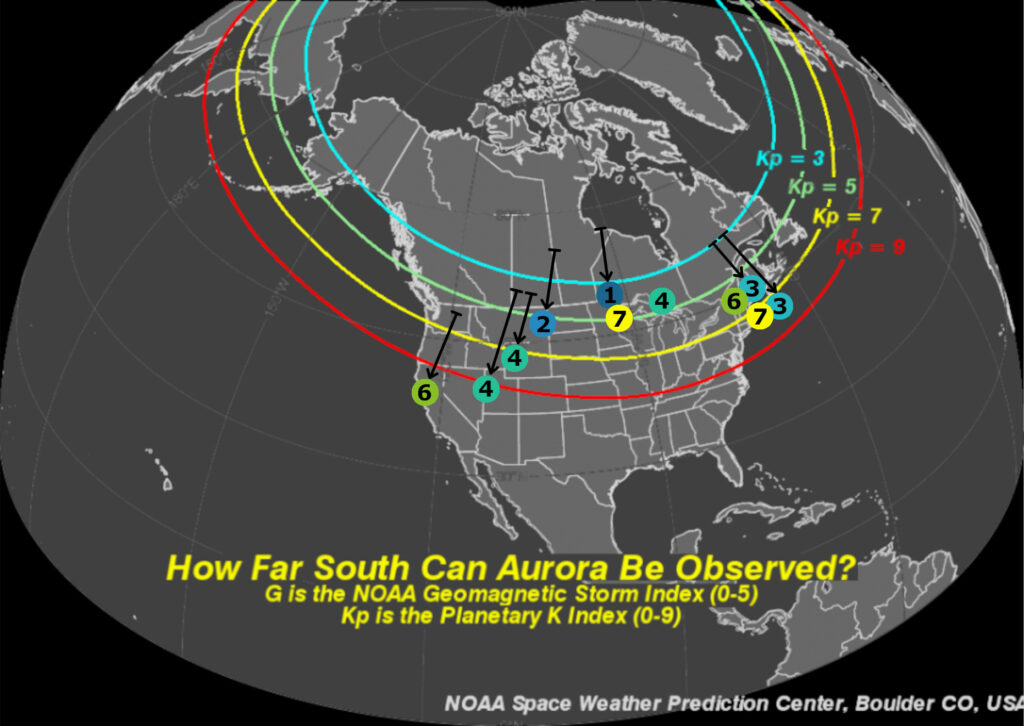
When doing long-exposure photography under a dark sky with good weather, it seems that aurora are visible about 5-10º south of the official viewline. This is a significant adjustment to my previous calculation. I would formalize it with the Kp – 2 Rule: subtract 2 from any Kp threshold to find out what is actually visible from your location, with enough luck. And take a Sharpie to those NOAA maps as follows:
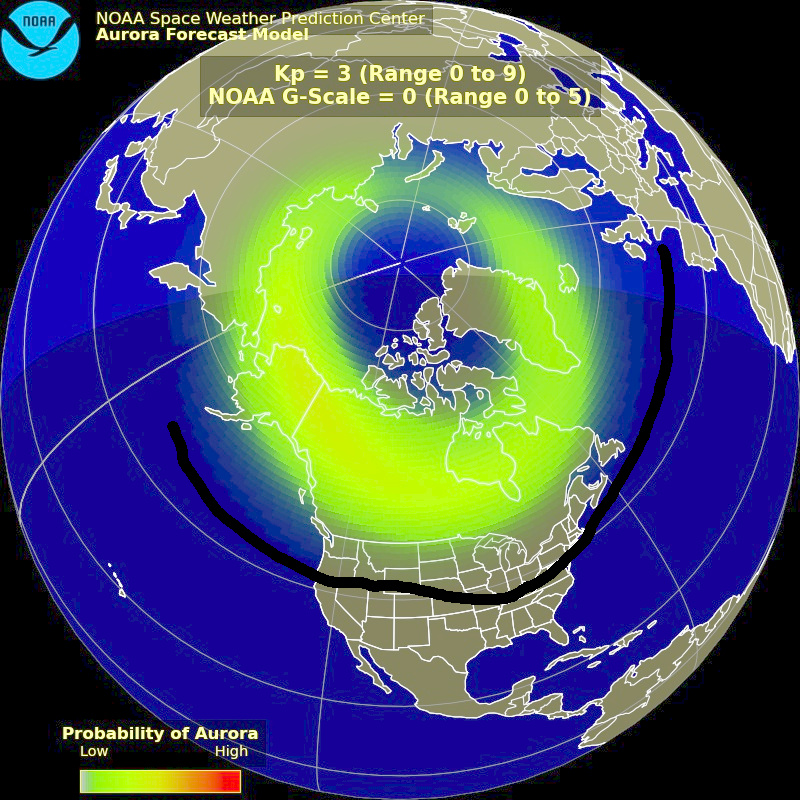
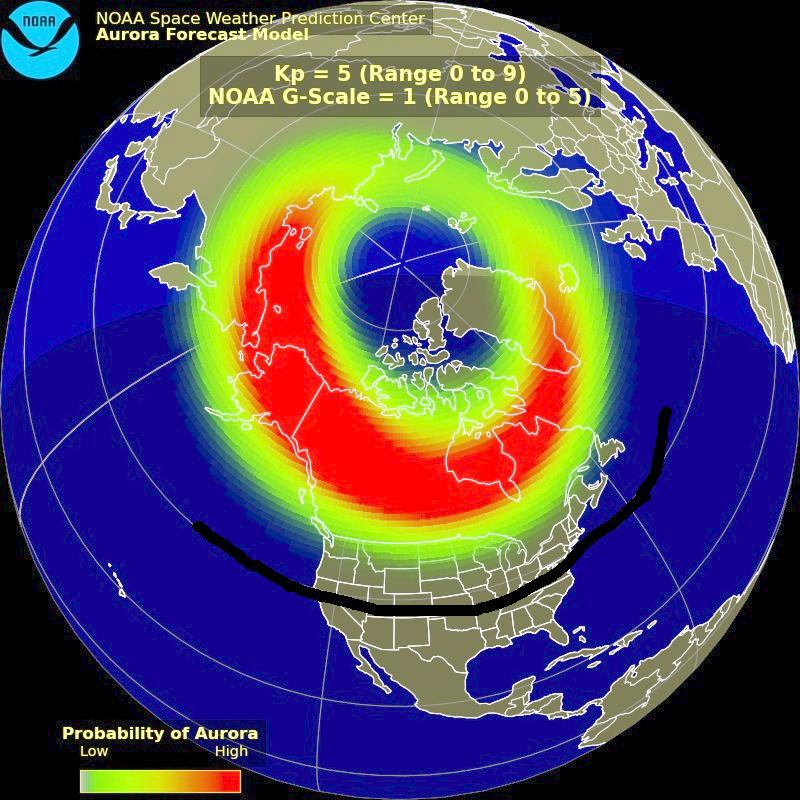
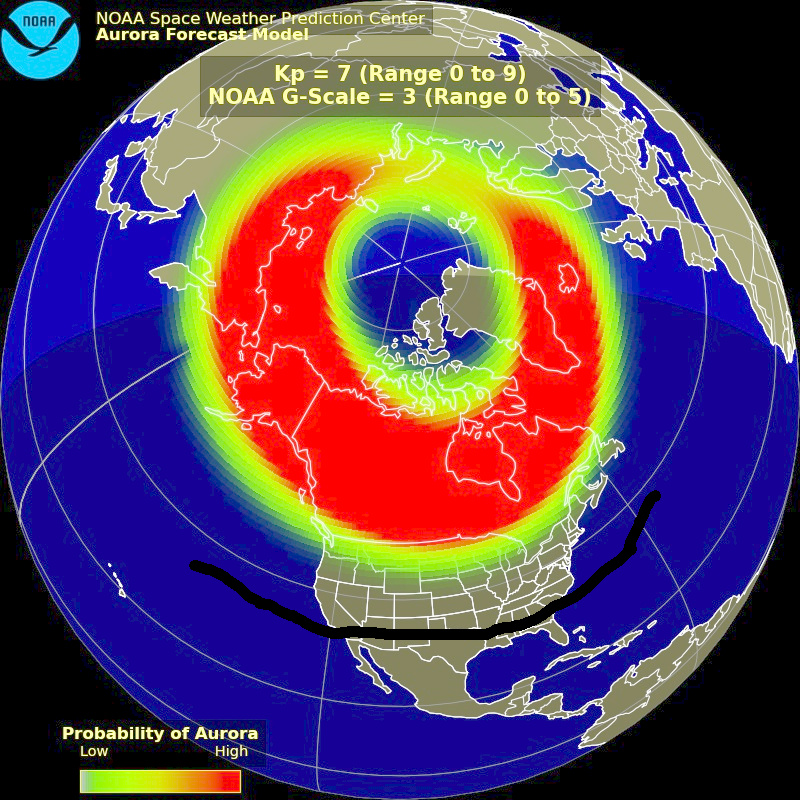
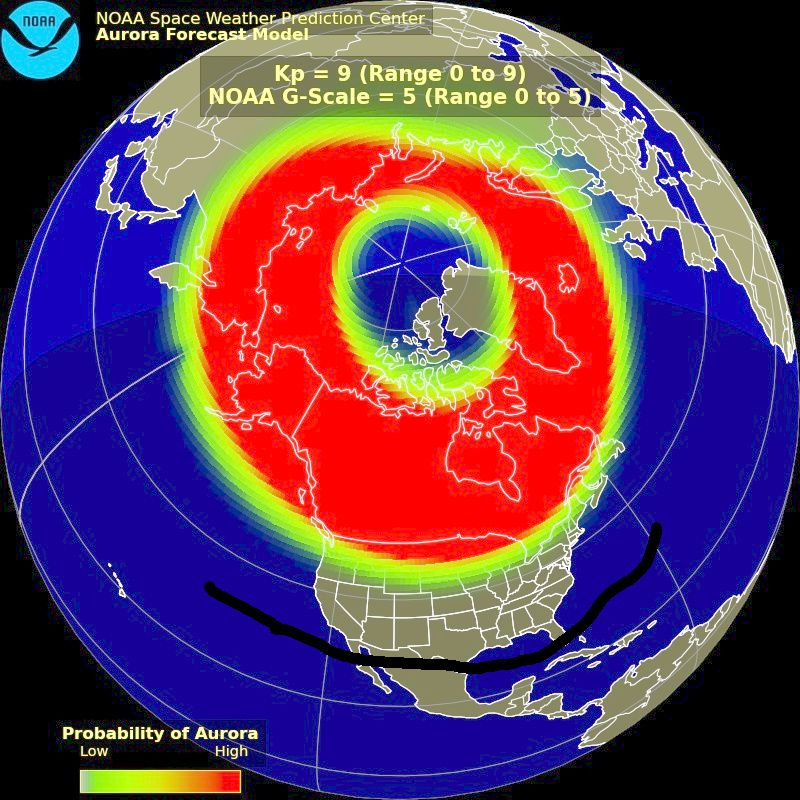
For example, in Massachusetts, the official threshold is Kp = 7 (only 8/year), but Kp ≥ 5 events (about 60/year) are probably visible in good conditions. That’s many more chances to catch aurora!
| Events/yr | Kp ≥ 3 | 4 | 5 | 6 | 7 | 8 | 9 |
|---|---|---|---|---|---|---|---|
| Max | 300 | 200 | 100 | 40 | 15 | 5 | 1 |
| Avg | 220 | 130 | 60 | 22 | 8 | 3 | <1 |
| Min | 150 | 70 | 24 | 7 | 2 | <1 | <1 |
But the really good aurora are still rare.