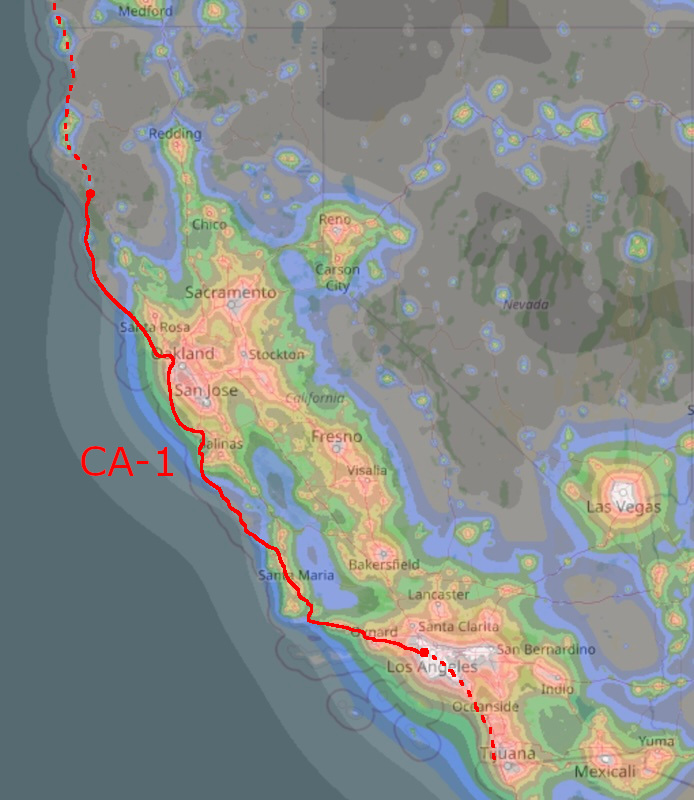
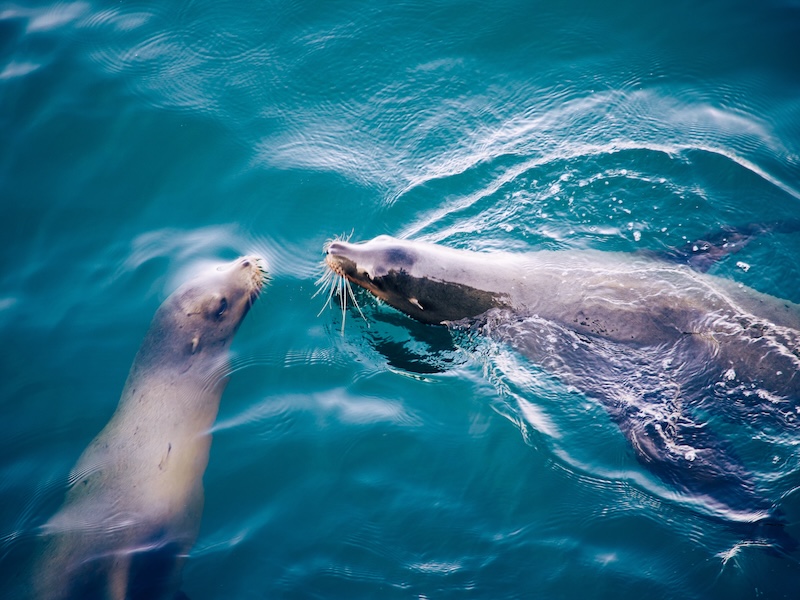
Few roads are as iconic as California State Route 1, a 600-mile highway that hugs the Pacific Coast all the way from Los Angeles to Mendocino. It is a road of towering bluffs, vast secluded beaches, narrow hairpin curves with majestic pullouts leading to perilous hiking trails that take you to the very edges of the cliff faces, where sea lions nestle in the coves below and the pounding surf echoes all the way to the horizon. For those in excellent shape, it is a biker’s paradise. But it’s also a joy to drive, almost like a go-kart course (drive safe!). And far from the major cities, it is one of the most remote parts of California. The dark skies are incredible.
The map on the right shows CA-1 overlaid on a light pollution map. Part of the highway runs through the SF Bay Area and LA metro region, and there’s lots of light pollution there. But the northern (Mendocino) stretch from SF to Fort Bragg, and the southern (Big Sur) stretch from Monterey to San Luis Obispo, are extremely dark, in addition to being the most enjoyable sections to drive. These are great spots to capture the autumn Milky Way, which sets in the southwest over the ocean. From a light-pollution perspective, the shooting over ocean is an ideal vantage point, with absolutely no light domes, and any horizon lighting coming from airglow or scattered starlight. These are the conditions where you can pull some really strong colors out of a photo. But the weather has a mind of its own! Even on a “clear” day, fog can easily ruin a shot, and humidity and sea mist can reduce the atmospheric transparency, or cause undesired scattering from lighthouses, ships, the Moon, etc.
This blog post captures my sleepless California travels, including both CA-1 and a couple of inland stops. If you don’t have much time, scroll to the end for the best pictures! But there’s a lot in between, including:
- Pinnacles National Park — a lovely foreground for a night sky
- Buckhorn Recreation Area — some of my best airglow in Milky Way shots
- Northern CA-1 — lighthouses and satellite trails
- Southern CA-1 — moonsets and rocky cliffs
- Orion Nebula & Neighbors — the classic that never gets old
- California Nebula — last hurrah of the winter astro season!
2024
Prelude: Pinnacles National Park
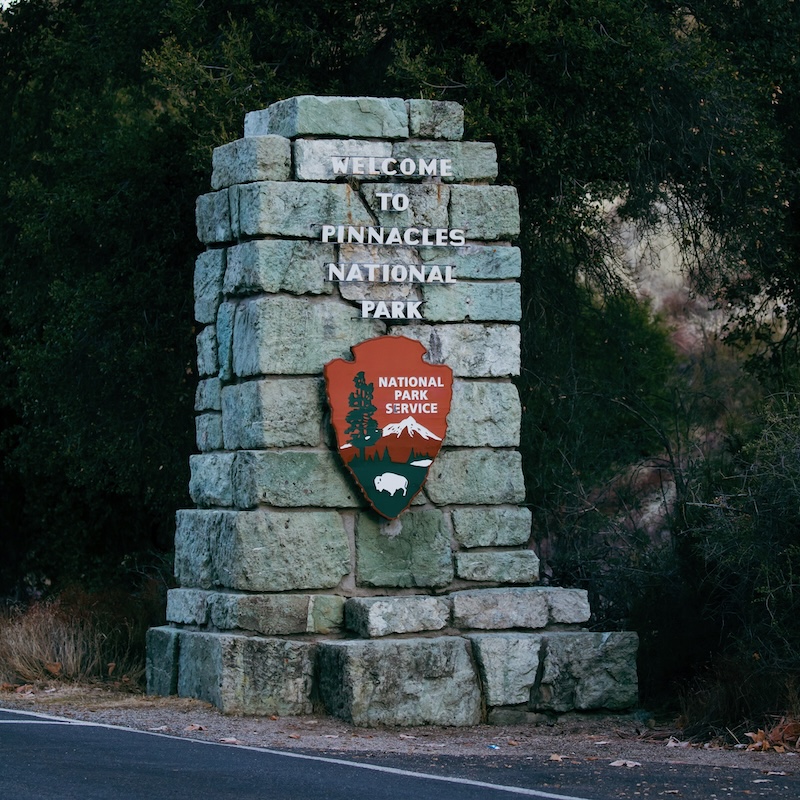
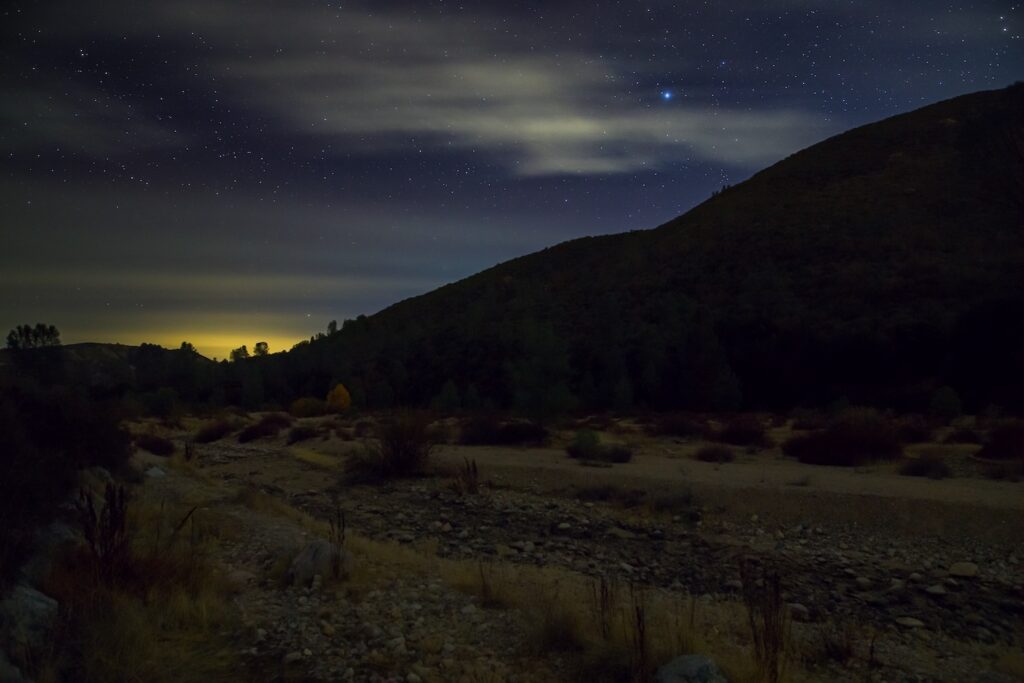
I was in California over Thanksgiving to pick up my car from the repair shop. It had run over some rocks a couple of months ago and needed lengthy repairs. But the mechanics were running late and didn’t want to work holidays, so I had to get a rental and burn some time until it was ready. For the holiday weekend, I went to Pinnacles National Park for two nights. It’s not the darkest place in California (Bortle ~3, LP index = 0.42), but still has excellent skies, and the rock formations can make some unique foreground elements if you arrive at the right time and vantage point. But it was very cold at night, and the Milky Way was setting in the west with the mountain range in the way, so I didn’t get any good shots of it. Also, even though the zenith sky is very dark, the city lights to the north (San Jose area) are still quite noticeable, while the rest of the sky is quite pristine.
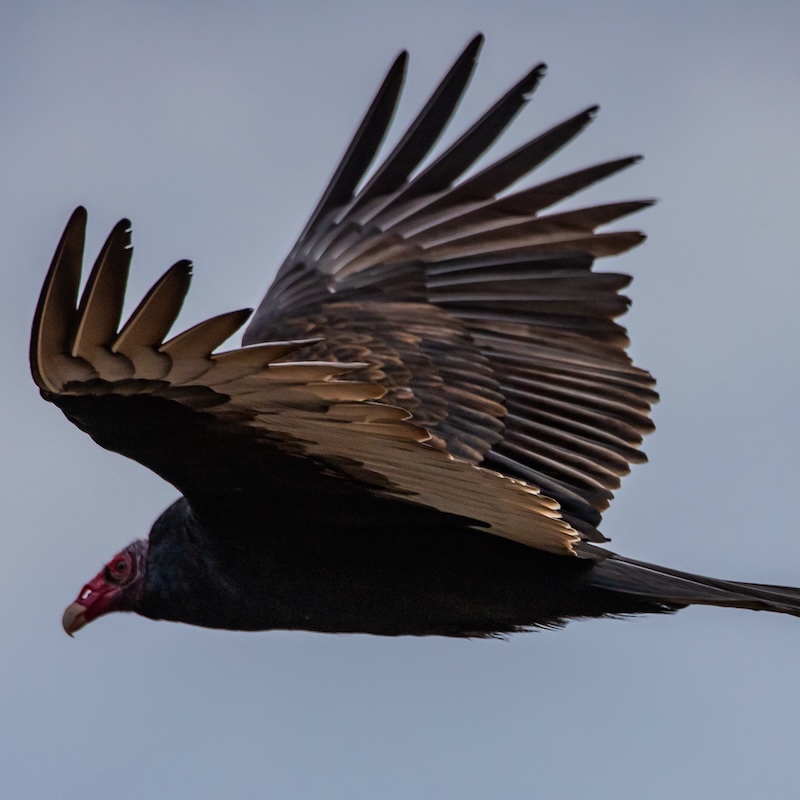
I’d like to come back another day in the spring. This seems like a great spot to catch a rising Milky Way in the east, especially if you have already climbed up to one of the overlooks (risky at night!) to get a good vantage point. And I saw some birds by day, but not any California Condors.
Buckhorn Recreation Area
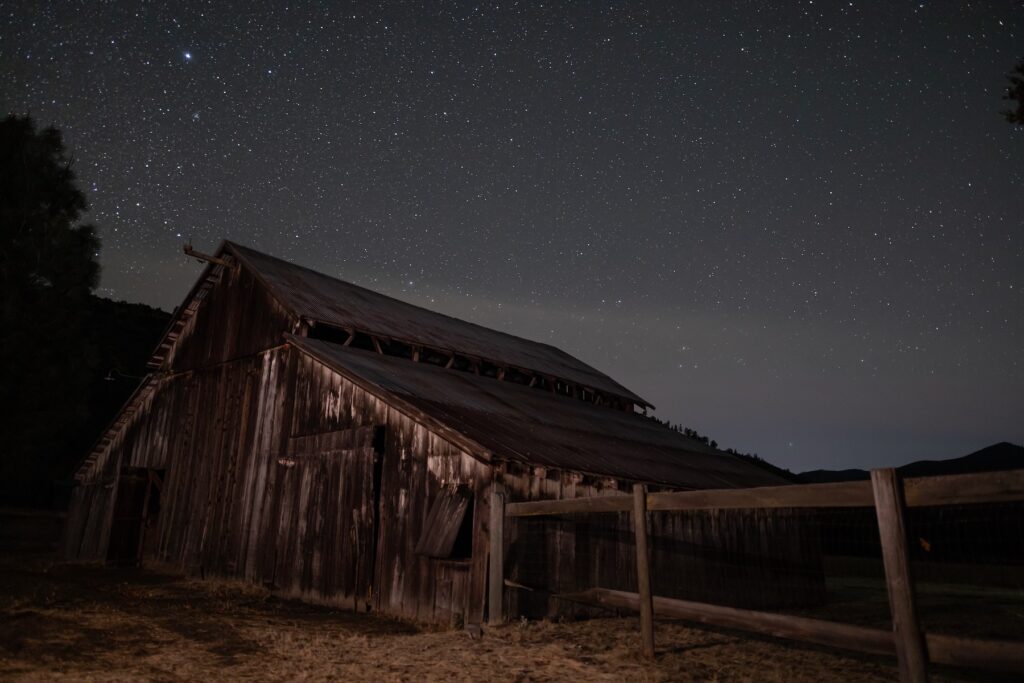
For Saturday and Sunday, I drove the rental Mustang north to Buckhorn Recreation Area (Black Butte Lake), which has a campground with lots of sites near the lake shore. This is not a national / state park, so it’s much less busy, even on a holiday weekend. Since it was cool out, although warmer than Pinnacles, there were very few campers during my stay — maybe three or four in all. The RV section was a lot busier.
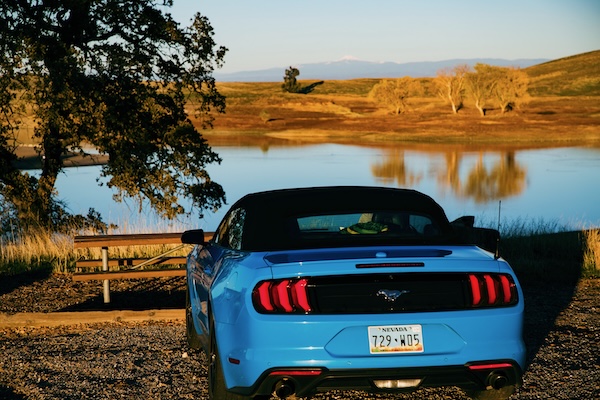
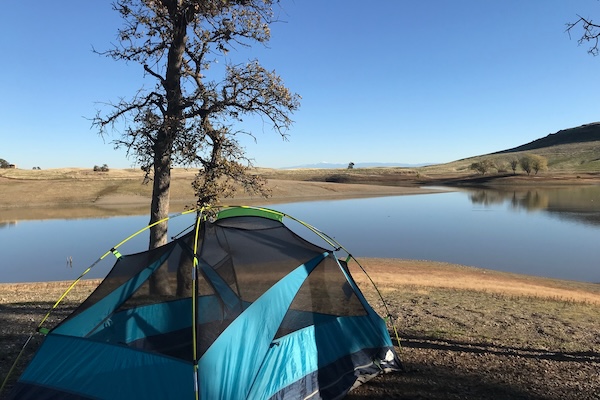

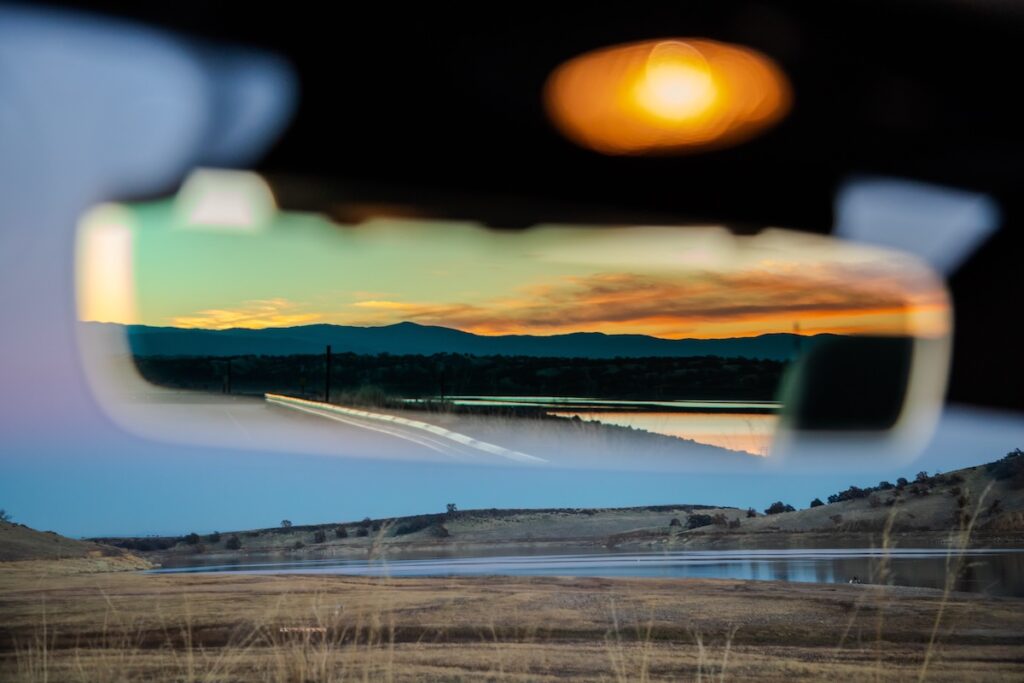
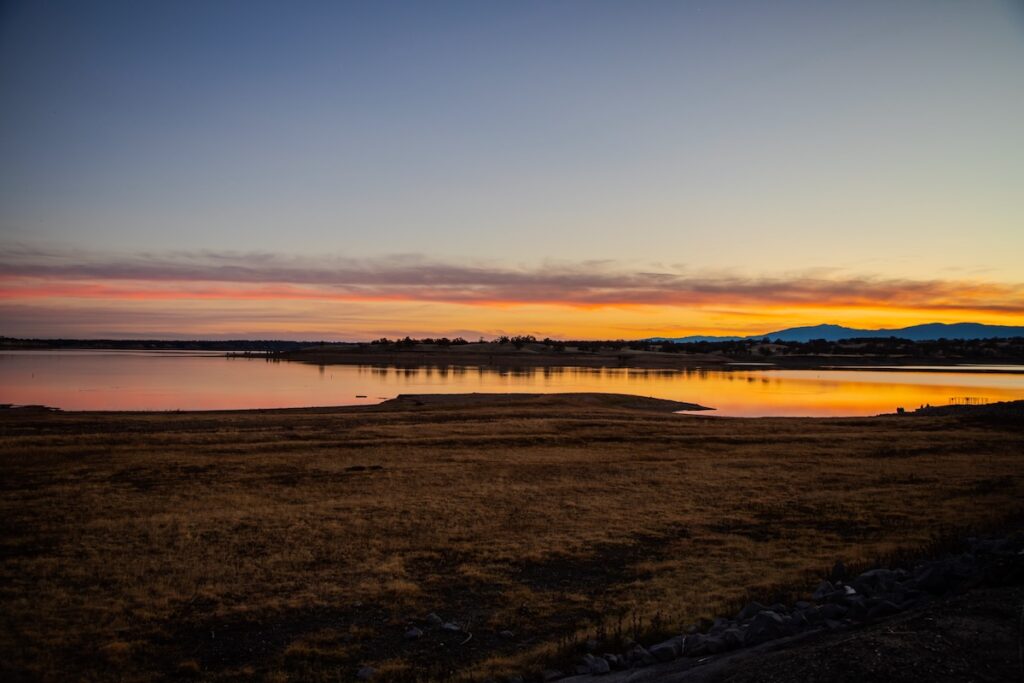
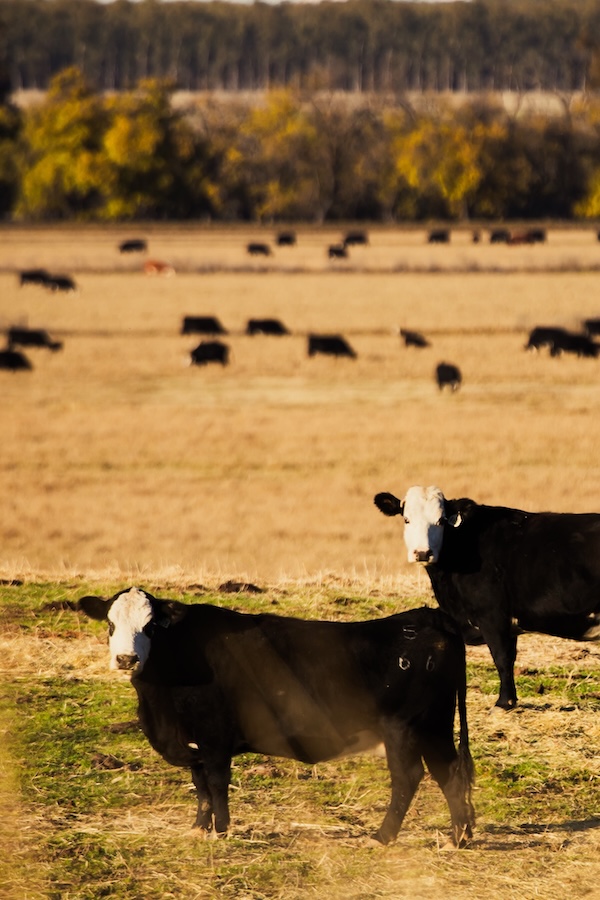
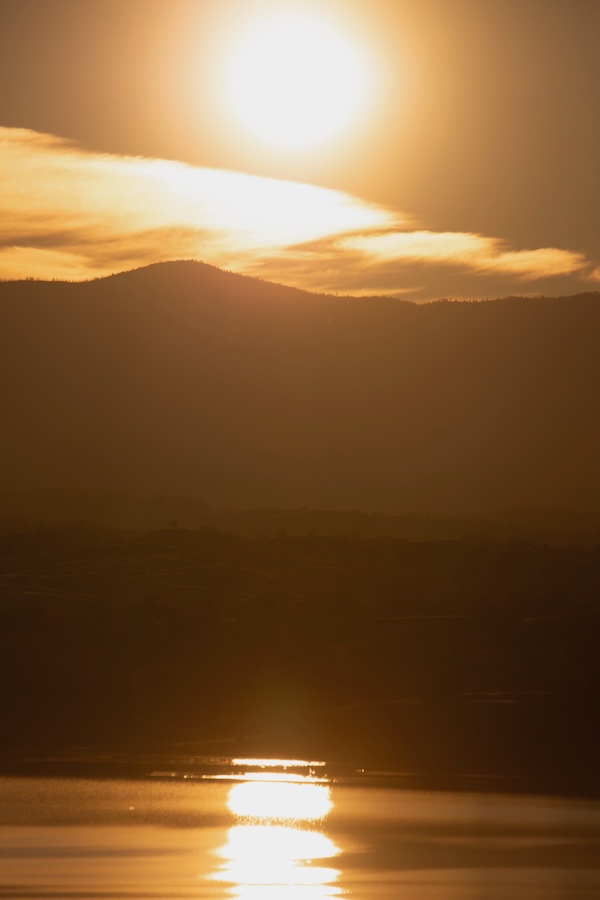
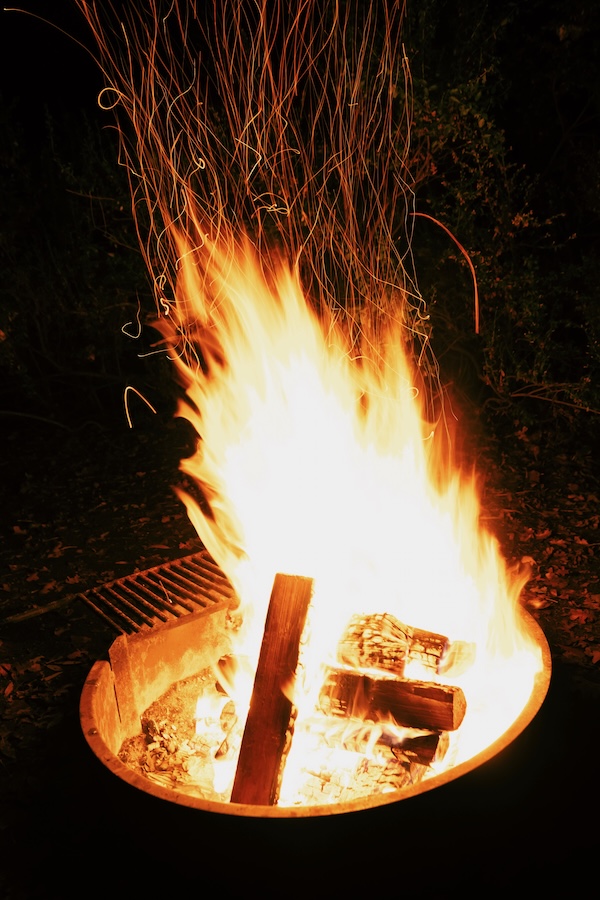
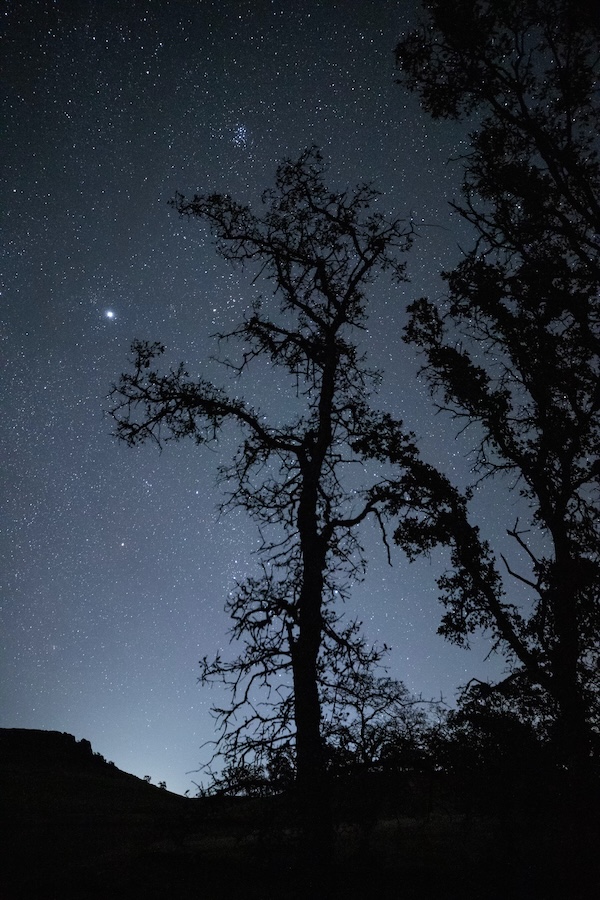
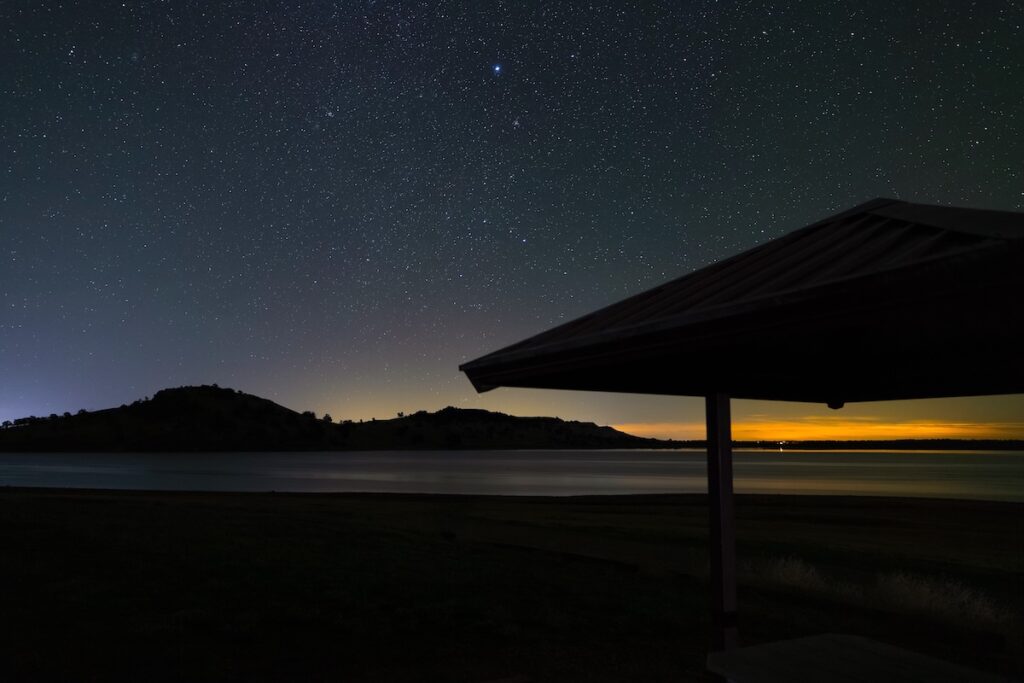
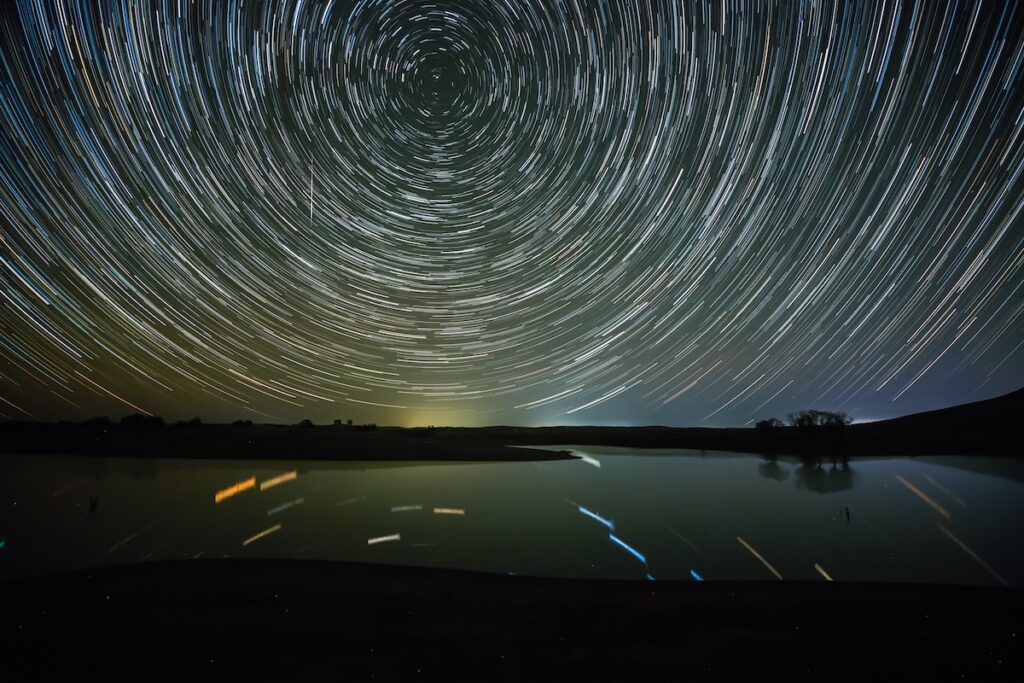
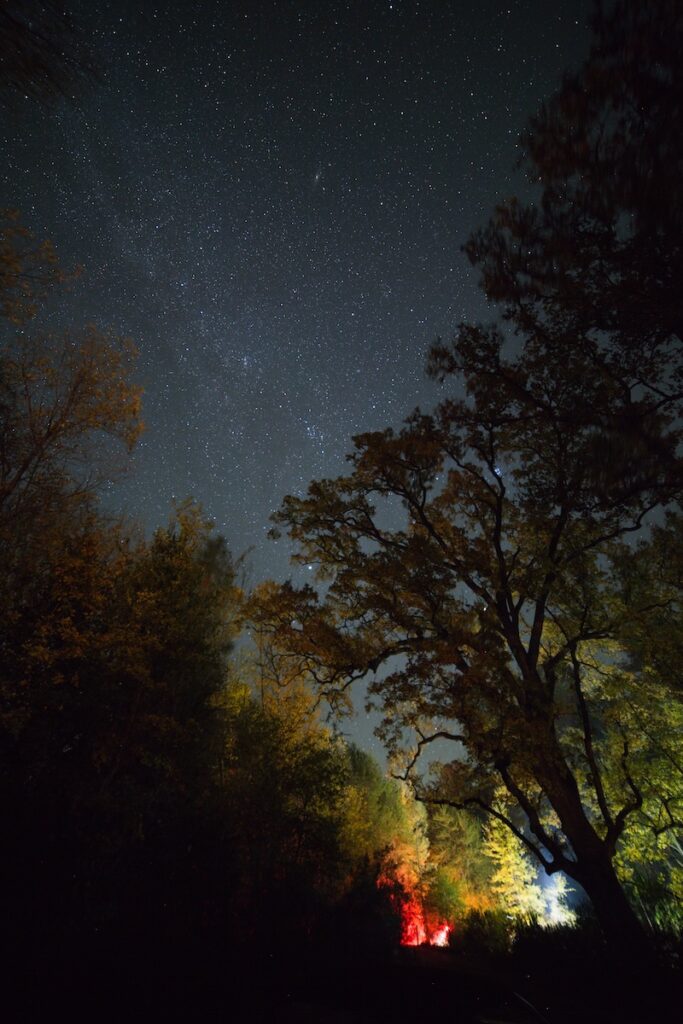
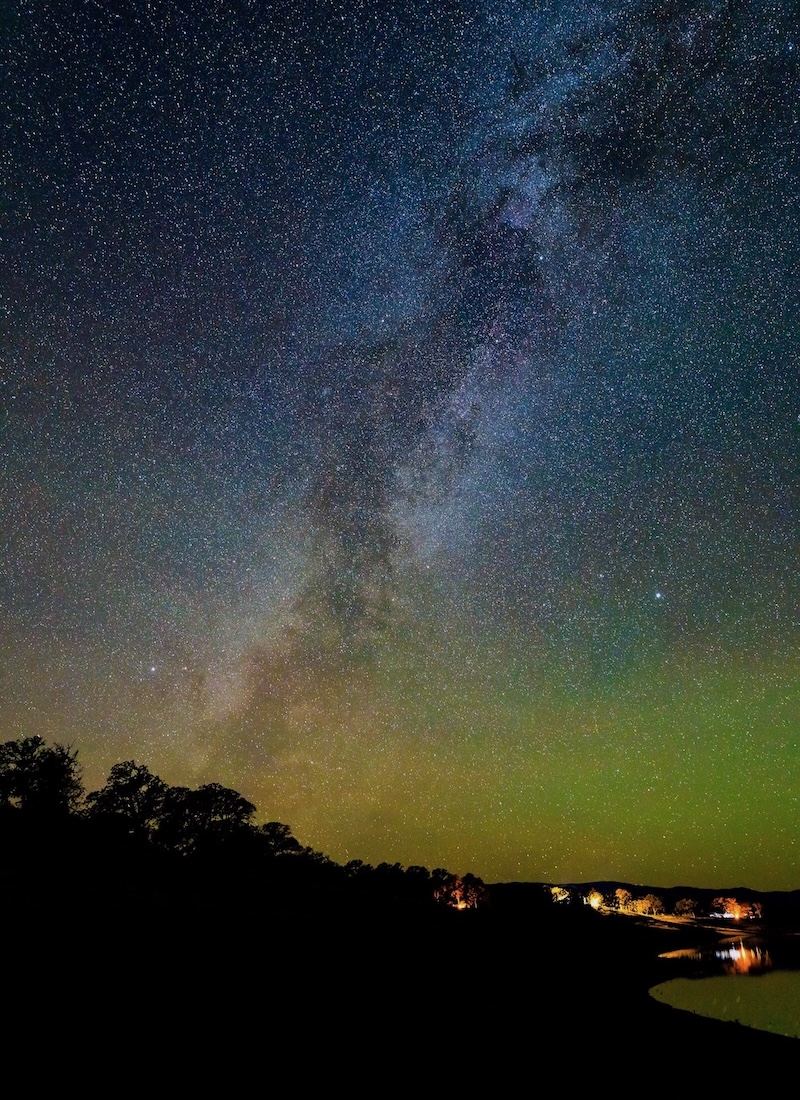
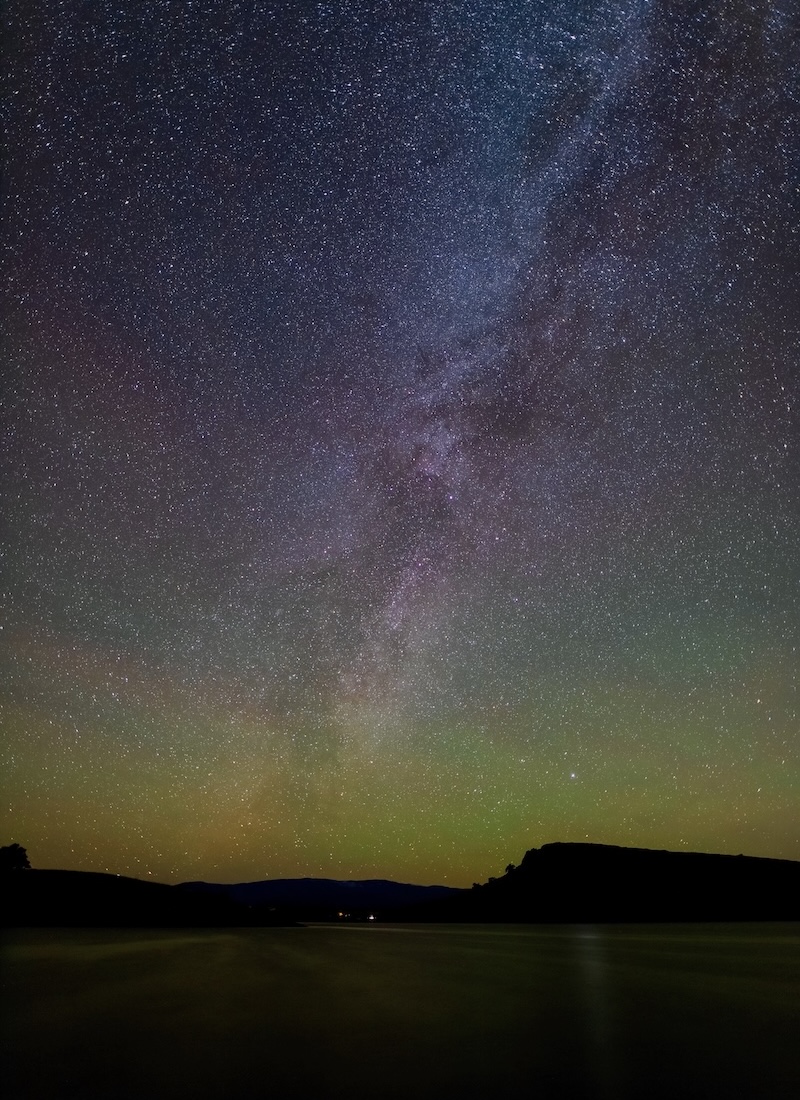
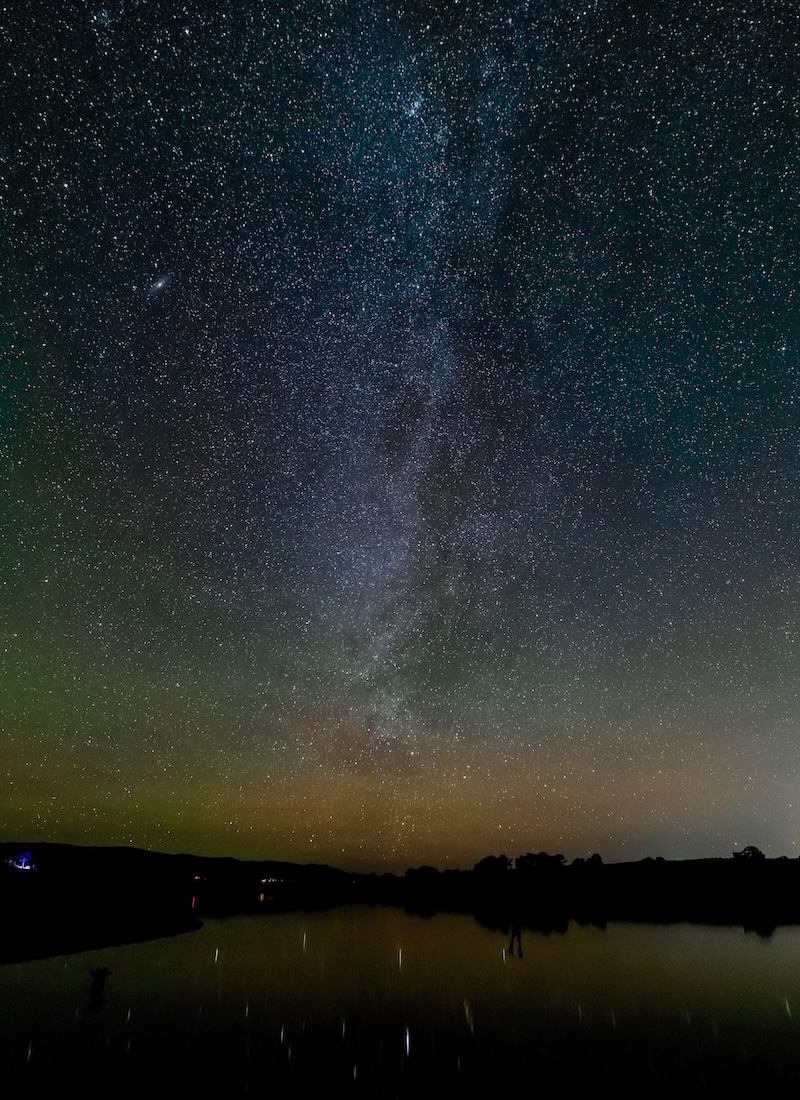
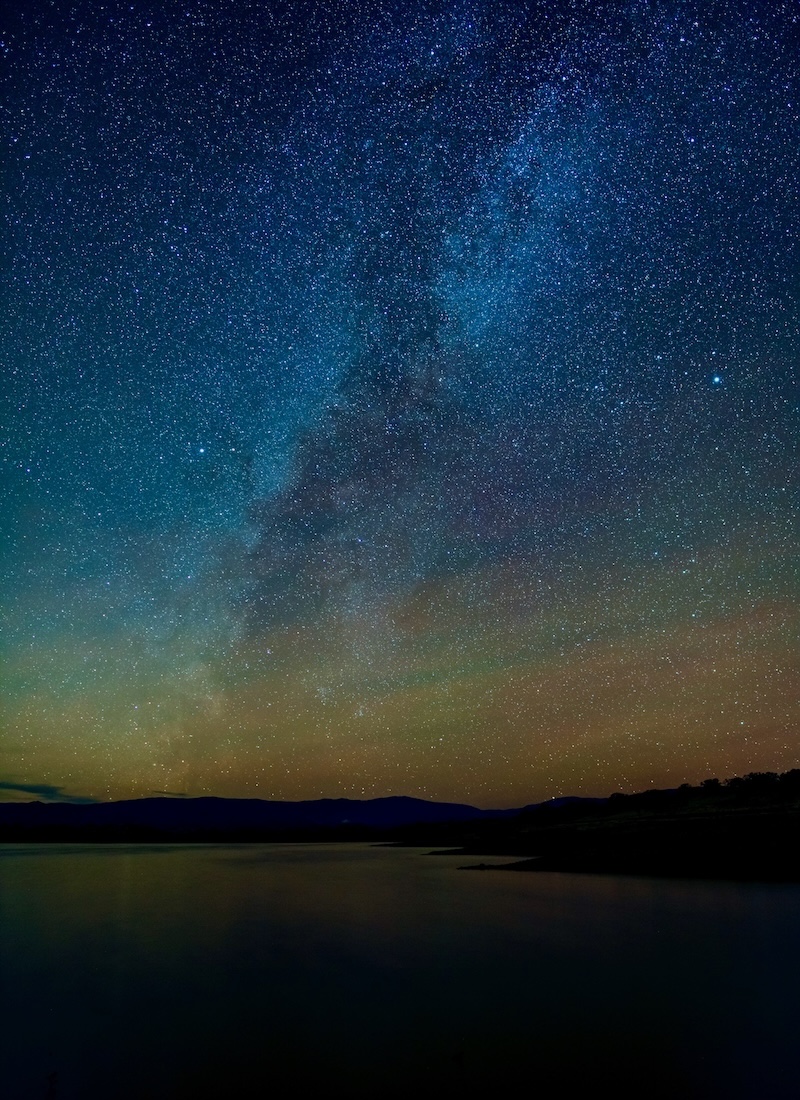
The skies here were darker than Pinnacles (Bortle 2, LP index = 0.25). Moreover, most of the light pollution comes from the cities along I-5 and CA-99 to the east (Sacramento-Redding corridor), and there were no major obstructions to the west. This made it an ideal spot to capture the setting Milky Way. November is pretty late in the Milky Way season, so the core is already below the horizon and in the shots below, I only catch the galaxy down to about Aquila. Nevertheless, thanks to the pristine darkness of the western sky, I think that the pictures turned out well. Below are four separate shots, taken at different times with different foregrounds.
Hwy 1: Fort Bragg to Big Sur
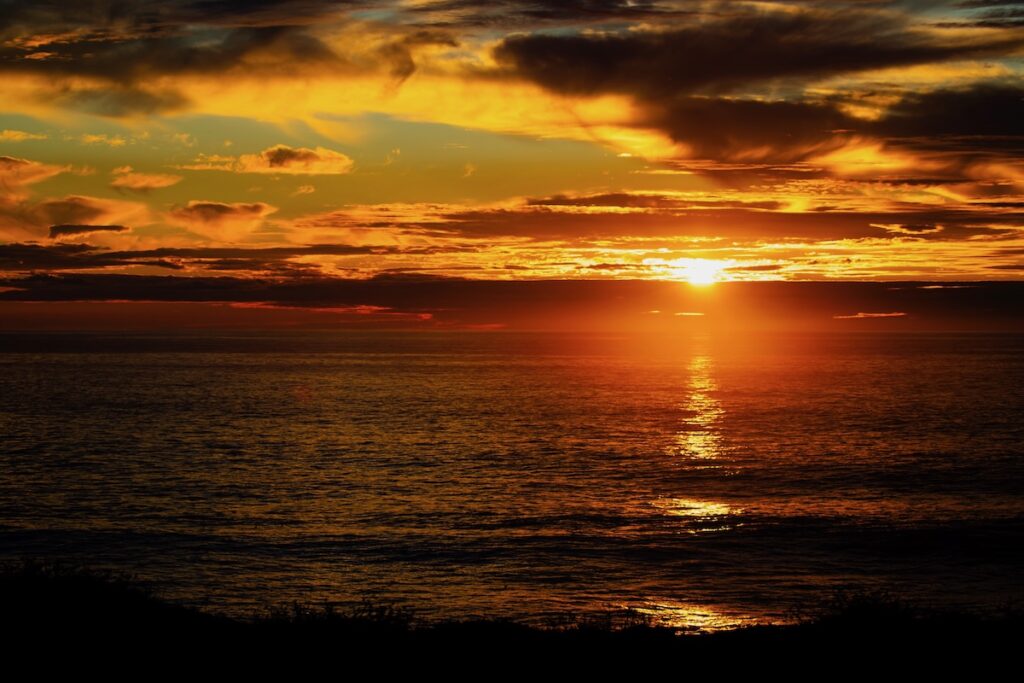
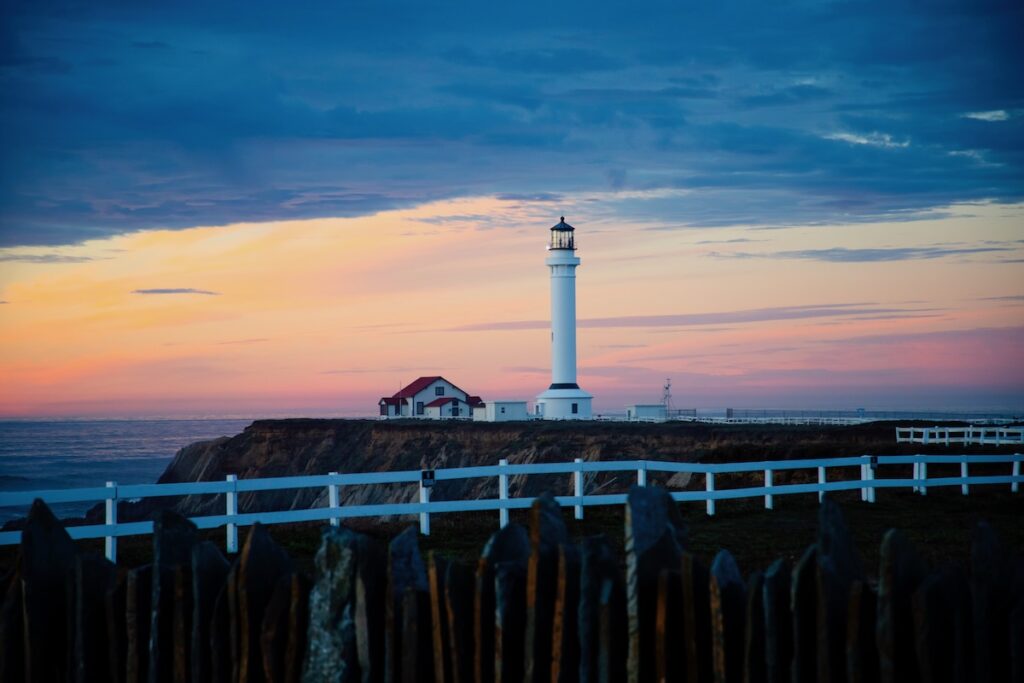
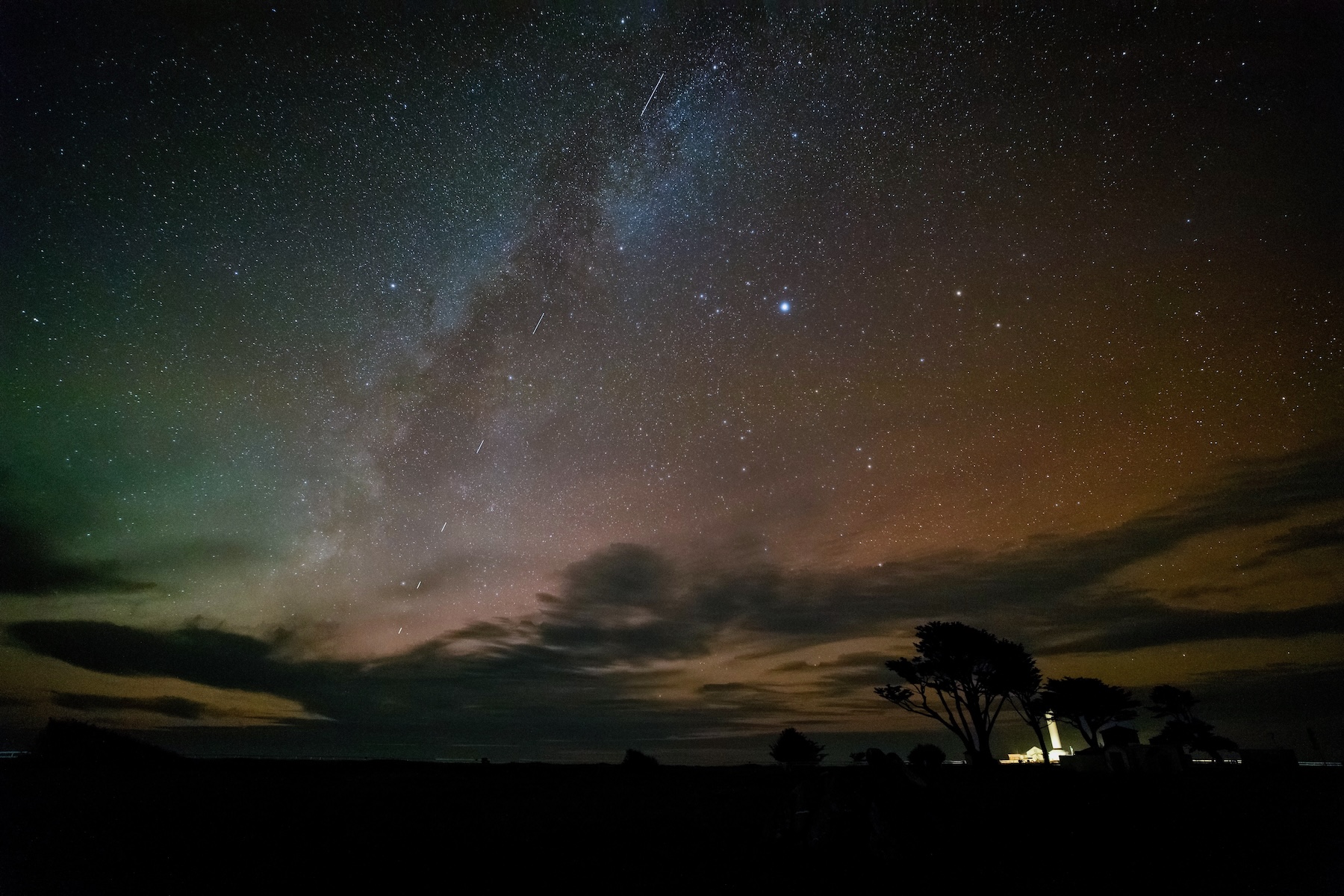
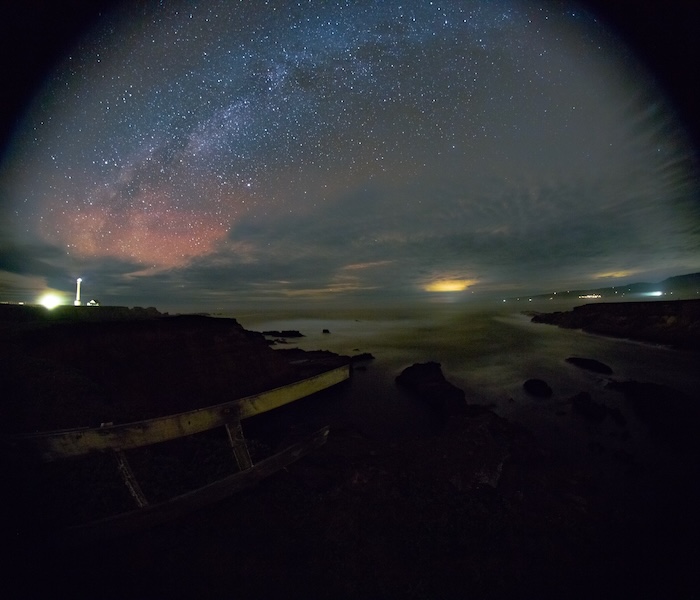
On the return trip, I crossed the mountains via CA-20 to Fort Bragg followed the CA-1 south to San Francisco. I timed it to hit sunset just after reaching Point Arena Lighthouse. This is an even darker area (Bortle 2, LP index = 0.17), and when looking over the ocean, there no light domes at all! But it was partly cloudy on this night. This didn’t stop me from catching some nice satellite trails, though. Also, some faint condensation (cirrus clouds?) led to a pleasant “haloing” of the stars, where bright stars bulge out and appear more prominently than under a pristine sky. This decreases image contrast, but I like it because it makes the constellations appear more prominently. In the shot below, I have no trouble finding Cygnus, Lyra, Aquila, and the head of Draco. In some of my other photos, I have to search hard for these.
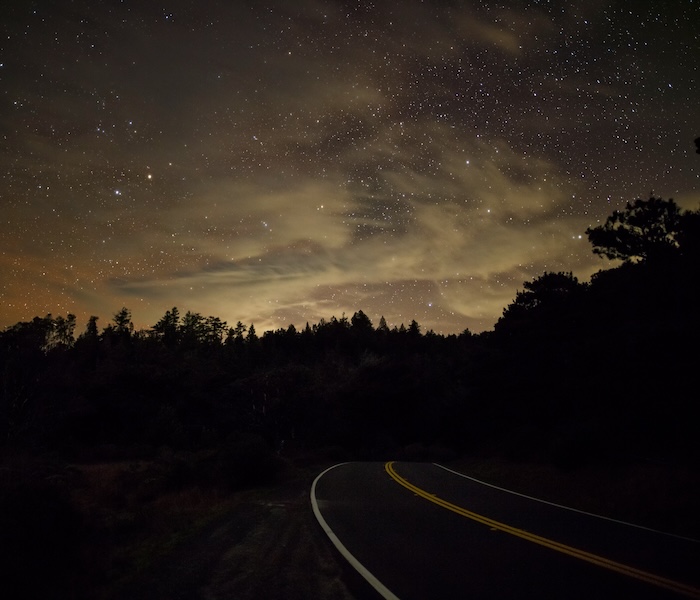
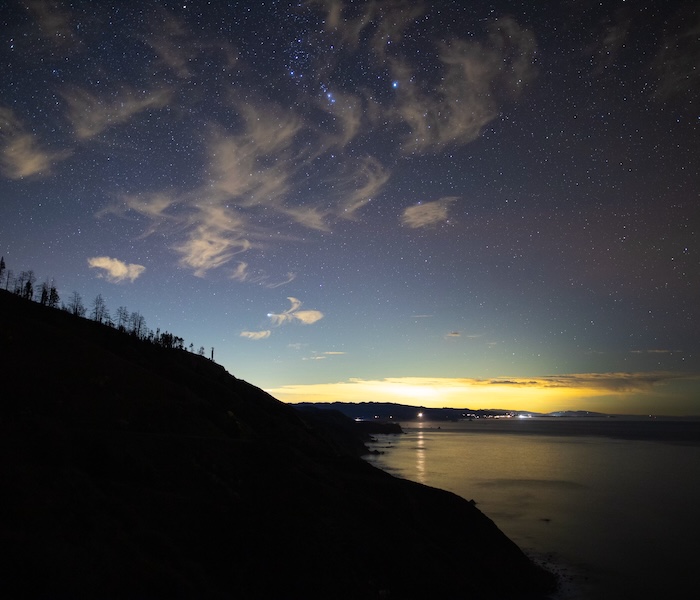
It was a long drive back from Point Arena, and this is a very uncomfortable road to drive at night. Many of the curves are perilously tight, and speed limit signs of 15 (or even 10!) mph should not go ignored. A couple of the curves weren’t marked very well and caught me by surprise. I grew tired as the hours went by, while the voices on the radio carried a song of longing down the road:
All the leaves are brown
And the sky is gray
I’ve been for a walk
On a winter’s day
I’d be safe and warm
If I was in LA
California dreamin’
On such a winter’s day…
Later that year (still waiting on the car repairs!), I went south to Santa Cruz, Monterey and the Big Sur area. In between SF and Santa Cruz, the skies are not quite as dark, but the horizon is still pristine. There are also picturesque lighthouses here, more easily accessible on a day-trip, although when I visited Pigeon Point, it was covered by ugly scaffolding. Pigeon Point is also remarkable because there is a youth hostel right next door. I have stayed at the Truro Youth Hostel before, including on my summer aurora shootout. I should try Pigeon Point sometime.
This time the sky was clear all the way to the horizon! This let me take a shot of a partially setting Moon with the Milky way in the background, something that almost never works otherwise. Usually, even a thin crescent Moon is bright enough to blow out the Milky Way and most stars. You will be forced to choose between capturing the Moon as a crescent (and losing all but the brightest stars), or raising the exposure / gain to properly light the dim stars and Milky Way, which causes the Moon to saturate into a white blob. But right over the horizon, the Moon’s brightness is greatly attenuated (the same thing happens for sunrises and sunsets — this is why you can look at them without feeling pain in your eyes). The attenuation is just enough to create a balanced photo that can be captured with a single exposure — no HDR needed. I’ve done this elsewhere — see the shot from Gargantua Harbor in my aurora post. But it is a rare night over the ocean when the sky is clear enough to do such a thing.

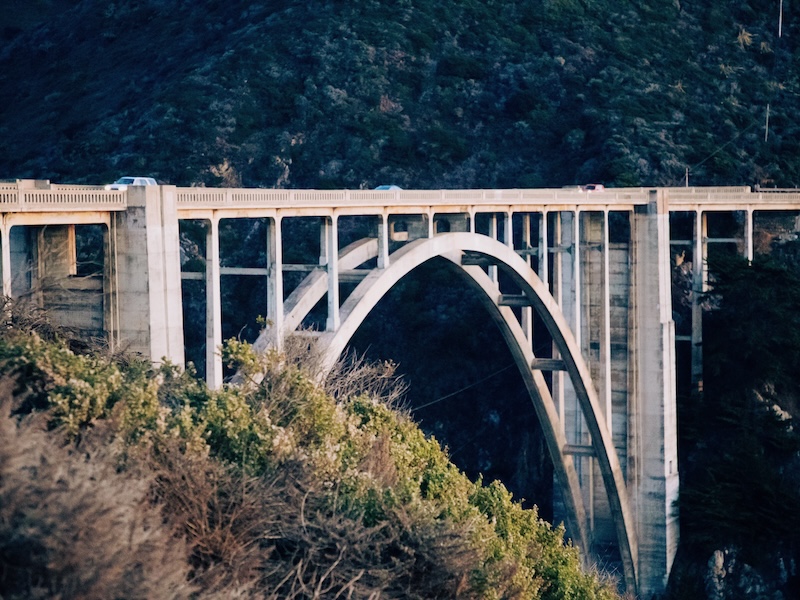
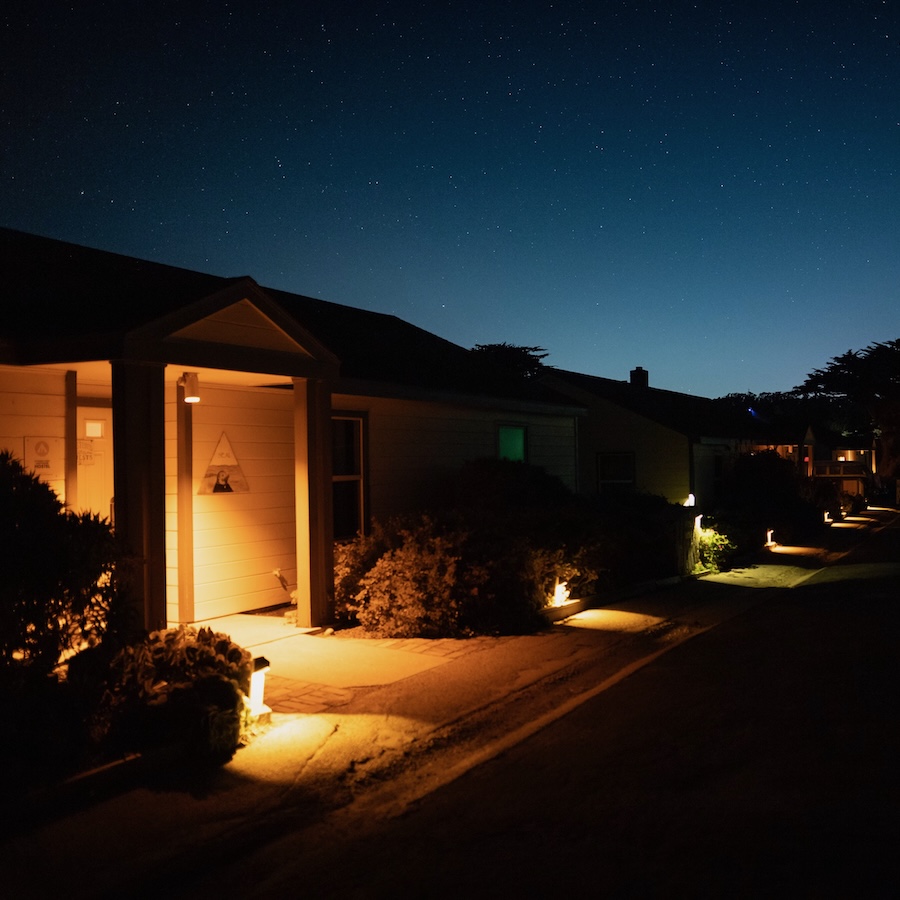
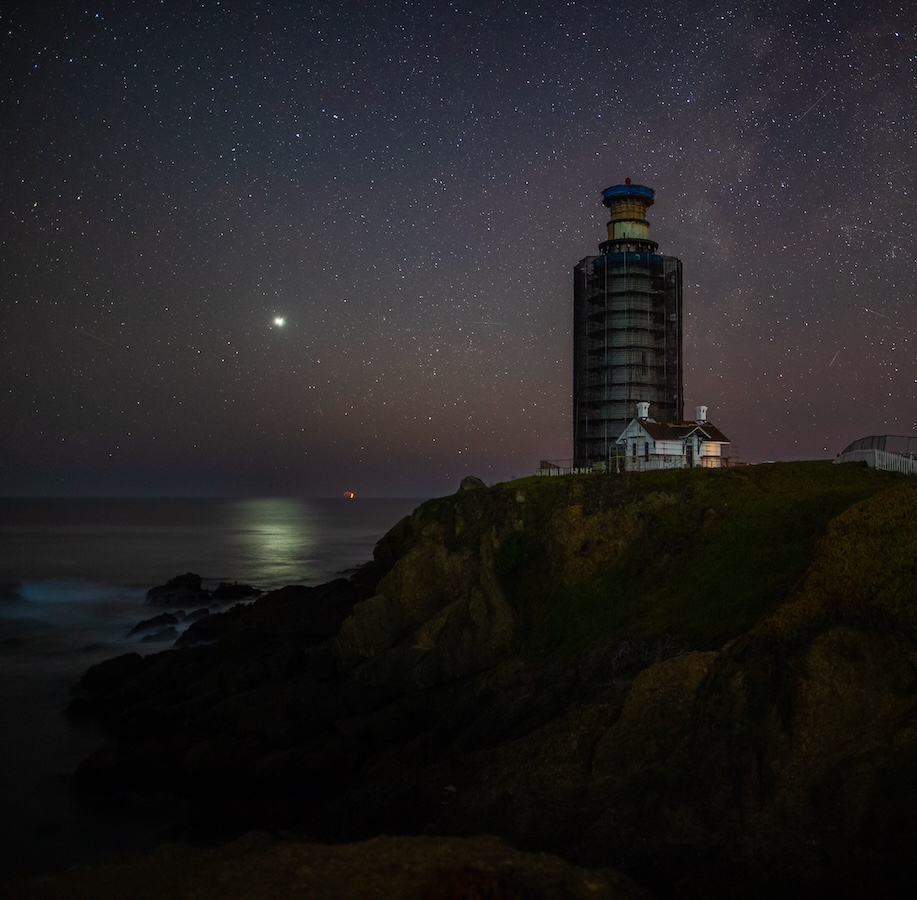
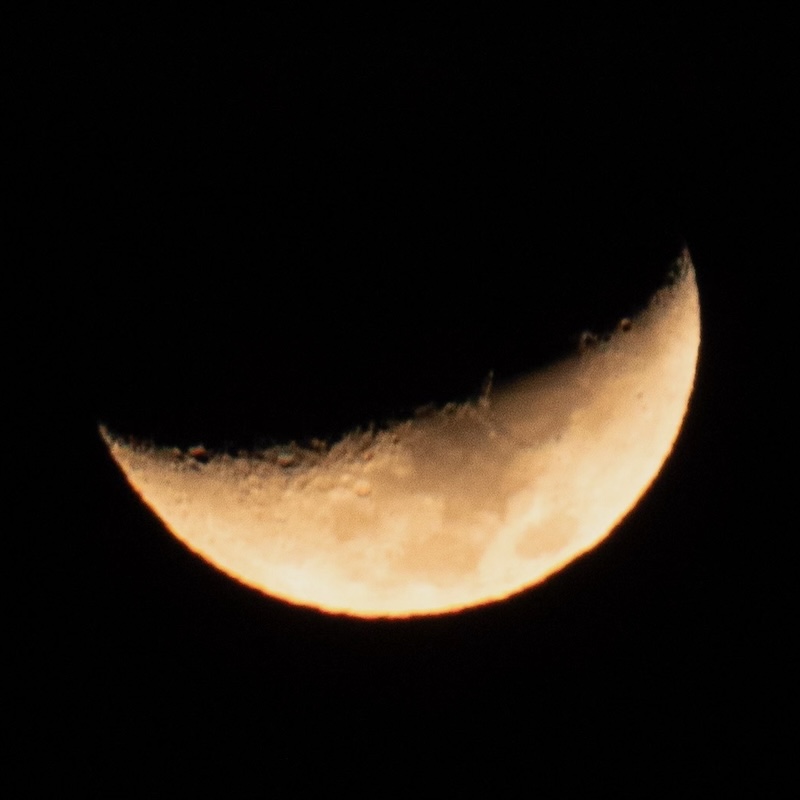
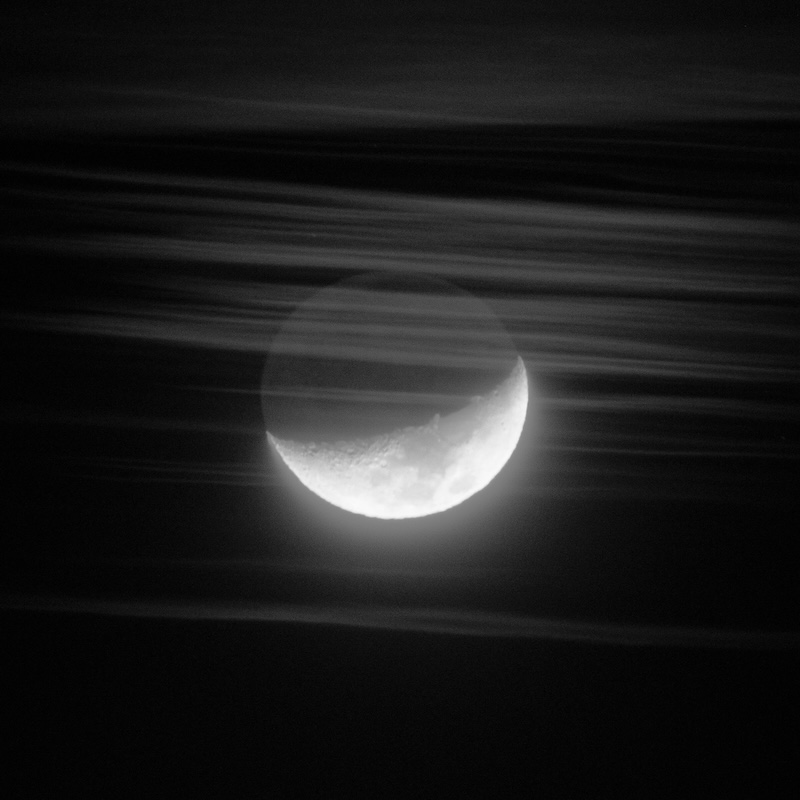
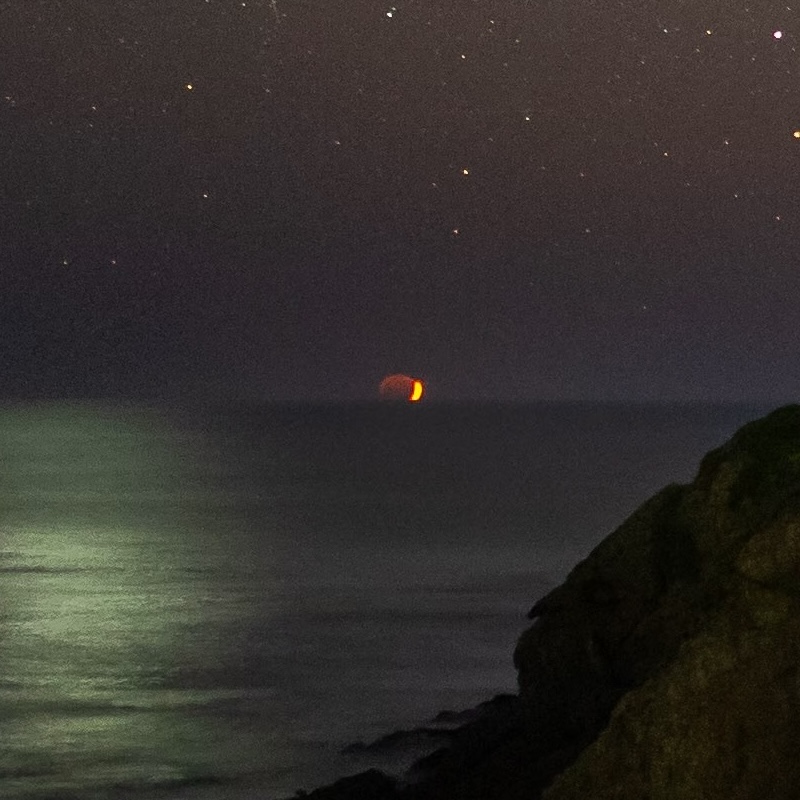
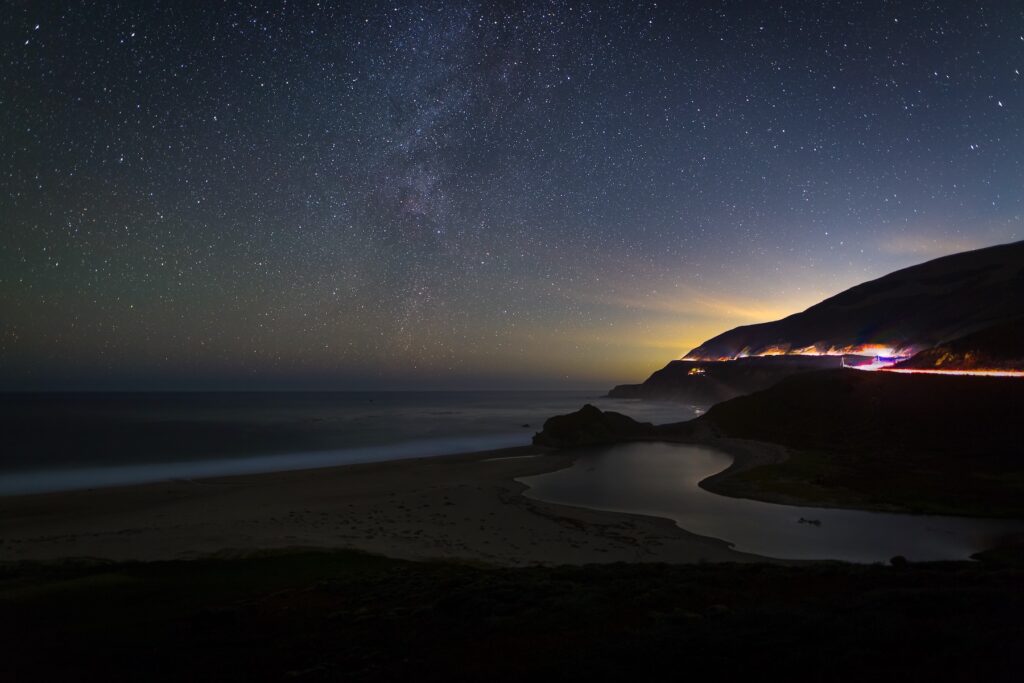
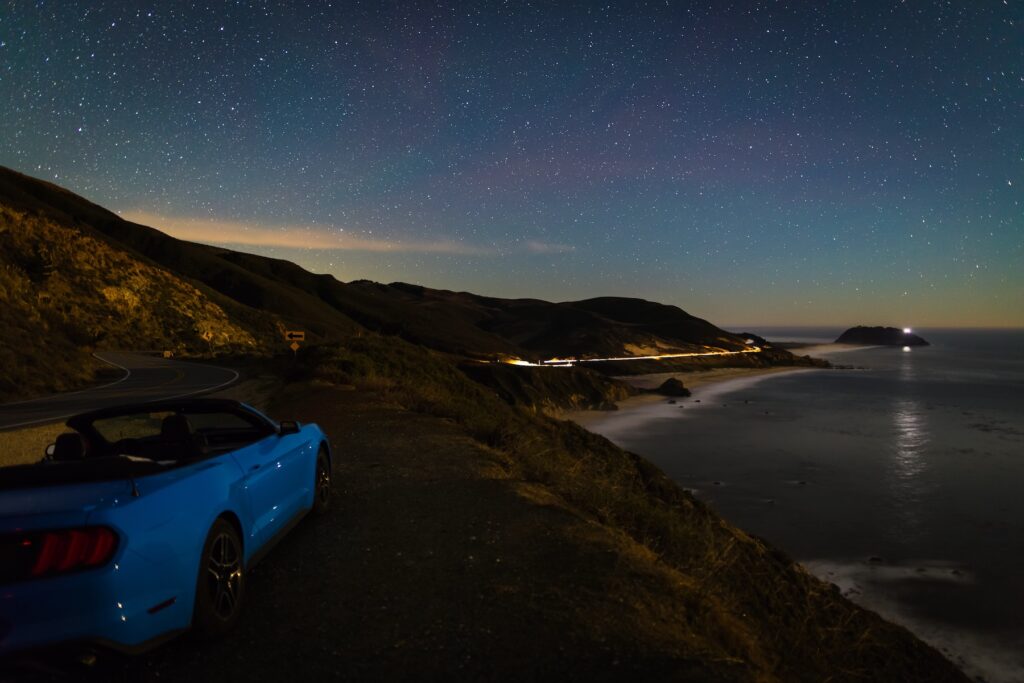
Driving south from Monterey past Big Sur, it gets really dark again. Earlier in the year, I had stayed at Kirk Creek Campground (almost always fully booked — snagging that spot two days before the trip was a miracle!). This is even darker at Bortle 1 (LP index = 0.085), and I caught the comet Tsuchinshan-ATLAS (C/2023 A3) by pure accident. That will be the topic of a future post on comets. I didn’t get all the way to Kirk Creek this time, but it wasn’t necessary. Here the appeal is not just the dark skies — its the combination of sky, beaches, headlight trails — and even subtle city lights to the far north — that make this place unique at night.
2026
New Year, New Gear
I went through a lot of gear upgrades over the past year, so when I went on my second journey up CA-1, I was shooting with an entirely different set of tools. I was eager to see how it affected the photos!
Back to Fort Bragg
Following the northern section of CA-1 again, it was nice to do this by day. I made good use of the 28-200mm Tamron, and the 16mm Sony G lens is a welcome addition, even when not shooting wide open at f/1.8. It’s so light and compact that I can happily carry it around as a spare lens, unlike the Canon 16-35.
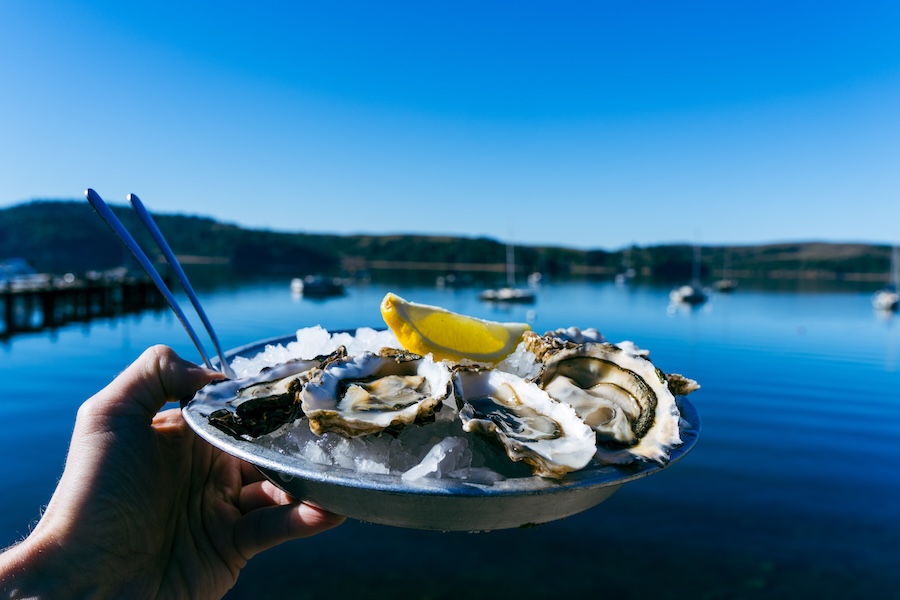
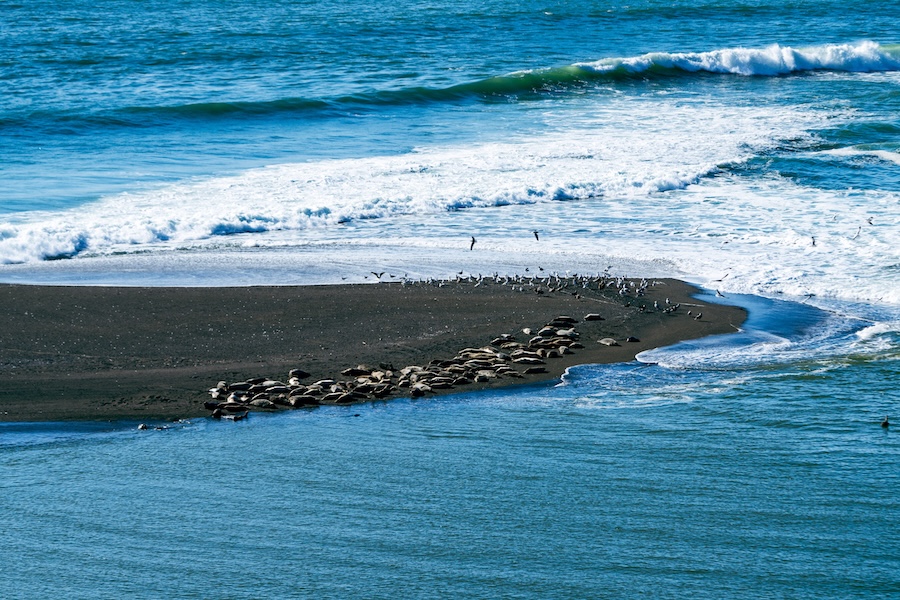
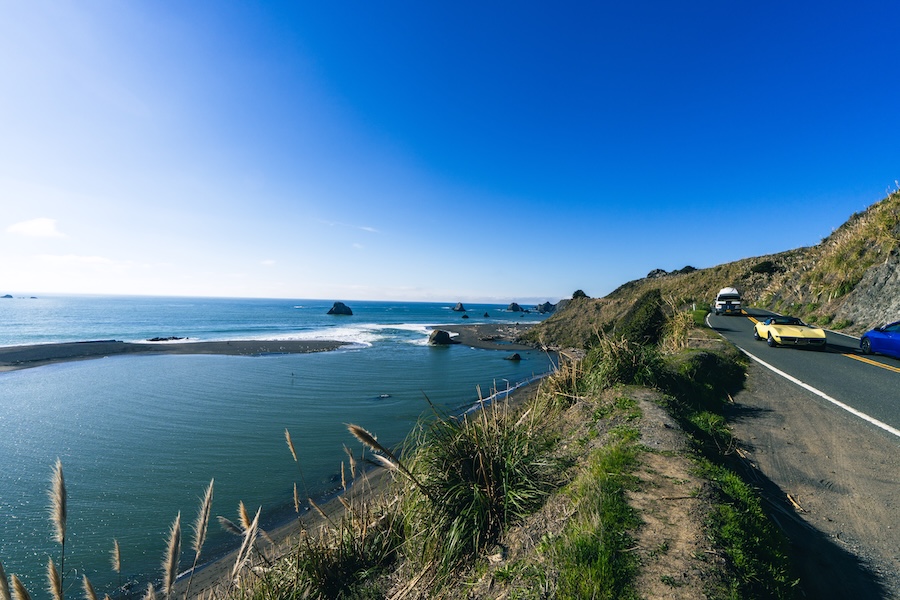
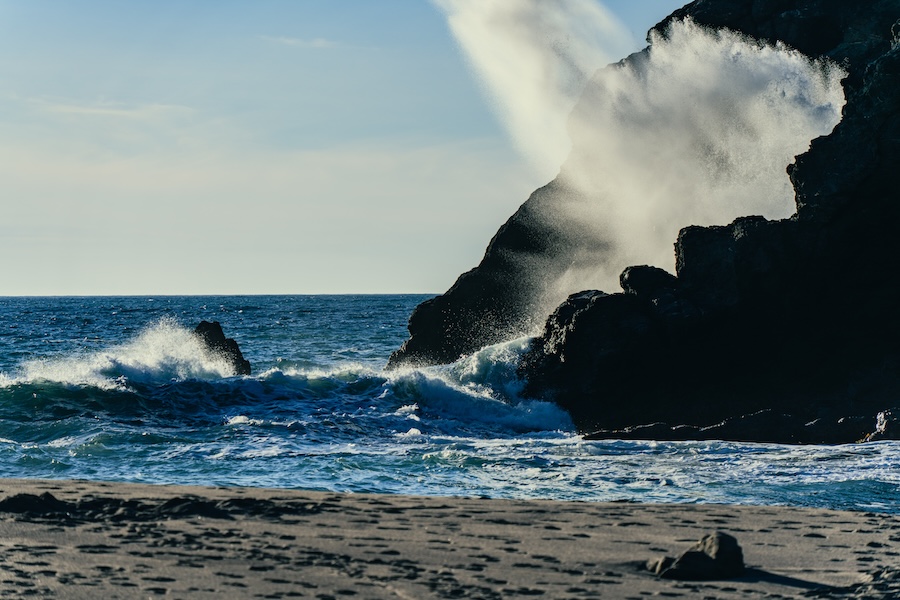
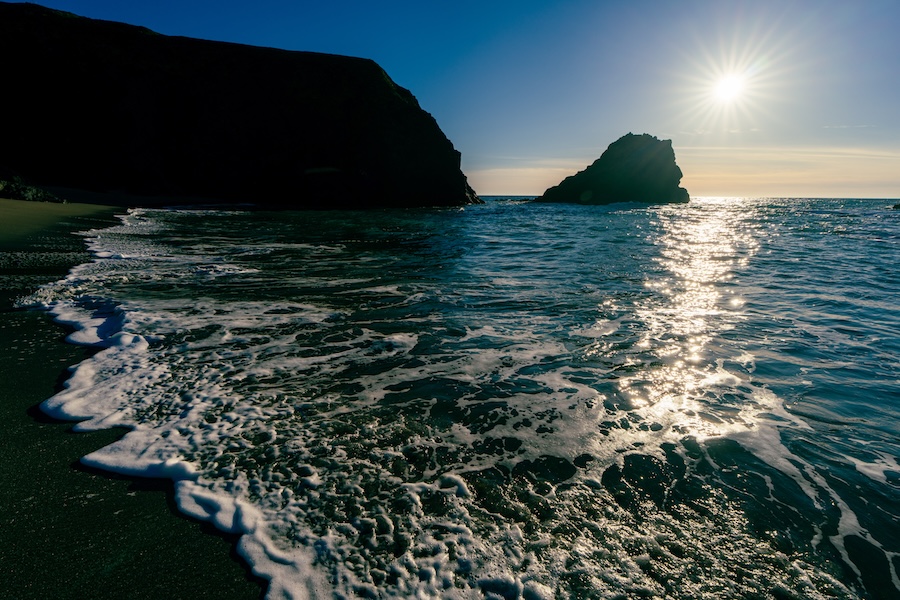
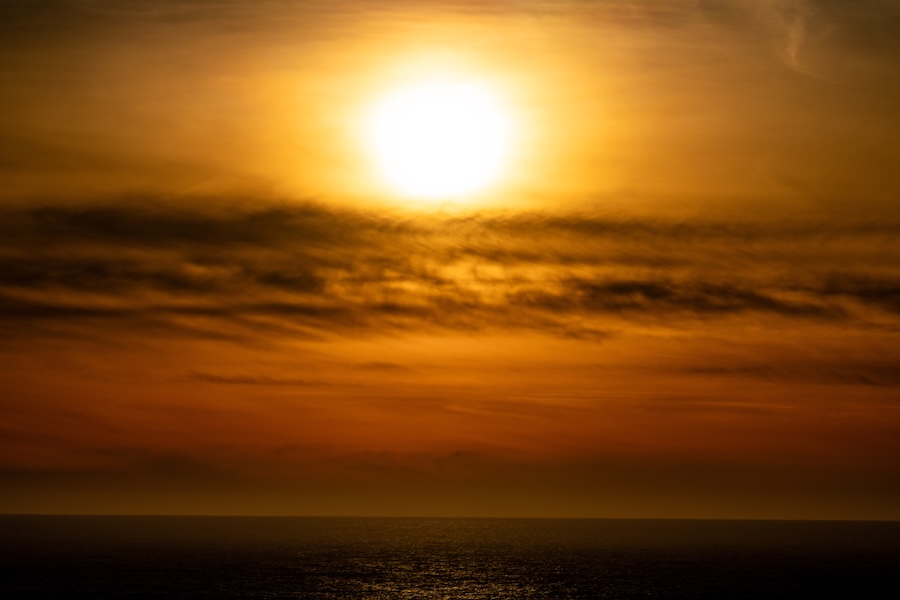
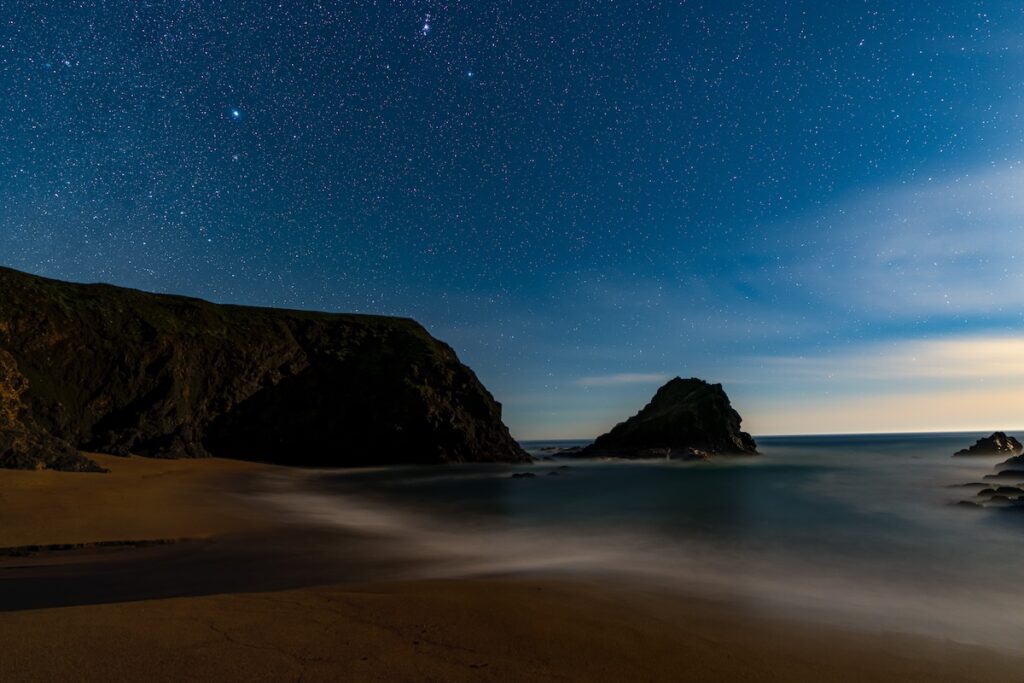
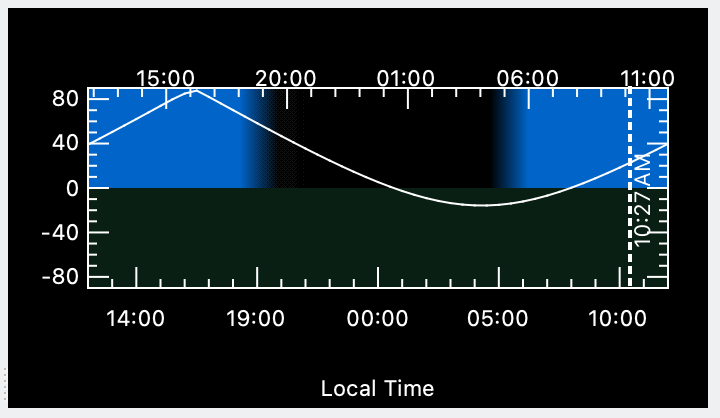
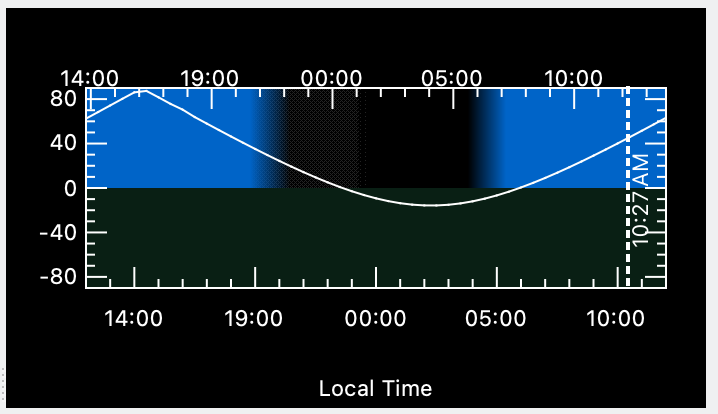
About an hour south of Fort Bragg, I found a parking spot with a little cove. There were a couple of houses around, but other than that, it was very remote, and the skies quite clear. However, a waxing crescent moon lit the sky all night, setting around 11:00 pm, which was well after the clouds rolled in. The Moon lit the sky a bright blue, but even so, I could see a faint hint of the outer Milky Way setting to the northeast.
This was my first time experimenting with a Teseek mini star tracker, which I bought for cheap on Aliexpress. When it worked, it was fine. But it proved extremely finicky, and would often stop tracking for no reason at all. I will try debugging it in the future, but for now I cannot recommend this product.
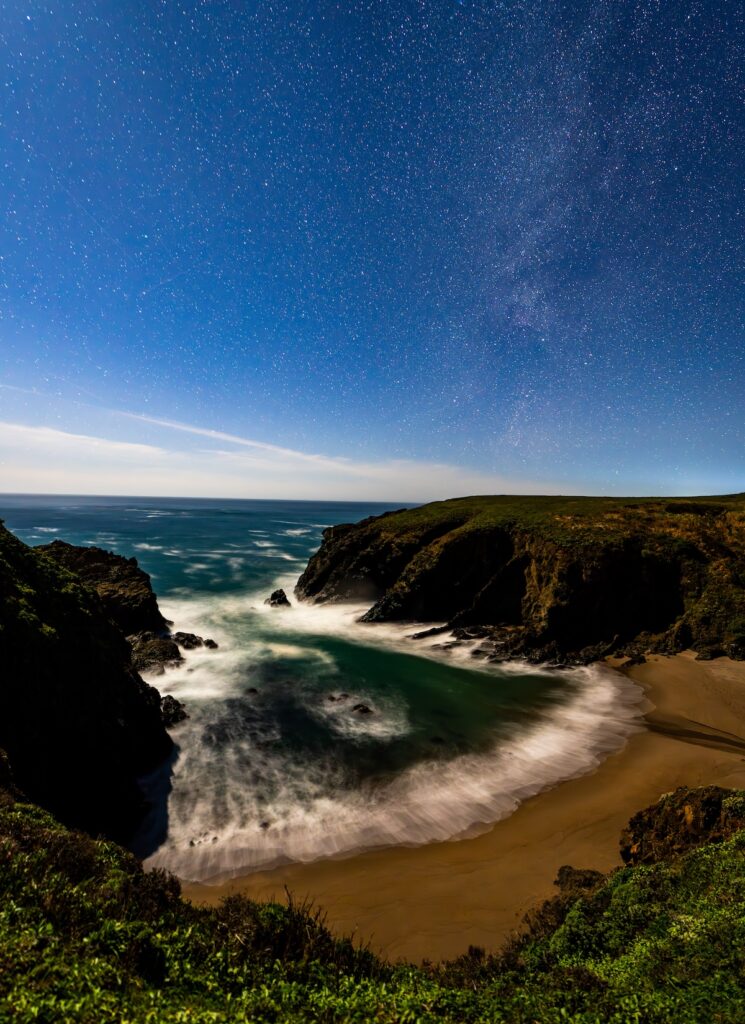
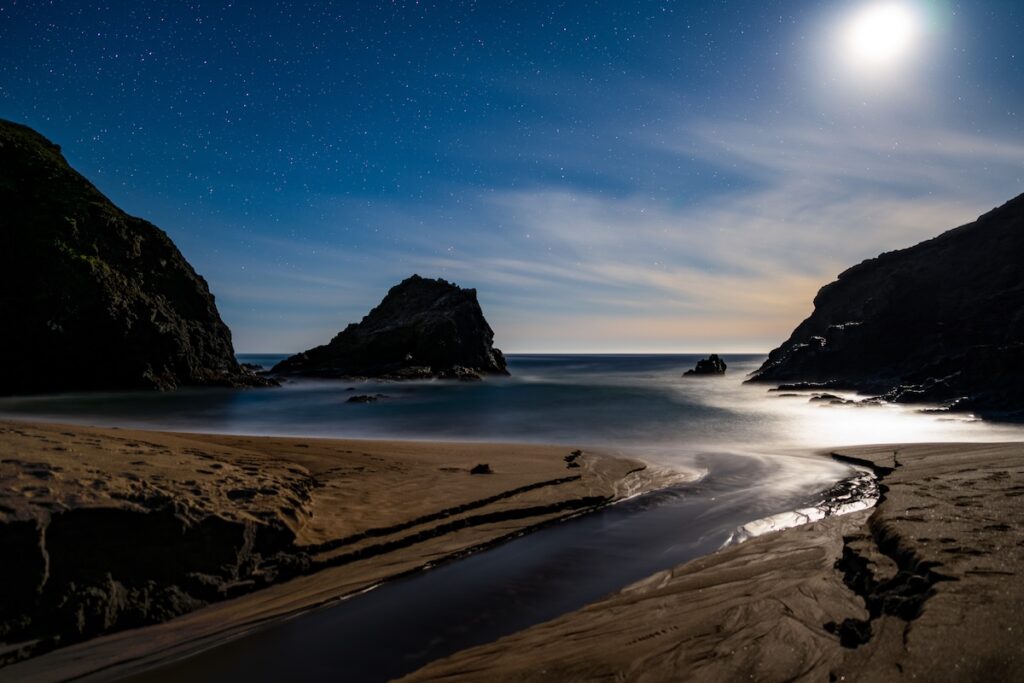
My good friend Tammy met me in Japan. We shot for the last couple of months and Tammy always took crisp photos. But Tammy got swept into the sea and this is all that is left of her. So I drove up to the cliffs near Mendocino where it turned cloudy, and we held a memorial for Tammy, and the waves crashed over the rocks bringing comfort to my soul.
Back to Buckhorn / Orion Attempt #1
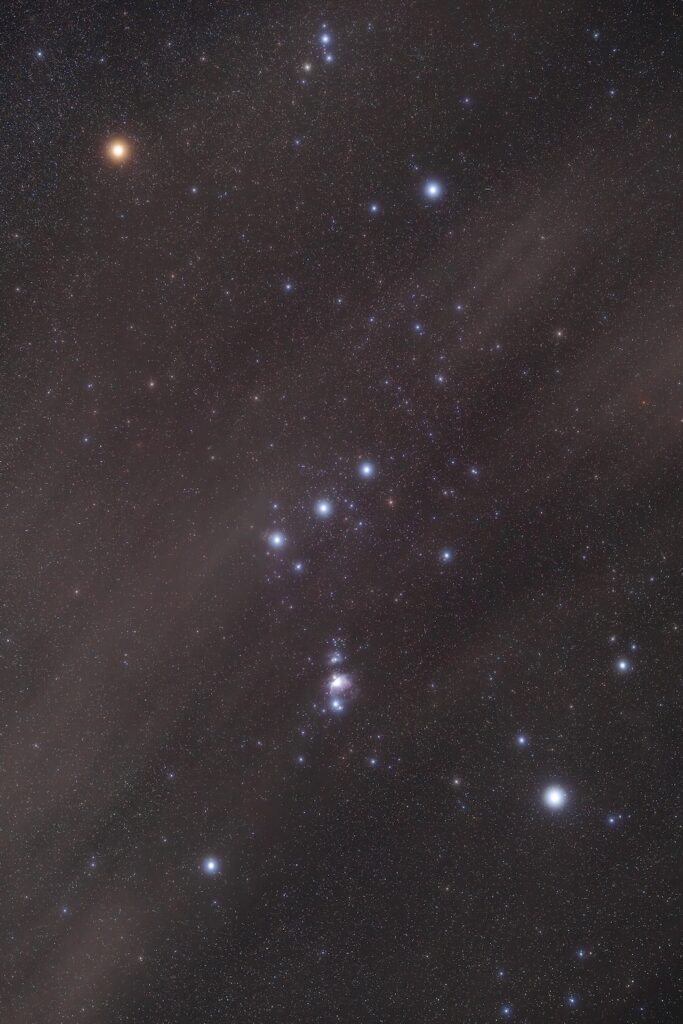
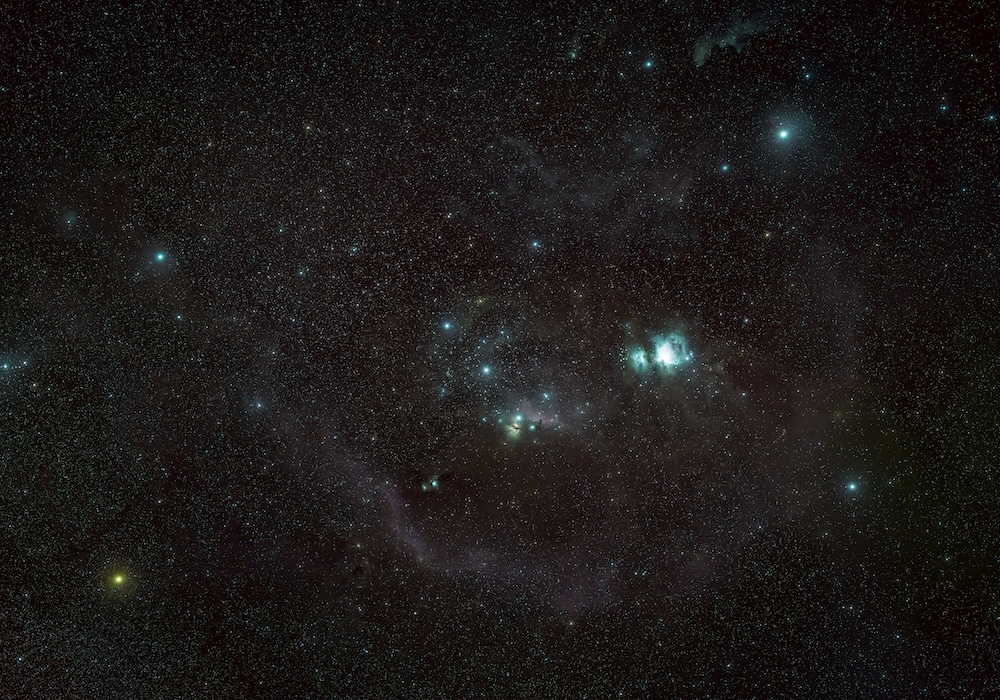
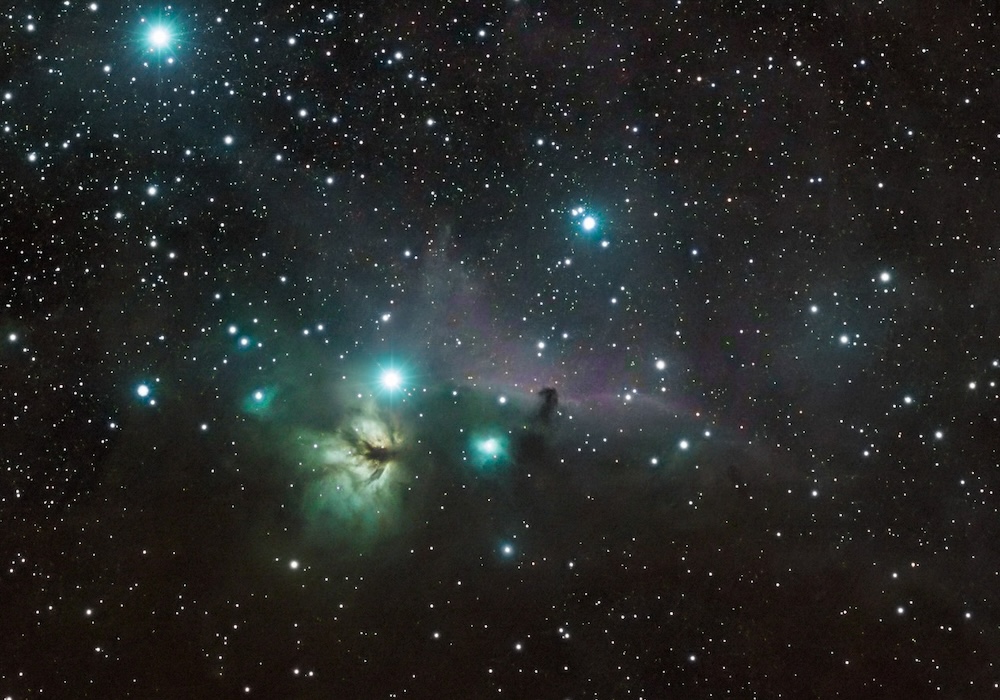
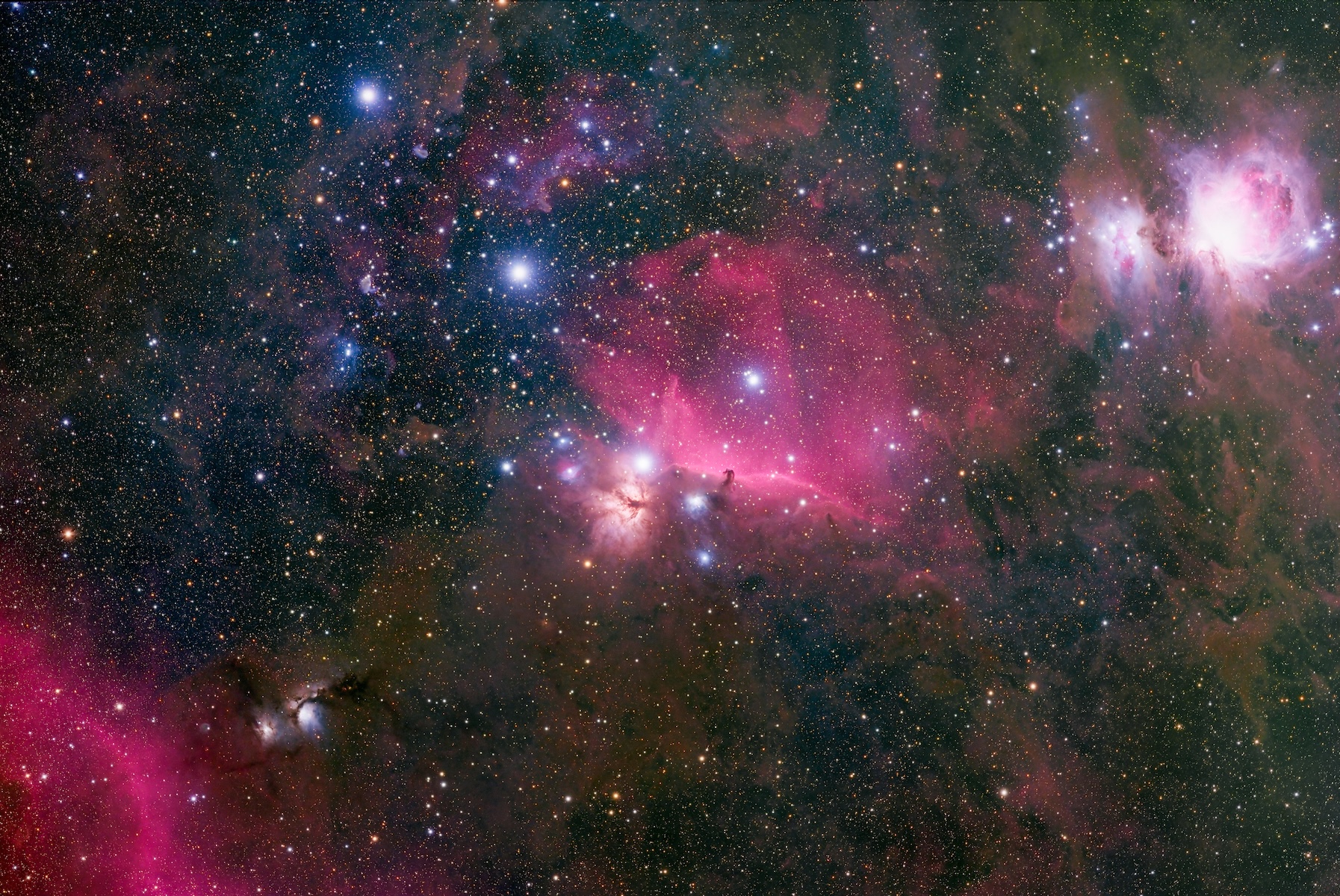
A week later, I went to Buckhorn a second time, with the hopes of capturing the Orion constellation. While I’ve done the nebula before, there is a lot of structure in the whole constellation, including the Flame/Horsehead Nebula complex (near Alnitak), Orion’s Nebula, and Barnard’s Loop. And it fit nicely in the field of view of my 85mm Sigma Art lens. I mounted the Art on the Sony camera, and used the Teseek Mini 11 harmonic mount and a guide camera, with the camera and mount controlled by a Stellarmate Raspberry Pi.
However, clouds rolled in shortly after setting up. I got only around 15 good one-minute frames. Postprocessing in PixInsight and following the standard procedure (debayer, WBPP, SPCC) led to some strange star colors: blue stars turned a strange turquoise, and the Orion nebula turned blue. Much of the Hα emission also turned a dusty gray. But I could make out the Horsehead nebula in a rough zoom-in image, superimposed on a reddish emission background as expected. If I had better raw data (say, 2-3 hours rather than 15 minutes), I would try harder to pin down the problems and produce a pleasing image. But that won’t be necessary, since I would take a much better photo two weeks later.
Orion Attempt #2
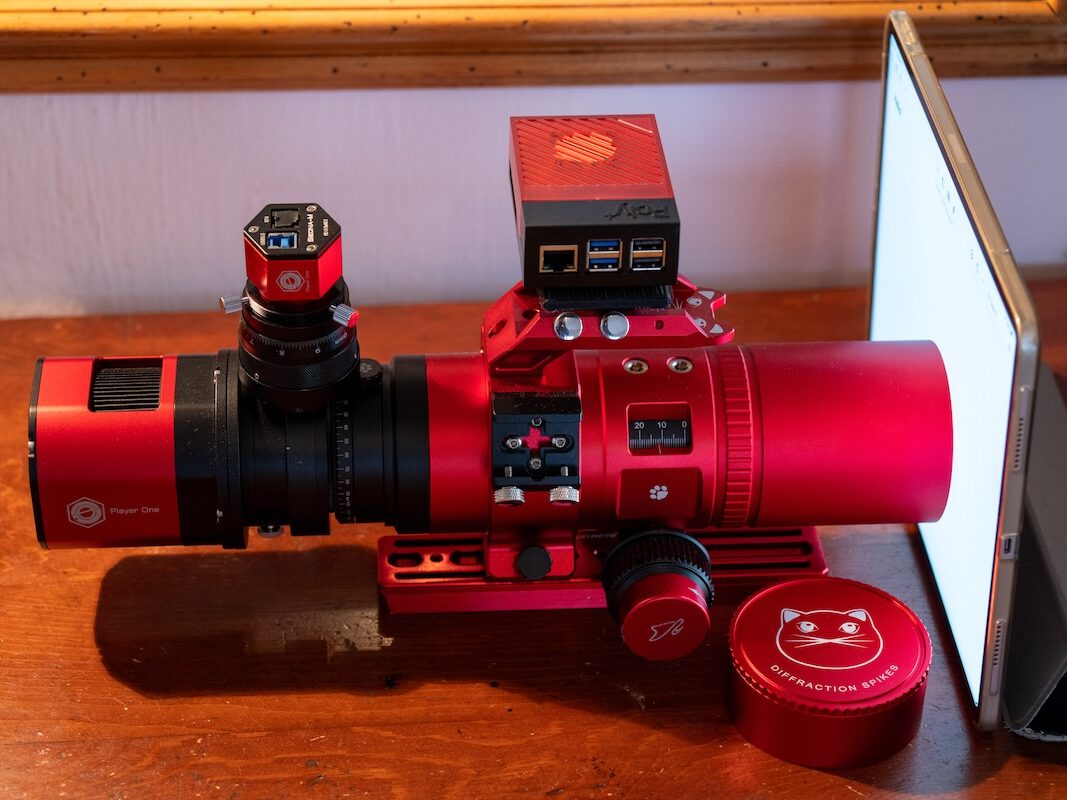
The next two weeks were miserable and rainy. Finally, at the end of February, the skies cleared and I had another chance. This would probably be my last realistic chance to catch Orion before late fall, since it is a winter constellation. It was a couple of days shortly after the new moon, and I made two attempts: up north at Lake Sonoma (failure — too windy), and south by San Gregorio Beach (success). I used a similar setup: RedCat 51 + Teseek Mini 11 + Stellarmate + RPi 5. But instead of the Sony A7RV, this time I used the Player One Zeus-455M astronomy camera, with LRGB filters, manually swapped (a great nuisance, but worth it).
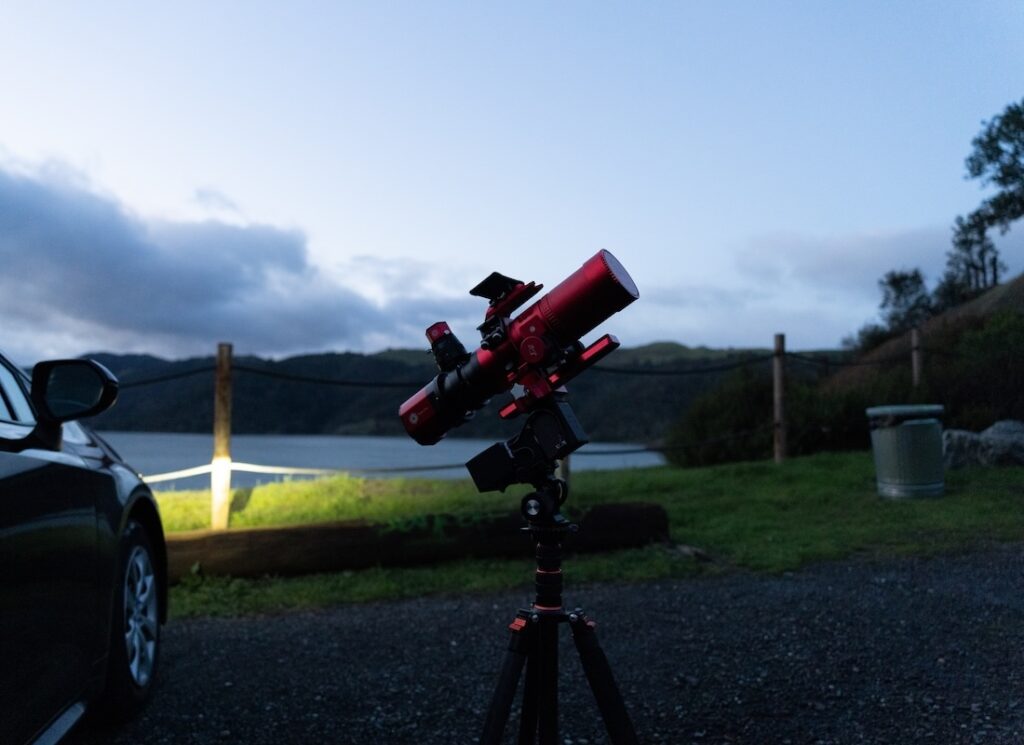
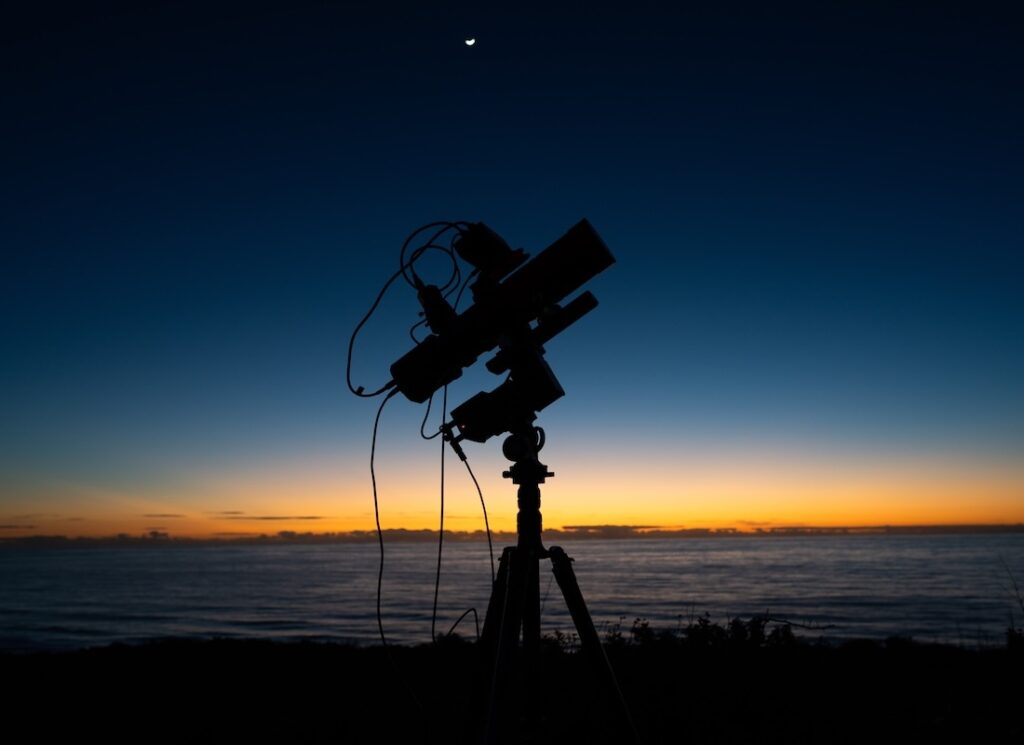
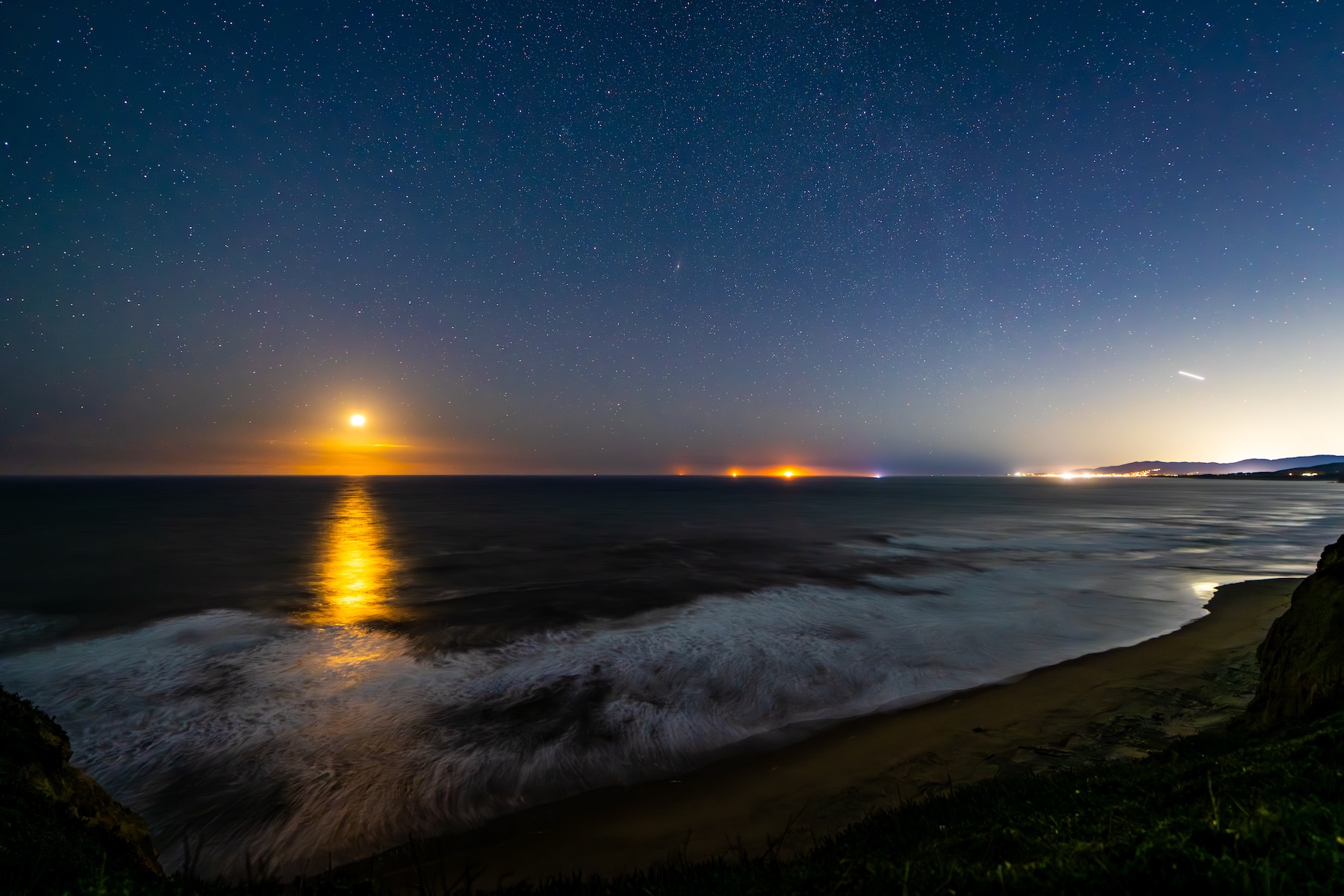
While the RedCat was shooting, I caught this amazing shot of a moonset over the Pacific, facing northeast. Remember what I said earlier about the bright moon blowing out the scene in a photo? Here the moon is a crescent (see shorter-exposure shot with telescope, above), but the long exposure turns it into a bright yellow ball, like the Sun. But everything else about the photo is well-balanced: the Moon casts a reflection that looks like golden butter, and boats light the horizon far in the distance. I took a time-lapse extending until well after moonset, but thanks to the horizon clouds, didn’t catch a “half-submerged moon” like the one at Pigeon Point.
Below is the shot of Orion, centered at the star Alnitak. There are a couple of differences that made this a more striking photo compared to the Buckhorn one shown previously:
- Longer FL lens (250mm vs. 85mm), focusing only on the important elements.
- Sharper optics. APO refractors like the RedCat prioritize sharpness at any cost, beating camera lenses that are designed for a range of competing priorities.
- More integration time. I got 2-3 hours instead of 15 minutes.
- More efficient sensor. 90% QE vs. 55%.
- Sensor cooling. This makes dark subtraction more accurate and reduces noise.
- Astro camera spectral response. Astro cameras are more sensitive to Hα and S-II emission vs. conventional DSLRs.
- More photons. Mono+LRGB gives 2x the photons of a color camera using a Bayer matrix. The downside is that you must carry filters and exchange them. This has to be done manually in the setup above. I have a filter wheel to automate it, but I feel that a filter-wheel setup is too heavy for this mount.
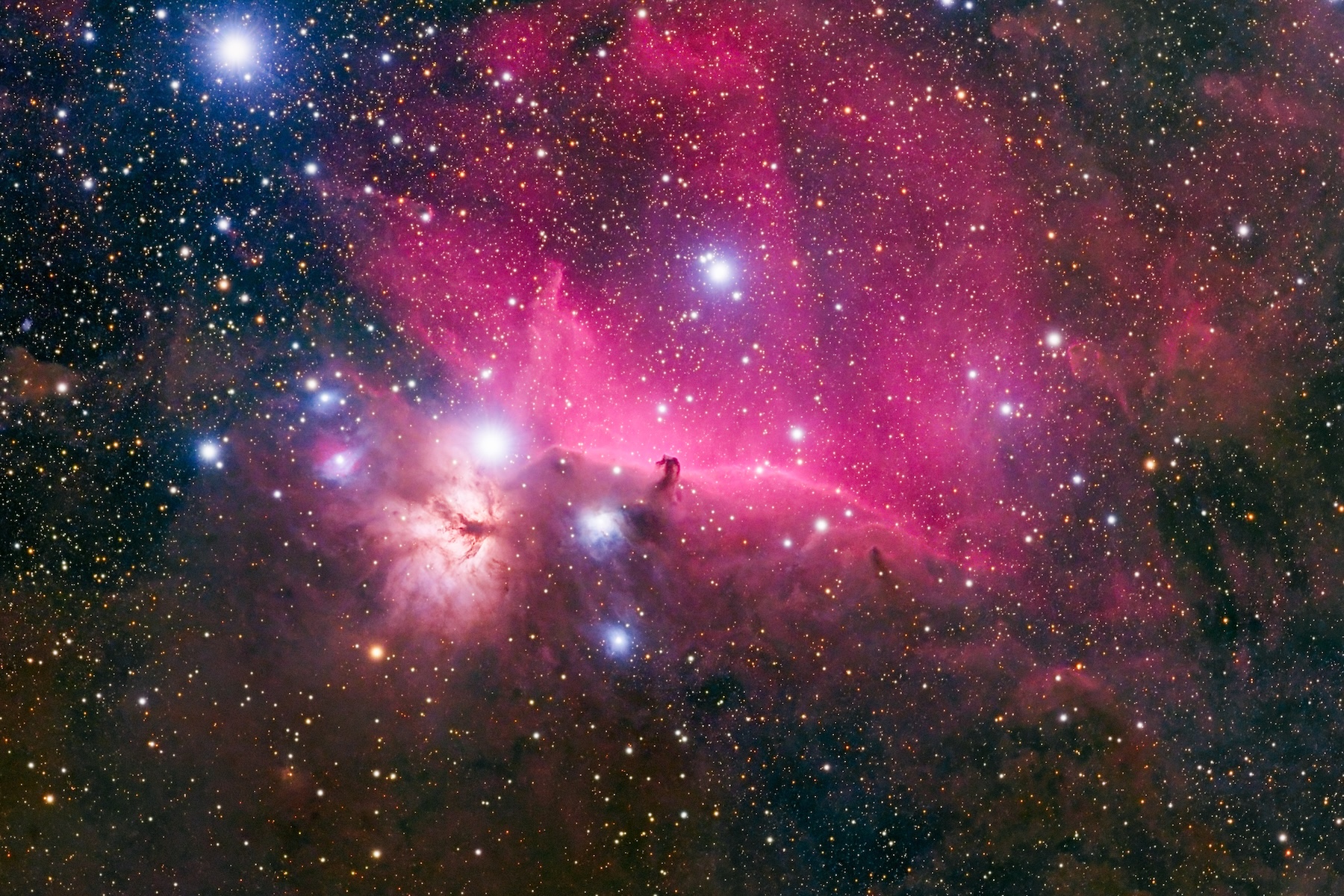
Here’s a zoom-in of the Horsehead Nebula:
California Nebula
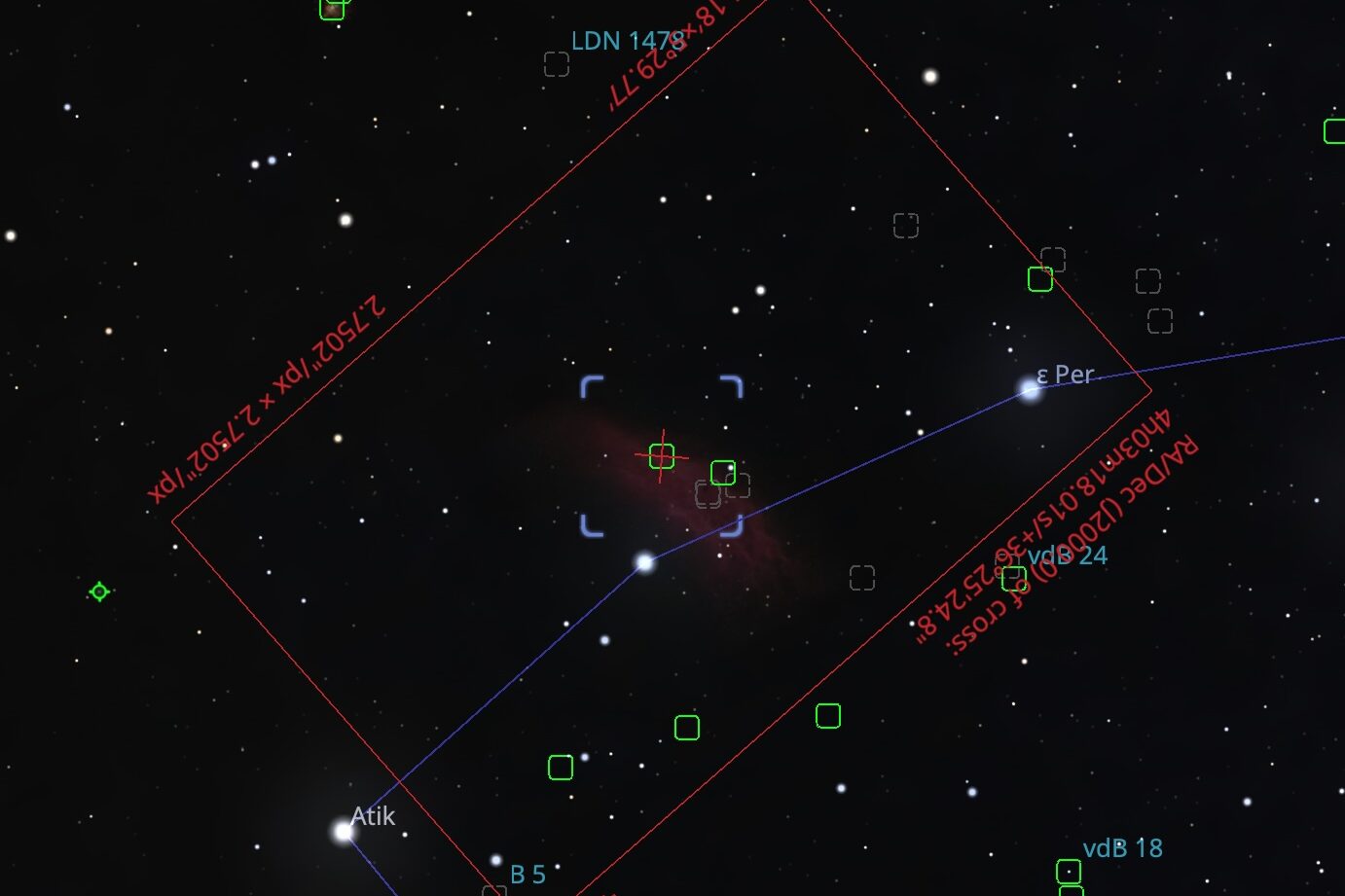
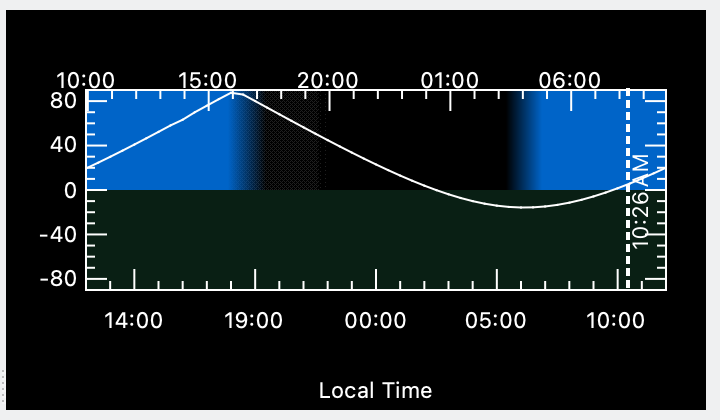
The following day was a Saturday. The moon was waxing and clouds were blowing in from the northwest. The forecast predicted rain for the rest of the week, but tonight would be clear, at least south of the bay. So I booked a motel in Hollister and drove another hour south, setting up at a turnout just outside Pinnacles. The target was the California Nebula (NGC 1499). This was already past peak season for this object, but it would likely be my last chance to catch it until late fall.
Since NGC 1499 is an emission nebula, most of the time is spent imaging in the SHO filter bands. This was my first time doing SHO imaging on the Raspberry Pi setup, and only the second time I’ve tried it on the RedCat 51. The photo plan for the night was as follows:
- ~7:30-12:00, 4-5h total
- 1h Hα (30 x 120s), followed by ~1h LRGB (8 x 60s each), followed by 1h S-II (30 x 120s) and 1+h O-III (30+ x 120s)
- RedCat 51 + Zeus-455M + Teseek Mini 11 + Geekoto tripod + Stellarium RPi5
- Switch filters manually (filter drawer), do flats later
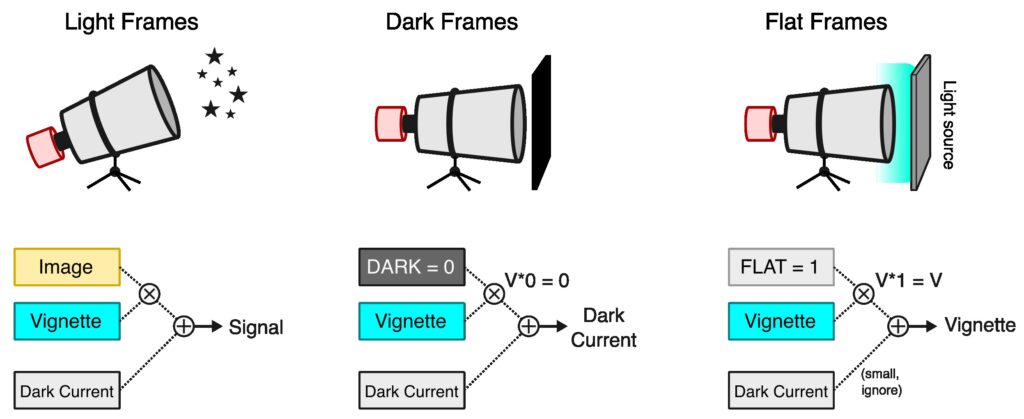
When shooting SHO, you have to be very careful about flat frames! Flat and dark frames are a mandatory technique in serious astrophotography, and allow you to correct for systematic imperfections in an imaging train — specifically, dark current and vignetting. The final signal is combination of the desired image, plus these undesired effects:
SIGNAL (LIGHT) = IMAGE * V + D
where V is the vignetting (lens profile, dust motes, etc.) and D is the dark current.
We have to take separate calibration frames to measure V and D, and then correct them to obtain the original image. Specifically, we take “dark frames” with the telescope covered, and “flat frames” with the telescope pointed at a uniform light source. This gives us:
DARK = 0 * V + D = D
FLAT + 1 * V + D ≈ V
Now we can calibrate our light frame:
(LIGHT – DARK) / FLAT = [(IMAGE * V + D) – D] / V = [IMAGE * V]/V = IMAGE
This doesn’t matter much in daytime photography. But for faint dark-sky objects, it is critical!
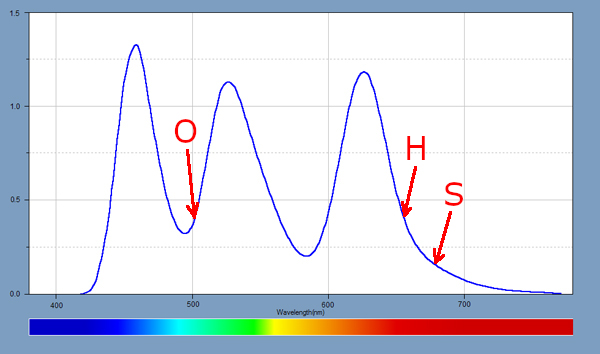
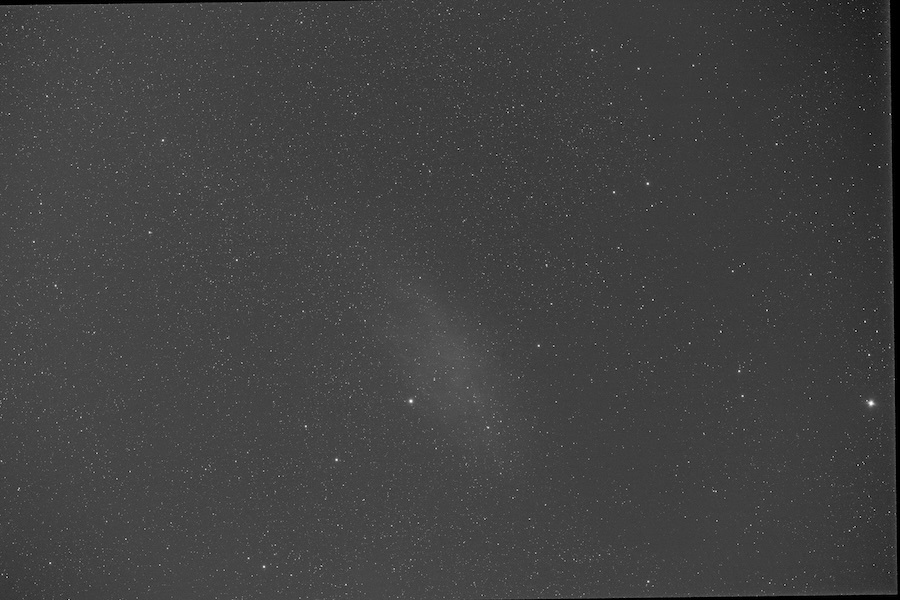
Below, I show the flats obtained for L, S-II, Hα, and O-III. Flat frames are supposed to show a vignetting pattern: bright in the center and dim in the corners. L and O-III look “normal”. But S-II and Hα are weird, especially Hα! I speculate that this is the result of the iPad LED screen used for flats. LED screens do not give “true” white light, but imitate it by mixing red, green, and blue. This leads to non-uniform spectra where the power at the S, H, and O wavelengths may be weak, even though the light appears white to the eye. S and H were especially weak when shooting flats, and I needed to integrate for over 30 seconds to get a good exposure (O was only 6 seconds, L under a second). I suspect that this weak signal allows other systematic effects to spoil the flats.
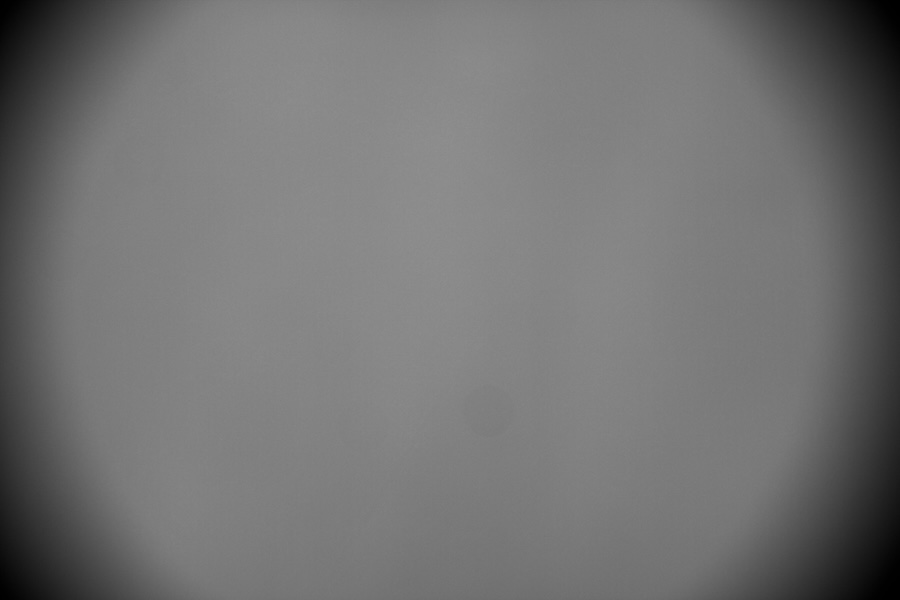
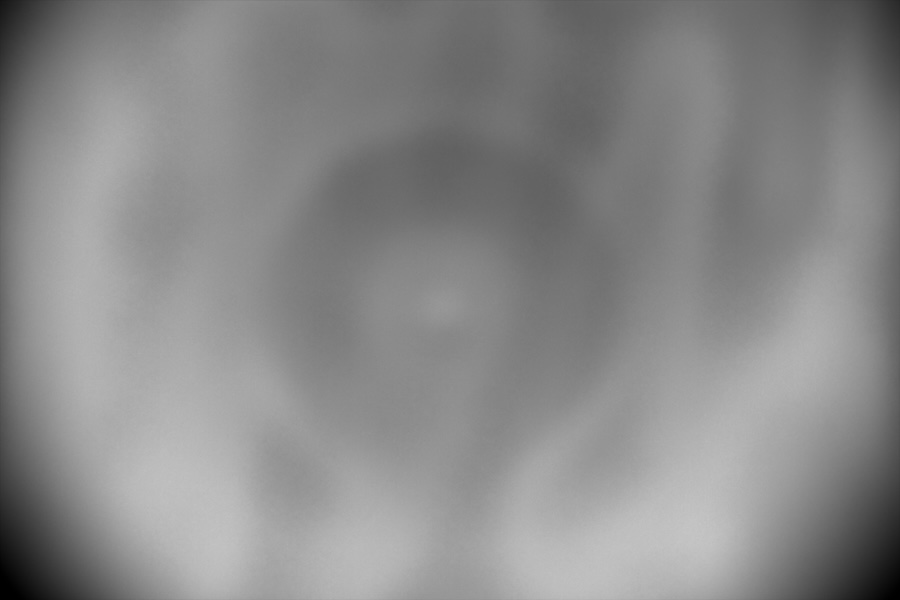
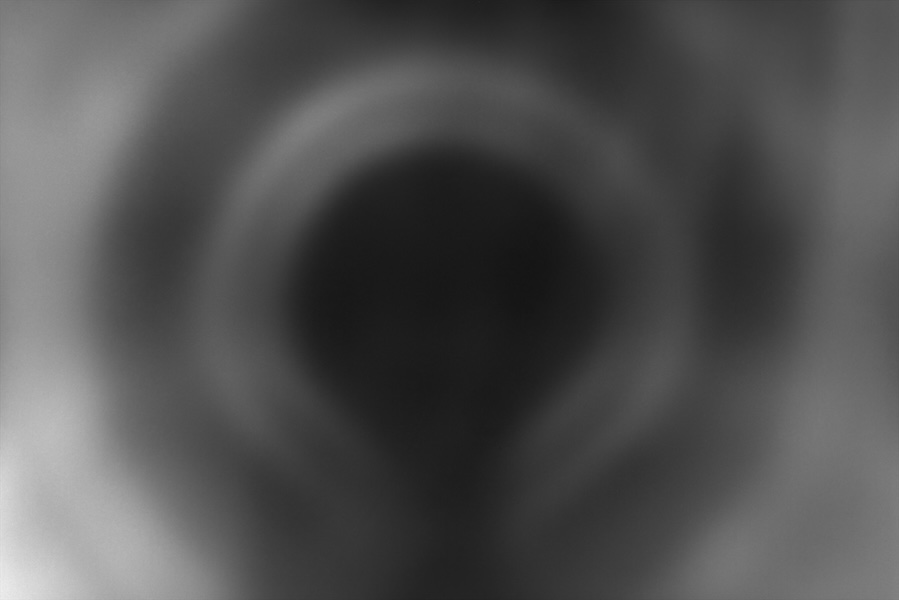

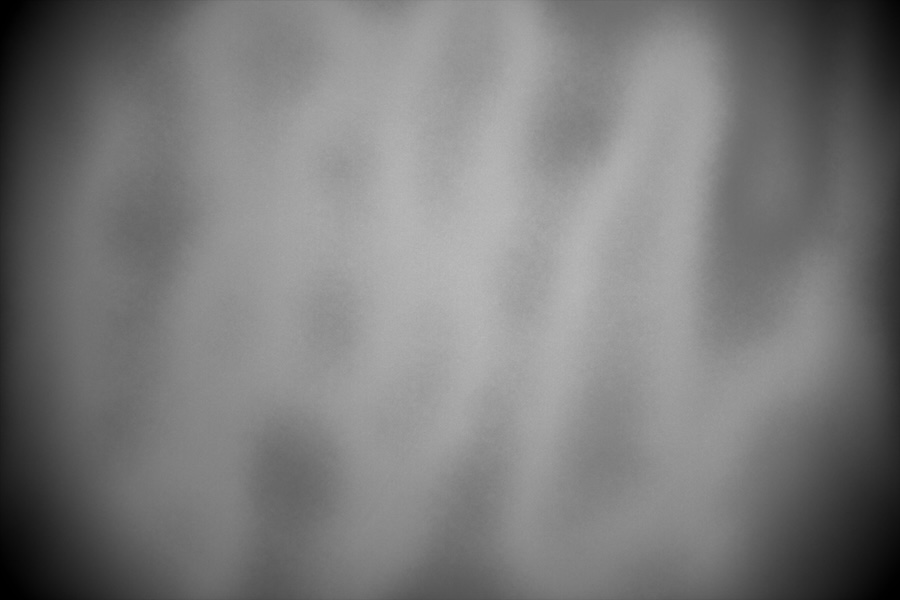
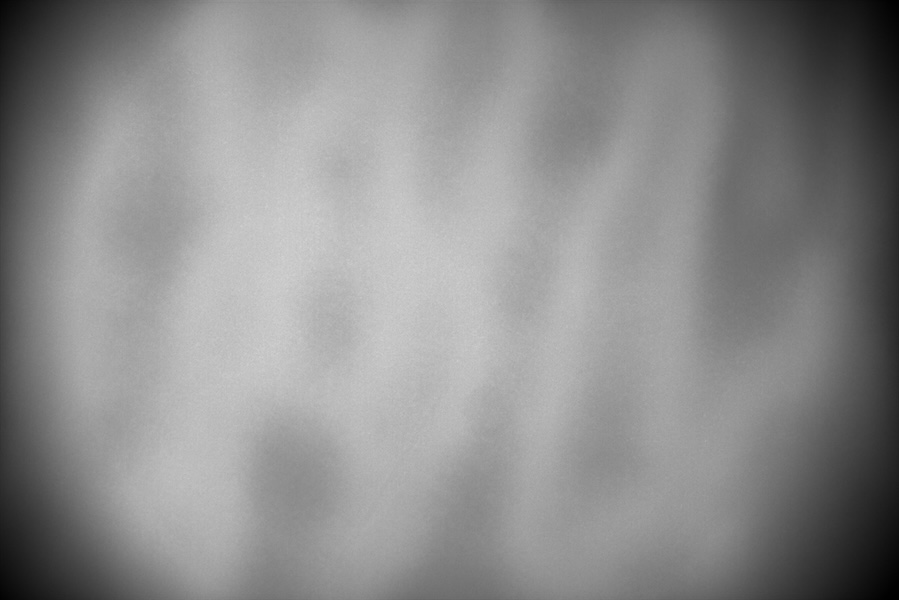
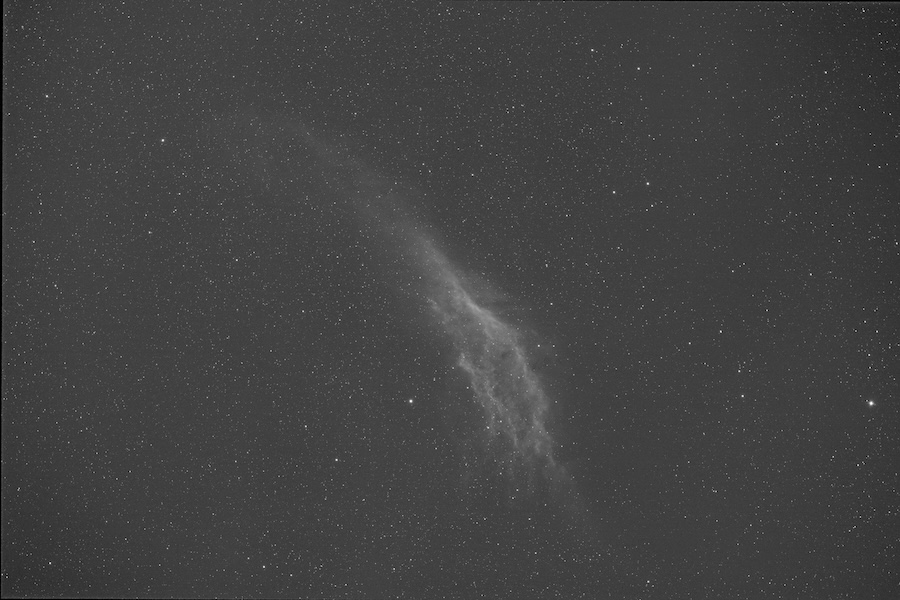
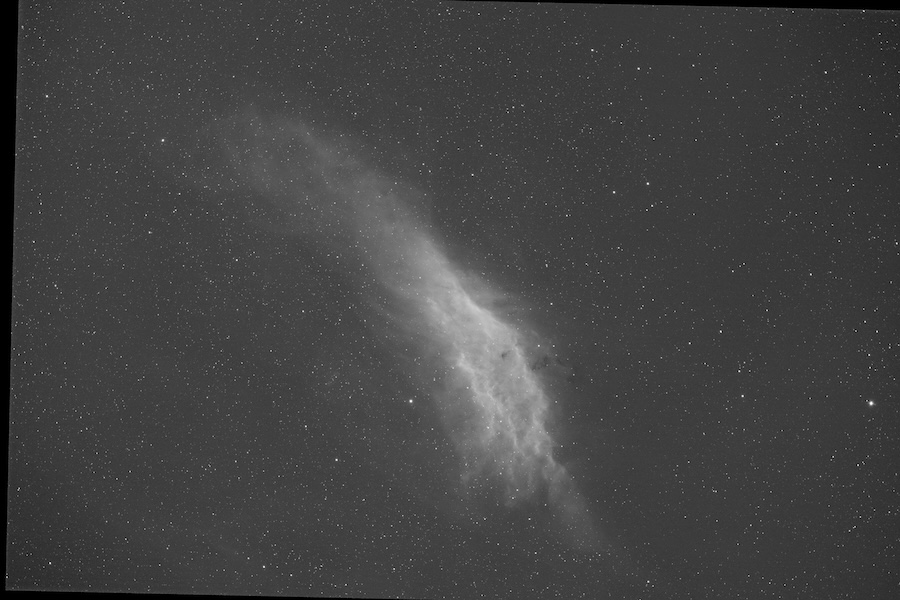
To test this theory, I took a second set of flats with an incandescent bulb shining on a piece of paper (above). These didn’t have the strange “halos” in the S-II or Hα flats. But they still looked “bumpy”. I haven’t figured out why, so I decided to use the luminance flat for all SHO channels instead. Thanks to the narrow filter bandwidth and resulting high contrast of the SHO data, this was good enough to calibrate the image. The SHO masters are shown below. You can see a little residual vignetting if you look very hard, but this is easily correctable with a gradient extraction.
Finally, here’s the image. The post-processing workflow was roughly the following:
- Generate masters with WBPP, use BXT to correct aberrations
- Use ChannelCombination, auto-stretching, LRGBCombination, and SXT to obtain LRGB stars
- Stretch SHO images, remove gradients with DBE, create RGB image with Hubble palette, balance colors with SCNR
- Use SXT to get SHO background, clean up with NXT, adjust contrast and saturation with curves
- Screen LRGB stars onto SHO background
- Finishing touches in lightroom (histogram, dehaze, clarity, etc.)
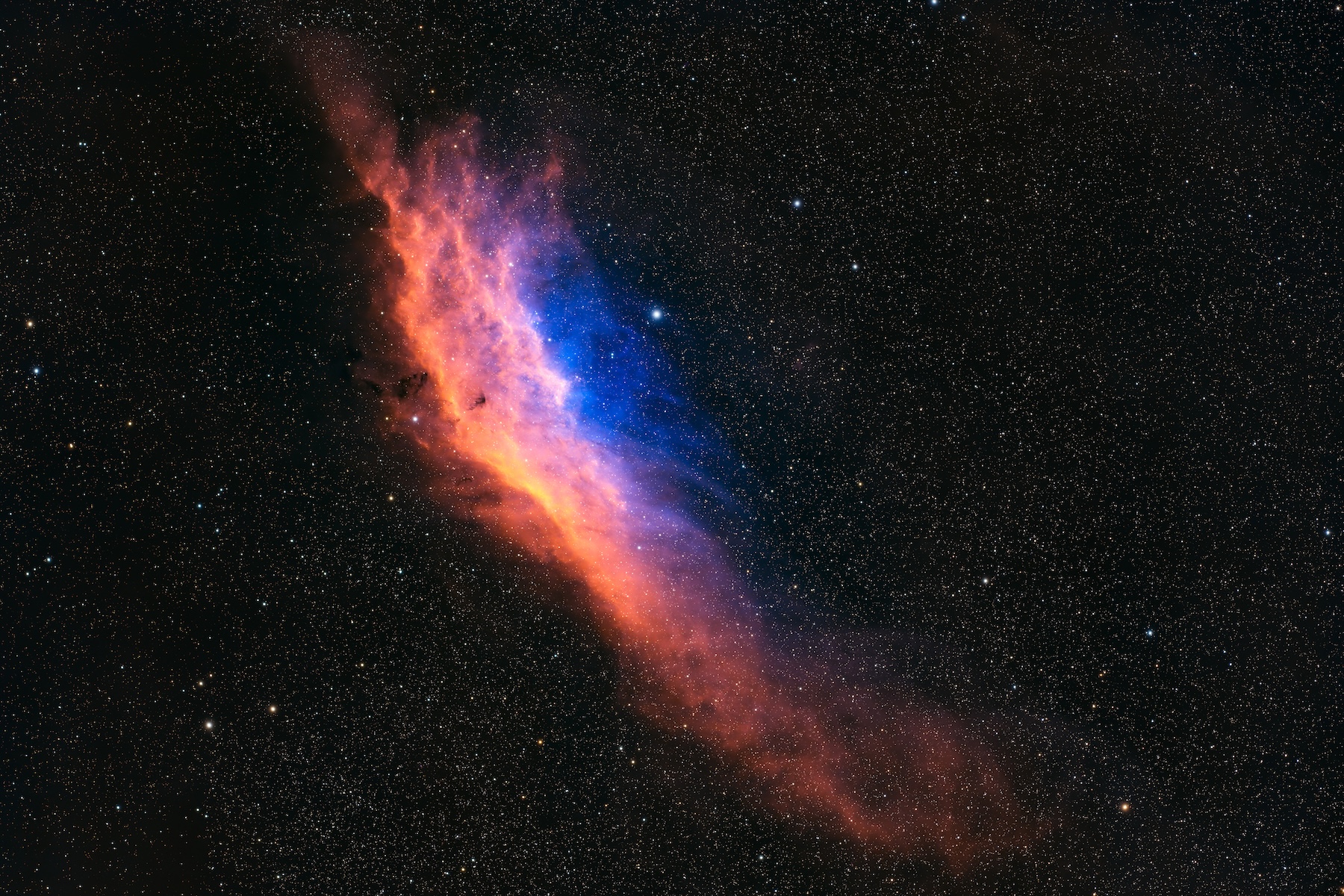
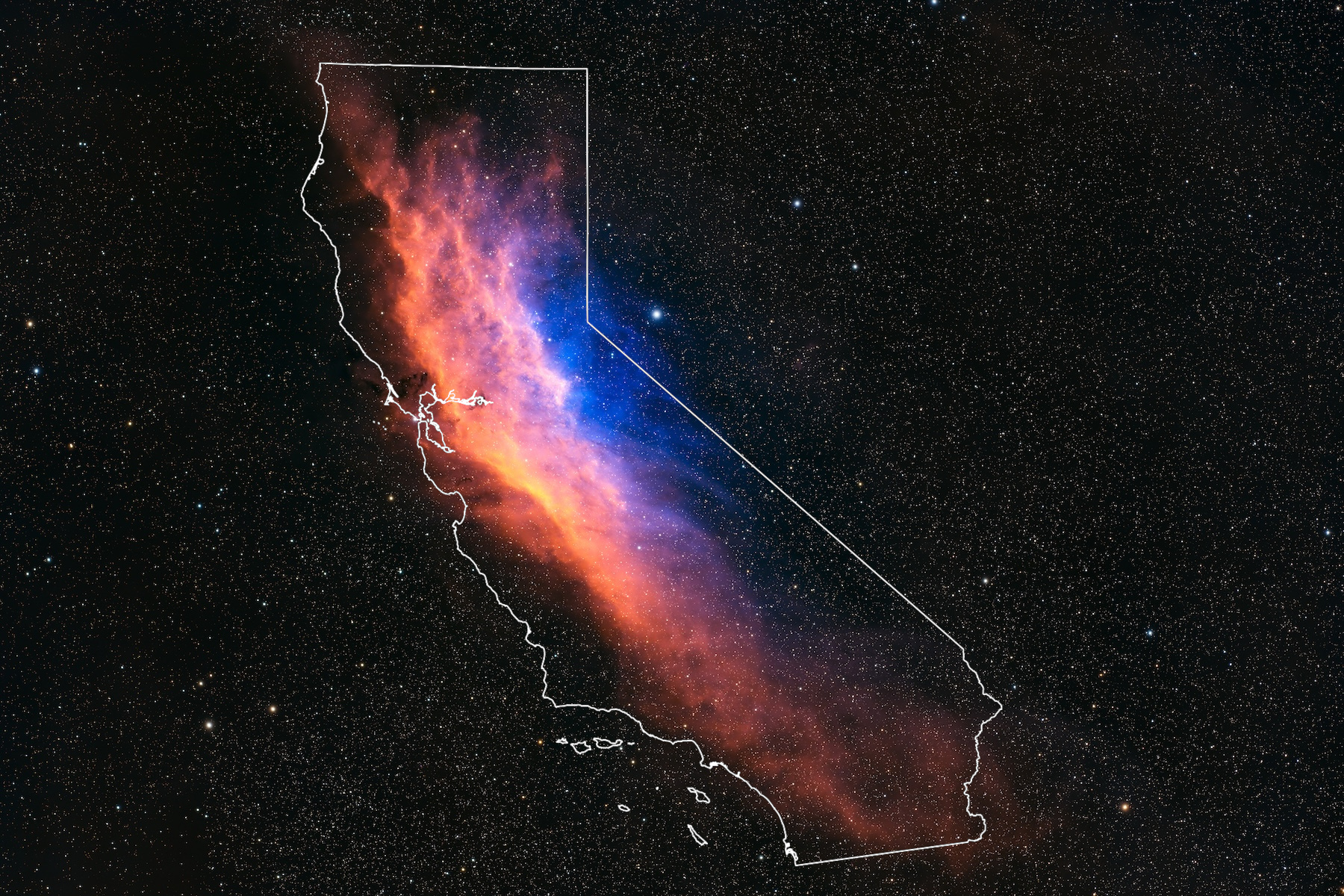
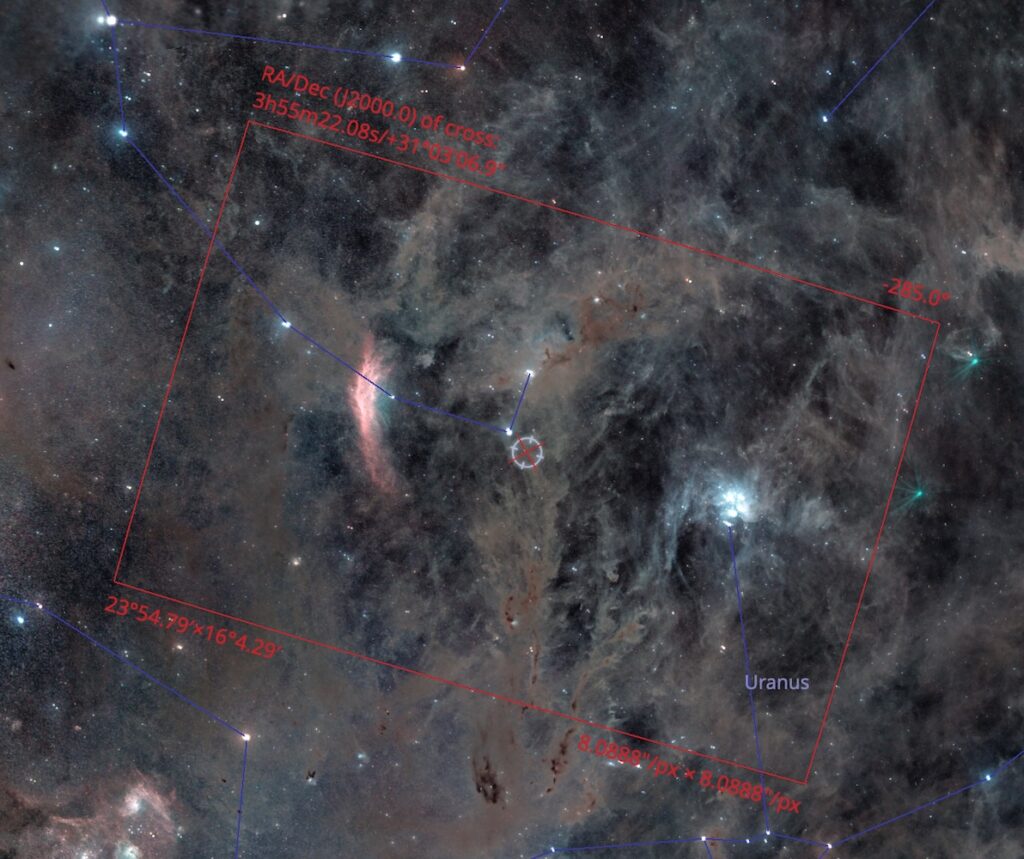
250mm looks like the ideal focal length for this object! But I’d love to revisit it with the 504mm Takahashi ε-180, which would require mosaicing but could bring out even finer details (especially in the weak O-III band). Zooming out, it would also be cool to shoot the California Nebula and Pleiades in the same frame. This should be doable with my Sigma 85mm f/1.4 Art, which is a Canon EF-mount lens attachable to the astro camera through a ZWO filter drawer adapter.