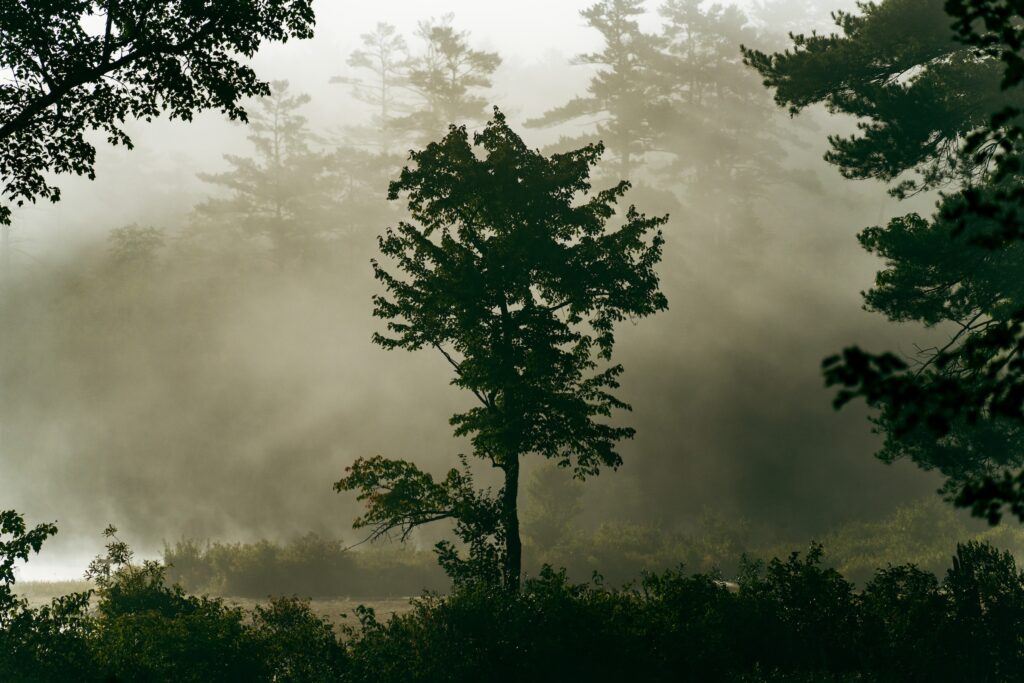
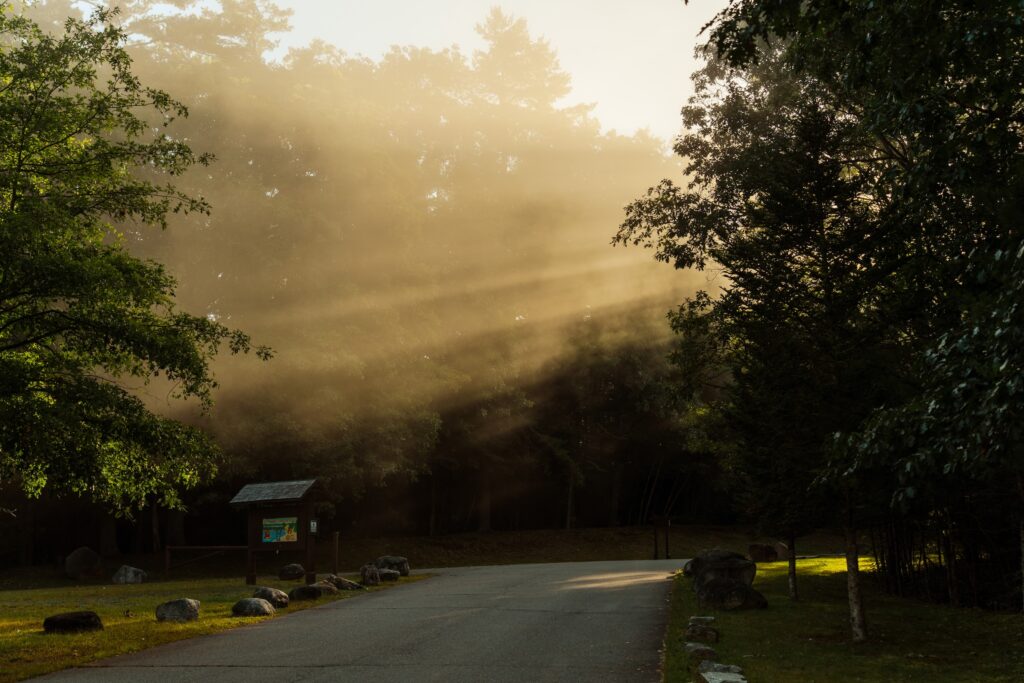
When your camping story begins “I only spent 20 minutes packing”, it’s bound to be a good story. Anyways, on Friday night I did a camping dry run for this year’s summer-delayed-into-fall road trip. This makes my first camping trip since last summer, and because I also had to work on Friday, I only spent 20 minutes packing.
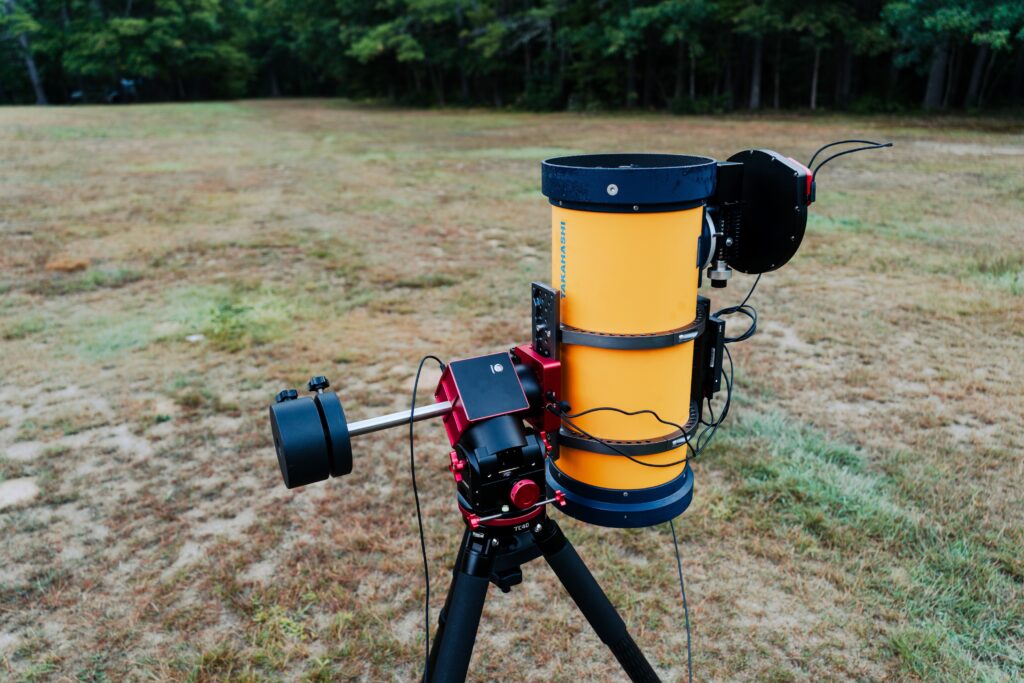
The location of this story was Lake Dennison Campground, and the target was the Dark Shark Nebula (LDN 1235). The hero was Mr. Takahashi Epsilon-180ED, and his sidekick was … me. Lake Dennison Campground is on the north shore of a nice, small lake in western Massachusetts. At the right time of year, you are treated to sunset over the lake, or sunrise over its morning mist. Naturally, those campsite always sell out. Instead, I booked one further inland, close to a large clearing for a “group campsite” (not booked), where I could pitch the telescope. And that is the point of this trip.
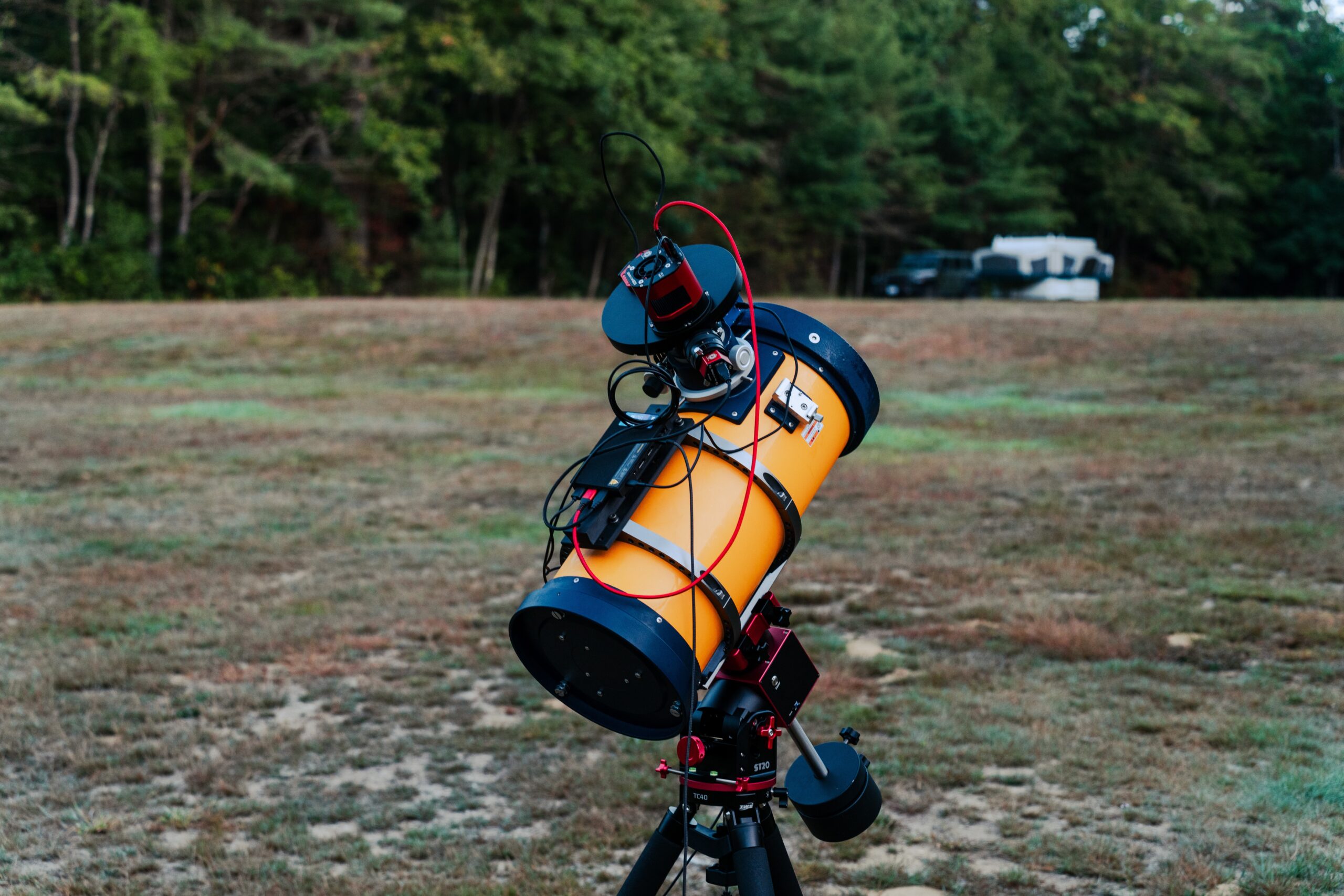
Back at home, I’ve been timing myself on telescope setup and tear-down. It used to take a lot longer because I was always rifling through a large bag to find cables and whatnot. Now I’ve streamlined it by putting all the essential cables and accessories in one (small) bag. The other stuff, which I might need from time to time or if something goes wrong, goes in the big bag. In day or twilight, physical setup takes 10-15 minutes. Initialization (polar alignment, autofocus, PHD2 calibration, framing, slewing, and rotation) takes an extra 15 or more. Therefore, the whole process can take well under an hour if nothing goes wrong. Flat frames and teardown can take 15-20 minutes in the morning, too.
If I arrive before sunset, this leaves plenty of time for a nice dinner and campfire. Today I did not arrive before sunset. But there was still a campfire. It just ran late into the night.
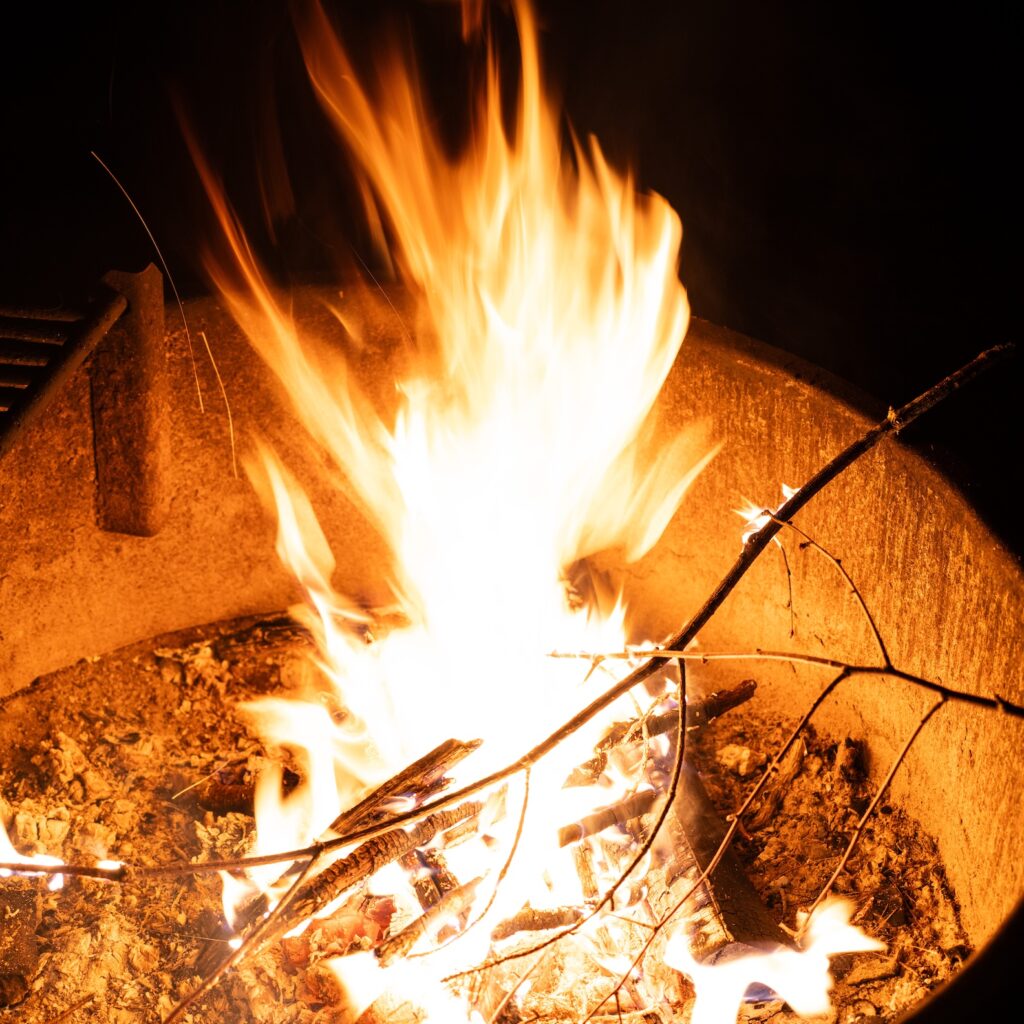
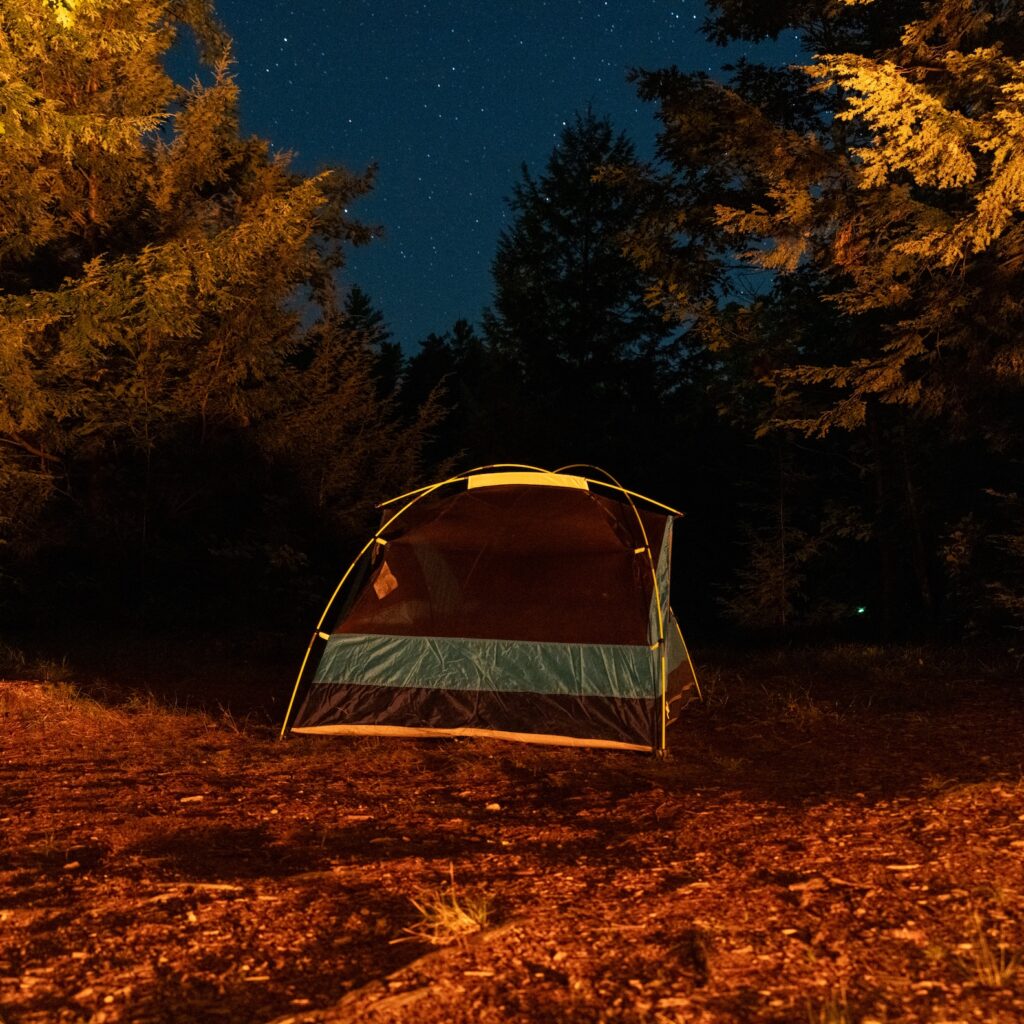
Starting imaging at 9:30, it would be possible to get up to 8 hours of data if the telescope ran all the way to 5:30. That could make for a splendid image when you consider the Epsilon’s fast optics, even though the Dark Shark is very dim. I set the camera to take 2-minute exposures all night long, alternating between L (3x), R, G, and B filters.
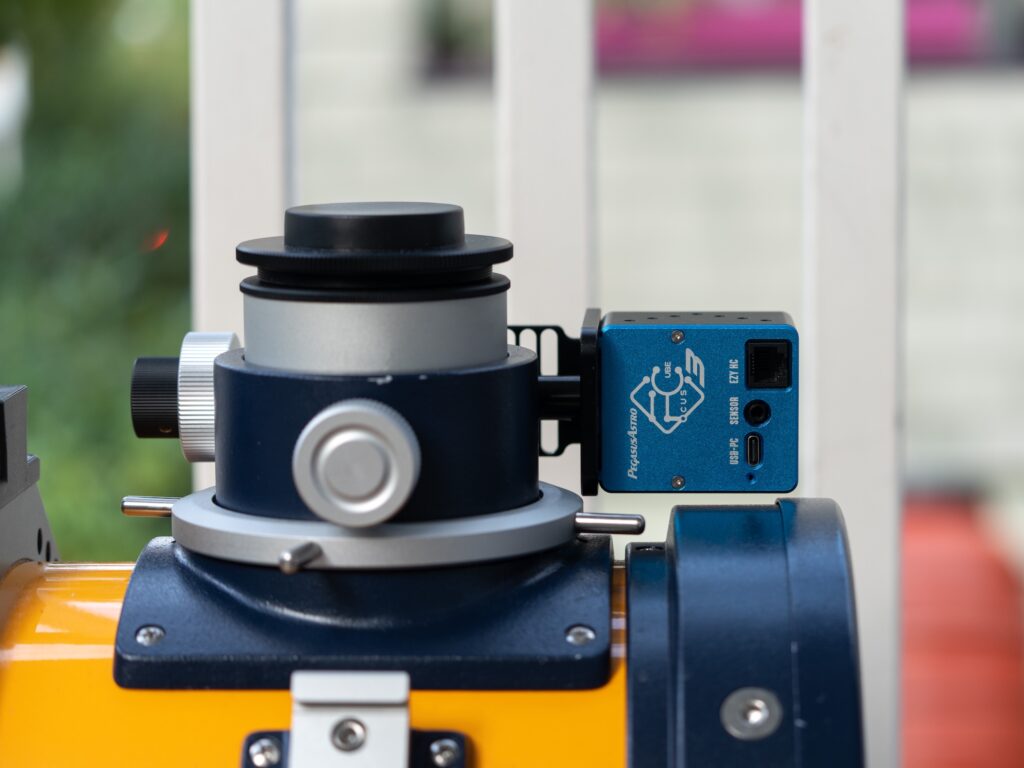
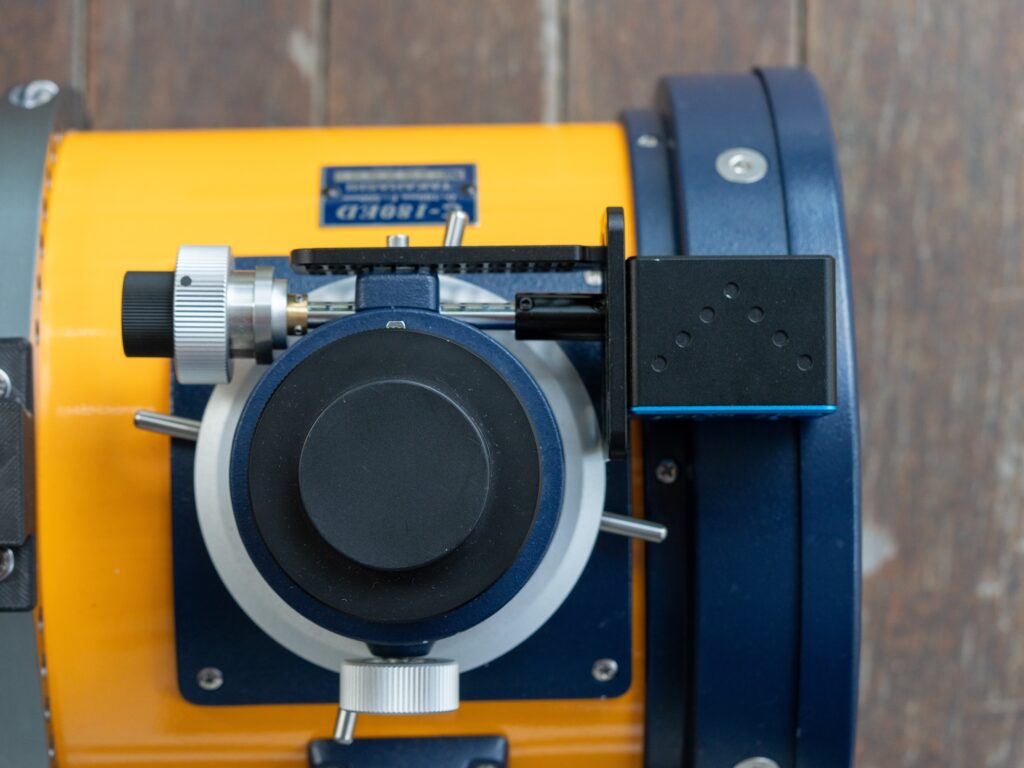
Finally, this was my first night using an electronic focus motor while shooting with the Epsilon. It is the little blue box in the first of the photo, which I attached to the Tak focuser using the metal L-bracket. You can see this more clearly below. The bracket, while difficult to install initially, is very stable and has no flexure. But the black attachment between the gear shafts is prone to failure. If you apply too much pressure, it will come loose, and then you have to take off the camera, re-tighten those little set screws, and then reattach the camera. That can easily burn through 20 minutes. But if you are careful, this motor removes one of the Epsilon’s biggest hassles: focus!
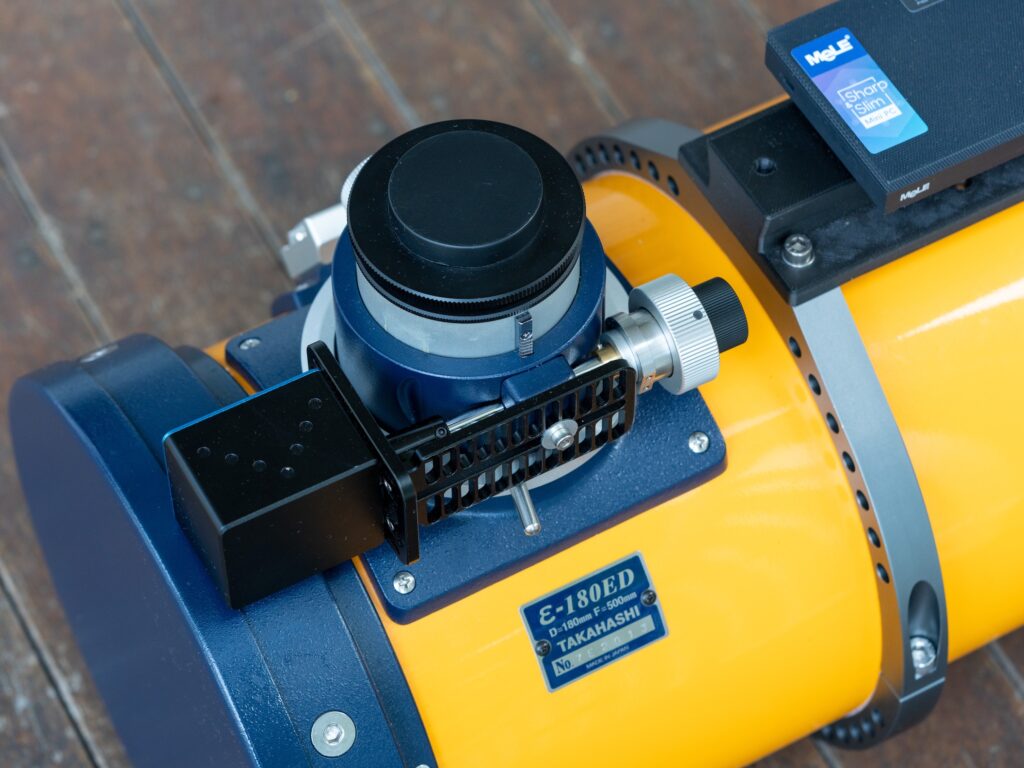
Through the night, the Epsilon’s focus also drifts. It’s much more minor than the FSQ, which is why I survived a year focusing manually, but it’s still obvious by looking at star HFR trends. With a motor, you can periodically autofocus when HFR degrades, keeping the image tack-sharp while you sleep. So I got the telescope running and then returned to the campsite, set up the tent, ate dinner by a fire, and then went to bed.
And then, at 12:30 AM, the hard drive ran out of space and the camera stopped taking pictures. I only found out when taking flat frames the next morning.
I also forgot my flat-frame light box. Therefore, I was forced to improvise and try sky flats, which I have never done before. But NINA has a wizard for this, the morning was clear, and the flats turned out great!
Below is the final product. In spite of user error leading to >60% data loss, the Epsilon’s magnificent optics deliver again!
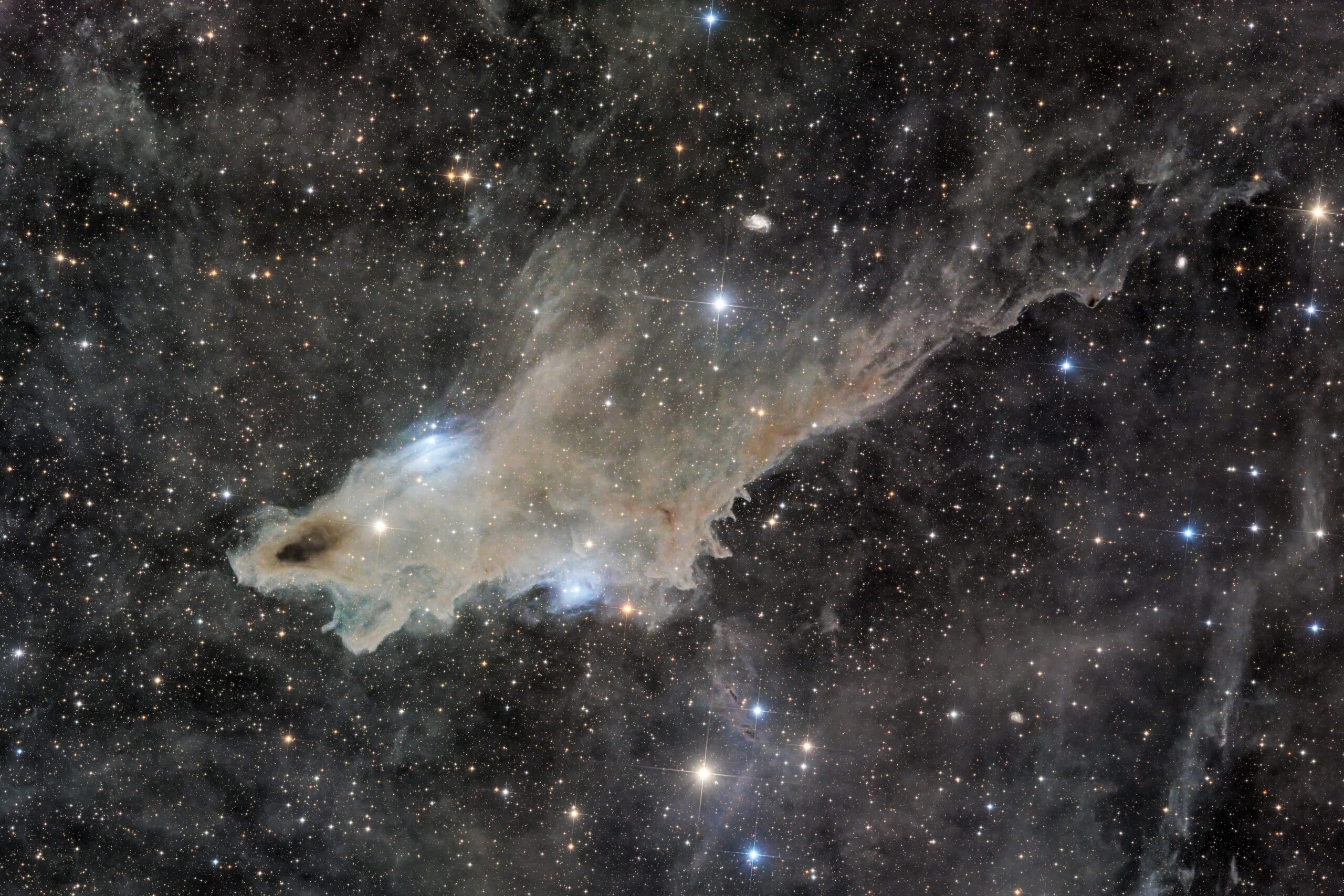
To my amazement, editing this object was both easy and fun. That’s something that only happens when the raw data is really good. In many ways, the Shark Nebula is an ideal target for the Epsilon. It is a relatively large object (1-2º), broadband, and quite faint. It’s well matched to the Epsilon’s field of view, and as a broadband nebula, it can be imaged with standard LRGB filters that are compatible with the Epsilon’s f/2.8 optics. But it can’t be shot in the city. To see the Shark and its brethren, go camp under dark skies.
Well, dark skies are where I am headed, crossing the boreal forests of and sweeping plains of central Canada in one last “hurrah” before winter. And after the darkness, sunrise. Or maybe fog. But fog is beautiful too.