Happy July 4th! Today I’m posting two red-white-and-blue images, taken over successive years, from my backyard observatory just outside Boston.
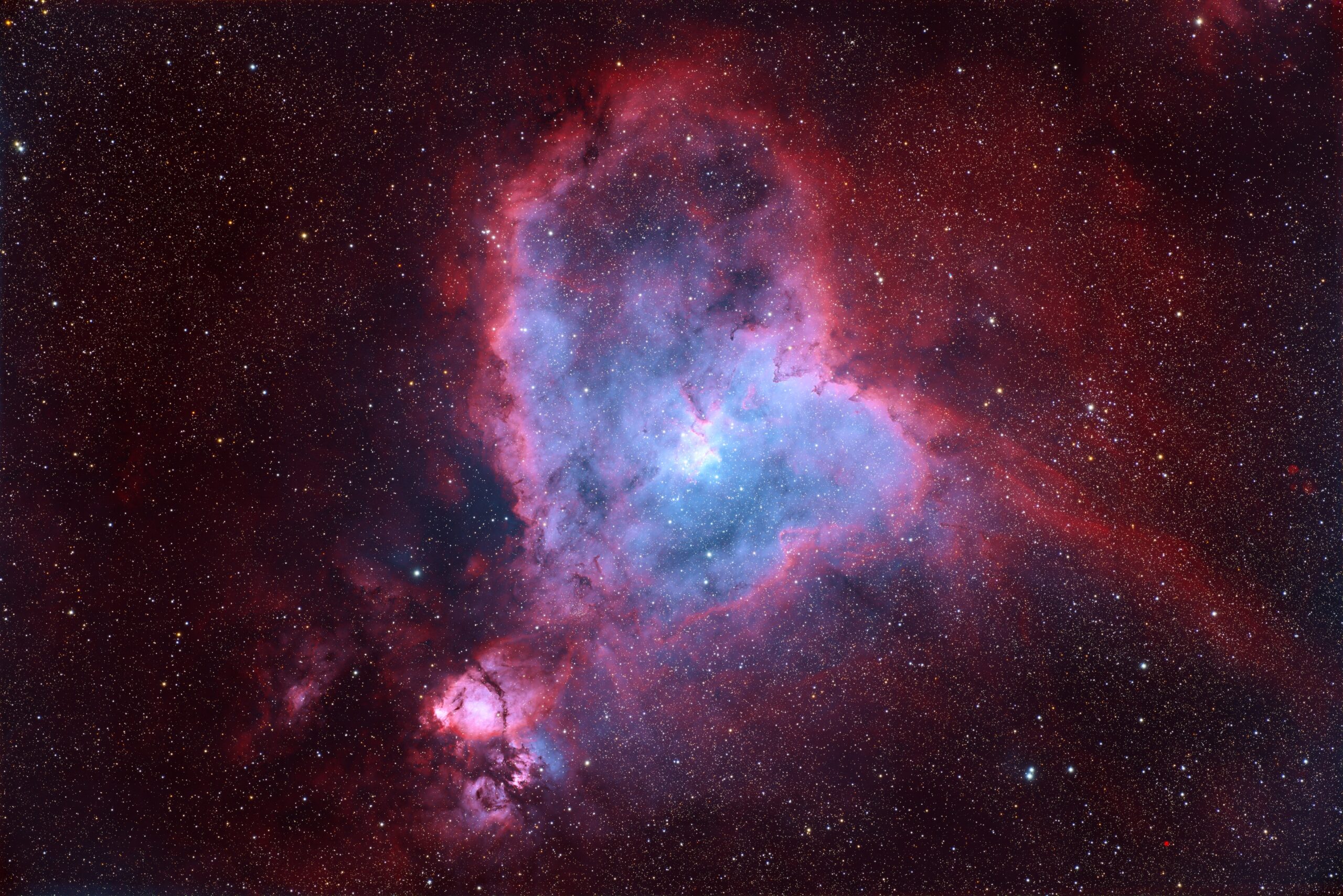
Since Boston is the “heart” of the Revolution, my first image is the Heart Nebula (IC 1805). I originally attempted this in late August 2025 outside Grand Teton National Park. That failed because my exposures were too short, and this nebula is very faint. So I tried again a month later in Boston. Taking really long exposures (8 minutes!), with very narrow filters (3 nm SHO), I collected the following image, shown in the HOO pallete.
HOO is a common technique used to render nebulae with strong H-alpha and O-iii signals, but weak S-ii. But sometimes I can’t get it to work right. The Rosette nebula is one such case. A previous post describes how a simple DSLR (with an IR-cut filter) can produce a red-white-and-blue image that is much more pleasing than the astronomy camera!
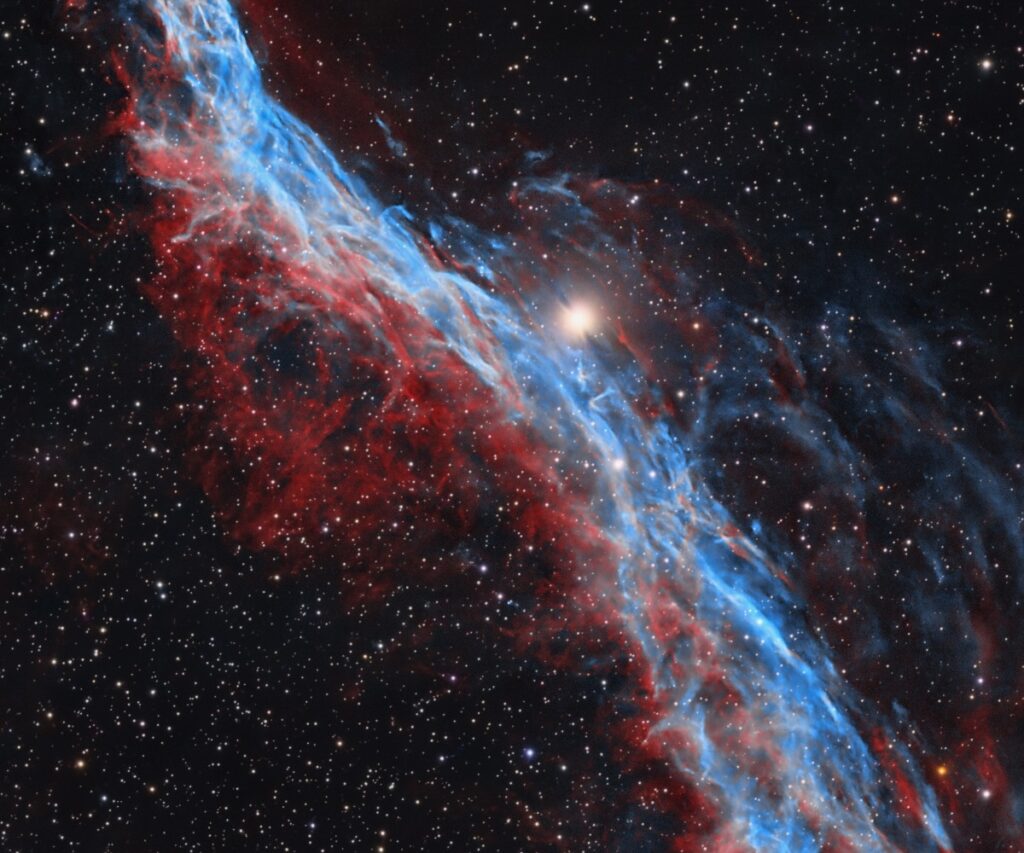
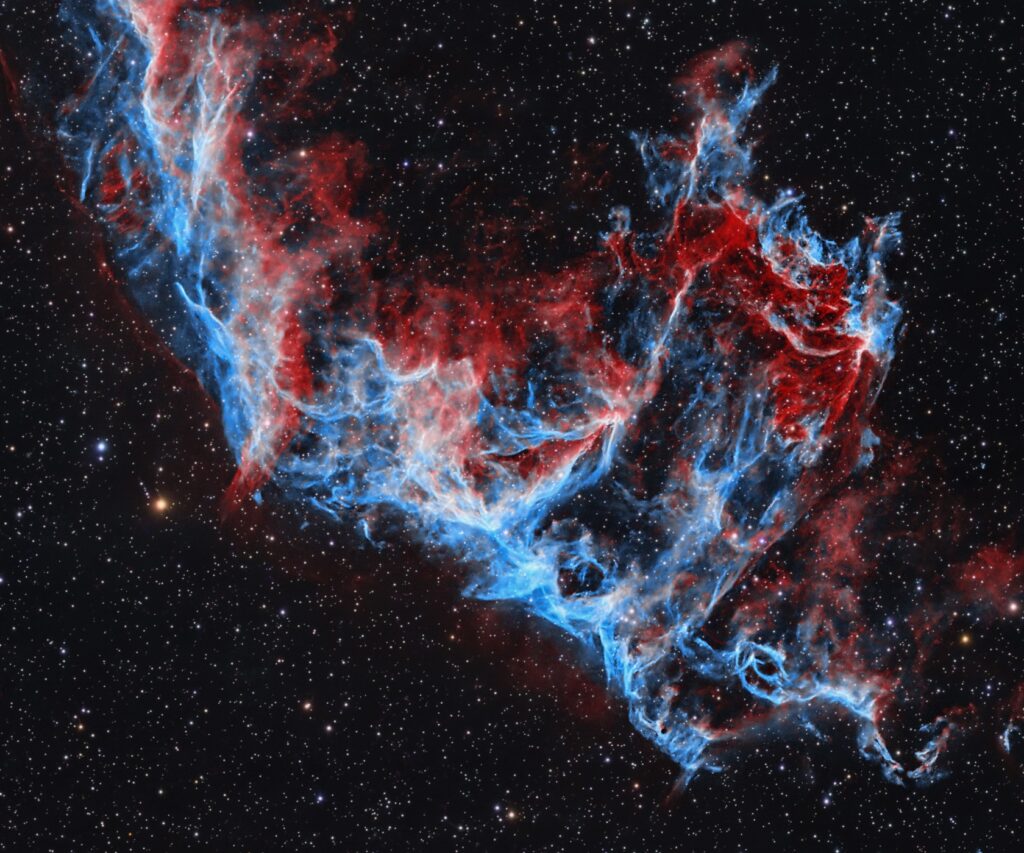
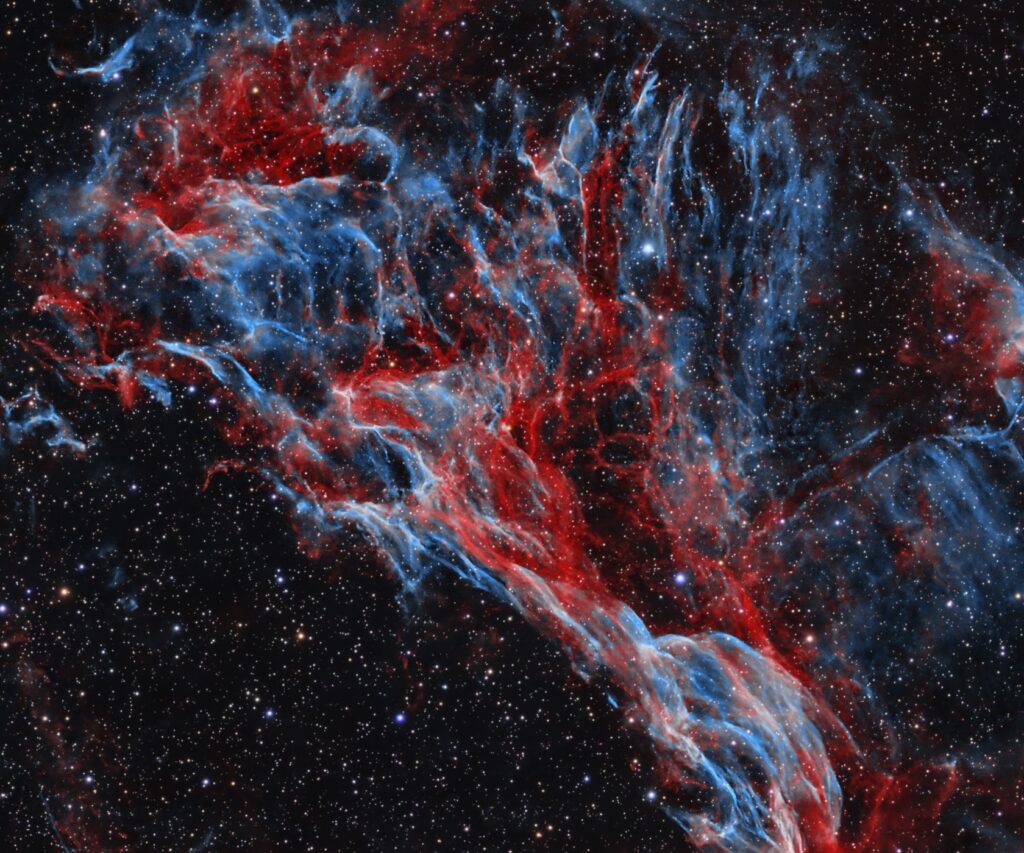
Back to Boston, next is the Veil / Filamentary Nebula complex (C33 / C34). This is a supernova remnant in Cygnus, and it rises high in the summer sky. I took this picture near Boston over one night (attempted two nights but the second one clouded over), using the FSQ-106N and 3nm Scorpio SHO filters. Again, I used an HOO palette, plus SCNR and a few color tricks to give it a good red-blue balance.
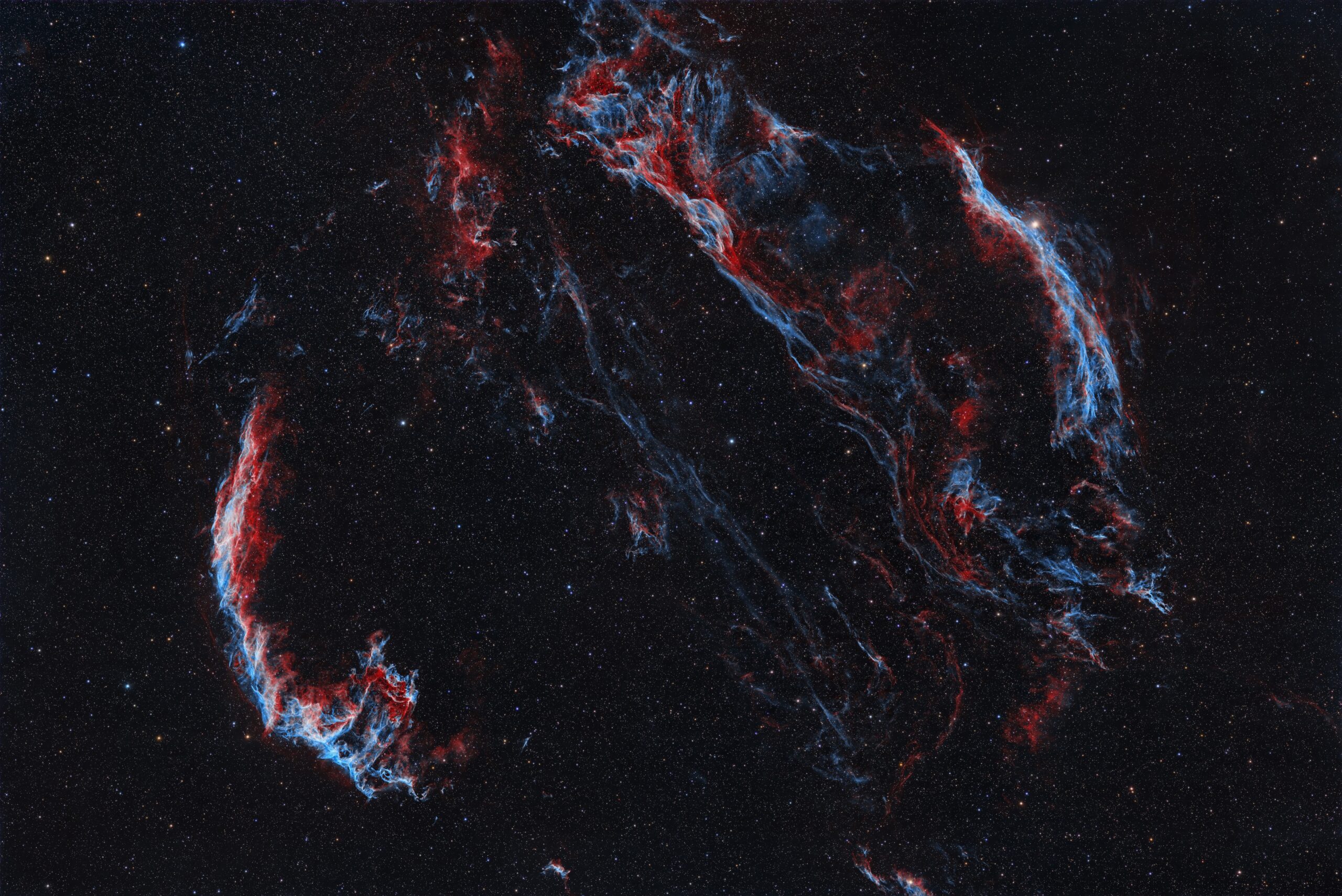
Compared to the Epsilon, my FSQ is a smaller and older scope with a slower f-ratio. But when shooting narrowband in the city, fast scopes don’t do well due to the wavelength shift effect. You can use 3nm filters on an f/5 scope, but not at f/2.8. And although I have an extender to bring the Epsilon up to f/4.3, the field of view becomes too narrow to frame the object. The FSQ was the best telescope for this case.
Here are three crops of the image. The first crop, with the bright yellow star 52 Cygni, gives a good test of “haloing”. Cheap filters often have weak reflections off of both glass surfaces, which creates a weak circular halo around every bright star. I don’t see anything here. People will often spend $800 or more per filter just to get rid of halos. This (2-inch!) Scorpio SHO set only cost $450, or $150 per filter. Well done, Scorpio Astro!