The order of the heavens is a constant through times and cultures. The stars come out in season, the moon waxes and wanes, and the planets follow their appointed paths. From the great works of mathematics and religion, to everyday calendars and even the navigation of boats, all these things owe inspiration to the unbreakable discipline of this cosmic clockwork.
Comets are remarkable because they exist outside this clockwork. They can come at any time, anywhere. Harbingers of doom, they laugh at the cosmic order, bringing with them the full brilliance and unpredictability of the primal chaos from which they arise. A Pandora’s box of chocolates, you never know what you’re going to get, and as a comet approaches the Sun, it may put on a great show, or quietly slip by, or even disintegrate. Comets are anything but predictable.
My First Comets
I saw comet Hale-Bopp when I was little. This was supposedly a great comet, one of the brightest of the century, but I don’t remember anything about it. Also when I was little, comet Shoemaker-Levy 9 crashed into Jupiter. I don’t remember that event, but I learned about it in school.
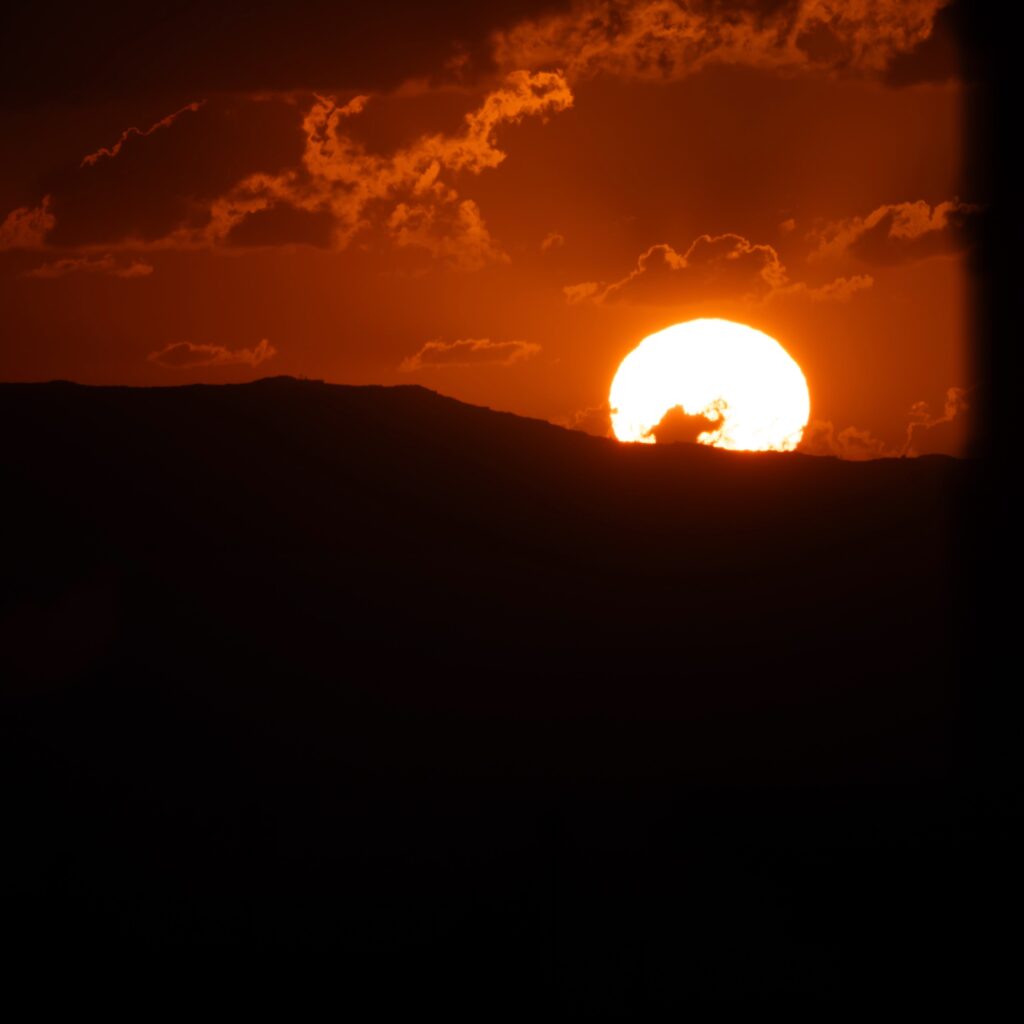
C/2023 A3 (Tsuchinshan-ATLAS) starred in my first comet photo. This was a great comet, peaking in brightness in early October 2024. It was visible before sunrise in late September, before swinging around the Sun and appearing in the mid-October evening sky. I attempted to spot it during a trip to Greece, just before dawn, but with no luck. But it being Greece, the photos weren’t bad.

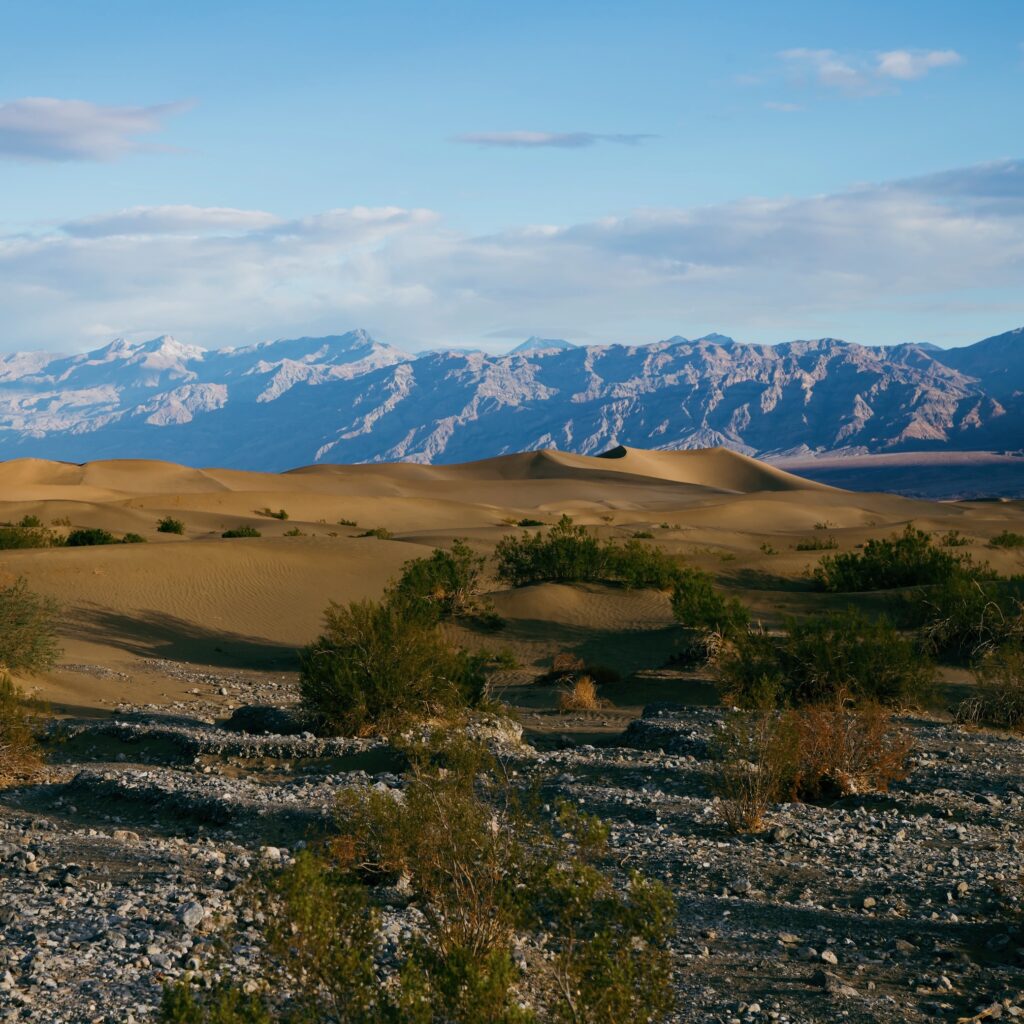
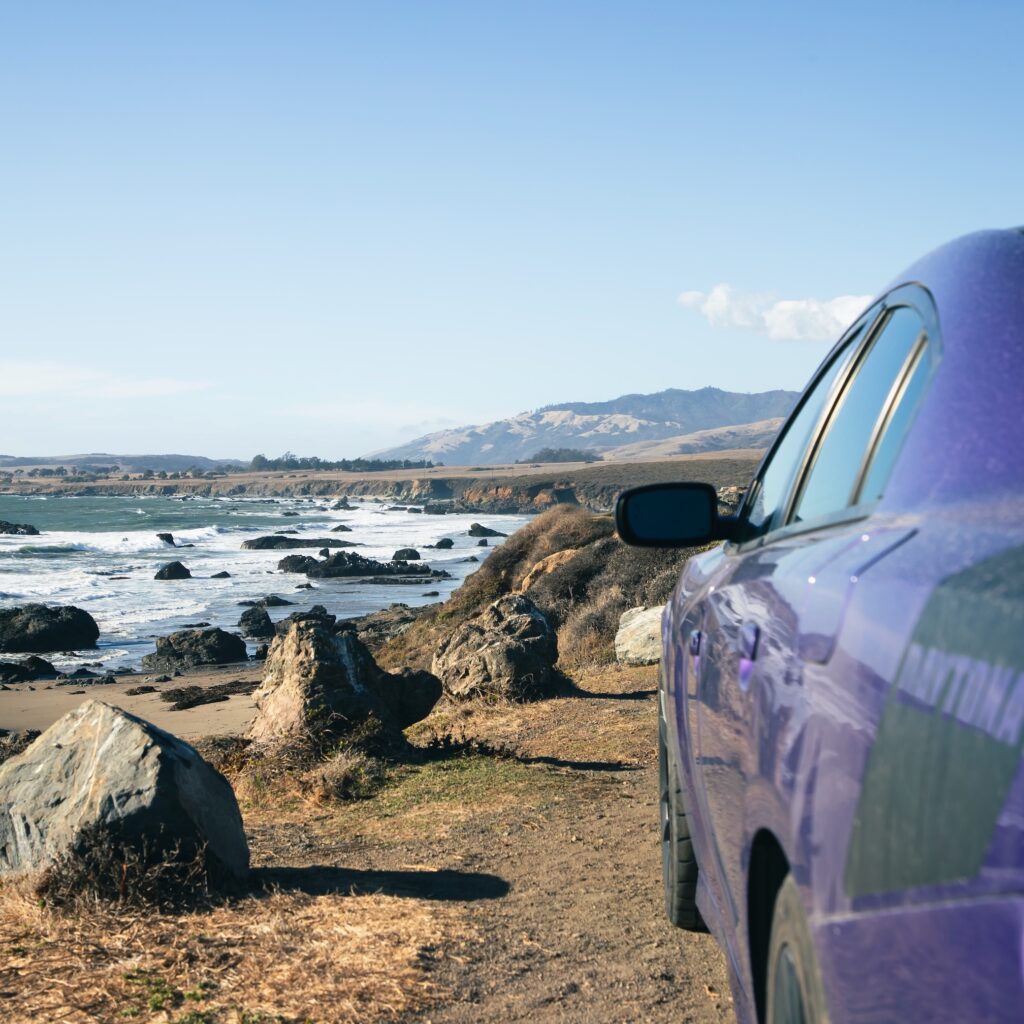
I also had no luck spotting it later on the trip, in Denmark, due to cloudy weather. But the aurora was nice. By late October, I had given up on the comet, assuming it was too faint to photograph. Chasing California dreams from Death Valley to the Pacific coast, I wound my way up Highway 1 to the very end, where it was cut in two by a rockslide. Just before the road closure, I pulled into Kirk Creek Campground and stayed the night.


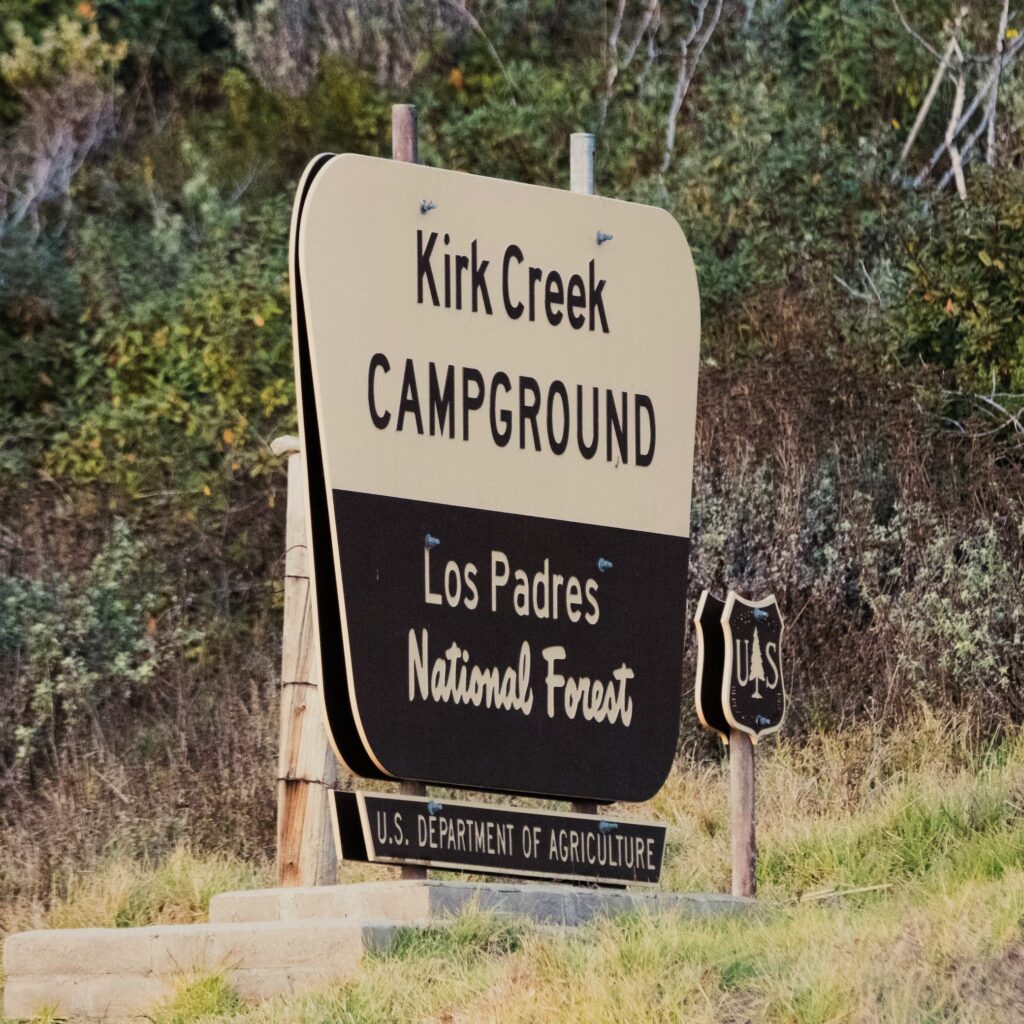
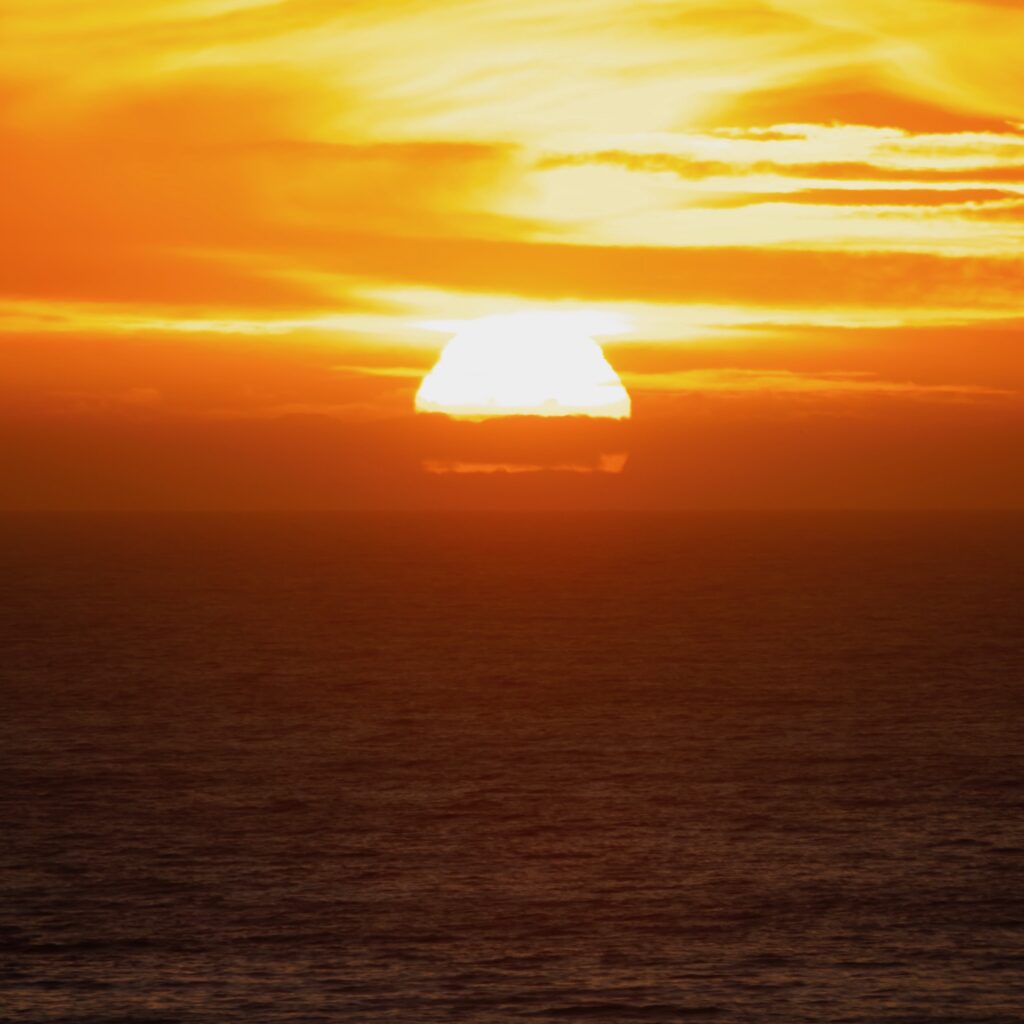

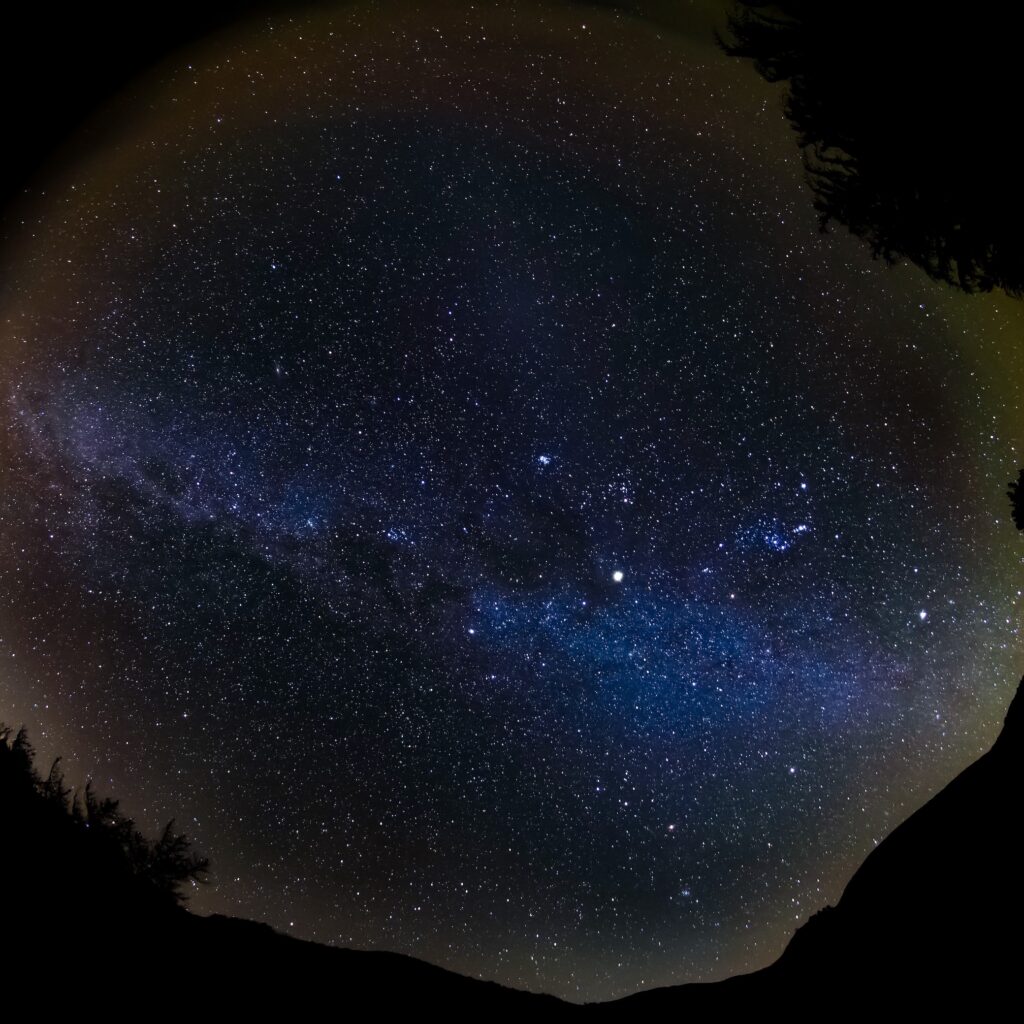
The campground was crowded, but this was a quiet spot. Normally, the highway stays busy with trucks buzzing through during the night, and campers complain about this in the reviews — but with the road cut, all you could hear were distant sea lions and the lapping of the waves. I snapped a picture of the Milky Way. Only later did I spot the comet:
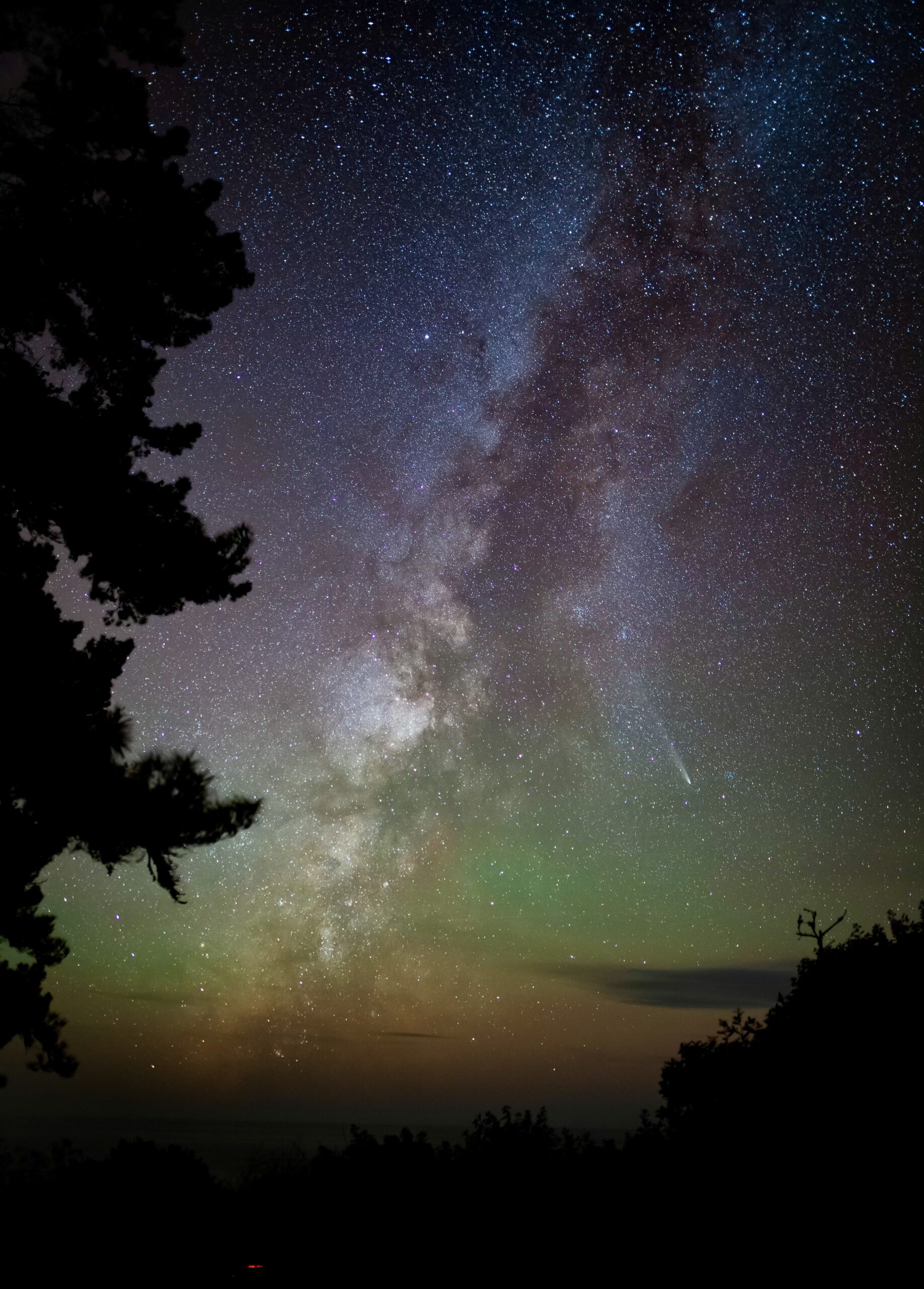
I love the rainbow of colors enveloping the Milky Way: first brown, then yellow, green, purple, and blue. This is a consistent pattern that I have seen in other photos, although the purple does not always feature so prominently (it depends a lot on tint settings). When this photo was taken, the comet was a magnitude 6, well past its peak. But against a dark background well after dusk, it stands out prominently.
In January 2025, there was talk about another “great comet”: C/2025 ATLAS. But this was mediocre at best, and only barely visible very close to dawn. Here’s my best picture from that month:
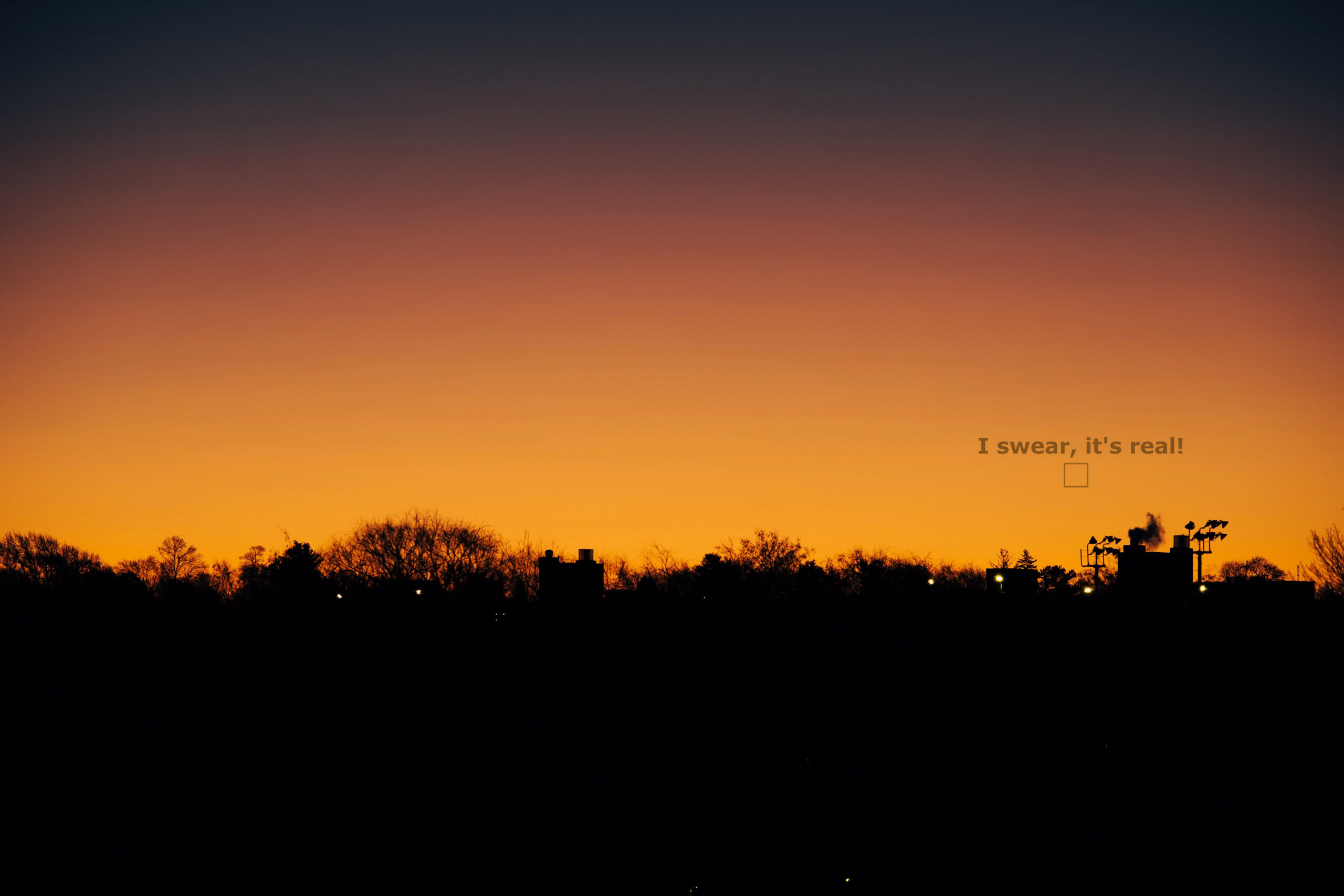
Zooming in, you can see a couple of bright pixels on an orange background. That’s the comet.

Not much happened comet-wise during the spring and summer. But during that time, I bought a telescope and familiarized myself with deep-sky astrophotography. That fall, we had two more remarkable comets.
The Lemmon and the Swan
C/2025 A6 (Lemmon) was spotted in January. From mid-September it brightened, reaching its peak by late October. C/2025 R2 (SWAN) appeared at the same time. It was not as bright as Lemmon, but took a remarkable path through the heart of the Milky Way, promising a rare chance to frame a comet next to some of the galaxy’s most striking dark sky objects.
Since this was my first attempt shooting a comet through a telescope, I made a lot of mistakes. So this blog post is as much a story of learning as a celebration of the results.
The First Days: Tracking the Stars
The first night, I drove to Halibut Point at about 3:00 in the morning to catch Comet Lemmon. I was using a Canon R6ii with a RedCat 51, mounted on my old Sky Watcher Star Adventurer 2i. The Takahashi was back at home waiting on a replacement filter wheel. For some reason, the mount did not track, so I was forced to take many untracked photos and stack them in post. This is a very bad technique that leads to noisy photos (noise scales inversely with exposure time for short exposures), and even with short 3-5 second shots, the stars still trailed considerably.
On the second night, I got the mount to work. But it was finicky, and over the course of ~90 minutes, I only collected about 10 minutes of good exposures. I think that something may be broken with this mount, and after two years of eventful service from the peaks of the Ginza Panorama to the desert flats of the Mojave, it is nearing the end of its life.
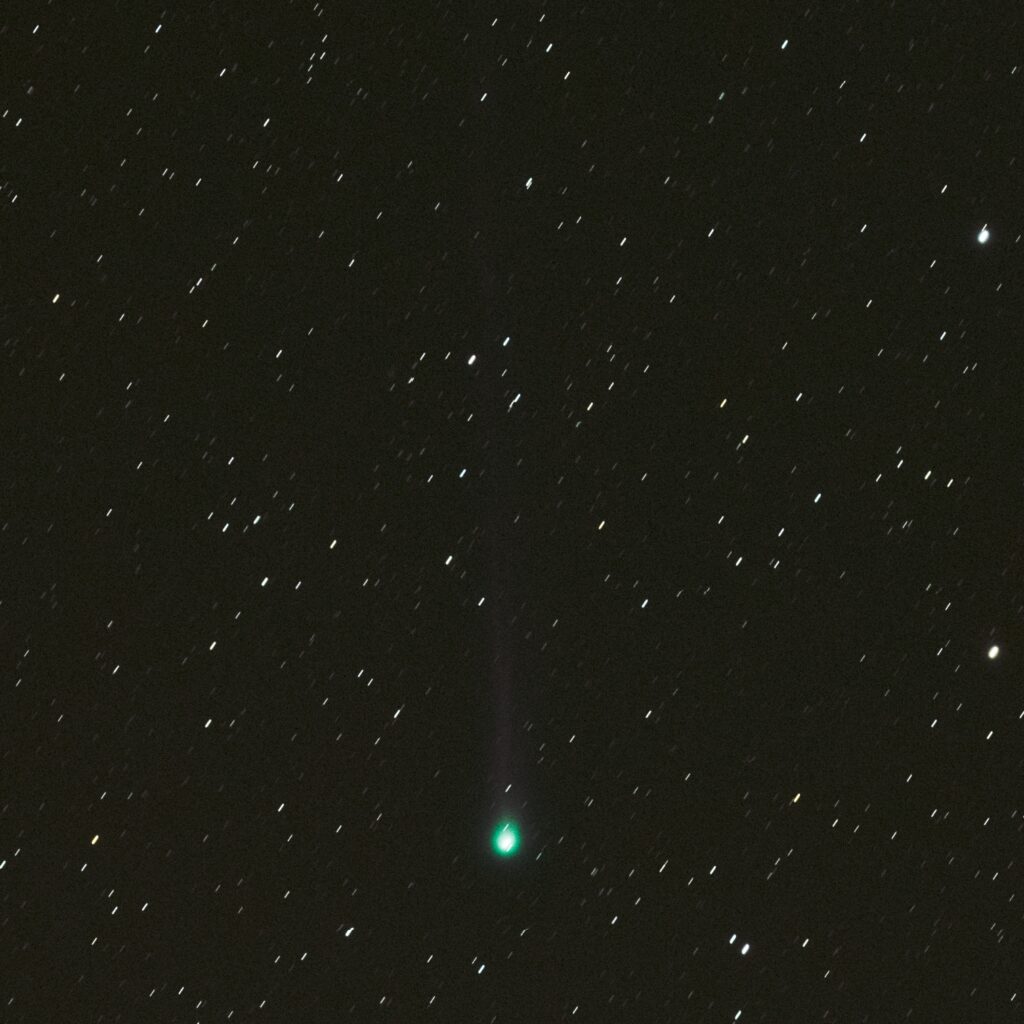
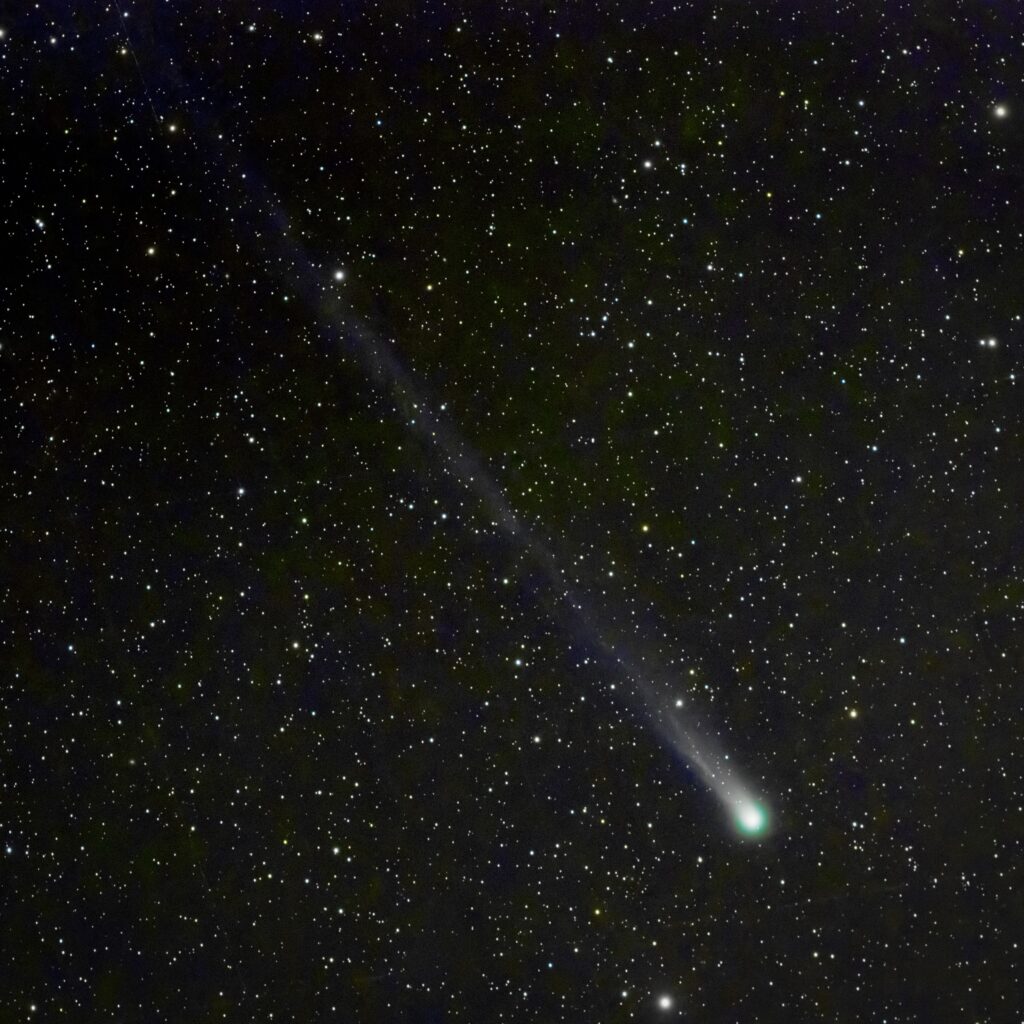
First nights with Lemmon. Left: untracked. Right: tracked.
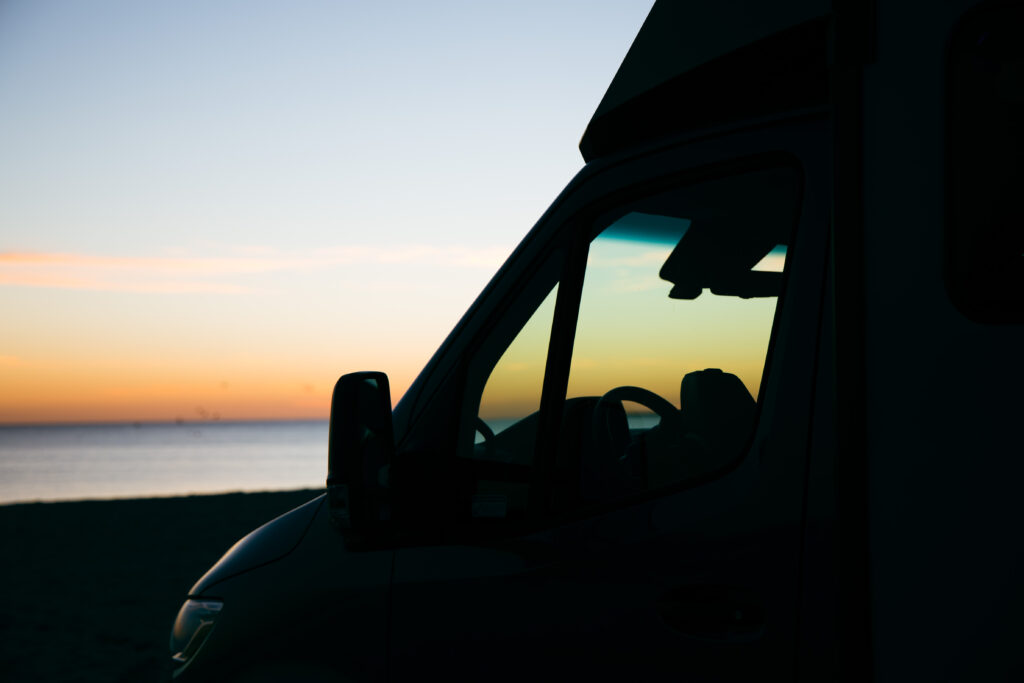
The third night was a little better. I went camping at Salisbury Beach, a transition area of approximately Bortle 5. It was dark enough to see many stars, but the Milky Way was not present in great detail (and it sets to the southwest over Newburyport, which is a big light dome). But it was also extremely humid, with mist coming and going through the night, and if it wasn’t for my dew heater, all the optics would have fogged up.
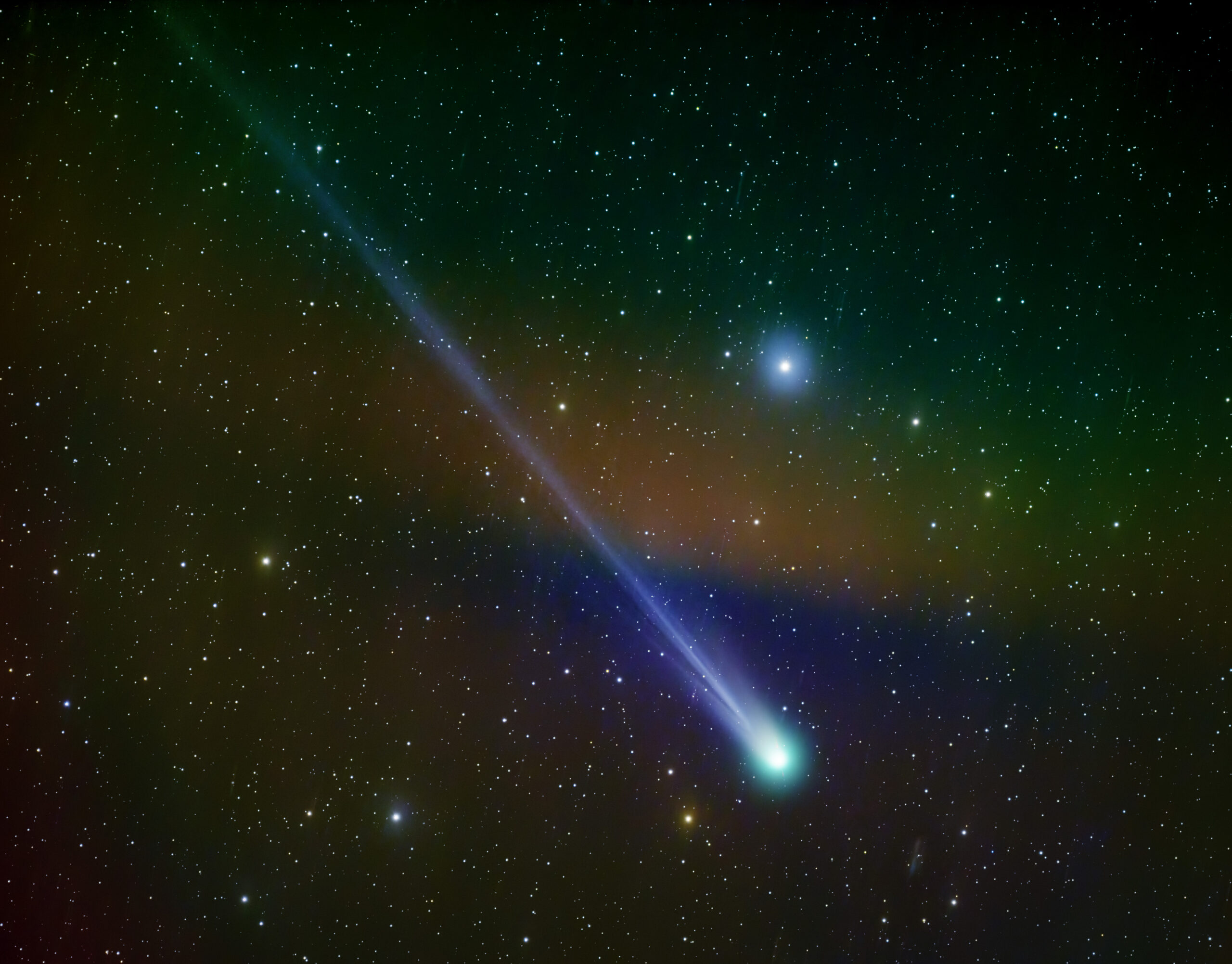
The picture above was captured with the FSQ-106N and a Canon R6ii. The orange-green glow is glare from the lights of a neighbor’s RV, possibly reflecting off of dew on the front lens element. It is not aurora! Aurora is wide-field, spanning tens of degrees, while this photo has 4º FOV. You capture aurora with 14-35mm lenses, not a 530mm telescope. Also, the colors are reversed: for aurora, red/orange should be on top and green should be below. For more info on aurora, check out my blog posts: Catching Aurora, and I was wrong about Aurora.
Looking very closely, you can notice “streaking” in the photo, about 10º from vertical. This is called walking noise and arises from the fixed-pattern noise (FPN) of the camera, plus imperfect polar alignment. You normally correct for FPN with dithering. For technical reasons involving lack of adapters, I could not dither tonight, so ended up with this effect. It is fairly minor on a bright comet, but can be really ugly when imaging faint objects.
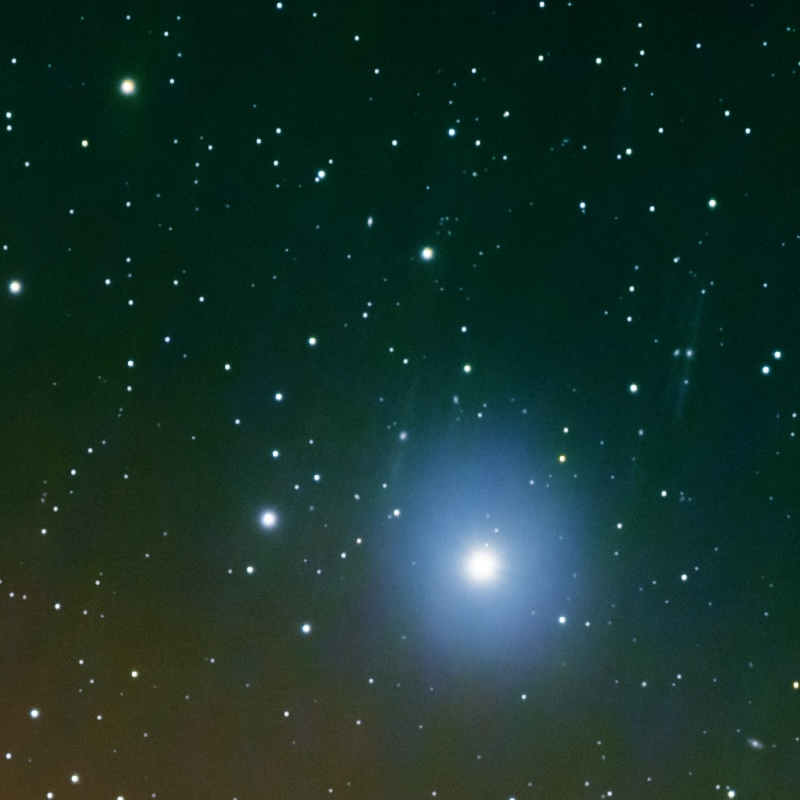


I nailed tracking on the fourth night. Here I was using a MiniCam8 camera while waiting for a replacement full-frame filter wheel. This was taken from downtown Cambridge, MA (Bortle 7), facing east over the city, so only the green core is resolved. But the following night, shooting from southern New Hampshire (Barn Door Hostel, Bortle 3), I caught the tail in full detail, even though it was a full moon. The image is in black and white because I still didn’t have a working filter wheel for the full-frame astro camera.
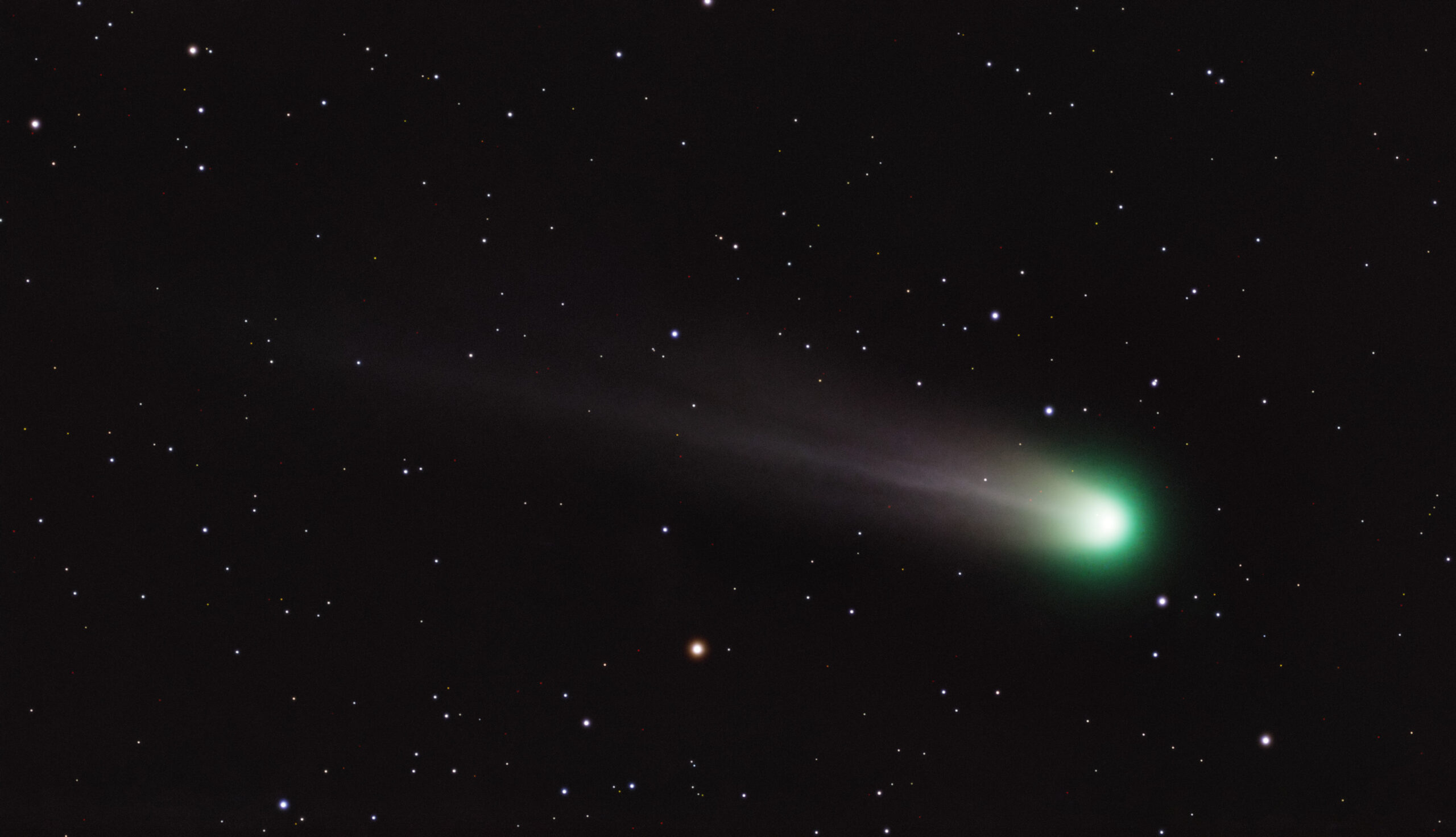
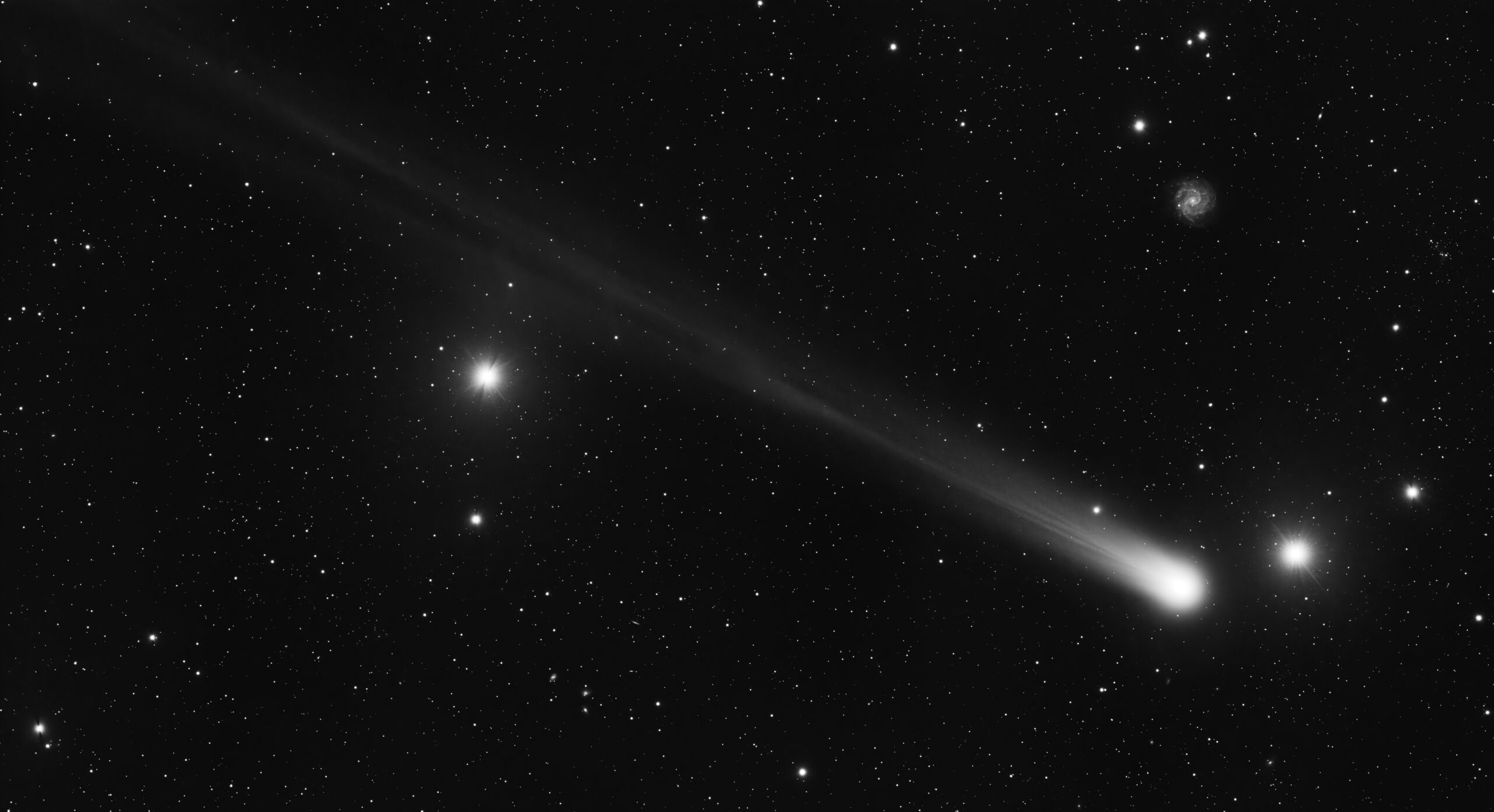

Five shots in five consecutive nights, Oct 2-6. This is progressing fast. With comets, you can’t wait around!
Coming of the Swan
A week went by and by then we had two comets in the sky! The second, C/2025 R2 (SWAN), was visible in the southwest just after sunset. I shot it from Hancock Overlook (northern NH, Bortle 2), but it was faint and only the central core was visible, with a small tail.
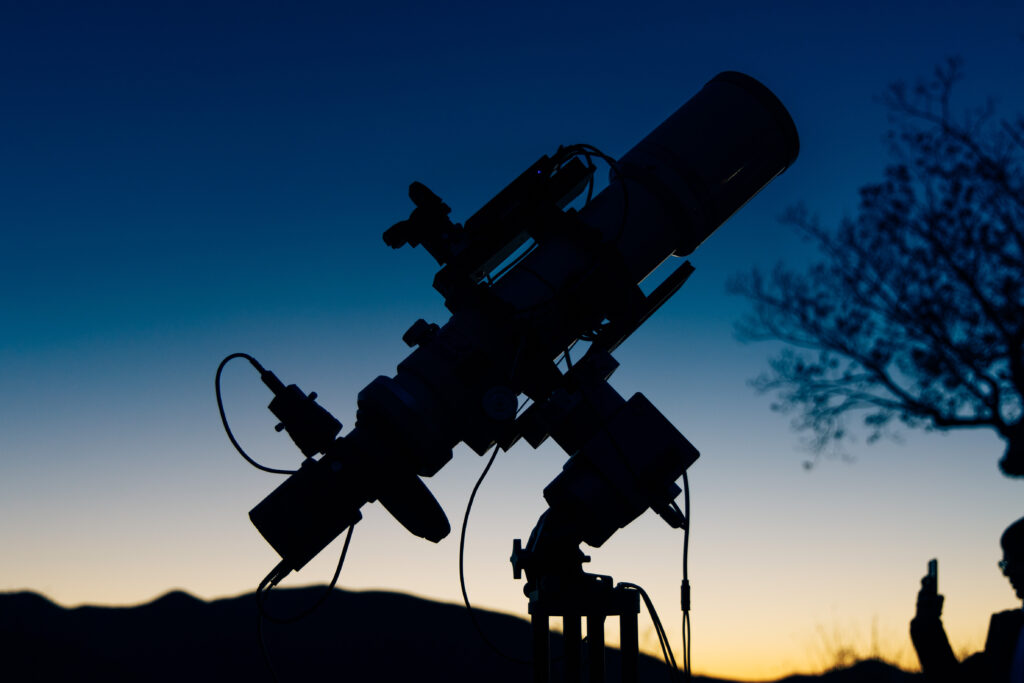
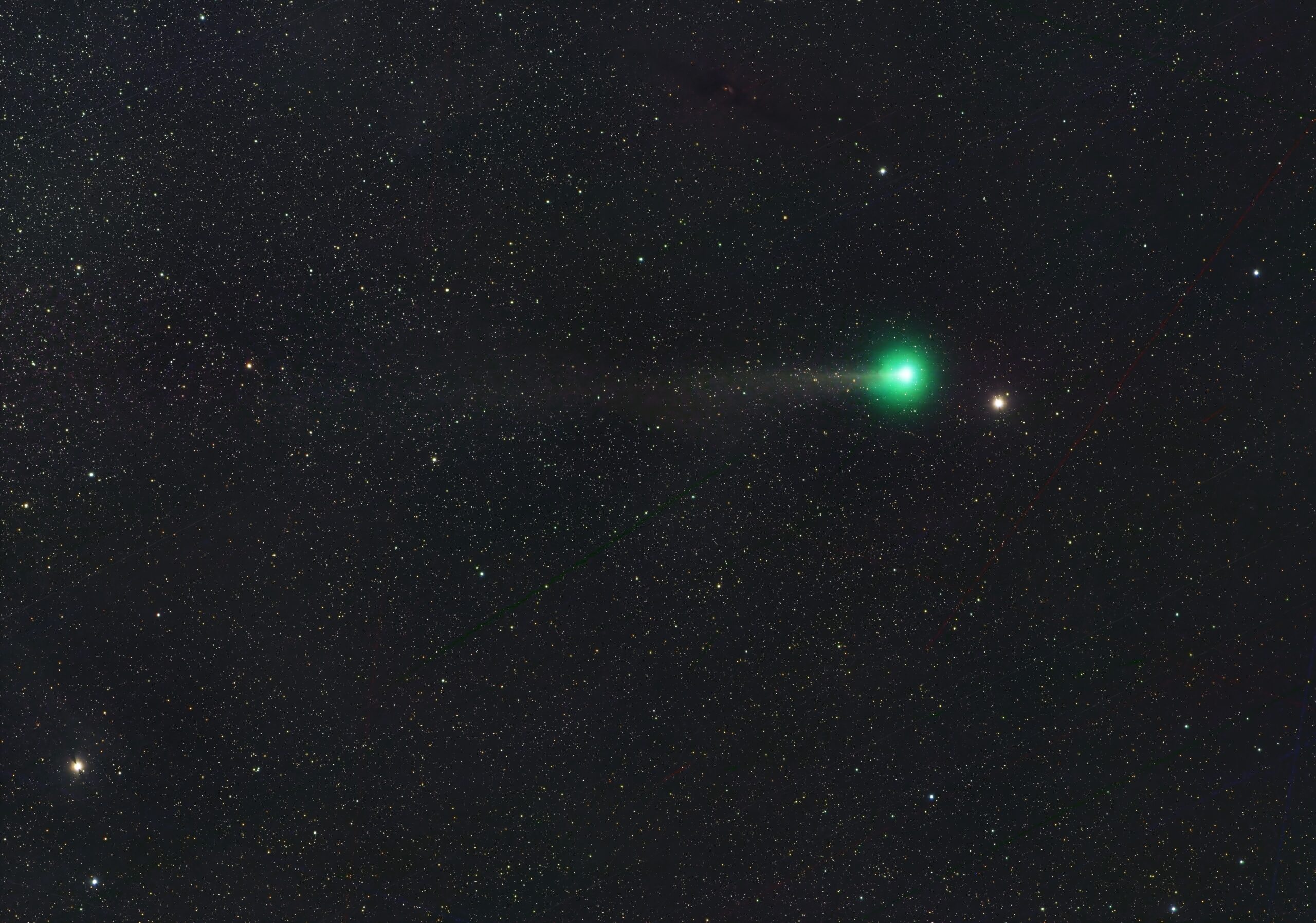
The following weekend, Lemmon brightened considerably. Visible just before dawn, I captured it from Castle Neck (45 min from Boston, Bortle 5). Here it can be seen passing by the Croc’s Eye Galaxy.
SWAN was still visible in the evening, so I made another attempt from Hardings Beach (Bortle 4, clear view south). From the Canon R6ii on a RedCat 51 with the new Teseek Mini 11 mount, we can see SWAN passing through the heart of the Milky Way with the Eagle and Omega nebulas in the frame.
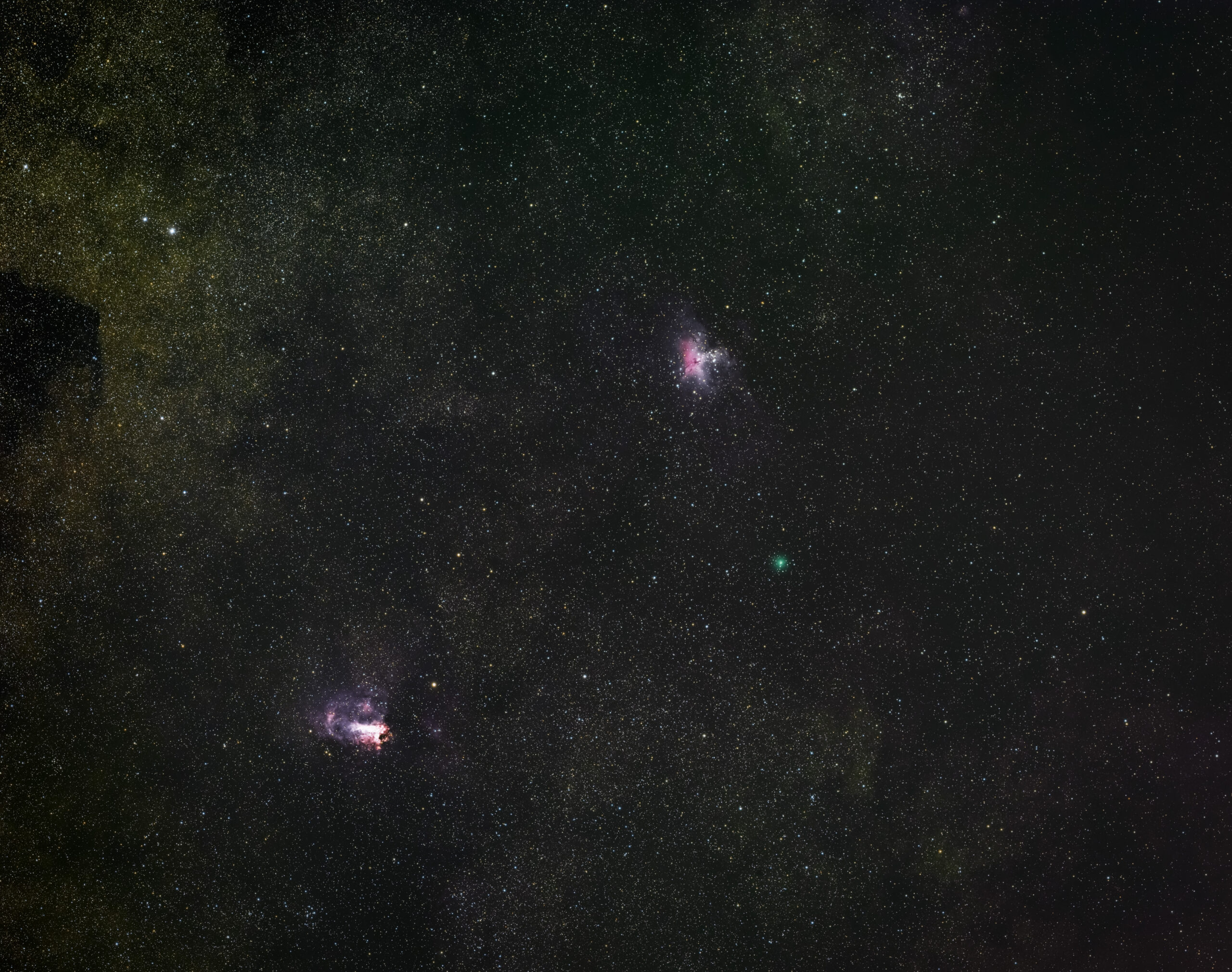
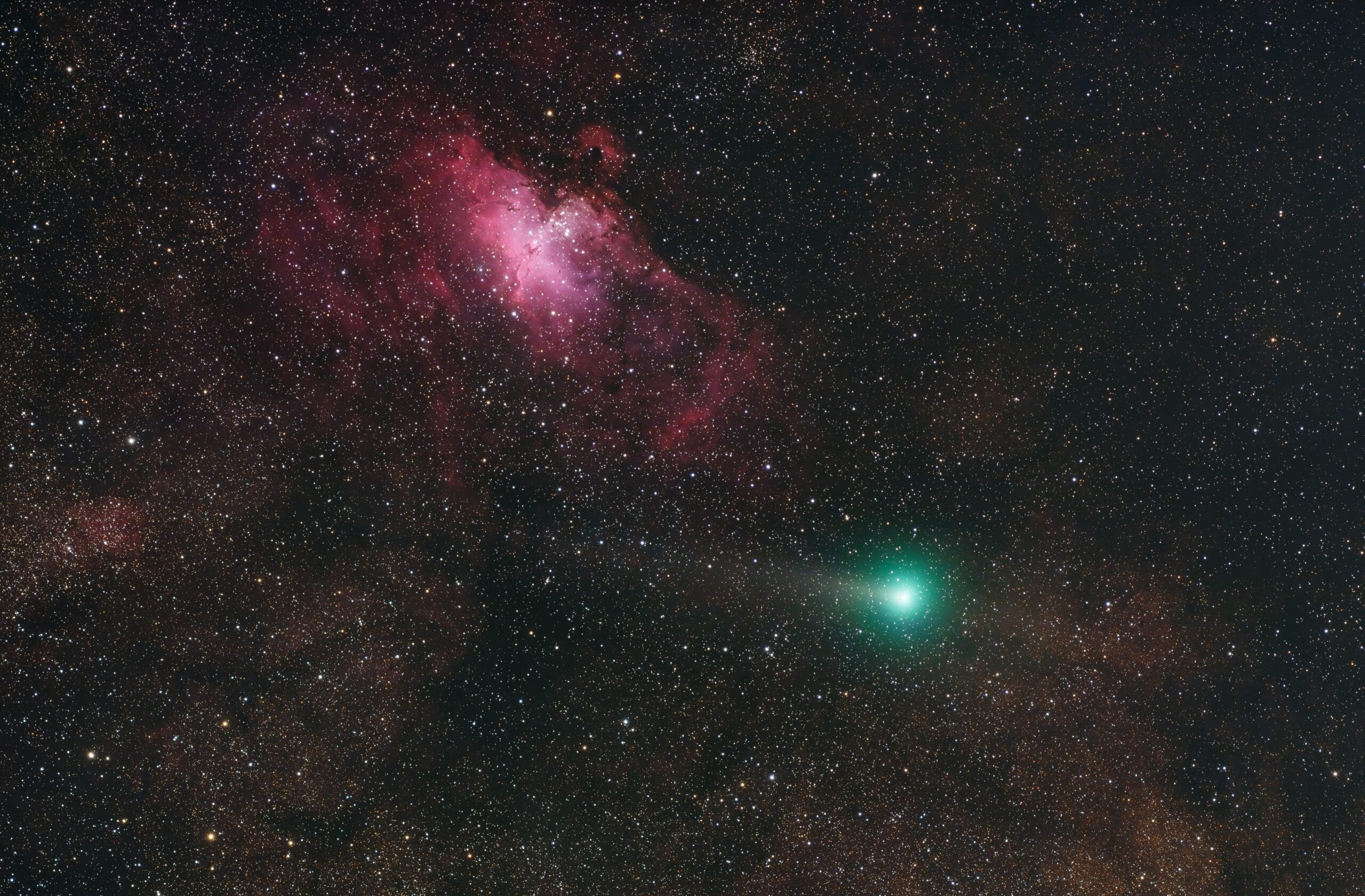
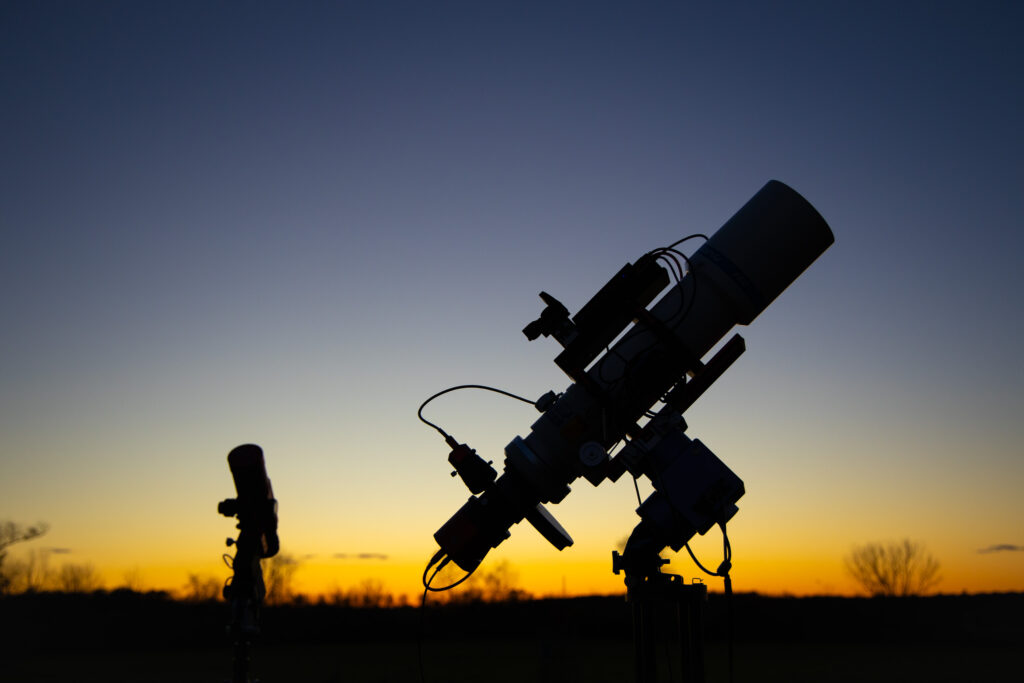
Below, the cosmic dance of the Eagle and the SWAN is captured with the Takahashi FSQ-106N, Juwei-17 harmonic mount, Zeus-455M astro camera with Sedna-M guider, and Scorpio LRGB filters mounted on a cheap manual (!) filter wheel. This is the same Eagle Nebula that I shot from Crater Lake in an earlier post, and that Hubble shot decades earlier.
Evening Lemmon
By this point, Lemmon had brightened even further, and was now visible to the northwest in the evening sky. It was ideally positioned to view at Plum Cove Beach, (1h from Boston, Bortle 4), which has free non-resident parking in the off-season, and unlike Halibut Point, there’s no restriction on night use. There were 4-5 other photographers at this spot, making it quite a party! One man had a nice Nikon camera and a telephoto, and another had a Sigma 150-600 lens, but my telescope was the best.

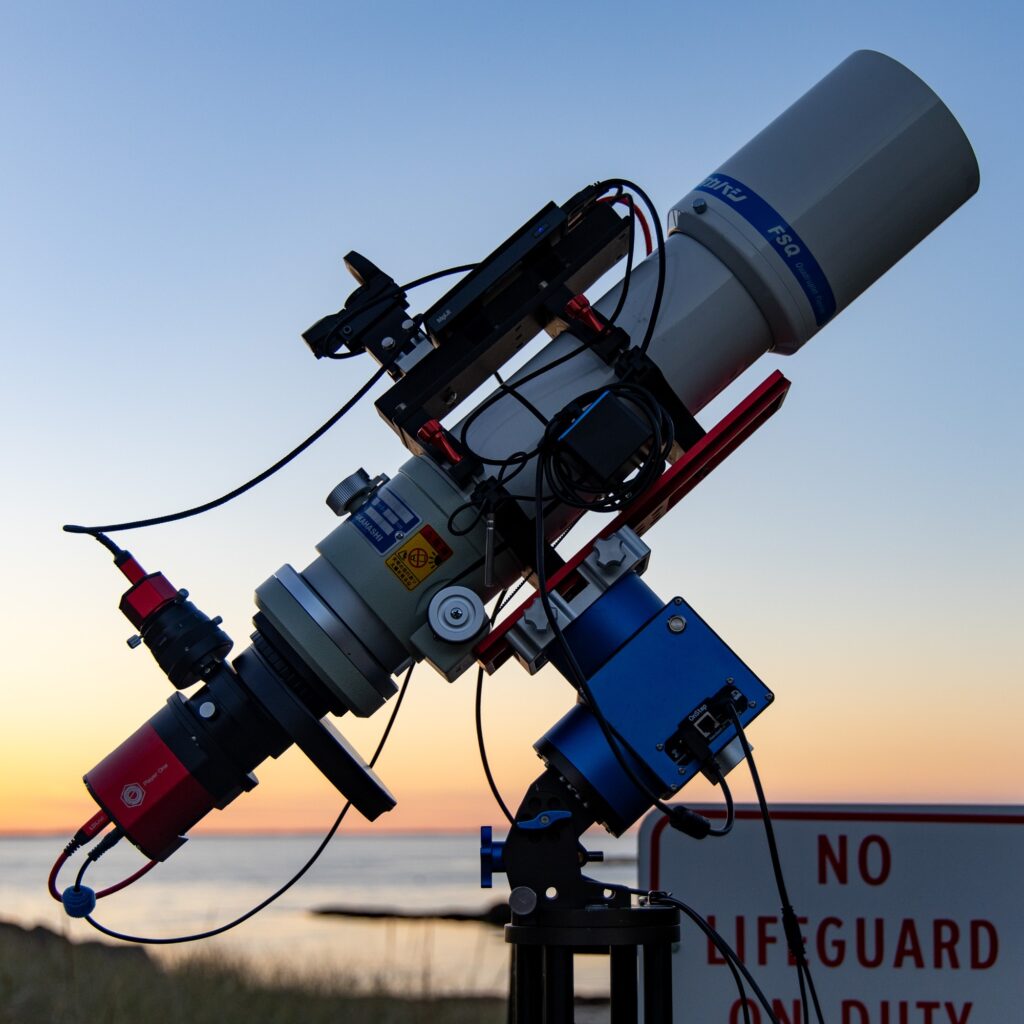
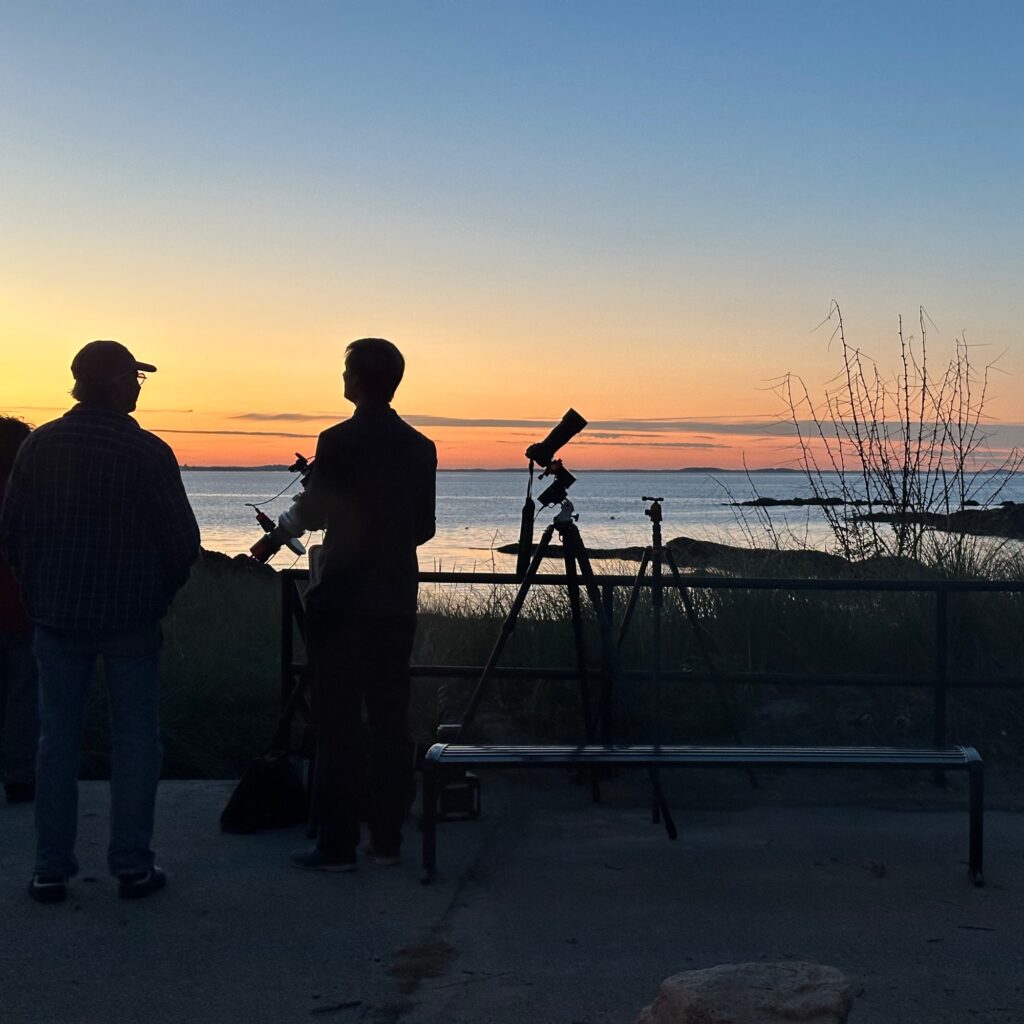

Below, a wide-field image of Lemmon taken with a Canon R6ii and a Rokinon 135mm at f/2. Honestly, for f/2 optics and no guiding, this is not bad.
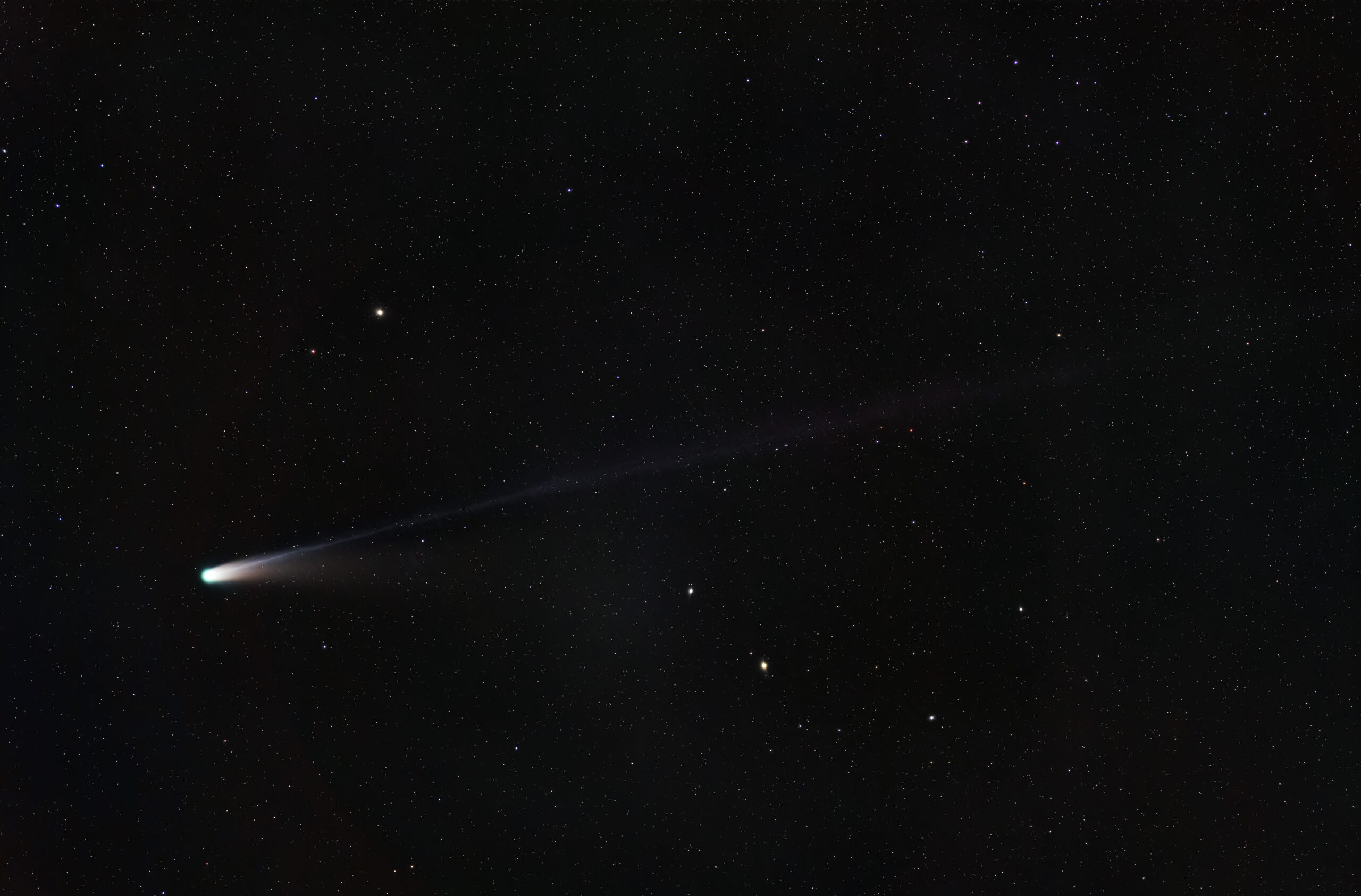
Zooming in, here is the same object taken with the FSQ-106N rig.
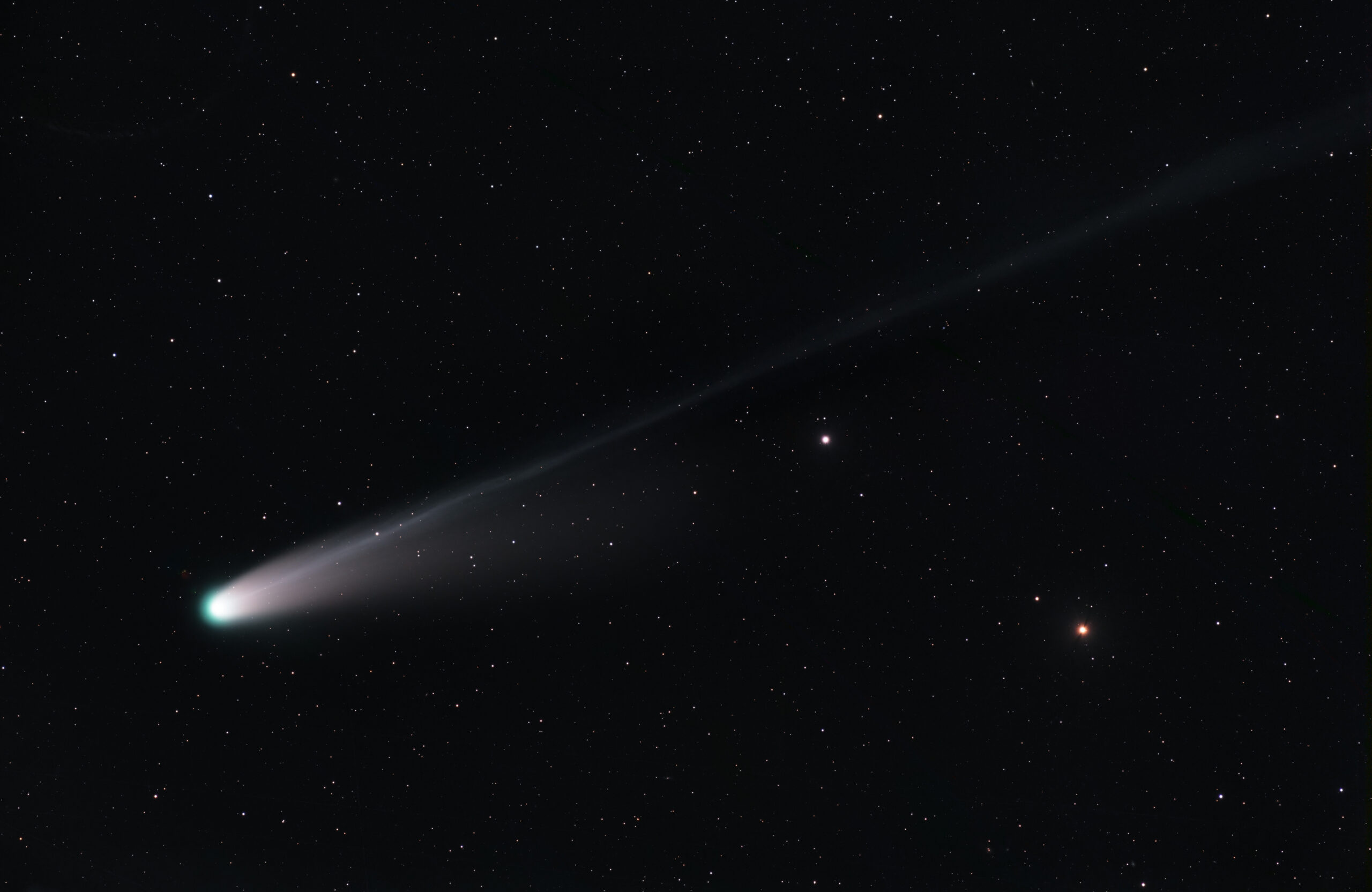
Just for fun, once the comet dropped low enough and guiding started to fail, I switched to unguided mode and took a timelapse with 30s exposures. Here we can watch the comet plunging through the clouds until the it disappears below the horizon. Note also the “rocking” of the camera. This is caused by “periodic error” in the mount. It is one of the few disadvantages of harmonic drive mounts, but is easily corrected using guiding. For unguided exposures, there is also a technique called periodic error correction, which can compensate this rocking after a calibration is performed, but I have never attempted this.
My Best Shot: Lemmon from Mandel Hill
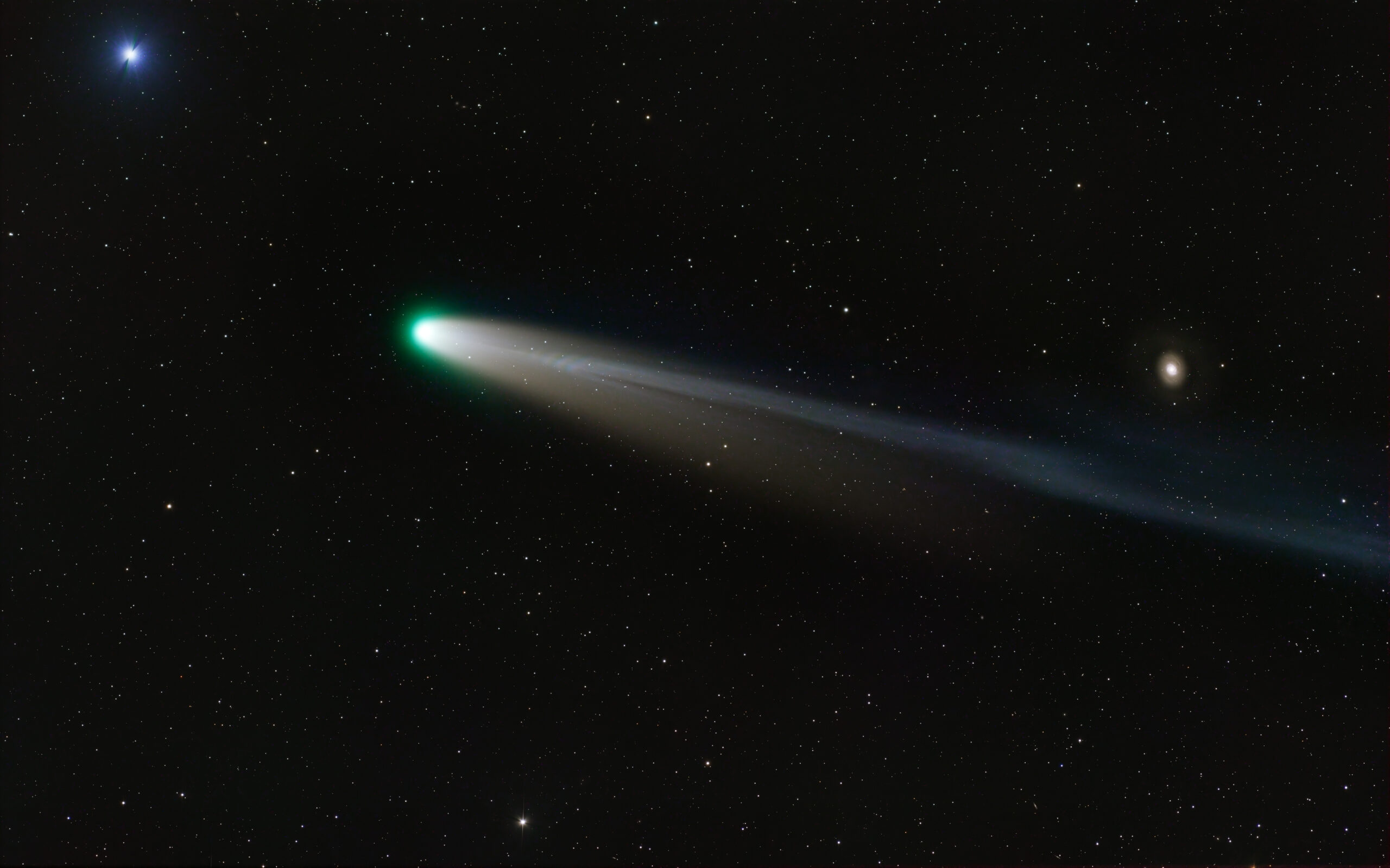
Lemmon kept getting brighter and brighter! Finally, on a Sunday night three days before leaving for Japan, I captured Lemmon from Mandel Hill. This was my best attempt yet. Below, I give two shots. The first is a wide-field from the RedCat 51. The walking noise is pretty obvious but otherwise the tail is nice and detailed.
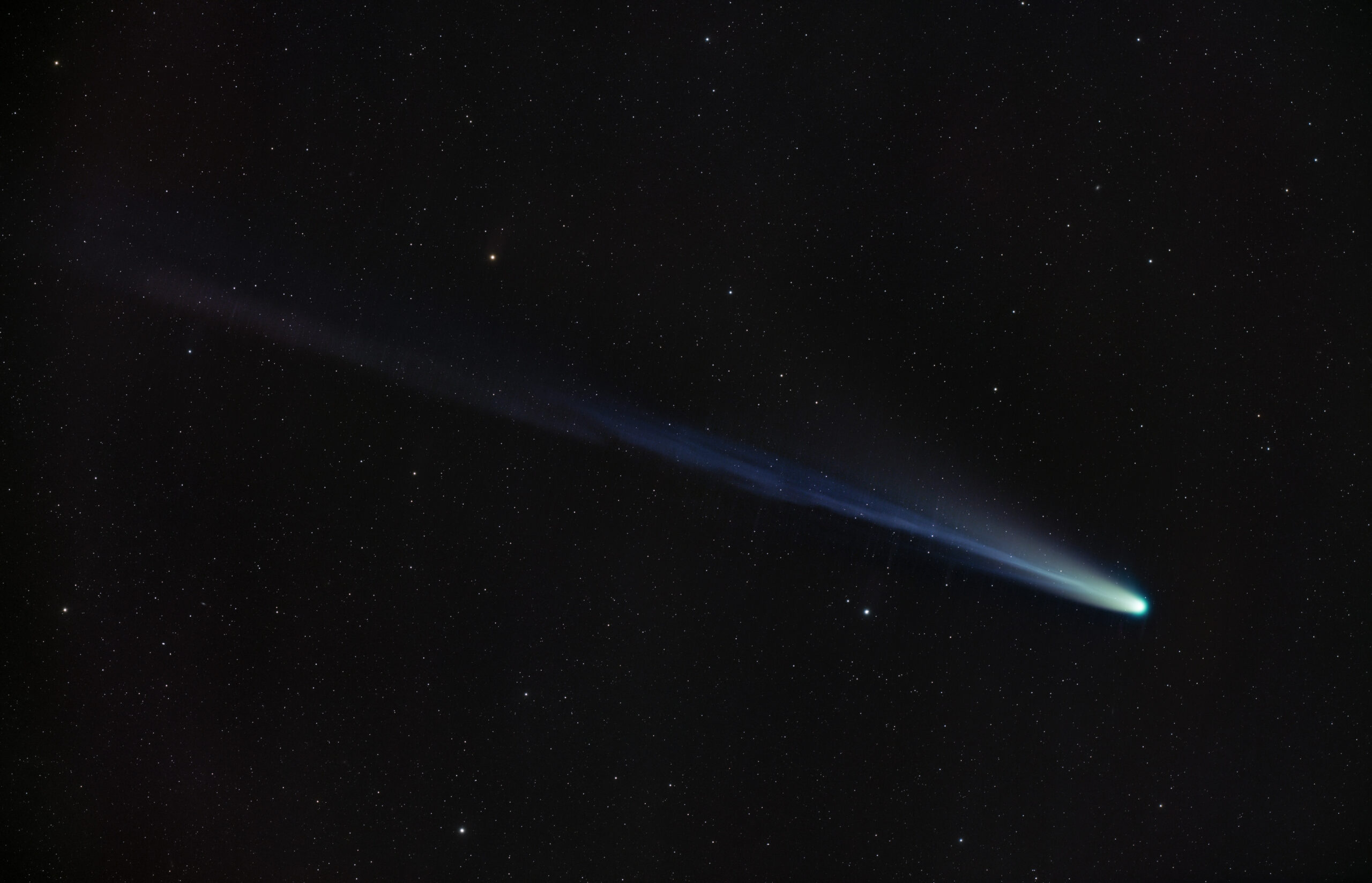
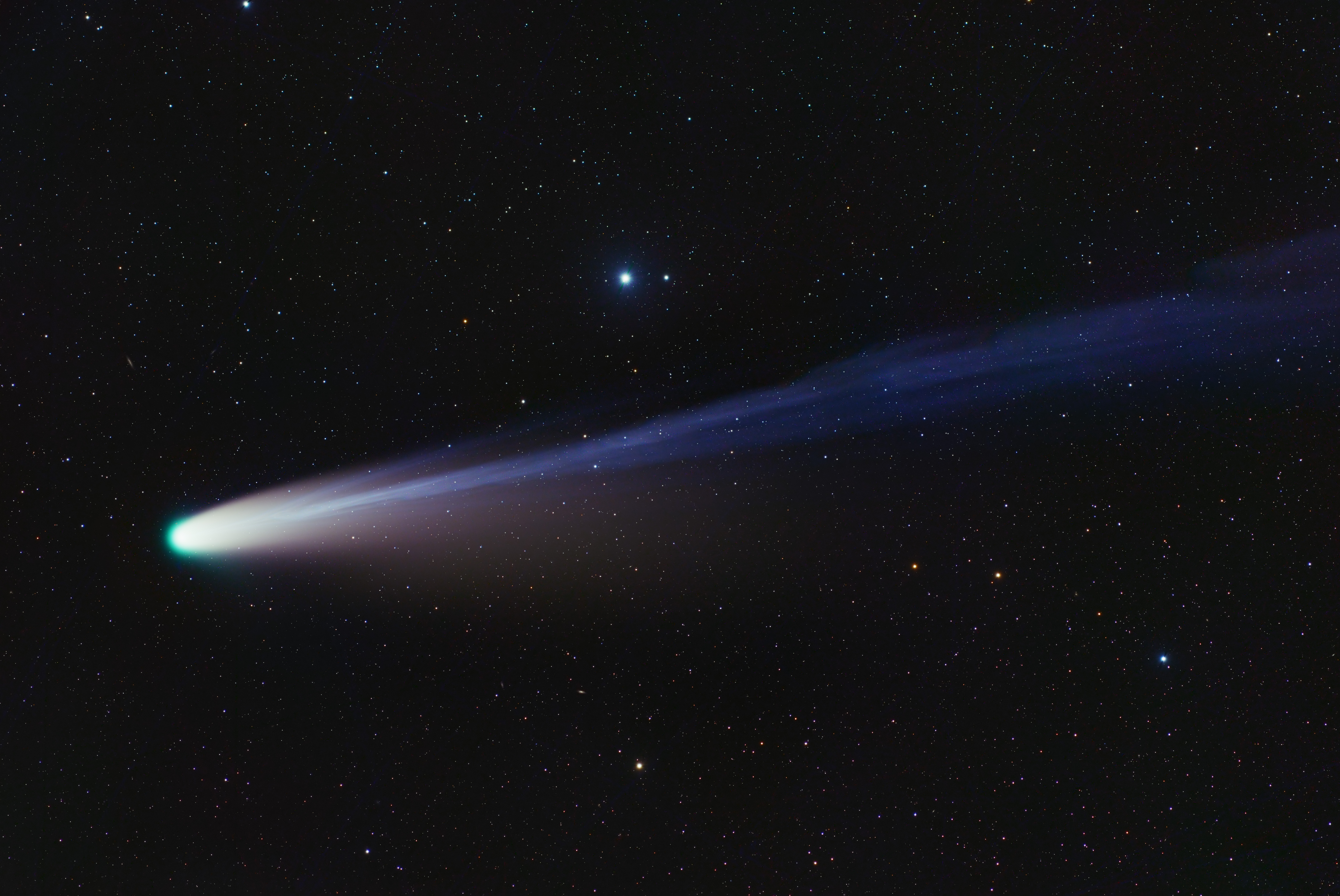
But my favorite by far is the zoom-in with the Takahashi, above. I got a full 90 minutes of exposures that night, and the comet was really bright, so this one came out uniquely well. My only regret is that it wasn’t framed with a nice galaxy in the background, like on some of my past shots. But look very closely and you’ll see at least four tiny ones! Galaxies are everywhere in the night sky.
But comets are rare.
Comet Astrophotography: Techniques
In this final part of the blog post, I cover basic techniques for comet astrophotography. This includes preparation, framing, imaging suggestions, and postprocessing.
Preparation
Several constraints make comet astrophotography different from DSO or planetary astrophotography. To emphasize the differences, the table below compares the important properties of comets (size, brightness, motion, etc.) against other popular dark-sky objects.
Let’s start with the similarities. While a comet’s core is small, the most impressive comet photos all capture detail on its faint tail, which can easily extend >1º in the sky. So comets are large objects, best suited to a wide-field telescope like the WO RedCat 51 (FL = 250mm) or Takahashi FSQ-106 (FL = 530mm). Also, while the core is bright, the tail is faint, so your comet photography is best done at long exposures (~1 min) with a cooled camera. And since comets are broadband objects (like galaxies and reflection nebulae), they have no need for narrowband filters. Like other broadband objects, this means you’ll be subject to the full unfiltered light pollution of your area, so shoot under a dark sky!
The two differences that make comets unique are:
- They are best imaged close to the Sun, when they peak in brightness and the tail reaches its maximum extent. This means that a comet is only really visible shortly after sunset or before sunrise. There will be a precious 30-90 minute window when the comet is high enough for good imaging (usually >10º altitude) and the sky is sufficiently dark.
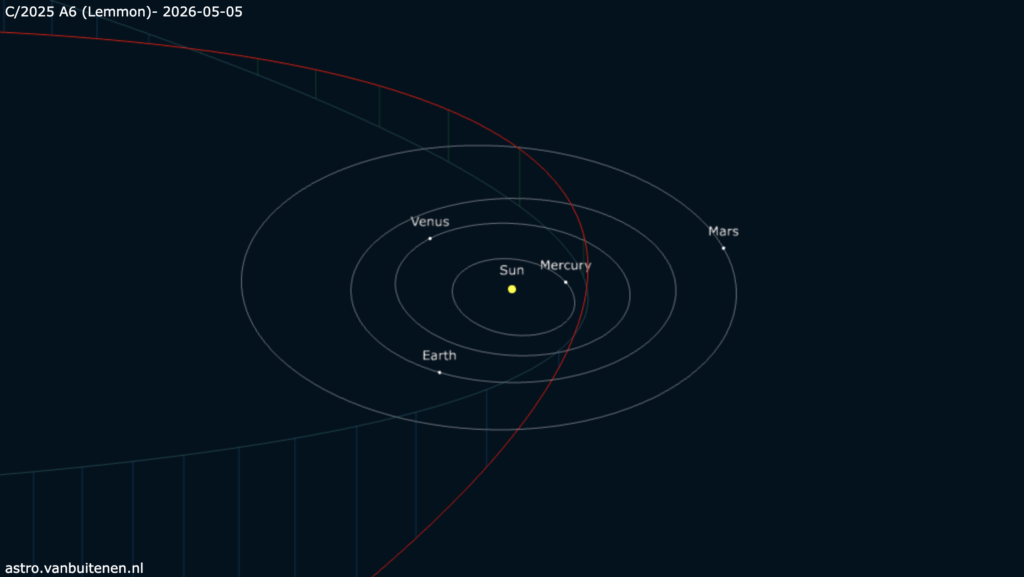
- This is pretty obvious, but comets move. Over the course of a 1-hour imaging session, it’s common for one to move up to half of a degree. This means that our exposures shouldn’t be too long, out of risk of “smearing” the comet’s fine features. In practice, limit exposures to 60 seconds. Also, be cautious when doing LRGB imaging with filter wheels, since the comet can move between filters, creating artificial “rainbow stripes” on the image (similar to this effect).
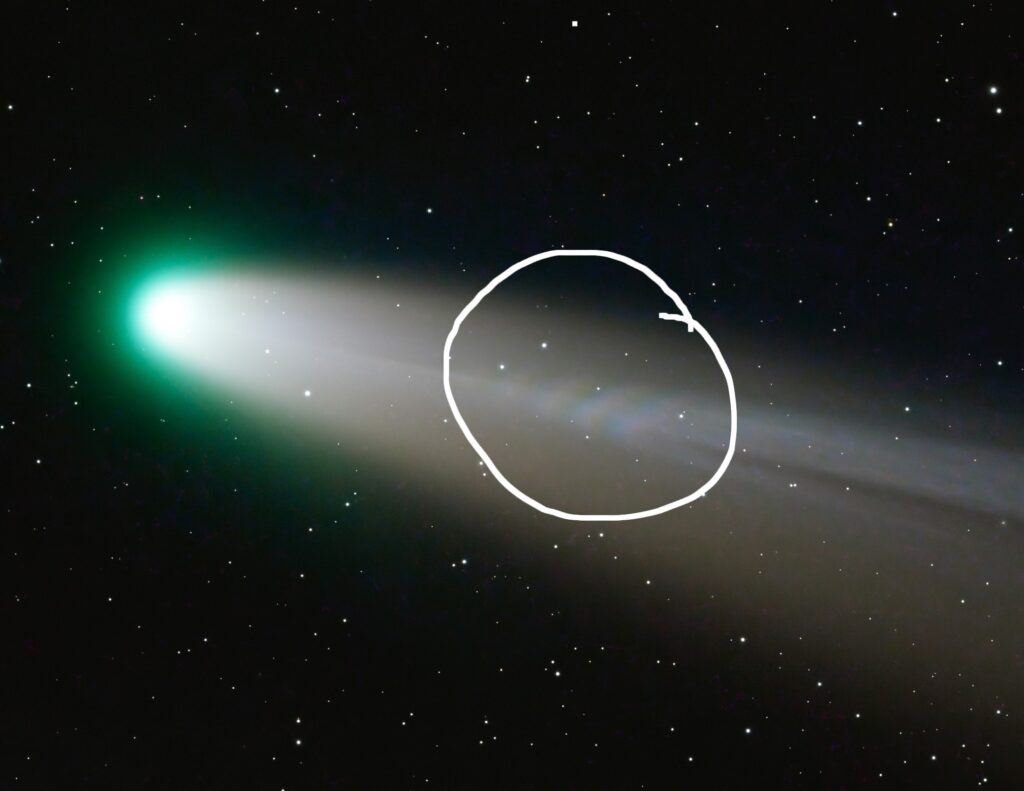
Below is a ~1 hour timelapse of comet C/2025 A6 (Lemmon), captured during a full moon from Barn Door Campground, New Hampshire. If we simply integrated these exposures, the comet would smear out. Much of the technique of comet astrophotography is finding ways to separate the “comet” and “sky” data, in order to separately align and integrate both.
Two great resources for comet planning are:
These websites give a list of the brightest comets in the sky, their expected brightness trends, and where to observe them. You can also add comet location data to apps like Stellarium. Check these websites every month or two. That should give you enough notice when a comet is coming and likely to become bright.
The best locations / sky conditions for comet viewing are those with:
- Clear view of the horizon (at least down to 5º), to maximize comet viewing time.
- Dark sky. No light pollution over horizon in the direction of the comet.
- Good seeing. This matters more than for average DSOs because comets are low in the sky.
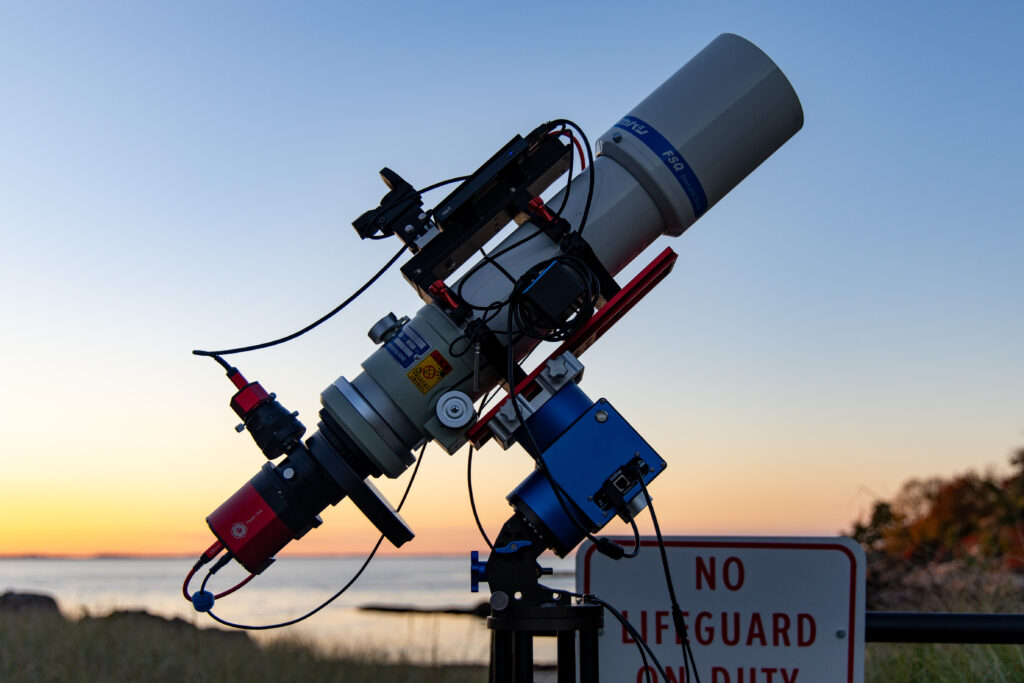
What telescope should you use? That depends on the field of view that you desire, but I find myself preferring ~500mm telescopes at full-frame (that’s about 350mm at APS-C). This zooms in far enough to capture fantastic detail of the core, while adequately framing the full tail. This checks out when I look at the telescopes used on all my past comet photos:
The 530mm Takahashi FSQ-106N was my go-to comet scope before buying the Epsilon-180. Since the Epsilon is at least as sharp and collects more light at f/2.8, I’ll probably default to it in the future. Bright optics matter when you only have an hour of integration time!
Postprocessing Technique
Below, I give a primer on the postprocessing techniques that I use when editing comet astrophotos. The most important fact of comet editing is to remember that, as I said above, comets move. Even over the course of a single imaging session, a comet can move a significant fraction of the field of view. This means that, in a stack of images, there are are two images superimposed on each other: a moving comet, and a stationary background. If we integrate exposures aligning to the background, the comet blurs out, and likewise, if we align to the comet, the background blurs out and the stars “trail”.
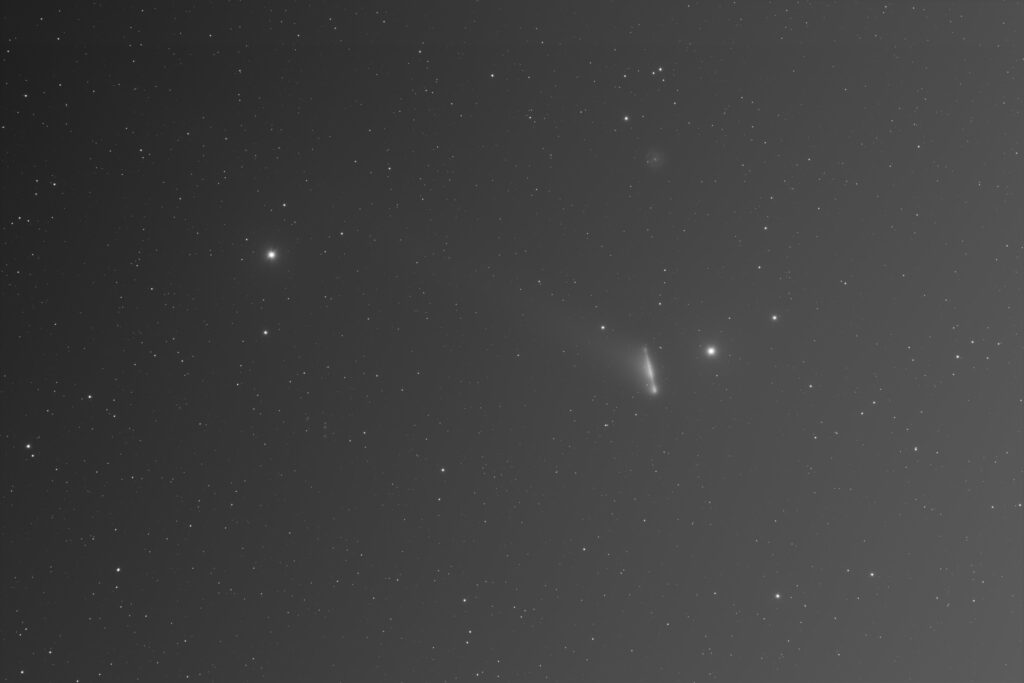
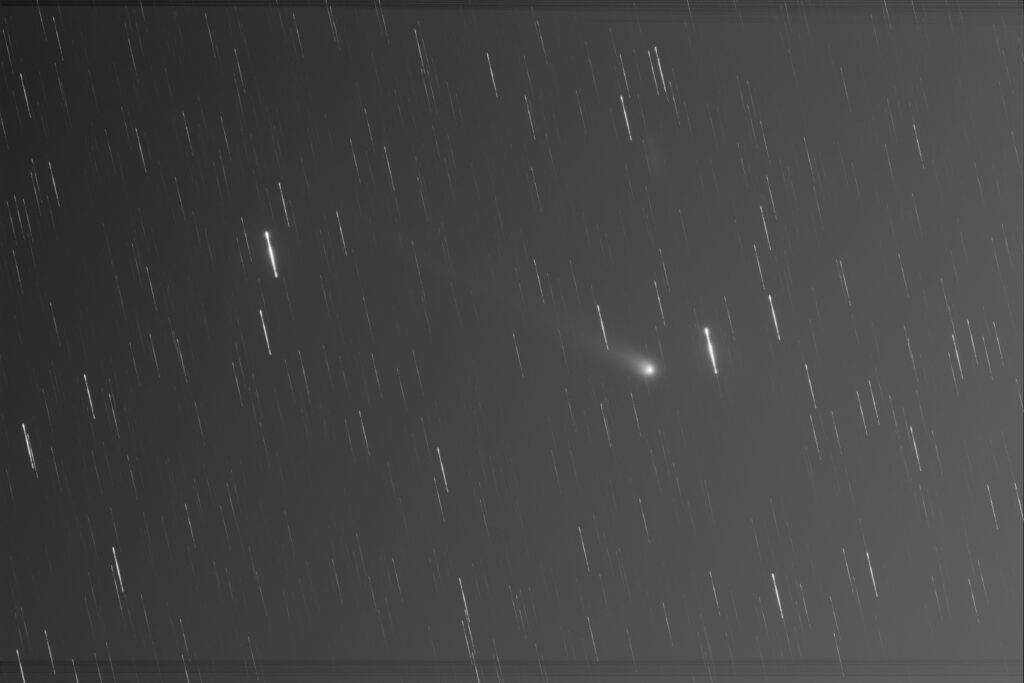
We need a method to separate comet and background, so that we can separately align and integrate them in a robust way, and combine the images later. This is done in the workflow shown below. We start with a set of calibrated, registered frames, generated from a tool like WBPP. To generate the background image, we simply integrate these and apply background extraction (DBE). But to generate the comet image, we start by comet-aligning the input frames (CA) and applying a star extraction tool (SXT). Then we integrate the starless images and subtract the background. Background extraction should be aggressive to pull out as many faint comet-tail details as we can.
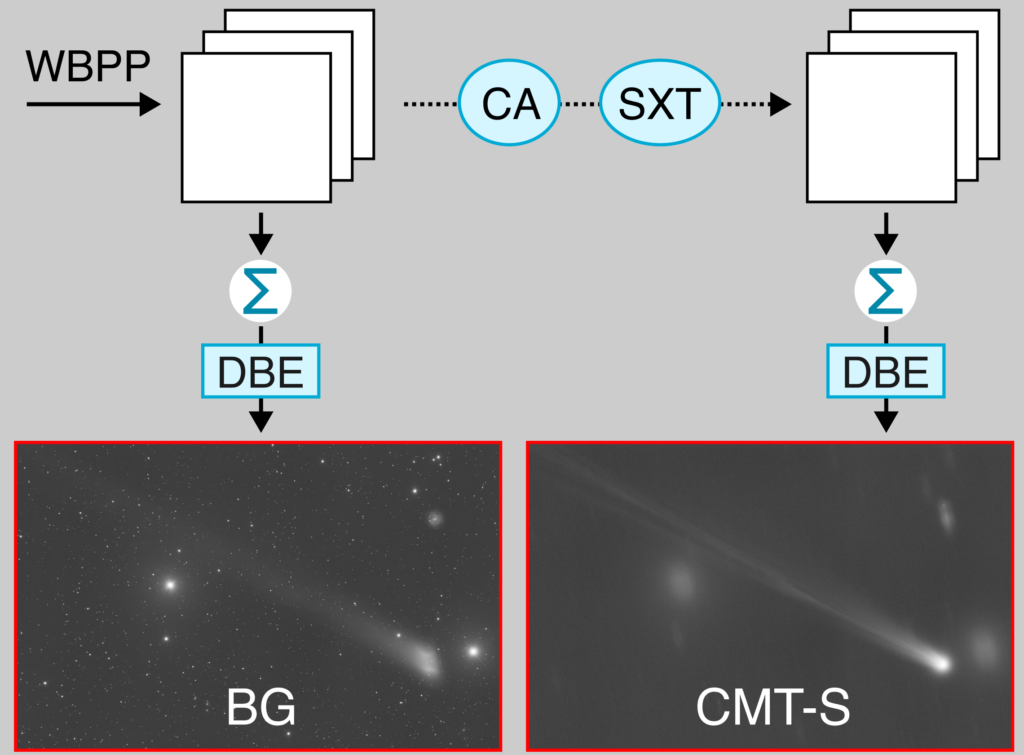
We are almost ready to combine the images, but the stars need to be added back to the comet image. To do so, apply star extraction to BG, take the star image, and add it to CMT-S.
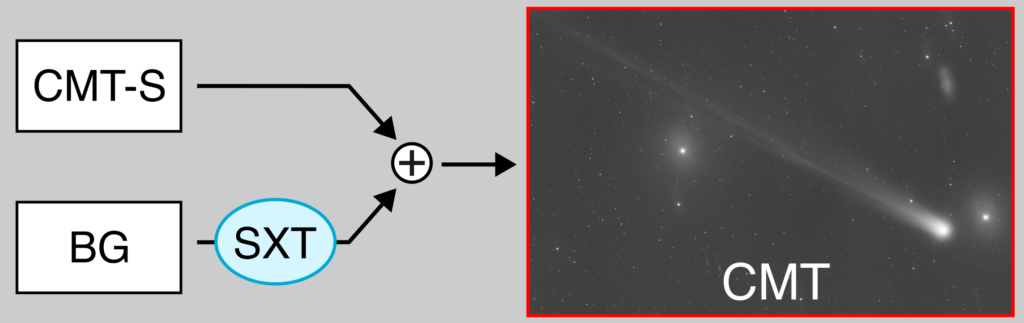
At this point, we have two images with the same star field that “look good” in different parts of the frame. BG resolves all the background details, including that beautiful galaxy to the upper-right, while CMT only resolves the comet. We need to combine them with a hand-drawn mask. This can be as simple as a linear interpolation. But I prefer to stretch the images first (the STF-to-Histogram technique, if using PixInsight), as this makes the process more robust to slight brightness differences.
OUT = [stretch(CMT) * mask] + [stretch(BG) * (1-mask)]
This gives a combined image with both the comet and background details preserved. This image is ready for further postprocessing such as denoising, saturation, curves, etc. I already showed the final image earlier in the post, but just for completeness, I show it again here.
Epilogue: PanSTARRS
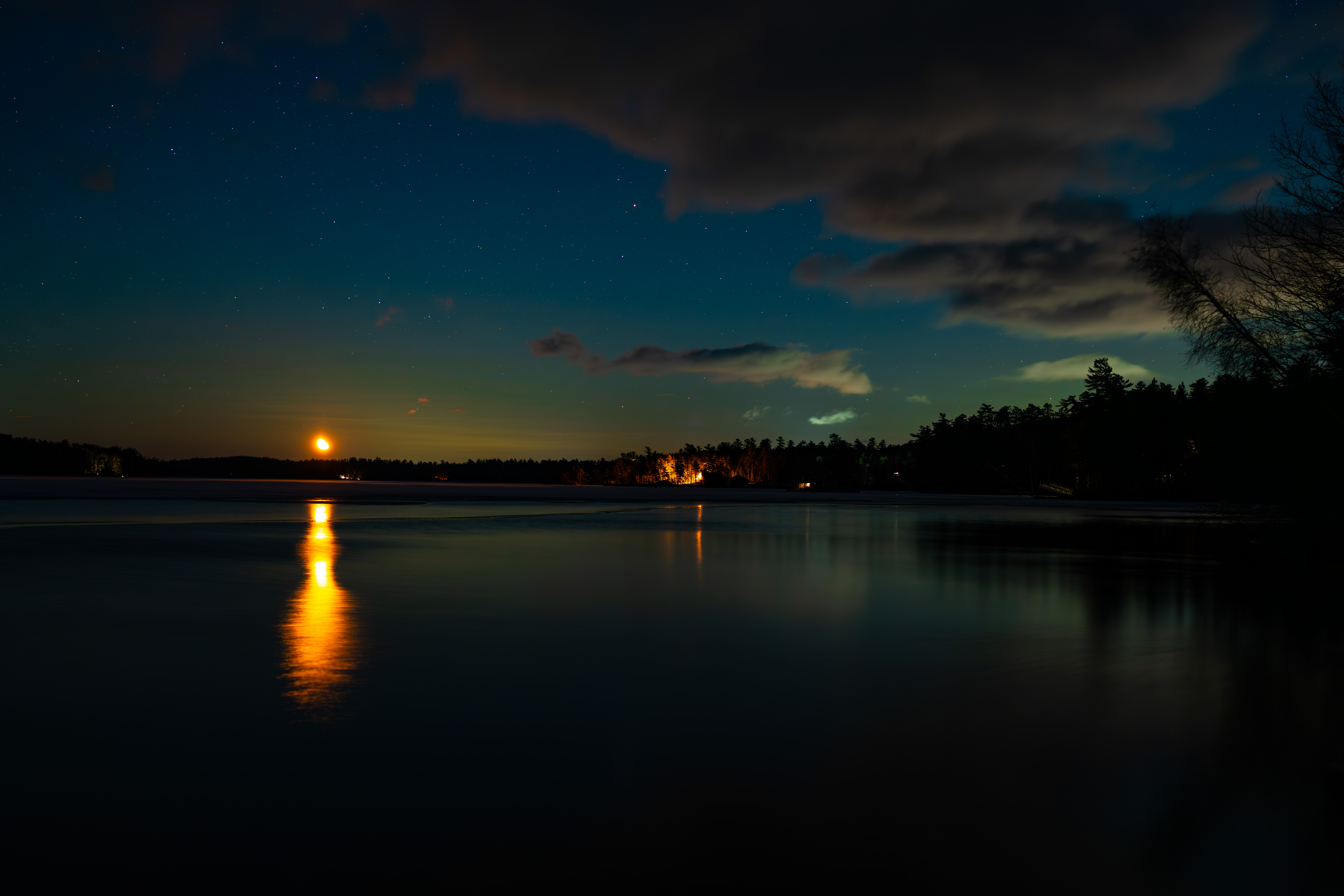
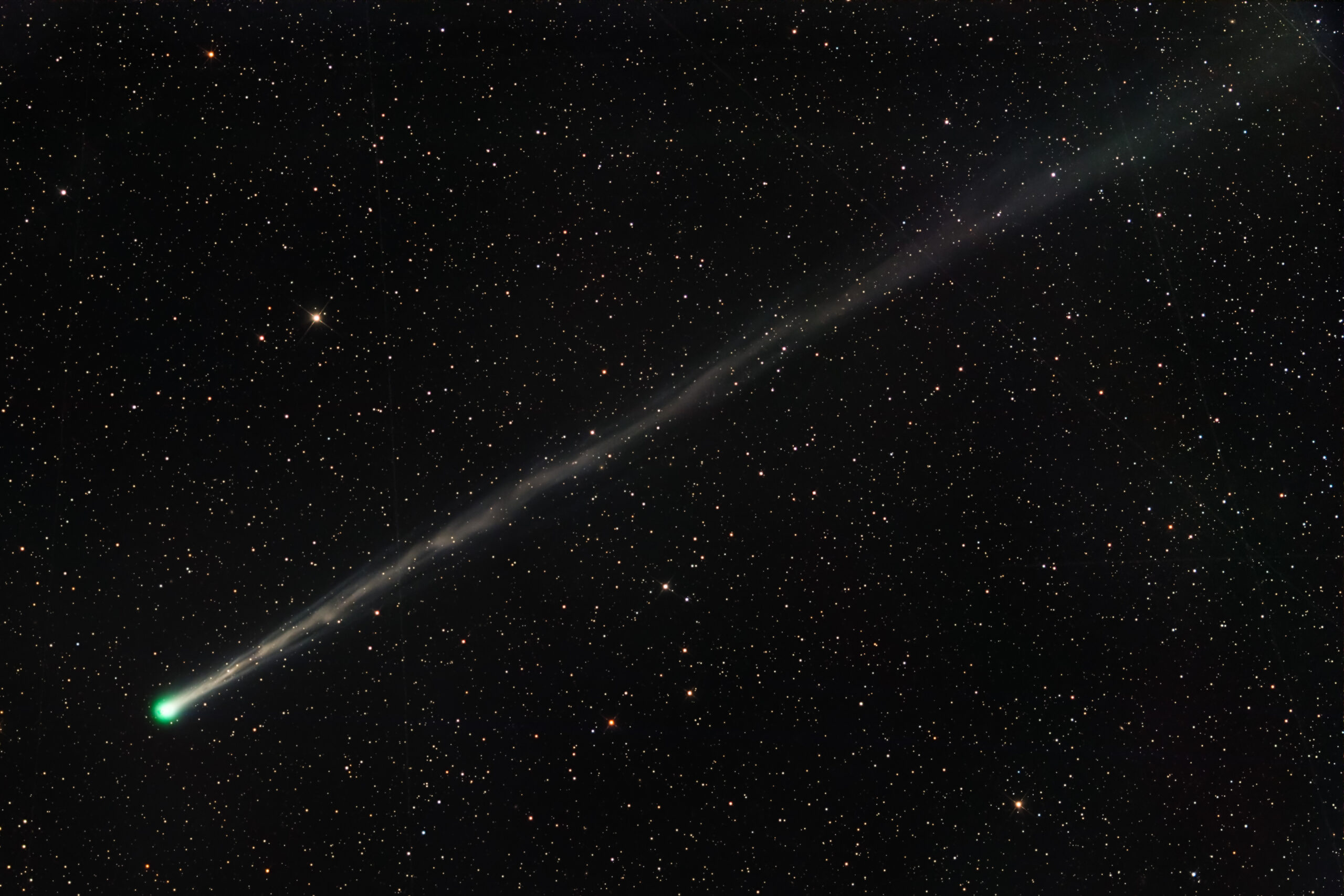
And they keep coming! Just as I was starting this post, a new comet C/2025 R3 (PanSTARRS) flashed through the sky. By early April it was visible in Pegasus just before sunrise. On an April outing at Lake Winnipesaukee (Bortle 3), I had wanted to shoot the Rosette Nebula, followed by the moonrise, and then PanSTARRS. Evening clouds prevented the Rosette shot, but the 2AM moonrise was nice, and after that sleepless night, I found a lakeside vantage point to watch PanSTARRS rise. It was close to the Sun and I only got 30 minutes of good data, but this was good enough for the Epsilon’s fast optics. As it happened, the comet moved very little during those 30 minutes, so all these editing techniques were not necessary. I just stacked the frames like any other deep-sky object, and it turned out fine.